


![[Marketing] Questao Topo - deslogado](https://storage.estuda.com.br/banners/0_6b7ebee90b03af1c560c73bb8bcce34a_banner_deslogado_70_dias.png)
Questões de Inglês
19.971 Questões
Questão 18 5134783
ACAFE Inverno 2021Which of the sentences below is grammatically correct?
Questão 82 5125248
UECE 1ª Fase 2021/1T E X T
Britain, Norway and the United States join forces with businesses to protect tropical forests.
Britain, Norway and the United States said Thursday they would join forces with some of the world’s biggest companies in an effort to rally more than $1 billion for countries that can show they are lowering emissions by protecting tropical forests. The goal is to make intact forests more economically valuable than they would be if the land were cleared for timber and agriculture.
The initiative comes as the world loses acre after acre of forests to feed global demand for soy, palm oil, timber and cattle. Those forests, from Brazil to Indonesia, are essential to limiting the linked crises of climate change and a global biodiversity collapse. They are also home to Indigenous and other forest communities. Amazon, Nestlé, Unilever, GlaxoSmithKline and Salesforce are among the companies promising money for the new initiative, known as the LEAF Coalition.
Last year, despite the global downturn triggered by the pandemic, tropical deforestation was up 12 percent from 2019, collectively wiping out an area about the size of Switzerland. That destruction released about twice as much carbon dioxide into the atmosphere as cars in the United States emit annually
“The LEAF Coalition is a groundbreaking example of the scale and type of collaboration that is needed to fight the climate crisis and achieve net-zero emissions globally by 2050,” John Kerry, President Biden’s senior climate envoy, said in a statement. “Bringing together government and privatesector resources is a necessary step in supporting the large-scale efforts that must be mobilized to halt deforestation and begin to restore tropical and subtropical forests.”
An existing global effort called REDD+ has struggled to attract sufficient investment and gotten mired in bureaucratic slowdowns. This initiative builds on it, bringing private capital to the table at the country or state level. Until now, companies have invested in forests more informally, sometimes supporting questionable projects that prompted accusations of corruption and “greenwashing,” when a company or brand portrays itself as an environmental steward but its true actions don’t support the claim.
The new initiative will use satellite imagery to verify results across wide areas to guard against those problems. Monitoring entire jurisdictions would, in theory, prevent governments from saving forestland in one place only to let it be cut down elsewhere.
Under the plan, countries, states or provinces with tropical forests would commit to reducing deforestation and degradation. Each year or two, they would submit their results, calculating the number of tons of carbon dioxide reduced by their efforts. An independent monitor would verify their claims using satellite images and other measures. Companies and governments would contribute to a pool of money that would pay the national or regional government at least $10 per ton of reduced carbon dioxide.
Companies will not be allowed to participate unless they have a scientifically sound plan to reach net zero emissions, according to Nigel Purvis, the chief executive of Climate Advisers, a group affiliated with the initiative. “Their number one obligation to the world from a climate standpoint is to reduce their own emissions across their supply chains, across their products, everything,” Mr. Purvis said. He also emphasized that the coalition’s plans would respect the rights of Indigenous and forest communities.
From: www.nytimes.com/April 22, 2021
The text mentions situations in which sometimes companies have tried to fund projects in defense of tropical forests, but were prey to circumstances related to
Questão 22 4060877
UNIFESP 1 Dia 2021Leia o texto para responder à questão.
Remember the good old days, when you could have a heated-yet-enjoyable debate with your friends about things that didn’t matter that much — times when you could be a true fan of the Manchester United soccer team when you didn’t come from the city of Manchester?
How things have changed.
Now disagreements feel deadly serious. Like when your colleague pronounces that wearing a face mask in public is a threat to his liberty. Or when you see that one of your friends has just tweeted that, actually, all lives matter. Before you know it, you’re feeling angry and forming harsh new judgments about your colleagues and friends. Let’s take a collective pause and breathe: there are some ways we can all try to have more civil disagreements in this febrile age of culture wars.
1. ‘Coupling’ and ‘decoupling’
The first is to consider how inclined people are to ‘couple’ or ‘decouple’ topics involving wider political and social factors. Swedish data analyst John Nerst has used the terms to describe the contrasting ways in which people approach contentious issues. Those of us more inclined to ‘couple’ see them as inextricably related to a broader matrix of factors, whereas those more predisposed to ‘decouple’ prefer to consider an issue in isolation. To take a crude example, a decoupler might consider in isolation the question of whether a vaccine provides a degree of immunity to a virus; a coupler, by contrast, would immediately see the issue as inextricably entangled in a mesh of factors, such as pharmaceutical industry power and parental choice.
2. ___________________
Most of us are deeply committed to our beliefs, especially concerning moral and social issues, such that when we’re presented with facts that contradict our beliefs, we often choose to dismiss those facts, rather than update our beliefs.
A study at Arizona State University, U.S., analysed more than 100,000 comments on a forum where users post their views on an issue and invite others to persuade them to change their mind. The researchers found that regardless of the kind of topic, people were more likely to change their mind when confronted with more evidence-based arguments. “Our work may suggest that while attitude change is hard-won, providing facts, statistics and citations for one’s arguments can convince people to change their minds,” they concluded.
3. Just be nicer?
Finally, it’s easier said than done, but let’s all try to be more respectful of and attentive to each other’s positions. We should do this not just for virtuous reasons, but because the more we create that kind of a climate, the more open-minded and intellectually flexible we will all be inclined to be. And then hopefully, collectively, we can start having more constructive disagreements — even in our present very difficult times.
(Christian Jarrett. www.bbc.com, 14.10.2020. Adaptado.)
The subtitle that most closely represents the content of the fifth and sixth paragraphs is:
Questão 9 3630404
AFA 2021TEXT
The end of life on Earth?
It weighted about 10,000 tons, entered the
atmosphere at a speed of 64,000 km/h and exploded
over a city with a blast of 500 kilotons. But on 15
February 2013, we were lucky. The metereorite that
[05] showered pieces of rock over Chelyabinsk, Russia, was
relatively small, at only about 17 metres wide. Although
many people were injured by falling glass, the damage
was nothing compared to what had happened in Siberia
nearly one hundred years ago, when a relatively small
[10] object (approximately 50 metres in diameter) exploded in
mid-air over a forest region, flattening about 80 million
trees. If it had exploded over a city such as Moscow or
London, millions of people would have been killed.
By a strange coincidence, the same day that the
[15] meteorite terrified the people of Chelyabinsk, another
50m-wide asteroid passed relatively close to Earth.
Scientists were expecting that visit and know that the
asteroid will return to fly close by us in 2046, but the
Russian meteorite earlier in the day had been too small
[20] for anyone to spot.
Most scientists agree that comets and asteroids
pose the biggest natural threat to human existence. It
was probably a large asteroid or comet colliding with
Earth which wiped out the dinosaurs about 65 million
[25] years ago. An enormous object, 10 to 16 km in diameter,
struck the Yucatan region in Mexico with the force of 100
megatons. That is the equivalent of one Hiroshima bomb
for every person alive on Earth today.
Many scientists, including the late Stephen
[30] Hawking, say that any comet or asteroid greater than
20km in diameter that hits Earth will result in the
complete destruction of complex life, including all
animals and most plants. As we have seen even a much
smaller asteroid can cause great damage.
[35] The Earth has been kept fairly safe for the last 65
million years by good fortune and the massive
gravitational field of the planet Jupiter. Our cosmic
guardian, with its stable circular orbit far from the sun,
sweeps up and scatters away most of the dangerous
[40] comets and asteroids which might cross Earth’s orbit.
After the Chelyabinsk meteorite, scientists are now
monitoring potential hazards even more carefully but, as
far as they know, there is no danger in the foreseeable
future.
[45] Types of space rocks
• Comet – a ball of rock and ice that sends out a
tail of gas and dust behind it. Bright comets only appear
in our visible night sky about once every ten years.
• Asteroid – a rock a few feet to several kms in
[50] diameter. Unlike comets, asteroids have no tail. Most
are to small to cause any damage and burn up in the
atmosphere.
• Meteoroid – part of an asteroid or comet.
• Meteorite – what a meteoroid is called when it
[55] hits Earth.
Taken from: http://learningenglishteens.britishcouncil.org - Access on 29/06/2020
The Russian meteorite
Questão 40 15417237
UENP 1 Dia 2020Texto 1
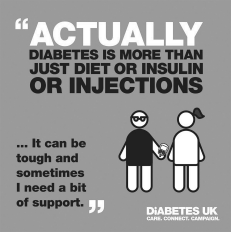
Texto 2
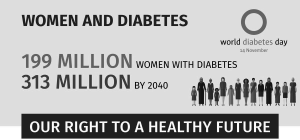
(Disponível em: team_consulting.com. Acesso em: 12 nov. 2019.)
Com base nos textos 1 e 2, considere as afirmativas a seguir.
I. Em “It can be tough”, no texto 1, o termo grifado pode ser substituído por “hard” sem alteração de sentido.
II. Em “our right to a healthy future”, no texto 2, pode-se inferir que o enunciador seja uma mulher.
III. Em “our right to a healthy future”, no texto 2, o termo grifado pode ser substituído por “correct” sem alteração de sentido.
IV. Em “sometimes I need a bit of support”, no texto 1, o enunciador revela sua opinião sobre a doença.
Assinale a alternativa correta.
Questão 34 15417229
UENP 1 Dia 2020If I Had My Life to Live over Again
If I had my life to live over again,
I’d dare to make more mistakes next time.
I’d relax.
I’d limber up.
I’d be sillier than I’ve been this trip.
I would take fewer things seriously.
I would take more chances,
I would eat more ice cream and less beans.
I would, perhaps, have more actual troubles but fewer imaginary ones.
you see, I’m one of those people who was sensible and sane,
hour after hour,
day after day.
Oh, I’ve had my moments.
If I had to do it over again,
I’d have more of them.
In fact, I’d try to have nothing else – just moments,
one after another, instead of living so many years ahead of each day.
I’ve been one of those persons who never goes anywhere without a thermometer, a hot-water bottle, a
raincoat, and a parachute.
If I could do it again, I would travel lighter than I have.
If I had to live my life over,
I would start barefoot earlier in the spring
and stay that way later in the fall.
I would go to more dances,
I would ride more merry-go-rounds, I would pick more daisies.
– Nadine Stair
(Disponível em: https://mrsmindfulness.com/if-i-had-my-life-to-live-over-again. Acesso em: 3 set. 2019.)
Considere o trecho a seguir.
I would, perhaps, have more actual troubles but fewer imaginary ones.
You see, I’m one of those people who was sensible and sane
Assinale a alternativa que apresenta, correta e respectivamente, as palavras que podem substituir os trechos sublinhados sem alteração de sentido.
06