


![[Marketing] Questao Topo - deslogado](https://storage.estuda.com.br/banners/0_6b7ebee90b03af1c560c73bb8bcce34a_banner_deslogado_70_dias.png)
Questões de Inglês
19.971 Questões
Questão 56 6304558
Campo Real Medicina 2021The following text refers to question.
BBC News
Published July 11, 2021.
How flooded coal mines could heat homes
Coal mines were the beating heart of Britain's industrial revolution. Their sooty, energy-dense output gave life to new-fangled factories and shipyards, fueling the nation's march towards modernity. They helped shape a carbon-intensive economy, one that took little notice of the natural world around it. The mines paved the way for a global dependence on fossil fuels, and in doing so, fired the starting pistol on the climate crisis that today confronts us all.
But what if, in a serendipitous circle of history, our extractive past could be repurposed for a greener, cleaner future? What if the vast maze of coal mines beneath our feet, now filled with naturally warm water, could help decarbonize the UK's – and the world's – herculean heating needs?
That's the question Adam Black, a renewable energy enthusiast employed by one of Britain's largest bottling firms, asked himself a decade ago. "I had about 400,000 sq ft [37,000 sq m] of warehouse that needed heating," says the director of energy projects at Durham-based Lanchester Wines. "And it was right over four layers of mine workings, which had naturally flooded over time."]
With the help of a few geothermal experts from Iceland, Black sunk a borehole into the murky depths of the old High Main coal seam in Gateshead, Tyne and Wear, England. Warmed by natural geological processes, the water they pumped to the surface was a pleasant 15 oC (59 ºF).
With a little supplemental warmth from an electrical heat pump – "a bit like a fridge in reverse" – it was perfect for keeping the company's warehouse, and the millions of wine bottles within, at the right temperature.
(Adaptado de BBC News Future. Disponível em: https://www.bbc.com/future/article/20210706-how-flooded-coal-mines-could-heat-homes#:~:text= It%20is%20estimated%20that%20around,the%20potential%20to%20store%20more.&text=Once%20its%20heat%20has%20been,will%20be%20warmed%20 up%20again.)
Based on the text, consider the following affirmatives:
1. The coal mines spread all over Britain’s territory caused a revolution in terms of renewable energy for that country.
2. Most of the Britain’s coal mines are established in places where previously other businesses, such as factories, were located.
3. The global dependence on fossil fuels had its origin in Britain.
4. Renewable energy is being produced by the mildly heated water found in abandoned and flooded mines.
Mark the correct alternative.
Questão 20 6303785
FACISA 2021/1TEXT
As superbugs spread, researchers are turning to microbes that kill bacteria
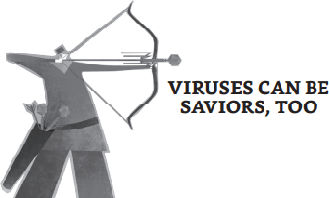
This year the world awakened to the fact that the most powerful and sophisticated species on earth is tragically vulnerable to the tiniest and most basic of creatures. Infectious disease specialists have been warning about this for decades. And the threat comes not only from novel viruses, such as the one causing COVID-19, that jump from animals to humans but also from microbial monsters that we have helped to create through our cavalier use of antibiotics […]
But in a splendid irony, it may turn out that viruses, so often seen as nemeses, could be our saviors in fighting a host of killer infections. As the threat from drugresistant bacteria has grown and the development of new antibiotics has stalled, researchers have turned their attention to bacteriophages—literally, bacteria eaters. Viruses in this class are believed to be the oldest and most numerous organisms on earth. And like guided missiles, each type has evolved to seek and destroy a specific type of bacteria. […] With modern techniques, virologists can precisely match just the right phages to a specific strain of superbug—with sometimes astonishing results. […]
For now phage therapy remains experimental. In most cases, it involves making custom cocktails of several phages shown to be active in vitro against an individual patient’s bug. […]
The effort that is furthest along, however, relies on a phage enzyme called a lysin rather than on whole phages. After multiplying inside a bacterium, phages use lysins to break through the cell wall of their host, instantly killing it. […]
Lysins work synergistically with standard antibiotics, […], they can pierce the walls of superbugs, enabling the drugs to do their job. Lysins also clear up biofilms
– slimy layers of bacteria, carbohydrates and gunk
– that cause lasting infections not readily cured by antibiotics. Another advantage is specificity: lysins kill their target without collateral damage to the microbiome.
Phage and lysin therapies still have a way to go, but at a time when much of the world is besieged by a virus, it’s good to know that these tiny invaders may someday save us.
Claudia Wallis, Scientific American, June 2020
The word cavalier in the first paragraph of TEXT means
Questão 16 6303760
FACISA 2021/1TEXT
As superbugs spread, researchers are turning to microbes that kill bacteria
This year the world awakened to the fact that the most powerful and sophisticated species on earth is tragically vulnerable to the tiniest and most basic of creatures. Infectious disease specialists have been warning about this for decades. And the threat comes not only from novel viruses, such as the one causing COVID-19, that jump from animals to humans but also from microbial monsters that we have helped to create through our cavalier use of antibiotics […]
But in a splendid irony, it may turn out that viruses, so often seen as nemeses, could be our saviors in fighting a host of killer infections. As the threat from drugresistant bacteria has grown and the development of new antibiotics has stalled, researchers have turned their attention to bacteriophages—literally, bacteria eaters. Viruses in this class are believed to be the oldest and most numerous organisms on earth. And like guided missiles, each type has evolved to seek and destroy a specific type of bacteria. […] With modern techniques, virologists can precisely match just the right phages to a specific strain of superbug—with sometimes astonishing results. […]
For now phage therapy remains experimental. In most cases, it involves making custom cocktails of several phages shown to be active in vitro against an individual patient’s bug. […]
The effort that is furthest along, however, relies on a phage enzyme called a lysin rather than on whole phages. After multiplying inside a bacterium, phages use lysins to break through the cell wall of their host, instantly killing it. […]
Lysins work synergistically with standard antibiotics, […], they can pierce the walls of superbugs, enabling the drugs to do their job. Lysins also clear up biofilms
– slimy layers of bacteria, carbohydrates and gunk
– that cause lasting infections not readily cured by antibiotics. Another advantage is specificity: lysins kill their target without collateral damage to the microbiome.
Phage and lysin therapies still have a way to go, but at a time when much of the world is besieged by a virus, it’s good to know that these tiny invaders may someday save us.
Claudia Wallis, Scientific American, June 2020
Which is the most powerful species on earth, referred to in TEXT?
Questão 9 5951989
PUC-RS Verão 2021TEXTO

Choose the alternative which presents an idea that is NOT related to the message of the cartoon.
Questão 46 5950056
PUC-MG Medicina 2021/2Why do we buy into the 'cult' of overwork?
By Bryan Lufkin, 9th May 2021
Although many of us associate overly ambitious workaholism with the 1980s and the finance industry, the tendency to devote ourselves to work and glamourize long-hours culture remains as pervasive as ever. In fact, it is expanding into more sectors and professions, in slightly different packaging. Overwork isn't a phenomenon exclusive to Silicon Valley or Wall Street. People work long hours all over the world, for many different reasons
In Japan, a culture of overwork can be traced back to the 1950s, when the government pushed hard for the country to be rebuilt quickly after World War Two. In Arab League countries, burnout is high among medical professionals, possibly because its 22 members are developing nations with overburdened healthcare systems, studies suggest. Reasons for overwork also depend on industry. Some of the earliest researchers on burnout in the 1970s asserted that many people in jobs geared toward helping others, like employees in clinics or crisis-intervention centers, tended to work long hours that led to emotional and physical exhaustion – a trend which is shown up in the pandemic, too. But millions of us overwork because somehow, we think it’s exciting – a status symbol that puts us on the path to success, whether we define that by wealth or an Instagram post that makes it seem like we're living a dream life with a dream job. Romanticization of work seems to be an especially common practice among "knowledge workers" in the middle and upper classes. In 2014, the New Yorker called this devotion to overwork "a cult".
According to Anat Lechner, clinical associate professor of management at New York University. "We glorify the lifestyle, and the lifestyle is: you breathe something, you sleep with something, you wake up and work on it all day long, then you go to sleep. Again, and again and again."
Adapted from: Home - BBC Worklife.
What does the text imply about this tendency we have to devote ourselves to work and romanticize long-hours culture?
Questão 33 5945626
PUC-GO Medicina 2021/1On Wednesday, astronomers released what they said were the most detailed images ever taken of the surface of our sun.
[…]
Here, 93 million miles from the nearest star — the one we call the sun — the creatures of Earth eke out a living on the edge of almost incomprehensible violence. Every second, thermonuclear reactions in the center of the Sun turn 5 million tons of hydrogen into pure energy. That energy makes its way outward, through boiling gas pocked with magnetic storms that crackle, whirl and lash space with showers of electrical particles and radiation.
[…]
The images were taken as part of the initial test, known as“first light,” of the Inouye telescope, which was built by the National Science Foundation atop Haleakala, an ancient cratered volcano, sacred to native Hawaiians, on the island. Haleakala means “house of the sun” in Hawaiian. What better place to build the world’s biggest telescope devoted to the sun?
[…]
(Available in: https://www.nytimes.com/2020/01/29/ science/daniel-inouye-solar-telescope-pictures.html Accessed on: March 12th, 2020.)
Consider the context of the text to analise the following sentences:
I - The violence mentioned in the text refers to the way some creatures behave on Earth.
II - Hydrogen is transformed into gas.
III - The observation of the Sun is made from a telescope in the base of a mountain in Hawaii.
IV - Haleakala has to do with the Sun.
Mark the only alternative with correct statements according to the text:
06