


![[Marketing] Questao Topo - deslogado](https://storage.estuda.com.br/banners/0_6b7ebee90b03af1c560c73bb8bcce34a_banner_deslogado_70_dias.png)
Questões de Inglês
19.971 Questões
Questão 18 6695510
Mackenzie 2021READ TEXT AND ANSWER THE QUESTION
TEXT
Climate And COVID-19: Converging Crises
(https: //bibliotecapleyades.net/imagenes_ciencia4/dimatechange.jpg)
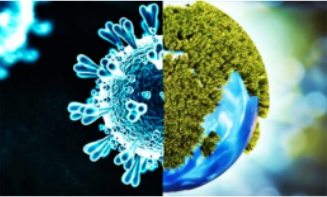
The climate crisis is still raging. A year ago, news headlines were dominated by the climate youth movement and a sense of urgency. But COVID-19 has displaced that interest and awareness. In fact, the causes of both crises share commonalities, and their effects are converging. The climate emergency and COVID-19, a zoonotic disease, are both borne of human activity that has led to environmental degradation. Neither the climate emergency nor a zoonotic pandemic were unexpected. Both have led to the preventable loss of lives through actions that are delayed, insufficient, or mistaken. However, aligning responses presents an opportunity to improve public health, create a sustainable economic future, and better protect the planet's remaining natural resources and biodiversity.
That health and climate change are interwoven is widely accepted, with extensive evidence of their interactions. For the past 5 years, the Lancet Countdown on Health and Climate Change has monitored and reported more than 40 global indicators that measure the impact of our changing climate on health. The newly published 2020 report includes novel indicators on heat-related mortality, migration and population displacement, urban green spaces, low-carbon diets, and the economic costs of labour capacity loss due to extreme heat. The breadth of the indicators has deepened scientific understanding of how climate affects health and puts stress on health systems. […]
Curbing the drivers of climate change will help to suppress the emergence and re-emergence of zoonotic diseases that are made more likely by intensive farming, international trade of exotic animals, and increased human encroachment into wildlife habitats, which in turn increase the likelihood of contact between people and zoonotic disease. Increased international travel and urbanisation leading to higher population density encourage the rapid spread of zoonoses once they spill over into the human population. These factors also have an important role in climate change as environmental determinants of health.
Both COVID-19 and the climate crisis have exposed the fact that the poorest and most marginalised people in society, such as migrants and refugee populations, are always the most vulnerable to shocks. With regard to climate change, those most impacted by extremes have usually contributed the least to the root causes of the crisis. This year's Countdown report finds that no country is immune to avoidable loss of lives arising from widening inequalities, with every indicator in the report following a worsening trend.
Climate has slipped from the top of the global agenda because of political indifference and the need to deal with the immediacies of COVID-19. 5 years on from the Paris Agreement, seizing the opportunity to refocus interests on sustainability offers the cobenefits of protecting our future health, the environment, and our planetary systems. As governments embark on economic recovery plans in the wake of COVID-19, concerns for climate change and equity are rightly focused on a green recovery. A global rapid transition to clean energy sources is needed, ending the stranglehold of fossil fuels. Decisions being made now must tackle both crises together to ensure the most effective response to each.
(Adapted from https://www.thelancet.com/journals/lancet/article/PIIS0140- 6736(20)32579-4/fulltext, published: December 02, 2020)
Evidence from the 2020 report mentioned indicates that
Questão 16 6695405
Mackenzie 2021READ TEXT AND ANSWER THE QUESTION
TEXT
Climate And COVID-19: Converging Crises
(https: //bibliotecapleyades.net/imagenes_ciencia4/dimatechange.jpg)
The climate crisis is still raging. A year ago, news headlines were dominated by the climate youth movement and a sense of urgency. But COVID-19 has displaced that interest and awareness. In fact, the causes of both crises share commonalities, and their effects are converging. The climate emergency and COVID-19, a zoonotic disease, are both borne of human activity that has led to environmental degradation. Neither the climate emergency nor a zoonotic pandemic were unexpected. Both have led to the preventable loss of lives through actions that are delayed, insufficient, or mistaken. However, aligning responses presents an opportunity to improve public health, create a sustainable economic future, and better protect the planet's remaining natural resources and biodiversity.
That health and climate change are interwoven is widely accepted, with extensive evidence of their interactions. For the past 5 years, the Lancet Countdown on Health and Climate Change has monitored and reported more than 40 global indicators that measure the impact of our changing climate on health. The newly published 2020 report includes novel indicators on heat-related mortality, migration and population displacement, urban green spaces, low-carbon diets, and the economic costs of labour capacity loss due to extreme heat. The breadth of the indicators has deepened scientific understanding of how climate affects health and puts stress on health systems. […]
Curbing the drivers of climate change will help to suppress the emergence and re-emergence of zoonotic diseases that are made more likely by intensive farming, international trade of exotic animals, and increased human encroachment into wildlife habitats, which in turn increase the likelihood of contact between people and zoonotic disease. Increased international travel and urbanisation leading to higher population density encourage the rapid spread of zoonoses once they spill over into the human population. These factors also have an important role in climate change as environmental determinants of health.
Both COVID-19 and the climate crisis have exposed the fact that the poorest and most marginalised people in society, such as migrants and refugee populations, are always the most vulnerable to shocks. With regard to climate change, those most impacted by extremes have usually contributed the least to the root causes of the crisis. This year's Countdown report finds that no country is immune to avoidable loss of lives arising from widening inequalities, with every indicator in the report following a worsening trend.
Climate has slipped from the top of the global agenda because of political indifference and the need to deal with the immediacies of COVID-19. 5 years on from the Paris Agreement, seizing the opportunity to refocus interests on sustainability offers the cobenefits of protecting our future health, the environment, and our planetary systems. As governments embark on economic recovery plans in the wake of COVID-19, concerns for climate change and equity are rightly focused on a green recovery. A global rapid transition to clean energy sources is needed, ending the stranglehold of fossil fuels. Decisions being made now must tackle both crises together to ensure the most effective response to each.
(Adapted from https://www.thelancet.com/journals/lancet/article/PIIS0140- 6736(20)32579-4/fulltext, published: December 02, 2020)
Based on the information provided by Text I, mark the statements below as true (T) or false (F).
( ) Newspapers are now more interested in reporting on Covid19 than on climate change.
( ) The Covid-19 and the climate crises are dissociated from human actions.
( ) Less privileged people are more susceptible to the crises mentioned.
The statements are, respectively,
Questão 34 6312185
UNIFIMES 2021Leia o texto para responder a questão.
Polar bears will be wiped out by the end of the century unless more is done to tackle climate change, a study predicts. Scientists say some populations have already reached their survival limits as the Arctic sea ice shrinks. The carnivores rely on the sea ice of the Arctic Ocean to hunt for seals. As the ice breaks up, the animals are forced to roam for long distances or on to shore, where they struggle to find food and feed their babies.
Polar bears are listed as vulnerable to extinction by the International Union for Conservation of Nature (IUCN), with climate change a key factor in their decline. Studies show that declining sea ice is likely to decrease polar bear numbers, perhaps substantially. The new study, published in Nature Climate Change, puts a timeline on when that might happen.
By modelling the energy use of polar bears, the researchers were able to calculate their endurance limits. Dr Steven Amstrup, chief scientist of Polar Bears International, who was also involved in the study, told BBC News: “What we’ve shown is that, first, we’ll lose the survival of babies, so babies will be born but the females won’t have enough body fat to produce milk to bring them along through the ice-free season.
The researchers were also able to predict when these limits will be reached in different parts of the Arctic. This may have already happened in some areas where polar bears live, they said. Under a high greenhouse gas emissions scenario, it’s likely that all but a few polar bear populations will collapse by 2100, the study found. And even if moderate emissions reduction targets are achieved, several populations will disappear.
(www.bbc.com, 20.07.2020. Adaptado.)
De acordo com os dois últimos parágrafos,
Questão 18 6307651
FCMSCSP - Santa Casa 2021Leia a tirinha para responder a questão.

(https://gocomics.com)
A partir da análise da tirinha, pode-se afirmar que
Questão 16 6307649
FCMSCSP - Santa Casa 2021Leia a campanha publicitária para responder a questão.
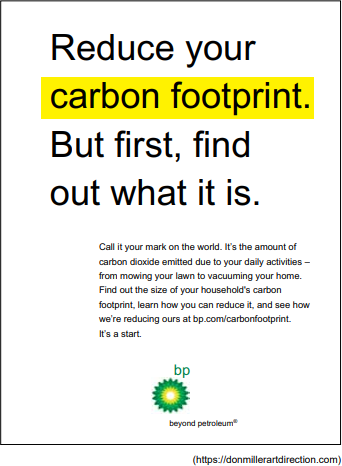
The main purpose of the ad is to
Questão 19 6305339
FACISA 2021/2THE THINGS THAT MAKE US WHO WE ARE

Our cultural values get baked into the materials we create, changing humanity along the way
Humans spend a lot of time and effort making stuff. At last count, humanity has created more than 100,000 different materials from which we build our cities, our clothing, our smartphones, our world. Without our stuff, we would be naked, vulnerable, and, arguably, not very human. The question of how much of our humanity is due to this material wealth and how our cultural values are baked into the materials we create is the subject of Ainissa Ramirez’s fascinating new treatise, The Alchemy of Us.[…] The book’s central thesis is that we make materials and materials make us. […]
Ramirez’s meditation on the materials that have facilitated community (“share”) is particularly illuminating. Here, she writes about the phonograph’s impact on how music was enjoyed. The ability to record music meant that the experience of listening to it no longer had to be a communal one. […] – but it also opened up uncharted horizons. The recordings allowed a cross-fertilization of musical culture between jazz, blues, and rock and roll, even as the musicians themselves remained segregated by race politics.
On the subject of race and racial discrimination, Ramirez argues that a society that is racist will reflect racism in the substances that it makes. For example, photographic film, she writes, was largely developed by white people for white people. Because dark skin absorbs more light than white skin, early photographs of black people were often underexposed, rendering images that were barely recognizable. […]
Ramirez is particularly keen to debunk the idea that materials arise from flashes of insight experienced by extraordinary individuals, instead painting a picture of a diverse range of people from all walks of life driven by love, passion, and intellect. The culture of innovation, she maintains, does not belong only to privileged elites, it can be found in all those who care enough to reinvent the material world and, as a result, themselves.
Mark Miodownik, Science, 03 Apr 2020.
In text Ramirez comments that when photographic film was first invented
06