


![[Marketing] Questao Topo - deslogado](https://storage.estuda.com.br/banners/0_6b7ebee90b03af1c560c73bb8bcce34a_banner_deslogado_70_dias.png)
Questões de Inglês
19.971 Questões
Questão 24 6888243
UPF Inverno 2021Why does a global temperature increase of 1.5°C matter?
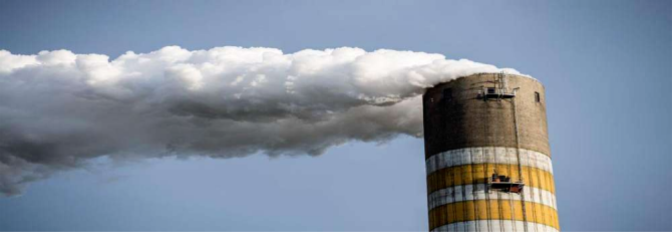
Source: https://ypard net/2020-02-25/cimate-change-dying-worid
Global warming of 1°C or 1.5°C represents an average across the planet – many places will warm faster, and see
far greater temperature increases. For example, the Arctic is warming 2-3 times faster than any other place on Earth.
The effects of global heating are far-reaching, including rising sea levels, glacier retreat, changes of seasonal events
(plants flowering, migration patterns), and a rise in the frequency and severity of extreme weather events. These
[5] categories of impacts have direct and indirect consequences on people and wildlife. Direct consequences include
displacement of people and communities -_______sea level rise and extreme weather events, whereas indirect
consequences may include disruptions to economic development, food production, escalation in water crises, and
increased public health risks.
The impacts of climate change will not be evenly felt around the world – people living in the poorest countries and
[10] in geographically vulnerable regions (small-island states) will be first and most significantly impacted. This is
because communities living in poverty are more likely to be exposed to environmental hazards, are often more
dependent on natural resource-based livelihoods _______ agriculture, and have fewer resources to cope with
climate impacts.
Each fractional degree of warming also results in outsized impacts on biodiversity and species extinction, and
[15] disturbances in natural ecosystems. Even if carbon emissions in the atmosphere can be absorbed and stabilized
over a long period of time, many of the impacts on wildlife, land, water, and people will be undone once they occur,
which makes halting the release of greenhouse gas emissions, and limiting global warming as much as possible,
the first priority.
Retrieved and adapted from: https://studentenergy.org/influencer/climate-change/?gclid=Cj0KCQjwsqmEBhDiARIsANV8H3YW2CGb85NQOQ GSyzc 6Ylt0TOMUwjO72kUW6XuEZX1fI9o6Ng-FUiUaAtqXEALw_wcB. Access on May 2nd, 2021.
In the fragment “Even if carbon emissions in the atmosphere can be absorbed and stabilized over a long period of time, many of the impacts on wildlife, land, water, and people will be undone once they occur […]”, (lines 15 and 16), it is possible to infer that:
Questão 23 6888234
UPF Inverno 2021Why does a global temperature increase of 1.5°C matter?
Source: https://ypard net/2020-02-25/cimate-change-dying-worid
Global warming of 1°C or 1.5°C represents an average across the planet – many places will warm faster, and see
far greater temperature increases. For example, the Arctic is warming 2-3 times faster than any other place on Earth.
The effects of global heating are far-reaching, including rising sea levels, glacier retreat, changes of seasonal events
(plants flowering, migration patterns), and a rise in the frequency and severity of extreme weather events. These
[5] categories of impacts have direct and indirect consequences on people and wildlife. Direct consequences include
displacement of people and communities -_______sea level rise and extreme weather events, whereas indirect
consequences may include disruptions to economic development, food production, escalation in water crises, and
increased public health risks.
The impacts of climate change will not be evenly felt around the world – people living in the poorest countries and
[10] in geographically vulnerable regions (small-island states) will be first and most significantly impacted. This is
because communities living in poverty are more likely to be exposed to environmental hazards, are often more
dependent on natural resource-based livelihoods _______ agriculture, and have fewer resources to cope with
climate impacts.
Each fractional degree of warming also results in outsized impacts on biodiversity and species extinction, and
[15] disturbances in natural ecosystems. Even if carbon emissions in the atmosphere can be absorbed and stabilized
over a long period of time, many of the impacts on wildlife, land, water, and people will be undone once they occur,
which makes halting the release of greenhouse gas emissions, and limiting global warming as much as possible,
the first priority.
Retrieved and adapted from: https://studentenergy.org/influencer/climate-change/?gclid=Cj0KCQjwsqmEBhDiARIsANV8H3YW2CGb85NQOQ GSyzc 6Ylt0TOMUwjO72kUW6XuEZX1fI9o6Ng-FUiUaAtqXEALw_wcB. Access on May 2nd, 2021.
The expressions which complete the gaps appropriately in lines 6 and 12, are:
Questão 22 6888219
UPF Inverno 2021Why does a global temperature increase of 1.5°C matter?
Source: https://ypard net/2020-02-25/cimate-change-dying-worid
Global warming of 1°C or 1.5°C represents an average across the planet – many places will warm faster, and see
far greater temperature increases. For example, the Arctic is warming 2-3 times faster than any other place on Earth.
The effects of global heating are far-reaching, including rising sea levels, glacier retreat, changes of seasonal events
(plants flowering, migration patterns), and a rise in the frequency and severity of extreme weather events. These
[5] categories of impacts have direct and indirect consequences on people and wildlife. Direct consequences include
displacement of people and communities -_______sea level rise and extreme weather events, whereas indirect
consequences may include disruptions to economic development, food production, escalation in water crises, and
increased public health risks.
The impacts of climate change will not be evenly felt around the world – people living in the poorest countries and
[10] in geographically vulnerable regions (small-island states) will be first and most significantly impacted. This is
because communities living in poverty are more likely to be exposed to environmental hazards, are often more
dependent on natural resource-based livelihoods _______ agriculture, and have fewer resources to cope with
climate impacts.
Each fractional degree of warming also results in outsized impacts on biodiversity and species extinction, and
[15] disturbances in natural ecosystems. Even if carbon emissions in the atmosphere can be absorbed and stabilized
over a long period of time, many of the impacts on wildlife, land, water, and people will be undone once they occur,
which makes halting the release of greenhouse gas emissions, and limiting global warming as much as possible,
the first priority.
Retrieved and adapted from: https://studentenergy.org/influencer/climate-change/?gclid=Cj0KCQjwsqmEBhDiARIsANV8H3YW2CGb85NQOQ GSyzc 6Ylt0TOMUwjO72kUW6XuEZX1fI9o6Ng-FUiUaAtqXEALw_wcB. Access on May 2nd, 2021.
The only piece of information that is not addressed in the text is:
Questão 21 6888191
UPF Inverno 2021Why does a global temperature increase of 1.5°C matter?
Source: https://ypard net/2020-02-25/cimate-change-dying-worid
Global warming of 1°C or 1.5°C represents an average across the planet – many places will warm faster, and see
far greater temperature increases. For example, the Arctic is warming 2-3 times faster than any other place on Earth.
The effects of global heating are far-reaching, including rising sea levels, glacier retreat, changes of seasonal events
(plants flowering, migration patterns), and a rise in the frequency and severity of extreme weather events. These
[5] categories of impacts have direct and indirect consequences on people and wildlife. Direct consequences include
displacement of people and communities -_______sea level rise and extreme weather events, whereas indirect
consequences may include disruptions to economic development, food production, escalation in water crises, and
increased public health risks.
The impacts of climate change will not be evenly felt around the world – people living in the poorest countries and
[10] in geographically vulnerable regions (small-island states) will be first and most significantly impacted. This is
because communities living in poverty are more likely to be exposed to environmental hazards, are often more
dependent on natural resource-based livelihoods _______ agriculture, and have fewer resources to cope with
climate impacts.
Each fractional degree of warming also results in outsized impacts on biodiversity and species extinction, and
[15] disturbances in natural ecosystems. Even if carbon emissions in the atmosphere can be absorbed and stabilized
over a long period of time, many of the impacts on wildlife, land, water, and people will be undone once they occur,
which makes halting the release of greenhouse gas emissions, and limiting global warming as much as possible,
the first priority.
Retrieved and adapted from: https://studentenergy.org/influencer/climate-change/?gclid=Cj0KCQjwsqmEBhDiARIsANV8H3YW2CGb85NQOQ GSyzc 6Ylt0TOMUwjO72kUW6XuEZX1fI9o6Ng-FUiUaAtqXEALw_wcB. Access on May 2nd, 2021.
About global warming, it is possible to affirm that:
Questão 20 6888185
UPF Inverno 2021Text
Biden, Calling for Action, Commits U.S. to Halving Its Climate Emissions
Addressing leaders at a virtual summit meeting he convened, the president cast the fight against global warming as an economic opportunity for the world.
By Lisa Friedman, Somini Sengupta and Coral Davenport Published April 22, 2021 - Updated April 28, 2021
WASHINGTON — President Biden on Thursday moved to put four years of official climate denial behind the United
States, declaring that America would cut its global warming emissions at least in half by the end of the decade.
Addressing 40 world leaders at the start of a two-day summit about the U.S. return to the Paris climate agreement,
Mr. Biden sought to galvanize other countries to take more aggressive steps. He cast the challenge of avoiding
[5] catastrophic warming as an economic opportunity for America and the world, a striking contrast to his predecessor
who had abandoned the agreement. “This is a moral imperative, an economic imperative” Mr. Biden said. “A
moment of peril, but also a moment of extraordinary possibilities.”
In rapid succession, Japan, Canada, Britain and the European Union committed to steeper cuts. But China, India
and Russia made no new emissions promises, and even Mr. Biden’s commitment to cut U.S. greenhouse gases 50
[10] percent to 52 percent below 2005 levels by the end of the decade will be extraordinarily difficult to meet,
economically and politically.
Energy experts said it would require a dramatic overhaul of American society, including the virtual elimination of
coal for electricity and the replacement of millions of gasoline-powered cars with electric vehicles. And the Biden
administration’s ambitions cut to the heart of its toughest diplomatic challenge: Dealing with China. While the United
[15] States is the largest emitter in history, China’s emissions are currently the largest, which only add to the issues that
have both Republicans and Democrats seething at Beijing.
The stakes are enormous, for Mr. Biden and for the planet. If nations fail to keep global temperatures from rising
more than 1.5 degrees Celsius above preindustrial levels, the world economy will suffer $23 trillion in losses by
midcentury from natural disasters and the spread of disease, according to a report from Swiss Re, one of the world’s
[20] largest providers of insurance to other insurance companies.
American credibility has been battered by years of joining and then abandoning efforts to tackle climate change; if
the United States does not meet its new goals, or if it reverses course once again with a new administration, trust
from the international community would plunge still further.
Retrieved and adapted from: https://www.nytimes.com/2021/04/22/climate/biden-climate-change.html.Access on May 2nd, 2021.
Currently, the correct information about greenhouse gas emissions is
Questão 18 6888174
UPF Inverno 2021Text
Biden, Calling for Action, Commits U.S. to Halving Its Climate Emissions
Addressing leaders at a virtual summit meeting he convened, the president cast the fight against global warming as an economic opportunity for the world.
By Lisa Friedman, Somini Sengupta and Coral Davenport Published April 22, 2021 - Updated April 28, 2021
WASHINGTON — President Biden on Thursday moved to put four years of official climate denial behind the United
States, declaring that America would cut its global warming emissions at least in half by the end of the decade.
Addressing 40 world leaders at the start of a two-day summit about the U.S. return to the Paris climate agreement,
Mr. Biden sought to galvanize other countries to take more aggressive steps. He cast the challenge of avoiding
[5] catastrophic warming as an economic opportunity for America and the world, a striking contrast to his predecessor
who had abandoned the agreement. “This is a moral imperative, an economic imperative” Mr. Biden said. “A
moment of peril, but also a moment of extraordinary possibilities.”
In rapid succession, Japan, Canada, Britain and the European Union committed to steeper cuts. But China, India
and Russia made no new emissions promises, and even Mr. Biden’s commitment to cut U.S. greenhouse gases 50
[10] percent to 52 percent below 2005 levels by the end of the decade will be extraordinarily difficult to meet,
economically and politically.
Energy experts said it would require a dramatic overhaul of American society, including the virtual elimination of
coal for electricity and the replacement of millions of gasoline-powered cars with electric vehicles. And the Biden
administration’s ambitions cut to the heart of its toughest diplomatic challenge: Dealing with China. While the United
[15] States is the largest emitter in history, China’s emissions are currently the largest, which only add to the issues that
have both Republicans and Democrats seething at Beijing.
The stakes are enormous, for Mr. Biden and for the planet. If nations fail to keep global temperatures from rising
more than 1.5 degrees Celsius above preindustrial levels, the world economy will suffer $23 trillion in losses by
midcentury from natural disasters and the spread of disease, according to a report from Swiss Re, one of the world’s
[20] largest providers of insurance to other insurance companies.
American credibility has been battered by years of joining and then abandoning efforts to tackle climate change; if
the United States does not meet its new goals, or if it reverses course once again with a new administration, trust
from the international community would plunge still further.
Retrieved and adapted from: https://www.nytimes.com/2021/04/22/climate/biden-climate-change.html.Access on May 2nd, 2021.
Read the statements.
I. Biden’s new administration is noticed by the closeness with his predecessor’s climate denial ideas.
II. Biden formally pledged that the United States would reduce its emissions at least in half, although it seems almost impossible to be done.
III. Some major industrialized nations did announce aggressive new goals at the summit, but not all.
The true sentences are:
06