


![[Marketing] Questao Topo - deslogado](https://storage.estuda.com.br/banners/0_6b7ebee90b03af1c560c73bb8bcce34a_banner_deslogado_70_dias.png)
Questões de Inglês
19.971 Questões
Questão 57 7412833
URCA 2ºDia 2021/2Texto
How systems have supported teachers in their new role?
Almost 90% of countries that responded to the survey of Ministries of Education on National Responses to COVID-I9 conducted by UNESCO, UNICEF, and the World Bank (2020) supported teachers by sharing guidelinestressing the importance of: providing feedback to students, maintaining constant communication with caregivers, and reporting to local education units to keep track of learning. Fewer governments took a different approach: Costa Rica developed a digital toolbox with pedagogical resources such as a guide for autonomous work, the state of São Paulo in Brazil organized frequent two-hour conversations between Secretary Rossteli Soares and teachers through the mobile application developed by the state. These conversations and tools allowed governments to have an open line of communication with teachers to better understand their concerns and adjust remote learning programs.
As teachers started to implement these guidelines and recommendations, they found themselves balancing educating and providing feedback to students remotely, filling administrative reports, and taking care of their families. Some governments recognized early-on that their well-intentioned teacher support systems ended up generating burnout. Peru's Ministry of Education was open to receive feedback and reacted rapidly by changing the guidelines to reduce teacher's administrative workload. The state of Minas Gerais in Brazil developed the mobile application 'Conexão Escola” to encourage teacher-student interaction during designated time after each class, avoiding a situation in which students contacted teachers through WhatsApp or text message throughout the day. In Uruguay, teachers were expected to fill administrative information, but instead of requesting new information from them, the government decided to use GURI, a digital platform that has been used by Uruguayan teachers for over 10 years to report information such as student attendance and grades.
Beyond providing guidelines and tools, some governments have leveraged existing professional development programs that worked before the pandemic. The state of Edo in Nigeria trained all 11 thousand primary school teachers who are part of the Edo-BEST program in the past two years to effectively use digital technologies in the classroom; during the pandemic, this in-service teacher training program transitioned from in-person to remote training. Similarly, in Uruguay, The Institute for in-Service Teacher Training took an existing coaching program online to provide remote pedagogical support and Ceibal strengthened its teacher training program and Open Educational Resources repository. While over 90% of Uruguayan teachers were satisfied with the remote training received during the pandemic, some expressed the need for further training.
From: hitps://blogs.worldhank ory/education/changing-role-teachers-and-technologies-amidst-covid- 19-pandemic-key-findings-cross. Acvessed on 09/13/2021
Os professores foram encorajados a atender os alunos sem usar o WhatsApp:
Questão 56 7412826
URCA 2ºDia 2021/2Texto
How systems have supported teachers in their new role?
Almost 90% of countries that responded to the survey of Ministries of Education on National Responses to COVID-I9 conducted by UNESCO, UNICEF, and the World Bank (2020) supported teachers by sharing guidelinestressing the importance of: providing feedback to students, maintaining constant communication with caregivers, and reporting to local education units to keep track of learning. Fewer governments took a different approach: Costa Rica developed a digital toolbox with pedagogical resources such as a guide for autonomous work, the state of São Paulo in Brazil organized frequent two-hour conversations between Secretary Rossteli Soares and teachers through the mobile application developed by the state. These conversations and tools allowed governments to have an open line of communication with teachers to better understand their concerns and adjust remote learning programs.
As teachers started to implement these guidelines and recommendations, they found themselves balancing educating and providing feedback to students remotely, filling administrative reports, and taking care of their families. Some governments recognized early-on that their well-intentioned teacher support systems ended up generating burnout. Peru's Ministry of Education was open to receive feedback and reacted rapidly by changing the guidelines to reduce teacher's administrative workload. The state of Minas Gerais in Brazil developed the mobile application 'Conexão Escola” to encourage teacher-student interaction during designated time after each class, avoiding a situation in which students contacted teachers through WhatsApp or text message throughout the day. In Uruguay, teachers were expected to fill administrative information, but instead of requesting new information from them, the government decided to use GURI, a digital platform that has been used by Uruguayan teachers for over 10 years to report information such as student attendance and grades.
Beyond providing guidelines and tools, some governments have leveraged existing professional development programs that worked before the pandemic. The state of Edo in Nigeria trained all 11 thousand primary school teachers who are part of the Edo-BEST program in the past two years to effectively use digital technologies in the classroom; during the pandemic, this in-service teacher training program transitioned from in-person to remote training. Similarly, in Uruguay, The Institute for in-Service Teacher Training took an existing coaching program online to provide remote pedagogical support and Ceibal strengthened its teacher training program and Open Educational Resources repository. While over 90% of Uruguayan teachers were satisfied with the remote training received during the pandemic, some expressed the need for further training.
From: hitps://blogs.worldhank ory/education/changing-role-teachers-and-technologies-amidst-covid- 19-pandemic-key-findings-cross. Acvessed on 09/13/2021
Quais professores sentiram a necessidade de mais treinamento?
Questão 52 7412524
URCA 2ºDia 2021/2Texto
How systems have supported teachers in their new role?
Almost 90% of countries that responded to the survey of Ministries of Education on National Responses to COVID-I9 conducted by UNESCO, UNICEF, and the World Bank (2020) supported teachers by sharing guidelinestressing the importance of: providing feedback to students, maintaining constant communication with caregivers, and reporting to local education units to keep track of learning. Fewer governments took a different approach: Costa Rica developed a digital toolbox with pedagogical resources such as a guide for autonomous work, the state of São Paulo in Brazil organized frequent two-hour conversations between Secretary Rossteli Soares and teachers through the mobile application developed by the state. These conversations and tools allowed governments to have an open line of communication with teachers to better understand their concerns and adjust remote learning programs.
As teachers started to implement these guidelines and recommendations, they found themselves balancing educating and providing feedback to students remotely, filling administrative reports, and taking care of their families. Some governments recognized early-on that their well-intentioned teacher support systems ended up generating burnout. Peru's Ministry of Education was open to receive feedback and reacted rapidly by changing the guidelines to reduce teacher's administrative workload. The state of Minas Gerais in Brazil developed the mobile application 'Conexão Escola” to encourage teacher-student interaction during designated time after each class, avoiding a situation in which students contacted teachers through WhatsApp or text message throughout the day. In Uruguay, teachers were expected to fill administrative information, but instead of requesting new information from them, the government decided to use GURI, a digital platform that has been used by Uruguayan teachers for over 10 years to report information such as student attendance and grades.
Beyond providing guidelines and tools, some governments have leveraged existing professional development programs that worked before the pandemic. The state of Edo in Nigeria trained all 11 thousand primary school teachers who are part of the Edo-BEST program in the past two years to effectively use digital technologies in the classroom; during the pandemic, this in-service teacher training program transitioned from in-person to remote training. Similarly, in Uruguay, The Institute for in-Service Teacher Training took an existing coaching program online to provide remote pedagogical support and Ceibal strengthened its teacher training program and Open Educational Resources repository. While over 90% of Uruguayan teachers were satisfied with the remote training received during the pandemic, some expressed the need for further training.
From: hitps://blogs.worldhank ory/education/changing-role-teachers-and-technologies-amidst-covid- 19-pandemic-key-findings-cross. Acvessed on 09/13/2021
De acordo com o texto, é possível afirmar que:
Questão 51 7412465
URCA 2ºDia 2021/2Texto
How systems have supported teachers in their new role?
Almost 90% of countries that responded to the survey of Ministries of Education on National Responses to COVID-I9 conducted by UNESCO, UNICEF, and the World Bank (2020) supported teachers by sharing guidelinestressing the importance of: providing feedback to students, maintaining constant communication with caregivers, and reporting to local education units to keep track of learning. Fewer governments took a different approach: Costa Rica developed a digital toolbox with pedagogical resources such as a guide for autonomous work, the state of São Paulo in Brazil organized frequent two-hour conversations between Secretary Rossteli Soares and teachers through the mobile application developed by the state. These conversations and tools allowed governments to have an open line of communication with teachers to better understand their concerns and adjust remote learning programs.
As teachers started to implement these guidelines and recommendations, they found themselves balancing educating and providing feedback to students remotely, filling administrative reports, and taking care of their families. Some governments recognized early-on that their well-intentioned teacher support systems ended up generating burnout. Peru's Ministry of Education was open to receive feedback and reacted rapidly by changing the guidelines to reduce teacher's administrative workload. The state of Minas Gerais in Brazil developed the mobile application 'Conexão Escola” to encourage teacher-student interaction during designated time after each class, avoiding a situation in which students contacted teachers through WhatsApp or text message throughout the day. In Uruguay, teachers were expected to fill administrative information, but instead of requesting new information from them, the government decided to use GURI, a digital platform that has been used by Uruguayan teachers for over 10 years to report information such as student attendance and grades.
Beyond providing guidelines and tools, some governments have leveraged existing professional development programs that worked before the pandemic. The state of Edo in Nigeria trained all 11 thousand primary school teachers who are part of the Edo-BEST program in the past two years to effectively use digital technologies in the classroom; during the pandemic, this in-service teacher training program transitioned from in-person to remote training. Similarly, in Uruguay, The Institute for in-Service Teacher Training took an existing coaching program online to provide remote pedagogical support and Ceibal strengthened its teacher training program and Open Educational Resources repository. While over 90% of Uruguayan teachers were satisfied with the remote training received during the pandemic, some expressed the need for further training.
From: hitps://blogs.worldhank ory/education/changing-role-teachers-and-technologies-amidst-covid- 19-pandemic-key-findings-cross. Acvessed on 09/13/2021
Ao ler o Texto, conclui-se que:
Questão 40 7358002
UNITAU Verão Medicina 1ª Fase 2021Read the ad below to answer question
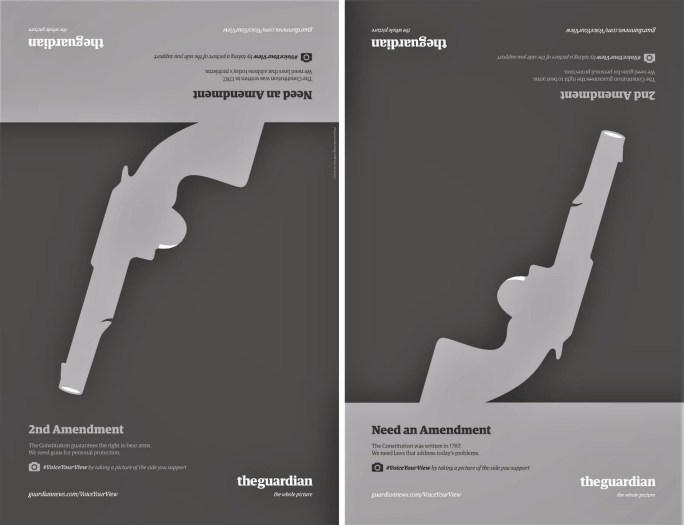

Fonte: https://www.commarts.com/exhibit'the-guardian-voice-your-view. Acesso em: 10 nov. 2020.
The sentences below express two different views on gun use.
1. The Constitution guarantees the right to bear arms. We need guns for personal protection.
2. The Constitution was written in 1787. We need laws that address today’s problems
The sentences that best summarize the views on 1 and 2 are:
Questão 35 7357987
UNITAU Verão Medicina 1ª Fase 2021How deforestation can lead to more infectious diseases
29.04.2020 - Nadia Pontes
Scientists have been repeating the warning for at least two decades: As humans encroach upon forests, their risk of contracting viruses circulating among wild animals increases. That's why Ana Lucia Tourinho wasn't surprised when she heard about the novel coronavirus. An ecologist at the Federal University of Mato Grosso in Brazil, Tourinho studies how an environmental imbalance can cause forests and societies to become sick.
Before it infected the first humans and spread through the world by living in travelers' bodies, the novel coronavirus, officially named SARS-CoV-2, inhabited other hosts in a wild environment — most likely bats. When such viruses are isolated and in equilibrium in their habitat, for example a closed forest, they are not a threat to humans. The problem arises when this natural reservoir is cut down, destroyed and occupied.
Scientific studies published before the current pandemic had already showed a connection between deforestation, the proliferation of bats in the damaged areas and the family of coronaviruses, which includes the current lethal strain.
The scenario is similar in the Amazon. In 2019, deforestation reached a record-breaking 9,762 square kilometers (3,769 square miles). Reports of deforestation increased by 51.4% between January and March 2020 in comparison to the same period the previous year. An analysis by Columbia University in New York showed that the region, which houses the biggest tropical forest in the world, is also considered a likely center for epidemics. It also found that bats in Brazil carried at least 3,204 types of coronaviruses.
"If the Amazon turns into a great savannah, we can't even imagine what kind of diseases [could] come out of there. It's unpredictable," Tourinho said. "Besides being important to us because of the climate, the fauna, it is important for our health."
Adapted from: https://www.dw.com/en/howdeforestation-can-lead-to-more-infectiousdiseases/a53282244. Access: 05 out. 202.
The pronouns their, it and it, underlined in the text, respectively refer to:
06