


![[Marketing] Questao Topo - deslogado](https://storage.estuda.com.br/banners/0_6b7ebee90b03af1c560c73bb8bcce34a_banner_deslogado_70_dias.png)
Questões de Inglês
19.971 Questões
Questão 31 15425467
UENP 2021Mummy Juanita: The Sacrifice of the Inca Ice Maiden
Momia Juanita (‘Mummy Juanita’) is the name given to the mummy of a 15th century Incan girl who was discovered in Peru in 1995. She is known also as the ‘Lady of Ampato’, and the ‘Inca Ice Maiden’, the first because she was found on the top of Mount Ampato, a dormant volcano in the Andes, and the second because her body was preserved due to the frigid temperatures on top of that mountain.]
Researchers have suggested that Mummy Juanita was a victim of an important Incan sacrificial rite known as Capacocha (Capac Cocha), which has sometimes been translated as ‘royal obligation’. […] This rite required the Inca to sacrifice the best and healthiest amongst them. This was done in an attempt to appease1 the gods, thereby ensuring a good harvest, or to prevent some natural disaster. Based on the location where the girl was sacrificed, it has been suggested that the ritual may have been connected to the worship2 of Mount Ampato.
When Momia Juanita was discovered, she was wrapped up in a bundle3. Apart from the remains of the young girl, the bundle also contained various artifacts, including numerous miniature clay statues, shells, and gold objects. These were left as offerings to the gods. Archaeologists have proposed that these objects, along with food, coca leaves, and chicha, an alcoholic drink distilled from corn, would have been brought by the priests as they led the girl up the mountain
The latter two would have been used to sedate the child, said to be a common practice used by the Incas before they sacrificed their victims. Once the victim was in this intoxicated state, the priests would carry out the sacrifice. In the case of Momia Juanita, it was revealed with radiology, that a club4 blow to the head caused massive hemorrhage, resulting in her death.
Another scientific analysis that revealed interesting information about Momia Juanita’s life is the isotopic analysis of her hair, which was made possible as it was so well preserved. This analysis provided researchers with information about the girl’s diet. […]. Before being chosen for the sacrifice, she had a standard Incan diet, which included potatoes and vegetables. This changed, however, about a year prior to the sacrifice, as it was found that she began to consume animal proteins and maize, which were the foods of the elites.
Today, Mummy Juanita is being housed in the Museo Santuarios Andinos in Arequipa, a city not far from Mount Ampato. The mummy is kept in a special case5 that carefully maintains the temperature and humidity within it, to ensure the preservation of these remains for the future.
Source: https://www.ancient-origins.net/history/mummy-juanita-sacrifice-inca-ice-maiden009800?fbclid=IwAR3aHGa56PN1Q3GXAiMFvFmStqNamq56MFGU9Mowtf4N4LVT2tZwfv6PwpA
Glossary:
1to appease: apaziguar; 2worship: culto, adoração; 3bundle: trouxa, pacote; 4club: taco, porrete; 5case: caixa, cápsula
Assinale a alternativa correta com relação à Juanita, de acordo com o texto.
Questão 60 15376551
CESUPA Medicina 2021READ THE TEXT BELOW, THEN ANSWER THE FOLLOWING QUESTIONS.
Social media vs. mental health

Research has revealed that younger and older users alike are in danger of breaking under the pressure of unachievable standards of beauty and success, which are often inherent in the workings of social networking websites.
Among young adult users, social media notably increases the incidence of anxiety and depression. According to the results of a sizeable study conducted in 2016, users who frequently checked their accounts had a more than twice as high a risk of depression than their less social media-oriented peers. This may partly be due to the fact that social networks create an artificial need to be available 24/7, to respond to messages and emoji reactions instantly. Despite the fact that such platforms are supposed to enhance our sense of connectedness with other people, research has found that they actually have the opposite effect: they render dedicated users lonelier and more isolated.
However, this shouldn't really surprise us. The hyperconnectedness takes place at a superficial level, eliminating all of the extra elements that make communication more valuable and psychologically constructive. Such elements include eye contact, body language, the possibility of listening for changes in our interlocutor's tone of voice, or the possibility of physical touch.
(Excerpt taken from: https://www.medicalnewstoday.com/articles/321498#1.-Social-media-can-affect-mental-health)
Glossary
Alike: indistintamente
Unachievable: impossível
Enhance: aumentar
Render: tornar
Concerning hyperconnectedness, it
Questão 16 15268603
FCMSCSP - Santa Casa Conhecimento Gerais 2021Leia a campanha publicitária para responder à questão.
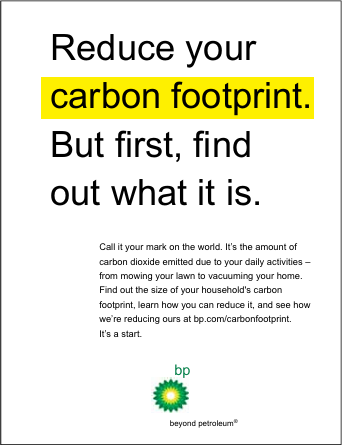
(https://donmillerartdirection.com)
The main purpose of the ad is to
Questão 15 15268598
FCMSCSP - Santa Casa Conhecimento Gerais 2021Leia o texto para responder à questão.
It’s probable you’ve already replied to a couple of emails today, sent some chat messages and maybe performed a quick internet search. As the day wears on you will doubtless spend even more time browsing online, uploading images, playing music and streaming video.
Each of these activities you perform online comes with a small cost — a few grams of carbon dioxide are emitted due to the energy needed to run your devices and power the wireless networks you access. Less obvious, but perhaps even more energy intensive, are the data centres and vast servers needed to support the internet and store the content we access over it.
Although the energy needed for a single internet search or email is small, approximately 4.1 billion people, or 53.6% of the global population, now use the internet. Those scraps of energy, and the associated greenhouse gases emitted with each online activity, can add up.
If we were to rather crudely divide the 1.7 billion tonnes of greenhouse gas emissions estimated to be produced in the manufacture and running of digital technologies between all internet users around the world, it means each of us is responsible for 400 g of carbon dioxide a year.
But things are not that simple — this figure can vary depending where in the world you are. Internet users in some parts of the globe will have a disproportionately large footprint. One study estimated that 10 years ago, the average Australian internet user was responsible for the equivalent of 81 kg of carbon dioxide being emitted into the atmosphere. Improvements in energy efficiency, economies of scale and use of renewable energy will doubtless have reduced this, but it is clear that people in developed nations still account for the majority of the internet’s carbon footprint.
(Sarah Griffiths. www.bbc.com, 05.03.2020. Adaptado.)
No trecho do quinto parágrafo “this figure can vary”, o termo “figure” refere-se, no texto, a
Questão 12 15268587
FCMSCSP - Santa Casa Conhecimento Gerais 2021Leia o texto para responder à questão.
It’s probable you’ve already replied to a couple of emails today, sent some chat messages and maybe performed a quick internet search. As the day wears on you will doubtless spend even more time browsing online, uploading images, playing music and streaming video.
Each of these activities you perform online comes with a small cost — a few grams of carbon dioxide are emitted due to the energy needed to run your devices and power the wireless networks you access. Less obvious, but perhaps even more energy intensive, are the data centres and vast servers needed to support the internet and store the content we access over it.
Although the energy needed for a single internet search or email is small, approximately 4.1 billion people, or 53.6% of the global population, now use the internet. Those scraps of energy, and the associated greenhouse gases emitted with each online activity, can add up.
If we were to rather crudely divide the 1.7 billion tonnes of greenhouse gas emissions estimated to be produced in the manufacture and running of digital technologies between all internet users around the world, it means each of us is responsible for 400 g of carbon dioxide a year.
But things are not that simple — this figure can vary depending where in the world you are. Internet users in some parts of the globe will have a disproportionately large footprint. One study estimated that 10 years ago, the average Australian internet user was responsible for the equivalent of 81 kg of carbon dioxide being emitted into the atmosphere. Improvements in energy efficiency, economies of scale and use of renewable energy will doubtless have reduced this, but it is clear that people in developed nations still account for the majority of the internet’s carbon footprint.
(Sarah Griffiths. www.bbc.com, 05.03.2020. Adaptado.)
According to the context, the internet is posing a threat to the
Questão 4 14866303
UFMS PASSE - 3 Etapa 2021-2023O phrasal verb “pay up”, no primeiro quadro, tem o sentido de:

06