


![[Marketing] Questao Topo - deslogado](https://storage.estuda.com.br/banners/0_6b7ebee90b03af1c560c73bb8bcce34a_banner_deslogado_70_dias.png)
Questões de Inglês
19.971 Questões
Questão 34 9931602
Humanitas Medicina 2022/1Leia o texto pra responder à questão

The distance from home that kids are allowed to wander around and play has shrunk significantly over the last 50 years. That’s largely due to parents’ concerns over safety, especially in cities. More recently, the covid-19 pandemic has further influenced children’s independent activity. Researchers findings have suggested that children who are allowed to roam by themselves farther away from their homes are likely to become better, more confident navigators as adults than children who are more restricted.
When a person visualizes their neighborhood, takes a shortcut to work or explores an unfamiliar city, they use spatial navigation. This is also called wayfinding. Wayfinding is an essential part of intelligence as well as a survival skill for any person or animal who has to travel to find food, water, shelter or mates.
But how individuals navigate their environment can vary. For example, some people pay close attention to landmarks such as stop signs or buildings. This is called route information. Others prefer to use cardinal directions or global reference points like the Sun as a guide. These are examples of orientation information.
Most people combine both navigational styles. However, individuals who rely primarily on a route strategy are slower and less efficient navigators. That could be because route cues are less stable than cardinal directions. For example, the highway billboard a person normally uses to know which exit to take can be replaced, but which way north is remains the same no matter where someone is located.
(Vanessa Vieites. www.theconversation.com, 29.07.2021. Adaptado.)
According to the fourth paragraph, route clues
Questão 32 9931587
Humanitas Medicina 2022/1Leia o texto pra responder à questão
The distance from home that kids are allowed to wander around and play has shrunk significantly over the last 50 years. That’s largely due to parents’ concerns over safety, especially in cities. More recently, the covid-19 pandemic has further influenced children’s independent activity. Researchers findings have suggested that children who are allowed to roam by themselves farther away from their homes are likely to become better, more confident navigators as adults than children who are more restricted.
When a person visualizes their neighborhood, takes a shortcut to work or explores an unfamiliar city, they use spatial navigation. This is also called wayfinding. Wayfinding is an essential part of intelligence as well as a survival skill for any person or animal who has to travel to find food, water, shelter or mates.
But how individuals navigate their environment can vary. For example, some people pay close attention to landmarks such as stop signs or buildings. This is called route information. Others prefer to use cardinal directions or global reference points like the Sun as a guide. These are examples of orientation information.
Most people combine both navigational styles. However, individuals who rely primarily on a route strategy are slower and less efficient navigators. That could be because route cues are less stable than cardinal directions. For example, the highway billboard a person normally uses to know which exit to take can be replaced, but which way north is remains the same no matter where someone is located.
(Vanessa Vieites. www.theconversation.com, 29.07.2021. Adaptado.)
De acordo com o primeiro parágrafo, a distância que crianças são autorizadas a manter de casa, para brincar ou passear,
Questão 17 9883658
UNIEVA Medicina 2022/2Leia o texto para responder à questão.
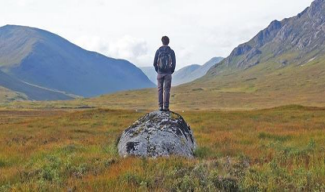
After years away on a foreign posting, coming „home‟ can be overwhelming and isolating.
No place like home
In a Facebook comment, Wendy Skroch dubbed the phenomenon "reverse culture shock". "There is a form of homelessness that goes with all this," she wrote. "The sense of never being at home anywhere is very real." Many people identified with the disheartening struggle to plant roots again upon returning home. Pete Jones, who left the UK in 2000 for a life in Denmark, Holland and Switzerland, wrote: "I do enjoy visiting Blighty for a few days and then feel the need to leave. It is not home anymore!"
Disponível em: https://www.englishforum.ch/daily-life/268873-bbc-howexpats-cope-losing-their-identity.html. Acesso em: 10 mai. 2022.
A palavra "home" aparece três vezes no texto. Escolha qual expressão abaixo se refere a este adjetivo:
Questão 45 9774267
IMEPAC Itumbiara 2022/2INSTRUCTION: Read the text to answer question.
Sleep, learning, and memory are complex phenomena that are not entirely understood. However, animal and human studies suggest that the quantity and quality of sleep have a profound impact on learning and memory. Research suggests that sleep helps learning and memory in two distinct ways. First, a sleep-deprived person cannot focus attention optimally and therefore cannot learn efficiently. Second, sleep itself has a role in the consolidation of memory, which is essential for learning new information.
Although the exact mechanisms are not known, learning and memory are often described in terms of three functions. Acquisition refers to the introduction of new information into the brain. Consolidation represents the processes by which a memory becomes stable. Recall refers to the ability to access the information (whether consciously or unconsciously) after it has been stored.
Each of these steps is necessary for proper memory function. Acquisition and recall occur only during wakefulness, but research suggests that memory consolidation takes place during sleep through the strengthening of the neural connections that form our memories. Although there is no consensus about how sleep makes this process possible, many researchers think that specific characteristics of brainwaves during different stages of sleep are associated with the formation of particular types of memory.
Available at: http://healthysleep.med.harvard.edu/healthy/ matters/benefits-of-sleep/learning-memory. Accessed on: April 9, 2022.
According to the text, a sleep-restricted state
Questão 43 9774248
IMEPAC Itumbiara 2022/2INSTRUCTION: Read the text to answer question.
Snooze more, eat less? Sleep deprivation may hamper weight control
By Maureen Salamon, Executive Editor, Harvard Women’s Health Watch
Weight loss once was considered a simple calculation: eat less and move more to create a calorie deficit. Now, basic differences between people — in genetics, health conditions, body type, and more — are also thought to play a role in how challenging it is to lose weight. Yet research suggests that some factors may help set the stage for success.
Sleep more to eat less? New research boosts this premise, suggesting that adults who are better rested consume significantly fewer calories than those who are chronically sleep-deprived.
This short-term study of 80 overweight people drives home just how integral slumber — or lack of it — is to our propensity to put on excess pounds, says Dr. Beth Frates, director of lifestyle medicine and wellness in the department of surgery at Massachusetts General Hospital.
“Working to find ways to clean up sleep hygiene may help people to extend sleep time to the recommended seven to nine hours per night,” Dr. Frates says. “This could, in turn, lead to consuming fewer calories and even weight loss in people who are in the overweight category by BMI.”
Available at: https://www.health.harvard.edu/blog/snoozemore-eat-less-sleep-deprivation-may-hamper-weightcontrol-202204042718. Accessed on: April 9, 2022.
The title of this text is “Snooze more, eat less? Sleep deprivation may hamper weight control”. A synonym for the verb to hamper is
Questão 44 9706248
IMEPAC Itumbiara 2022/1The brain’s ability to think, reason, and perceive all arises from an intricate web of connections among billions of cells. The connections that develop during infancy and childhood — periods of remarkable brain growth — can have lasting effects on learning and health.
Compared to other animals, we’re born with less developed brains, and they take longer to fully mature. Squirrel monkeys, for example, reach their adult brain size when they’re just six months old. One advantage of having such a protracted period of brain development is that our developing brains are more easily shaped by environment and experience, which helps us adapt and thrive in our unique environment.
The most sensitive windows of brain development are known as critical periods. During these times, sensory stimulation, motor activity, and even emotions shape the brain as it grows, wires, and learns. The period shortly after birth is one such window. A baby’s early life experiences — seeing parents’ faces, hearing their voices, and being held — provide important sensory information that guides its developing brain pathways.
Genes and environment both exert strong influences during critical periods. Together, they shape the neural circuits driving learning and behavior. One part of that process is forming new connections, or synapses, between neurons. Another is synaptic pruning, which removes weaker connections between cells.
Even the death of some neurons helps the brain develop properly. Changes in neural connections during critical periods coincide with high rates of learning. Think of a baby learning to walk or a toddler learning language.
Understanding brain development is changing how we think about brain disorders and treatment. Some diseases emerging in teens and adults may have their roots in how the brain developed early in life. Schizophrenia, for example, is often thought of as an adult disorder because it typically emerges in the mid-20s. But newer research suggests it might arise because connections didn’t form properly in the developing brain. Other research suggests genes governing brain development could play a role in a person’s susceptibility to autism spectrum disorders. And, growing knowledge of how neurons form and wire up in young brains could guide treatments for brain injury. Once the stuff of science fiction, the idea of regrowing damaged neurons or pathways is getting closer to reality. Knowing how the brain was first constructed is an essential step toward understanding its later ability to reorganize and bounce back from injuries.
Available at: https://www.brainfacts.org. Accessed on: Aug 30, 2021.
Changes in neural connections, such as new connections between neurons and synaptic pruning, can have effects on learning and health. According to the text, synaptic pruning is related to
06