


![[Marketing] Questao Topo - deslogado](https://storage.estuda.com.br/banners/0_6b7ebee90b03af1c560c73bb8bcce34a_banner_deslogado_70_dias.png)
Questões de Inglês
19.971 Questões
Questão 32 10977684
Unit-SE Medicina 1º dia 2022/2The Road Not Taken
Two roads diverged in a yellow wood,
And sorry I could not travel both
And be one traveler, long I stood
And looked down one as far as I could
To where it bent in the undergrowth;
Then took the other, as just as fair,
And having perhaps the better claim,
Because it was grassy and wanted wear;
Though as for that the passing there
Had worn them really about the same,
And both that morning equally lay
In leaves no step had trodden black.
Oh, I kept the first for another day!
Yet knowing how way leads on to way,
I doubted if I should ever come back.
I shall be telling this with a sigh
Somewhere ages and ages hence:
Two roads diverged in a wood, and I—
I took the one less traveled by,
And that has made all the difference.
FROST, Robert Disponivel em: https://allpoetry.com/the-road-not-taken. Acesso em: mai. 2022
About the underlined words or phrases in the poem, it’s correct to say:
Questão 31 10977678
Unit-SE Medicina 1º dia 2022/2The Road Not Taken
Two roads diverged in a yellow wood,
And sorry I could not travel both
And be one traveler, long I stood
And looked down one as far as I could
To where it bent in the undergrowth;
Then took the other, as just as fair,
And having perhaps the better claim,
Because it was grassy and wanted wear;
Though as for that the passing there
Had worn them really about the same,
And both that morning equally lay
In leaves no step had trodden black.
Oh, I kept the first for another day!
Yet knowing how way leads on to way,
I doubted if I should ever come back.
I shall be telling this with a sigh
Somewhere ages and ages hence:
Two roads diverged in a wood, and I—
I took the one less traveled by,
And that has made all the difference.
FROST, Robert Disponivel em: https://allpoetry.com/the-road-not-taken. Acesso em: mai. 2022
The road taken by the poet was the one which
Questão 50 10780641
UFN Verão 2022The human consequences of our immigration policies
By Seán P. O’Malley September 9, 2019, 5:00 a.m.
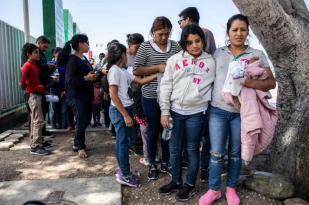
Caption: Central American migrants, part of a group of 87 people deported from the United States, wait in line at the El Chaparral border crossing before being transported to a shelter in Tijuana, Mexico, July 22.EDUARDO JARAMILLO CASTRO/AFP/GETTY IMAGES/AFP/GETTY IMAGES
Immigration is as ancient as recorded history. It is driven by multiple factors — people move because they are afraid, oppressed, or to escape violence and chaos. Immigration is often accompanied by human tragedy. But not always — people also move because of hopes and dreams. They move to find new opportunities, and they move to contribute to their new country. Having worked with immigrant communities throughout my priesthood, I have seen how deeply patriotic they are when they are welcomed to this country.
Immigration in our time has far exceeded previous experience. The World Health Organization estimates that one billion people are migrating today. We live in a globalized world; in that context, movement is perpetual. Ideas move, products move, money moves. But people do not migrate easily. Obstacles abound.
Part of the reason is that our globalized world is structured and governed by sovereign states. It is a basic function of states to establish secure boundaries, defining the territory where they exercise sovereignty.
Security and sovereignty are part of the reality of immigration, but they are not all of it. Sovereignty has moral content, but it is not an absolute value. The immigration policy of states should combine security with a generous spirit of welcome for those in danger and in need.
That necessary combination of values is seriously lacking in the United States today. Principal responsibility for this moral failure must rest with the federal government, where policy is a product primarily of the president and Congress. But it also must be recognized that, as a society, we are deeply divided over immigration. Our divisions have produced severe human consequences — it is imperative to acknowledge some of them.
First, the most dramatic and dehumanizing consequence is to be found on the border with Mexico. To be sure, the challenge — thousands of adults and children seeking asylum every day — is unprecedented in recent history. But even a challenge of this severity, in a country of our resources and capabilities, cannot justify how these children and families are being treated. The overarching policy of the US government lacks justification. Rather than a humane plan, existing policy in word and deed is more focused on castigating and confining young and old, male and female, in conditions often pervasively unfit for human life and dignity.
Second, rather than focus the efforts of all relevant agencies on the relief of suffering at the border, there are continuing threats made that the government will scour the country to remove people who have settled here and whose children are citizens.
Third, the dysfunction of our policy is acknowledged across the political spectrum of our country. The crisis at the border and the focus on removals leave the broader policy agenda unresolved in the executive and legislative branches of government.
To be sure, there are thousands at the border who require immediate attention. But there are also 11 million unauthorized immigrants in our midst with no policy to stabilize their existence and provide a path to citizenship — a policy objective advocated by the Catholic Church for decades.
Among the 11 million people are 3.6 million people brought to the United States as children, of which only 700,000 have temporary protection from deportation through the Deferred Action for Childhood Arrivals program, which is itself under threat. There are also over 400,000 people with Temporary Protected Status who are living in limbo. They have come to the United States for various reasons — for some, their countries have suffered natural disasters and they have no viable option to return home. There are no policies in place to allow TPS holders, the majority of whom have lived in the United State for more than 20 years, to earn lawful residency and move forward in their lives.
The point of identifying these broad categories and consequences of existing policy is to highlight that practical, concrete choices are available to correct a dysfunctional policy. First, we should recognize that economic assistance to El Salvador, Honduras, Nicaragua, Haiti, and Mexico could assist people to remain in their home countries. In addition, the historic “guest worker” program, which provides temporary visas for workers, can contribute to the needs of the United States as well. However, our policies on Central America seem exclusively focused on threats, coercion, and punishment. This is surely misguided.
Developing positive solutions does not seem to be the motivating concern of existing policy. Instead, the current emphasis, we are told, is on “deterrence,” a term at home in military policy that is now being advocated to confront people with no power of any kind. The targets in this case are not an armed array of hostile attackers. They are women, children, families.
Fourth, while deterrence can have some role in law enforcement and has been used by other administrations, much depends on the spirit and motivation that animates our broader immigration policy. Current US policy and practices combine to project an attitude of animus toward immigrants. Most evident is the language used at times to describe people on our borders; it is often degrading and demoralizing.
Beyond language, there are the policies to reduce the number of refugees the United States will welcome. The numbers have been reduced substantially, and threats exist to reduce them to zero. The federal government recently announced it will expedite removals of undocumented immigrants without judicial appeal or oversight and move to provide for unlimited detention of families seeking asylum. The tenor, tone, and result of these policies communicate a distinct message: We have no room in our hearts and no space in our country for people facing life-anddeath situations. This hostile spirit toward immigrants extends to proposals to expel some of those receiving crucial medical care. A similar spirit of lack of compassion and generosity is manifested in new proposals to focus immigration increasingly on merit-based applicants, leaving the poor excluded.
Our present moment requires civility and charity among the citizens of our society and toward those hoping to become citizens. As a country it is a good time to remember the biblical axiom: To whom much is given, much is expected.
(Fonte:https://www.bostonglobe.com/opinion/2019/0 9/09/the-human-consequences-our-immigrationpolicies/enl5KUvxNbPkG0ScDWtTNK/story.html)
Assinale a alternativa que identifica corretamente a ideia defendida pelo autor quanto às políticas de imigração de um país.
Questão 47 10780627
UFN Verão 2022The human consequences of our immigration policies
By Seán P. O’Malley September 9, 2019, 5:00 a.m.
Caption: Central American migrants, part of a group of 87 people deported from the United States, wait in line at the El Chaparral border crossing before being transported to a shelter in Tijuana, Mexico, July 22.EDUARDO JARAMILLO CASTRO/AFP/GETTY IMAGES/AFP/GETTY IMAGES
Immigration is as ancient as recorded history. It is driven by multiple factors — people move because they are afraid, oppressed, or to escape violence and chaos. Immigration is often accompanied by human tragedy. But not always — people also move because of hopes and dreams. They move to find new opportunities, and they move to contribute to their new country. Having worked with immigrant communities throughout my priesthood, I have seen how deeply patriotic they are when they are welcomed to this country.
Immigration in our time has far exceeded previous experience. The World Health Organization estimates that one billion people are migrating today. We live in a globalized world; in that context, movement is perpetual. Ideas move, products move, money moves. But people do not migrate easily. Obstacles abound.
Part of the reason is that our globalized world is structured and governed by sovereign states. It is a basic function of states to establish secure boundaries, defining the territory where they exercise sovereignty.
Security and sovereignty are part of the reality of immigration, but they are not all of it. Sovereignty has moral content, but it is not an absolute value. The immigration policy of states should combine security with a generous spirit of welcome for those in danger and in need.
That necessary combination of values is seriously lacking in the United States today. Principal responsibility for this moral failure must rest with the federal government, where policy is a product primarily of the president and Congress. But it also must be recognized that, as a society, we are deeply divided over immigration. Our divisions have produced severe human consequences — it is imperative to acknowledge some of them.
First, the most dramatic and dehumanizing consequence is to be found on the border with Mexico. To be sure, the challenge — thousands of adults and children seeking asylum every day — is unprecedented in recent history. But even a challenge of this severity, in a country of our resources and capabilities, cannot justify how these children and families are being treated. The overarching policy of the US government lacks justification. Rather than a humane plan, existing policy in word and deed is more focused on castigating and confining young and old, male and female, in conditions often pervasively unfit for human life and dignity.
Second, rather than focus the efforts of all relevant agencies on the relief of suffering at the border, there are continuing threats made that the government will scour the country to remove people who have settled here and whose children are citizens.
Third, the dysfunction of our policy is acknowledged across the political spectrum of our country. The crisis at the border and the focus on removals leave the broader policy agenda unresolved in the executive and legislative branches of government.
To be sure, there are thousands at the border who require immediate attention. But there are also 11 million unauthorized immigrants in our midst with no policy to stabilize their existence and provide a path to citizenship — a policy objective advocated by the Catholic Church for decades.
Among the 11 million people are 3.6 million people brought to the United States as children, of which only 700,000 have temporary protection from deportation through the Deferred Action for Childhood Arrivals program, which is itself under threat. There are also over 400,000 people with Temporary Protected Status who are living in limbo. They have come to the United States for various reasons — for some, their countries have suffered natural disasters and they have no viable option to return home. There are no policies in place to allow TPS holders, the majority of whom have lived in the United State for more than 20 years, to earn lawful residency and move forward in their lives.
The point of identifying these broad categories and consequences of existing policy is to highlight that practical, concrete choices are available to correct a dysfunctional policy. First, we should recognize that economic assistance to El Salvador, Honduras, Nicaragua, Haiti, and Mexico could assist people to remain in their home countries. In addition, the historic “guest worker” program, which provides temporary visas for workers, can contribute to the needs of the United States as well. However, our policies on Central America seem exclusively focused on threats, coercion, and punishment. This is surely misguided.
Developing positive solutions does not seem to be the motivating concern of existing policy. Instead, the current emphasis, we are told, is on “deterrence,” a term at home in military policy that is now being advocated to confront people with no power of any kind. The targets in this case are not an armed array of hostile attackers. They are women, children, families.
Fourth, while deterrence can have some role in law enforcement and has been used by other administrations, much depends on the spirit and motivation that animates our broader immigration policy. Current US policy and practices combine to project an attitude of animus toward immigrants. Most evident is the language used at times to describe people on our borders; it is often degrading and demoralizing.
Beyond language, there are the policies to reduce the number of refugees the United States will welcome. The numbers have been reduced substantially, and threats exist to reduce them to zero. The federal government recently announced it will expedite removals of undocumented immigrants without judicial appeal or oversight and move to provide for unlimited detention of families seeking asylum. The tenor, tone, and result of these policies communicate a distinct message: We have no room in our hearts and no space in our country for people facing life-anddeath situations. This hostile spirit toward immigrants extends to proposals to expel some of those receiving crucial medical care. A similar spirit of lack of compassion and generosity is manifested in new proposals to focus immigration increasingly on merit-based applicants, leaving the poor excluded.
Our present moment requires civility and charity among the citizens of our society and toward those hoping to become citizens. As a country it is a good time to remember the biblical axiom: To whom much is given, much is expected.
(Fonte:https://www.bostonglobe.com/opinion/2019/0 9/09/the-human-consequences-our-immigrationpolicies/enl5KUvxNbPkG0ScDWtTNK/story.html)
No excerto "Part of the reason is that our globalized world is structured and governed by sovereign states. It is a basic function of states to establish secure boundaries, defining the territory where they exercise sovereignty.", o pronome it se refere a
Questão 49 10779971
UFN Inverno 2022Analise o seguinte infográfico.
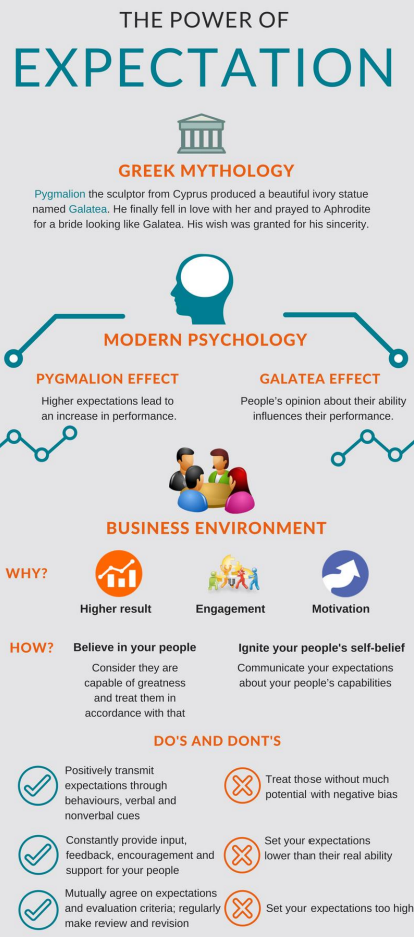
Fonte: https://blog.trginternational.com/hsfs/hubfs/Talent_-_Power_of_Expectations_ENG1.png?width=711&height=1777&name=Talent_- _Power_of_Expectations_ENG-1.png
Analise as asserções acerca da linguagem utilizada no gênero em análise e julgue-as como verdadeira ou falsa.
( ) A sentença Believe in your people está no modo imperativo, pois não há sujeito.
( ) O item greatness é um adjetivo, devido ao seu sufixo.
( ) Higher é um advérbio em grau comparativo de superioridade, pela existência do -er.
( ) O gênero em questão é um infográfico, pois a linguagem é técnica e é um gênero monomodal.
Questão 9 10769918
UNIFESO Medicina 2022/2THE POWER OF PETS
1st § Research on human-animal interactions is still relatively new, but they have already
shown positive health effects. Interacting with animals has proved to decrease levels
of cortisol – a stress-related hormone – and lower blood pressure. Other than that,
pets may also decrease stress, improve heart health, and even help children with
their emotional and social skills.
2nd § Dogs are sometimes brought into hospitals or nursing homes to help reduce patients’
stress and anxiety. “They are very present. If someone is struggling with something,
they know how to sit there and be loving,” says Dr. Ann Berger, a physician and
researcher at the NIH Clinical Center in Bethesda, Maryland. “Their attention is
focused on the person all the time.”
3rd §Berger works with people who have cancer and terminal illnesses. She teaches them
about mindfulness to help decrease stress and manage pain. “The foundations of
mindfulness include attention, intention, compassion, and awareness,” Berger says.
“All of those are things that animals bring to the table. People kind of have to learn it.
Animals do this innately.”
4th § “There’s not one single answer about how a pet can help somebody with a specific
condition,” explains Dr. Layla Esposito, who oversees NIH’s Human-Animal
Interaction Research Program. NIH is funding large-scale surveys to find out the
range of pets people live with and how their relationships with their pets relate to
health. “We’re trying to tap into the subjective quality of the relationship with the
animal – that part of the bond that people feel with animals – and how that translates
into some of the health benefits,” explains Dr. James Griffin, a child development
expert at NIH.
Adapted from: https://newsinhealth.nih.gov. Accessed 20 April 2022.
According to the article, dogs help terminal disease patients to:
06