


![[Marketing] Questao Topo - deslogado](https://storage.estuda.com.br/banners/0_6b7ebee90b03af1c560c73bb8bcce34a_banner_deslogado_70_dias.png)
Questões de Inglês
19.971 Questões
Questão 11 12423277
UCS Inverno 2022Instrução: A questão refere-se ao texto abaixo.
Virginia Hall
by Sonia Purnell
When Gina Haspel became the first female director of the Central Intelligence Agency (CIA) in
2018, she talked of how she had stood “on the shoulders of heroines who never sought public acclaim”.
She was “deeply indebted”, she said, to women who had served the agency and its wartime predecessor
the Office of Strategic Services (OSS) for making her appointment possible by challenging stereotypes
[5] and breaking down barriers. Perhaps no woman is a better illustration of that history than Virginia Hall, a
one-legged socialite from Baltimore, USA, whom the CIA Museum would later hail as the office’s most
successful American female spy of the Second World War.
Despite her record behind enemy lines in wartime France, it nevertheless took Hall years to land
the post-war job she longed for at the heart of the CIA. It has only been comparatively recently that the
[10] agency has publicly acknowledged her as an unqualified war heroine and a devoted officer, giving her a
citation in the CIA Museum catalogue on the OSS. The agency has also now named a training building
after her. Yet she has remained little known outside intelligence circles and her agency career suffered
from prejudice and misunderstanding until she retired in 1966.
Born to a wealthy banking family in 1906, Hall lost her left leg after a hunting accident at the
[15] age of 27 and thereafter was dependent on a wooden prosthetic she named Cuthbert. Despite her raft
of languages and extensive knowledge of Europe her dreams of becoming an ambassador had been
repeatedly thwarted by State Department prejudice against women as well as the disabled.
So, as war loomed in 1939, she resigned in disgust from her clerk role at the American legation
in the Baltic state of Estonia to embark on what would become a Homeric tale of adventure, action and
[20] seemingly unfathomable courage. Long before the U.S. joined the war after Pearl Harbor, she volunteered
to drive ambulances for the French army on the front line during the bloody Nazi invasion of May 1940,
persevering in picking up the wounded even when fighter planes swept over to pepper the roads with
machine gun fire. Yet this was merely an apprenticeship.
When Hall was demobilized after France capitulated, she decided to travel to London to offer
[25] her services to the British war effort. On her journey, she was spotted in a Spanish railway station by
an undercover agent who in a brief conversation with her quickly realized that here was a woman of
exceptional resolve and burning desire to free France from Hitler’s tyranny. He put her in touch with a
“friend” in Britain, a senior officer in Special Operations Executive (SOE), the new secret service set up by
Winston Churchill to “set Europe ablaze” through an unprecedented onslaught of spying, subversion and
[30] sabotage.
SOE top brass were not keen on employing women, especially foreign ones, and were specifically
barred from sending them into enemy territory. Yet after six months of trying, they had failed to infiltrate
a single agent into France to embark on what Churchill branded a most “ungentlemanly” new form of
undercover warfare. The search for rule-breaking recruits of “absolute secrecy”, “fanatical enthusiasm”
[35] and unimaginable courage was proving unsurprisingly difficult. Few were willing to take the estimated 50-
50 chance of survival against the ruthless barbarism of the Third Reich. When Hall once again volunteered,
her obvious qualities saw the old prejudices being abandoned. She was one of the first SOE officers to be
dispatched from London and became, in the words of an official British government report at the end of the
war, “amazingly successful”.
[40] Even then she was patronized and underestimated until she proved herself capable of eluding the
Gestapo longer than any of her male Allied colleagues and particularly adept at recruiting and organizing
useful assets in the nucleus of what would become the Resistance armies of the future. She also
masterminded spectacular jailbreaks for fellow agents who had been captured. For a whole year, she was
SOE’s only Allied female agent in France but after 12 months of marveling at her derring-do, the service
[45] decided to dispatch more women into the field. This “gallant lady”, her SOE commanders concluded, was
almost single-handedly changing minds about the role of women in combat.
When she later switched to SOE’s American counterpart, OSS, she once again had to break out of
her subordinate role by stealth and simply by being better than anyone else. Even the notion of dispatching
a woman on a paramilitary operation was still controversial in the U.S., let alone giving her command. So,
[50] she was deployed as the mere assistant and wireless operator to an older – but inexperienced – male
officer. She soon branched out on her own, leaving him flailing in her absence. Once shot of him, Hall quickly
emerged as a fearless guerrilla leader who helped liberate whole swathes of France by arming, organizing
and sometimes commanding Resistance units when blowing up bridges and attacking German convoys.
Hall was rewarded by becoming the only civilian woman of the war to be decorated with the Distinguished
[55] Service Cross for “extraordinary heroism”. CIA officers have said that the techniques she developed 80
years ago to build up the French Resistance still inform the agency’s missions today, including Operation
Jawbreaker in Afghanistan before and after 9/11.
The extreme exigencies of war had finally given Hall the chance to show what she could do;
the return of peace saw the return of the old barriers. Internal personnel papers and the recollections
[60] of fellow agents reveal how she was undermined, sidelined and belittled by some of her superiors at
the CIA – with her supporters saddened by her “reduced status” and angered by the fact that her track
record was viewed as an “embarrassment” by the agency’s “noncombat types”. Hall never received the
recognition she deserved during her lifetime, but since then her formidable legacy has gradually become
better understood. And as Gina Haspel made clear, her formidable legacy lives on.
Disponível em: https://time.com/5566062/virginia-hall/. Acesso em: 17 fev. 2022. (Parcial e adaptado.)
De acordo com o texto, é correto afirmar que Virginia Hall
Questão 12 11486554
FAME Medicina 2022/2INSTRUCTION: Read the text to answer question.
People meditate for all sorts of reasons. Some do it for spiritual purposes, others do it to reduce stress, and still others do it to manage their mental health. Meditation is a broad practice with many disparate effects, so it makes sense that people’s motivations would be correspondingly varied. But there’s more reasons to meditate than to simply feel relaxed or attain spiritual goals — one such reason is to become a better learner.
First, let’s define meditation. “At base, in essence,” said psychologist Daniel Goleman in a Big Think interview, “every kind of meditation retrains attention.” It can take many forms, but the majority of Western empirical research focuses on mindfulness meditation, in which the meditator focuses their attention on an experience in the present moment in an accepting, non-judgemental way. Commonly, this focus is placed upon the breath. There are other forms of meditation, such as the lovingkindness meditation common in Buddhist practices, where the meditator focuses on cultivating compassion for all beings. The bulk of scientific research, however, has been conducted on mindfulness meditation.
One of the best-known benefits of mindfulness meditation is in its ability to reduce stress. Robust research has shown that meditation is a powerful tool against stress, even for those suffering from anxiety or other mental disorders. In turn, stress plays a powerful role in learning. On the one hand, high levels of stress can leave us with an excessively strong memory, as is the case in PTSD. On the other, chronic stress inhibits the growth of neurons in the hippocampus, making it more difficult to form new memories. Acute stress, too, makes it more difficult for us to retrieve memories that we’ve already formed. By practicing mindfulness meditation, we can reduce the impact of stress on our ability to form and retrieve memories.
Available at: https://bigthink.com/neuropsych/meditationlearning/. Accessed on: Feb 28, 2022.
According to the text, every kind of meditation practice
Questão 11 11486523
FAME Medicina 2022/2INSTRUCTION: Read the text to answer question.
People meditate for all sorts of reasons. Some do it for spiritual purposes, others do it to reduce stress, and still others do it to manage their mental health. Meditation is a broad practice with many disparate effects, so it makes sense that people’s motivations would be correspondingly varied. But there’s more reasons to meditate than to simply feel relaxed or attain spiritual goals — one such reason is to become a better learner.
First, let’s define meditation. “At base, in essence,” said psychologist Daniel Goleman in a Big Think interview, “every kind of meditation retrains attention.” It can take many forms, but the majority of Western empirical research focuses on mindfulness meditation, in which the meditator focuses their attention on an experience in the present moment in an accepting, non-judgemental way. Commonly, this focus is placed upon the breath. There are other forms of meditation, such as the lovingkindness meditation common in Buddhist practices, where the meditator focuses on cultivating compassion for all beings. The bulk of scientific research, however, has been conducted on mindfulness meditation.
One of the best-known benefits of mindfulness meditation is in its ability to reduce stress. Robust research has shown that meditation is a powerful tool against stress, even for those suffering from anxiety or other mental disorders. In turn, stress plays a powerful role in learning. On the one hand, high levels of stress can leave us with an excessively strong memory, as is the case in PTSD. On the other, chronic stress inhibits the growth of neurons in the hippocampus, making it more difficult to form new memories. Acute stress, too, makes it more difficult for us to retrieve memories that we’ve already formed. By practicing mindfulness meditation, we can reduce the impact of stress on our ability to form and retrieve memories.
Available at: https://bigthink.com/neuropsych/meditationlearning/. Accessed on: Feb 28, 2022.
The best title for this article is
Questão 47 11327215
PUC-MG Medicina 2022/2READ THE FOLLOWING TEXT AND CHOOSE THE OPTION WHICH BEST COMPLETES EACH QUESTION ACCORDING TO THE TEXT:
Not smart but clever? The return of 'dumbphones'
Seventeen-year-old Robin West is an anomaly among her peers – she doesn't have a smartphone. Instead of scrolling through apps like TikTok and Instagram all day, she uses a so-called "dumbphone". These are basic handsets, or feature phones, with very limited functionality compared to say an iPhone. You can typically only make and receive calls and SMS text messages. And, if you are lucky – listen to radio and take very basic photos, but definitely not connect to the internet or apps. These devices are similar to some of the first handsets that people bought back in the late 1990s.
Her decision to ditch her former smartphone two years ago was a spur of the moment thing. While looking for a replacement handset in a second-hand shop she was lured by the low price of a "brick phone". Her current handset, from a French firm, cost her just £8. And as it has no smartphone functionality, she doesn't have an expensive monthly data bill to worry about. "I didn't notice until I bought a brick phone how much a smartphone was taking over my life," she says. "I had a lot of social media apps on it, and I didn't get as much work done as I always on my phone." The Londoner adds that she doesn't think she'll ever buy another smartphone. "I'm happy with my brick – I don't think it limits me. I'm definitely more proactive."
Dumbphones are continuing to enjoy a revival. Google searches for them jumped by 89% between 2018 and 2021, according to a report by software firm SEMrush. Meanwhile, a 2021 study by accountancy group Deloitte said that one in 10 mobile phone users in the UK had a dumbphone. "It appears fashion, nostalgia, and them appearing in TikTok videos, have a part to play in the dumbphone revival," says Ernest Doku, mobiles expert at price comparison site Uswitch.com. He says it was the 2017 relaunch of Nokia's 3310 handset – first released in 2000, and one of the biggest-selling mobiles of all time – that really sparked the revival. "Nokia pushed the 3310 as an affordable alternative in a world full of highspec mobiles." He adds that while it's true that dumbphones can't compete with the latest premium Apple and Samsung models when it comes to performance or functionality, "they can outshine them in equally important areas such as battery life and durability".
Tech expert, Prof Sandra Wachter, a researcher in artificial intelligence at Oxford University, says it is understandable that some of us are looking for simpler mobile phones. "One can reasonably say that nowadays a smart phone's ability to connect calls and send short messages is almost a side feature," she explains. "Your smart phone is your entertainment centre, your news generator, your navigation system, your diary, your dictionary, and your wallet." She adds that smartphones always "want to grab your attention" with notifications, updates, and breaking news constantly disrupting your day. "This can keep you on edge, might even be agitating. It can be overwhelming." Prof Wachter adds: "Some of us are now looking for simpler technologies and think that dumbphones might offer a return to simpler times. It might leave more time to fully concentrate on a single task and engage with it more purposefully. It might even calm people down. Studies have shown that too much choice can create unhappiness and agitation."
Adapted from: https://www.bbc.com/news/business-60763168. Available on March 25th, 2022.
What does the word as in “And as it has no smartphone functionality” indicate?
Questão 16 11204161
USS (Univassouras) Medicina 2022/1TEXTO
PREDICTING TOOTH LOSS
Machine-learning algorithms may help identify those at risk
Tooth loss is often accepted as a natural part of aging, but what if there was a way to better identify
those most susceptible without the need for a dental exam? New research led by investigators at Harvard
School of Dental Medicine suggests that machine learning tools can help identify those at greatest risk for
tooth loss and refer them for further dental assessment in an effort to ensure early interventions to avert
[5] or delay the condition.
The study compared five algorithms using a different combination of variables to screen for risk. The results
showed those that factored medical characteristics and socioeconomic variables, such as race, education,
arthritis, and diabetes, outperformed algorithms that relied on dental clinical indicators alone.
Tooth loss can be physically and psychologically debilitating. It can undoubtedly affect quality of life,
[10] well-being, nutrition, and social interactions. The process can be delayed, even prevented, if the earliest
signs of dental disease are identified, and the condition treated promptly. Yet, many people with dental
disease may not see a dentist until the process has advanced far beyond the point of saving a tooth. This
is precisely where screening tools could help identify those at highest risk and refer them for further
assessment, the team said. This approach could also be used globally, in a variety of health care settings,
[15] even by non-dental professional.
“Our findings suggest that the machine-learning algorithm models incorporating socioeconomic
characteristics were better at predicting tooth loss than those relying on routine clinical dental indicators
alone,” Elani said. “This work highlights the importance of social determinants of health. Knowing the
patient’s education level, employment status, and income is just as relevant for predicting tooth loss as
[20] assessing their clinical dental status.”
Indeed, it has long been known that low-income and marginalized populations experience a disproportionate
share of the burden of tooth loss, due to lack of regular access to dental care, among other reasons, and
early identification and prompt care are critical in preventing tooth loss. These new findings point to an
important new tool in achieving that and Dr. Elani and her research team shed new light on how they can
[25] most effectively target prevention efforts and improve quality of life for patients.
Adapted from sciencedaily.com. June 24, 2021. Accessed 17 September 2021.
Concerning tooth loss, according to the last paragraph, Dr. Elani and her research team:
Questão 35 10977709
Unit-SE Medicina 1º dia 2022/2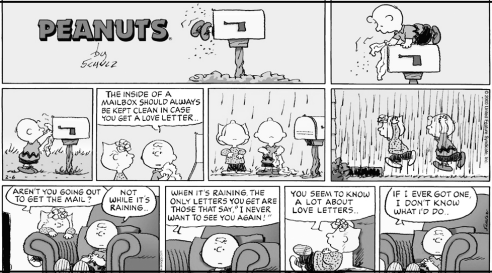
SCHULZ. Disponivel em: http://eanuts.fandom.com/wiki . Acesso em: mai. 2022
Considering language use in this comic strip, it’s correct to say
06