


![[Marketing] Questao Topo - deslogado](https://storage.estuda.com.br/banners/0_6b7ebee90b03af1c560c73bb8bcce34a_banner_deslogado_70_dias.png)
Questões de Inglês
19.971 Questões
Questão 22 14629105
UFT Manhã 2022/2Read the following text in order to answer QUESTIONS.
Hubble telescope finds most distant star ever, giving glimpse into early stages of universe
Astronomers using NASA’s Hubble Space Telescope say they have found the most distant star ever recorded, a giant celestial body that was around when the universe was in the early stages of its existence.
Light from the star, named Earendel, which means "morning star" in Old English, took 12.9 billion years to reach Earth. In 2013, NASA estimated the universe was an estimated 13.8 billion years old, meaning Earendel was born about 900 million years after the big bang. The stars findings were published Wednesday in the journal Nature.
"We almost didn’t believe it at first," Brian Welch, astronomer at Johns Hopkins University and lead author of the study, said in a statement. “Earendel existed so long ago that it may not have had all the same raw materials as the stars around us today."
The previous record for the most distant star ever recorded was the blue star Icarus, which was discovered in 2018. Its light takes about 4 billion years to reach Earth.
Though 12.9 billion years is an almost incomprehensible age, Earendel isn't the oldest star ever spotted. In 2013, Hubble discovered Methuselah, which confused astronomers because it's estimated to be older than the universe at 14.5 billion years old.
The universe was vastly different from 12.9 billion years ago to now.
“When the light that we see from Earendel was emitted, the universe was less than a billion years old; only 6% of its current age. At that time it was 4 billion light-years away from the proto-Milky Way, but during the almost 13 billion years it took the light to reach us, the universe has expanded so that it is now a staggering 28 billion light-years away," Victoria Strait, postdoctoral researcher at the Cosmic Dawn Center in Copenhagen and co-author of the study, said in a statement.
Researchers noted in the study that Earendel is "consistent with a star of mass greater than 50 times the mass of the sun" and is millions of times brighter than our solar system's center.
Available at: https://www.usatoday.com/story/news/world/2022/03/30/nasas-hubble telescope-distant-star/7219036001/
According to the text, all the alternatives bellow are correct, EXCEPT:
Questão 30 14055372
UnB Conhecimento Gerais 2022/1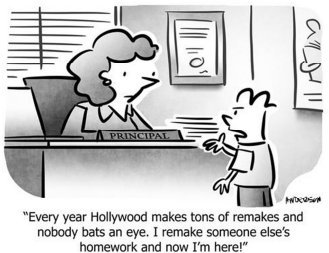
Internet: andertoons.com.
Based on cartoon above, one can correctly conclude that
Questão 58 13364958
Feevale Medicina 2022/1TEXTO
Epidemiological Data by Sex and Age, as a Minimum, Must be Routinely Collected, Analysed, and Reported to Inform Vaccination Strategies
To better understand who is at greater risk of SARS-CoV-2 infection, morbidity, and
mortality, we need granular data. Global aggregate data indicate an equal distribution
of cases between women and men, but a higher case fatality rate in men. Partial data
on hospitalisation and intensive care unit (ICU) admission from a handful of countries
[5] indicate greater severity of disease in men, explained by a combination of higher
biological susceptibility and gender-related behavioural risk factors. The higher
prevalence of comorbidities in men may be a result of both sex-related and gender-
related risk factors, influenced by higher rates of tobacco and alcohol consumption.
Poorer compliance with non-pharmaceutical interventions and delay in seeking
[10] healthcare may further increase men’s COVID-19 risk. Other factors related to
differences in testing, hospital access and ICU admission policies cannot be excluded.
The incidence and case fatality rates depend on the extent of testing among different
population groups, which may vary across countries and over time. Unfortunately, data
on testing, hospitalisation, ICU admission and the post-COVID-19 condition are rarely
[15] available by sex and other indicators, leaving us in the dark with respect to which
groups are at greater risk and why. Notably, transmission patterns and SARS-CoV-2
incidence and mortality vary between women and men across age groups in different
countries as well as within countries. The age-specific female to male ratios and
patterns of morbidity and mortality can further change over time, shaped by evolving
[20] exposure and transmission patterns in the society or extent of testing or
diagnosis. While data continue to point to higher mortality among men, emerging data
reveal that mid-adult women are more likely to suffer from post-COVID-19 condition.
Gender differences can further vary within populations, with greater impact on those
affected by structural disadvantages, such as racial or ethnic minorities, people of
[25] diverse sexual orientation and gender identity, and other underserved groups. Reports
point to higher mortality rates among racial and ethnic minorities, explained by
structural vulnerabilities. These groups may have greater exposure due to working in
the service sectors, living in congregant housing or facilities, or having limited access
to accurate information, prevention measures or health services. Unfortunately, data
[30] on minority groups are rarely available and gender differences within groups are rarely
examined, while these indeed exist. A report from England and Wales points to a
differential male to female mortality ratio for different ethnic minority groups, ranging
from 1.3 to 3.5. Hence, routine collection of disaggregated data and regular
intersectional gender analysis will be invaluable in informing targeted interventions, in
[35] light of limited capacity and resources.
(HEIDARI, Shirin et al. Time for action: towards an intersectional gender approach to COVID-19 vaccine development and deployment that leaves no one behind. BMJ Global Health. Data de publicação: 13 ago. 2021. Disponível em: https://gh.bmj.com/content/6/8/e006854. Acesso em: 15 ago. 2021).
Consider the following statements about the article excerpt.
I. Acquiescence with non-pharmaceutical interventions, as well as being willing to pursue healthcare are factors that increase men’s COVID-19 risks.
II. Gender indicators about issues such as intensive care unit admission, hospitalisation, and the postCOVID-19-condition, could aid the understanding about the male and female risks related to this disease.
III. Although the mortality among men is higher than among women, the mid-adult women, presumably, suffer more from post-COVID-19-condition.
Check the correct answer.
Questão 55 13362623
Feevale Medicina 2022/1The Growth Mindset Explained
Carol Uweck Is widely known Tor her work in tis field. Ihrough her research, she
identified two mindsets: fixed and growth, A fixed mindset is, "believing your qualities
are carved in stone," while a growth mindset is “the belief that your basic qualitios are
things you can cultivate through your efforts” (Dweck, 2016, pp. 6-7). The experience of
[5] these mindsets is on a continuum. It is not possible to always operate from one or the
other. For example, you might have a fixed or growth perspective about your math ability.
Maybe you think that you are horrible with numbers because they do not come naturally
to you. In your mind, you either "get" math or you don't. On the other hand, you could
have a growth mindset if you believe you have the ability to leam math because it is a
[10] skill that a person develops. Your perspective is that you do not understand it — yet. An
individual also could have a fixed mindset in one area of their life and a growth mindset
in another. Maybe you believe you are not athleticaly-inclined, so you avoid sports or
other physicaly-demanding activities. You believe people are born with athletic prowess.
They have a natural talent that you do not possess. In another area of your life, you feel
[15] confident in your public-speaking ability. so you seek out opportunities to do that more
often. You also believe it is a skill that develops with practice. Each time you do it and
receive feedback, you leam how to get better. This motivates you to keep doing it. It is
easy to understand how a fixed mindset could hold a person back. In our math ability
example, that person might avoid seeking jobs that involve math. The bottom line is that
[20] some people operate from the perspective that intelligence is a finite thing. Others
believe it is mutable. In an article for the Harvard Business Review (Dweck, 2016), she
points out three areas of confusion some experience regarding her research. First,
people mix up open-mindedness and positivity with having a growth mindset, believing
that they have always had a growth mindset, and therefore, always will. Second, some
[25] people believe that praising and rewarding effort is all that matters. Her research
demonstrated that acknowledging the process is critical, as is the leaming and progress
that led to the process. Finally, sometimes people think that if they talk about a growth
mindset, or put up posters about it, that is all that is needed. Without doing any work to
create a growth mindset culture or environment, those posters are just paper on a wal.
[30] Having a growth mindset involves understanding that taking appropriate risks sometimes
leads to failure. The difference though is in how a person with a growth mindset defines
and rebounds from that failure. People who consistently develop and maintain a growth
mindset share the following characteristics (Dweck, 2016, p. 245). They embrace
challenges, persist in the face of setbacks, see effort as the path to mastery, learn from
[35] criticism, find lessons and inspiration in the success of others. It is not enough to shift
one's mindset, We also need a healthy dose of grit and resilience to achieve short and
long-term goals.
(MILLER, Coles O. The Growih mindset explained. Positive Paychalogy. Data de publicação: 22 mar. 2021. Disponivel em: htips:!positivepsychology.com/5-ways-develop-grit-resiliences. Acesso em: 14 ago. 2021).
Sobre o texto, fazem-se as seguintes afirmações.
I. A pesquisa de Dweck (2016) mostrou como se pode realizar processos de aprendizagem para mudar o próprio “mindset”.
II. Pessoas que têm um “mindset” fixo não correm riscos e não buscam oportunidades de crescimento.
III. Pessoas que têm um “mindset” de crescimento assumem riscos, aprendem a lidar com críticas e se inspiram com o sucesso dos outros.
Marque a alternativa correta.
Questão 80 12909506
UECE 2ª Fase 1° Dia 2022/2T E X T
The Story Paradox
Scott McLemee reviews Jonathan Gottschall’s The Story Paradox: How Our Love of Storytelling Builds Societies and Tears Them Down.
Rarely does anyone read a work of
social criticism for the plot. But in the case
of Jonathan Gottschall’s The Story Paradox:
How Our Love of Storytelling Builds
[5] Societies and Tears Them Down (Basic
Books), we have a sort of whodunit: Who is
ultimately responsible for the new world
disorder? The storytellers, as it happens—
although that turns out to be a very broad
[10] category of suspects.
Gottschall, a research fellow in
English at Washington & Jefferson College in
Pennsylvania, is also author of The
Storytelling Animal: How Stories Make us
[15] Human (Mariner Books, 2012), aspects of
which are reprised in the new book. The
basic argument runs like so: Humans are by
no means the strongest of the primates, or
the most nimble or hardy, and our
[20] altogether improbable rise as a species
owes almost everything to having evolved a
capacity to accumulate and transfer
information over time. And in that regard,
storytelling may have been catalytic. Being
[25] able to transmit the message “one of the
ancestors ate those berries and died” counts
as a definite evolutionary advantage, one
that must have developed long before the
cognitive power required to formulate so
[30] complex a concept as “poison.”
An enormous portion of humanity’s
mental bandwidth is devoted to producing,
consuming and processing narratives of all
kinds: long and short, serious and trivial,
[35] complex and simple. Whole professions and
industries specialize in factual or
imaginative narratives and the many shades
in between. As an alternative to the self-
bestowed title of Homo sapiens (“wise
[40] person”), Gottschall proposes our species
might better be called Homo fictus (“story
person”). The suggested change in
nomenclature will likely go unheeded, but
the point seems valid: humans are both the
[45] creators and the products of narrative
communication.
The Story Paradox expands upon
this notion by emphasizing that narrative’s
tool-like aspects are not limited to its
[50] usefulness in transmitting experience.
Through the skills of the teller or the power
of the tale itself, narrative engrosses not
just the individual listener (or reader) but
groups—even whole populations—creating a
[55] sort of coordinated social attention that
influences human thought and behavior.
Gottschall returns to his point about the
presumable long-term evolutionary
advantages: “Human groups with strong
[60] fantasies that bound them together into
well-functioning collectives would have
outcompeted human groups that lacked
them,” he writes. “And we, the
grandchildren of these ancient storytellers,
[65] have inherited the earth.”
Here the full significance of the
book’s title comes into view. While
storytelling is an occasion for shared
engrossment, the most compelling
[70] narratives—whether real or fictional—
involve conflict. (Everyone knows that “they
lived happily ever after” means the story is
over.) “That people gravitate most naturally
to tales of social conflict,” writes Gottschall,
[75] “is supported not just by the relative
prevalence of these stories but also by
research showing that even little children
are far more attracted to stories of social
conflict as opposed to other kinds.” And
[80] while tales of conflict do not automatically
resolve themselves into a showdown
between good and evil, the total defeat of a
villain does tend to gratify audiences of all
ages. There must be some blockbuster
[85] movie that ends with a reasoned
compromise between people with diverging
conceptions of the common good, though
none springs to mind.
Fairly recently on the timeline of
[90] human development, another factor has
intervened to make the situation more
precarious: a number of incredibly effective
systems for storytelling over long distances,
with much of it available more or less on
[95] demand. Any evolutionary advantage once
attached to being able to benefit from the
wisdom of the tribe about potential dangers
in the world has morphed into the capacity
to find, absorb and share whatever stories
[100] click with our own worst fears and meanest
impulses. As if that were not worrying
enough, Gottschall refers to efforts to
weaponize narratives and their delivery
systems, with Russian social media
[105] shenanigans in the 2016 election as an
example. The Story Paradox leaves the
reader in the position of a character at the
end of an episode of an old-fashioned
serial—hanging from a cliff and afraid to
[110] look down.
From:https://www.insidehighered.com/views/2021/11/19
The verbs in “The Story paradox: How Our Love of Storytelling Builds Societies and tears them down” (lines 03-05) are, respectively,
Questão 76 12909454
UECE 2ª Fase 1° Dia 2022/2T E X T
The Story Paradox
Scott McLemee reviews Jonathan Gottschall’s The Story Paradox: How Our Love of Storytelling Builds Societies and Tears Them Down.
Rarely does anyone read a work of
social criticism for the plot. But in the case
of Jonathan Gottschall’s The Story Paradox:
How Our Love of Storytelling Builds
[5] Societies and Tears Them Down (Basic
Books), we have a sort of whodunit: Who is
ultimately responsible for the new world
disorder? The storytellers, as it happens—
although that turns out to be a very broad
[10] category of suspects.
Gottschall, a research fellow in
English at Washington & Jefferson College in
Pennsylvania, is also author of The
Storytelling Animal: How Stories Make us
[15] Human (Mariner Books, 2012), aspects of
which are reprised in the new book. The
basic argument runs like so: Humans are by
no means the strongest of the primates, or
the most nimble or hardy, and our
[20] altogether improbable rise as a species
owes almost everything to having evolved a
capacity to accumulate and transfer
information over time. And in that regard,
storytelling may have been catalytic. Being
[25] able to transmit the message “one of the
ancestors ate those berries and died” counts
as a definite evolutionary advantage, one
that must have developed long before the
cognitive power required to formulate so
[30] complex a concept as “poison.”
An enormous portion of humanity’s
mental bandwidth is devoted to producing,
consuming and processing narratives of all
kinds: long and short, serious and trivial,
[35] complex and simple. Whole professions and
industries specialize in factual or
imaginative narratives and the many shades
in between. As an alternative to the self-
bestowed title of Homo sapiens (“wise
[40] person”), Gottschall proposes our species
might better be called Homo fictus (“story
person”). The suggested change in
nomenclature will likely go unheeded, but
the point seems valid: humans are both the
[45] creators and the products of narrative
communication.
The Story Paradox expands upon
this notion by emphasizing that narrative’s
tool-like aspects are not limited to its
[50] usefulness in transmitting experience.
Through the skills of the teller or the power
of the tale itself, narrative engrosses not
just the individual listener (or reader) but
groups—even whole populations—creating a
[55] sort of coordinated social attention that
influences human thought and behavior.
Gottschall returns to his point about the
presumable long-term evolutionary
advantages: “Human groups with strong
[60] fantasies that bound them together into
well-functioning collectives would have
outcompeted human groups that lacked
them,” he writes. “And we, the
grandchildren of these ancient storytellers,
[65] have inherited the earth.”
Here the full significance of the
book’s title comes into view. While
storytelling is an occasion for shared
engrossment, the most compelling
[70] narratives—whether real or fictional—
involve conflict. (Everyone knows that “they
lived happily ever after” means the story is
over.) “That people gravitate most naturally
to tales of social conflict,” writes Gottschall,
[75] “is supported not just by the relative
prevalence of these stories but also by
research showing that even little children
are far more attracted to stories of social
conflict as opposed to other kinds.” And
[80] while tales of conflict do not automatically
resolve themselves into a showdown
between good and evil, the total defeat of a
villain does tend to gratify audiences of all
ages. There must be some blockbuster
[85] movie that ends with a reasoned
compromise between people with diverging
conceptions of the common good, though
none springs to mind.
Fairly recently on the timeline of
[90] human development, another factor has
intervened to make the situation more
precarious: a number of incredibly effective
systems for storytelling over long distances,
with much of it available more or less on
[95] demand. Any evolutionary advantage once
attached to being able to benefit from the
wisdom of the tribe about potential dangers
in the world has morphed into the capacity
to find, absorb and share whatever stories
[100] click with our own worst fears and meanest
impulses. As if that were not worrying
enough, Gottschall refers to efforts to
weaponize narratives and their delivery
systems, with Russian social media
[105] shenanigans in the 2016 election as an
example. The Story Paradox leaves the
reader in the position of a character at the
end of an episode of an old-fashioned
serial—hanging from a cliff and afraid to
[110] look down.
From:https://www.insidehighered.com/views/2021/11/19
The sentences “And in that regard, storytelling may have been catalytic.” (lines 23-24) and “…humans are both the creators and the products of narrative communication.” (lines 44- 46) contain, respectively, a/an
06