


![[Marketing] Questao Topo - deslogado](https://storage.estuda.com.br/banners/0_6b7ebee90b03af1c560c73bb8bcce34a_banner_deslogado_70_dias.png)
Questões de Inglês
19.971 Questões
Questão 43 9513993
ESPM 2023/1Drink Up, Japan Tells Young People. I’ll Pass, Many Reply.
The country’s tax agency, hoping to reverse the alcohol industry’s pandemic doldrums, is holding a contest to encourage more drinking among the young.
By Hikari Hida and John Yoon Aug. 19, 2022
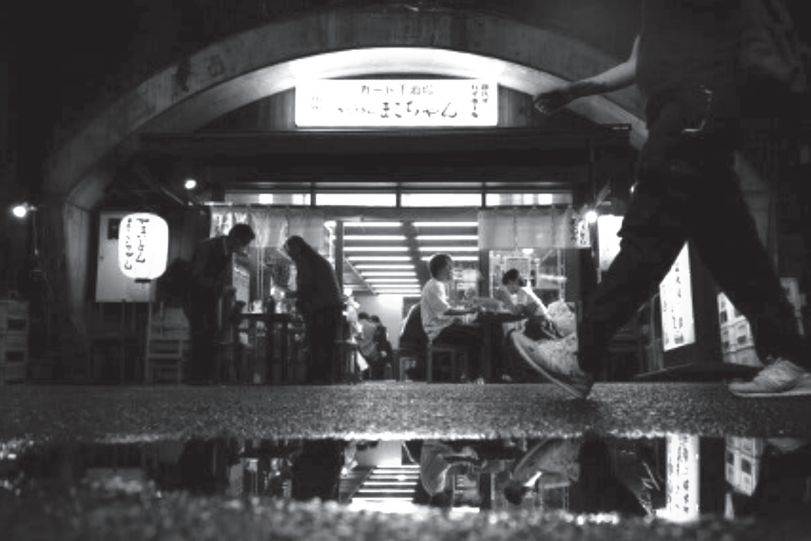
TOKYO — Among the casualties of the pandemic is one that many young people in Japan say they do not miss: the drinking culture.
Sobriety, they have decided after two years of less socializing and nightcrawling, has its advantages. And that’s why a new message from the Japanese government — drink up! — seems to be putting few in the spirit.
To bolster its ailing alcohol industry, Japan’s National Tax Agency has kicked off a contest inviting those ages 20 to 39 to submit ideas for encouraging people to consume more alcohol. It named the project after the national beverage: “Sake Viva!”
The agency says it hopes to “revitalize the industry” with the contest, whose winner is to be selected in a tournament later this year. But its entreaty is clashing with more than two years of actions by the government, which discouraged alcohol sales at restaurants and bars and put up signs forbidding drinking in parks and in the streets.
With Japan reaching new highs in coronavirus infections, including over 255,000 new cases on Thursday, many young people are wondering why the government is now saying it’s OK to go out and drink.
“The media is announcing record Covid cases, while restaurants are like, don’t talk while eating, wear a mask,” said
Chika Kato, a 27-year-old consultant in Tokyo. “But the government is at the same time asking us to go all out and drink.”
“It’s an awkward situation,” she added. “Who do I listen to?”
To some, any official encouragement to drink — pandemic or not — is a bad idea.
“I don’t think it is a good thing to make people who don’t drink, drink,” said Mima Matsumaru, 25, who works in advertising. After using the pandemic as a chance to stop drinking, she said she didn’t miss it very much anyway.
None of the Japanese alcohol makers have signed on to the initiative. But bar owners praised it.
In Ginza, one of Tokyo’s popular nightlife districts, the pubs remained dimly lit and mostly quiet on Thursday night. “I hope this helps Ginza come alive again,” said Kenta Kobayashi, 34, a bartender who has seen a drastic drop in sales since the pandemic began.
On average, people in Japan drank about 20 gallons of alcohol in 2020, down from 26 gallons in 1995, according to government data. The decline has hurt lucrative tax revenues: Levies on alcohol accounted for 1.7 percent of Japan’s tax revenue (about $8 billion) in 2020, down from 3 percent in 2011 and 5 percent in 1980.
Under the Japan tax agency’s contest, participants may propose new products and designs targeting young people, even sales techniques involving artificial intelligence or the metaverse. As long as submissions are written in Japanese, they may come from anywhere. The winning entry will be commercialized.
The contest’s organizers said that overindulgence was not the goal, adding that people should drink only “the appropriate amount” and take “common sense” measures against contracting the virus. “We are in no way promoting excessive drinking among young people,” said Ryo Tsukamoto, a spokesman for the agency’s alcohol tax division.
But critics worried about unintended consequences. Hidetomi Tanaka, an economist, called the effort an “irresponsible and unorthodox drinking campaign.” About one million Japanese suffer from alcoholism, while about 9.8 million others are potentially addicted, according to research by the Japanese Health Ministry.
Worldwide, the pandemic has brought down alcohol consumption among younger adults. In South Korea, consumption of soju dropped by 14 percent from 2019 to 2020 and beer consumption by 23 percent, leading to the nation’s lowest revenue in alcohol taxes in 10 years. In the United States, the prevalence of binge drinking among young adults surveyed dropped to 26 percent in 2020, after remaining at about 30 percent from 2015 to 2019, a study showed.
Neither country’s government has gone as far as to promote drinking. In France, though, lawmakers once considered promoting wine consumption when wine exports and domestic sales fell off the table in 2004. Included in their recommendations was a program encouraging young people to “educate their tastes.”
Disponível em: https://www.nytimes.com/2022/08/19/ world/asia/japan-alcohol-contest.html. Acesso em 30/08/2022
The contest, run by Japan’s National Tax Agency,
Questão 44 9513990
ESPM 2023/1Drink Up, Japan Tells Young People. I’ll Pass, Many Reply.
The country’s tax agency, hoping to reverse the alcohol industry’s pandemic doldrums, is holding a contest to encourage more drinking among the young.
By Hikari Hida and John Yoon Aug. 19, 2022
TOKYO — Among the casualties of the pandemic is one that many young people in Japan say they do not miss: the drinking culture.
Sobriety, they have decided after two years of less socializing and nightcrawling, has its advantages. And that’s why a new message from the Japanese government — drink up! — seems to be putting few in the spirit.
To bolster its ailing alcohol industry, Japan’s National Tax Agency has kicked off a contest inviting those ages 20 to 39 to submit ideas for encouraging people to consume more alcohol. It named the project after the national beverage: “Sake Viva!”
The agency says it hopes to “revitalize the industry” with the contest, whose winner is to be selected in a tournament later this year. But its entreaty is clashing with more than two years of actions by the government, which discouraged alcohol sales at restaurants and bars and put up signs forbidding drinking in parks and in the streets.
With Japan reaching new highs in coronavirus infections, including over 255,000 new cases on Thursday, many young people are wondering why the government is now saying it’s OK to go out and drink.
“The media is announcing record Covid cases, while restaurants are like, don’t talk while eating, wear a mask,” said
Chika Kato, a 27-year-old consultant in Tokyo. “But the government is at the same time asking us to go all out and drink.”
“It’s an awkward situation,” she added. “Who do I listen to?”
To some, any official encouragement to drink — pandemic or not — is a bad idea.
“I don’t think it is a good thing to make people who don’t drink, drink,” said Mima Matsumaru, 25, who works in advertising. After using the pandemic as a chance to stop drinking, she said she didn’t miss it very much anyway.
None of the Japanese alcohol makers have signed on to the initiative. But bar owners praised it.
In Ginza, one of Tokyo’s popular nightlife districts, the pubs remained dimly lit and mostly quiet on Thursday night. “I hope this helps Ginza come alive again,” said Kenta Kobayashi, 34, a bartender who has seen a drastic drop in sales since the pandemic began.
On average, people in Japan drank about 20 gallons of alcohol in 2020, down from 26 gallons in 1995, according to government data. The decline has hurt lucrative tax revenues: Levies on alcohol accounted for 1.7 percent of Japan’s tax revenue (about $8 billion) in 2020, down from 3 percent in 2011 and 5 percent in 1980.
Under the Japan tax agency’s contest, participants may propose new products and designs targeting young people, even sales techniques involving artificial intelligence or the metaverse. As long as submissions are written in Japanese, they may come from anywhere. The winning entry will be commercialized.
The contest’s organizers said that overindulgence was not the goal, adding that people should drink only “the appropriate amount” and take “common sense” measures against contracting the virus. “We are in no way promoting excessive drinking among young people,” said Ryo Tsukamoto, a spokesman for the agency’s alcohol tax division.
But critics worried about unintended consequences. Hidetomi Tanaka, an economist, called the effort an “irresponsible and unorthodox drinking campaign.” About one million Japanese suffer from alcoholism, while about 9.8 million others are potentially addicted, according to research by the Japanese Health Ministry.
Worldwide, the pandemic has brought down alcohol consumption among younger adults. In South Korea, consumption of soju dropped by 14 percent from 2019 to 2020 and beer consumption by 23 percent, leading to the nation’s lowest revenue in alcohol taxes in 10 years. In the United States, the prevalence of binge drinking among young adults surveyed dropped to 26 percent in 2020, after remaining at about 30 percent from 2015 to 2019, a study showed.
Neither country’s government has gone as far as to promote drinking. In France, though, lawmakers once considered promoting wine consumption when wine exports and domestic sales fell off the table in 2004. Included in their recommendations was a program encouraging young people to “educate their tastes.”
Disponível em: https://www.nytimes.com/2022/08/19/ world/asia/japan-alcohol-contest.html. Acesso em 30/08/2022
Japan’s National Tax Agency initiative is seen as controversial by many. The alternatives below all justify the controversy, except:
Questão 10 9512506
PUC-RS Verão - Medicina 2023Responder às questão com base no texto.
TEXTO
STATELESSNESS
NEWSLETTER
#IBELONG CAMPAIGN
Celebrating its 6th anniversary

The #IBelong Campaign marked its 6th year anniversary in November. On this occasion, several activities took place in the region _________ awareness about statelessness, the importance of _________ and the role of the UNHCR, governments and civil society in _________ an end to statelessness in the region.
Source: https://data.unhcr.org/en/documents/ download/84004
“Statelessness” and “awareness” are nouns formed from adjectives by adding a suffix.
The nouns below that are formed from adjectives are
Questão 4 9512091
PUC-RS Verão - Medicina 2023Responder à questão com base no texto
TEXTO
Asylum-seeker smuggling is a symptom, not a root cause
Robert Falconer/Craig D. Smith - Jan 31, 2022.
Earlier this month, the Patels – a family of four from
India – died of cold exposure trying to walk south
through the Canada-U.S. border, near Emerson, Man.
Canadian politicians and news media, rather than look
[5] at how policies incentivize such irregular migration and
produce such tragedies, have been quick to parrot
rhetoric from other rich countries, speculating about
the responsibility of criminal smugglers and wider
networks of nefarious actors. “It is so tragic to see a
[10] family perish like this, victims of human traffickers,
misinformation and people who have taken advantage
of their desire to build a better world,” Prime Minister
Justin Trudeau said.
The U.S., which for decades has forced irregular
[15] migrants to make deadly desert crossings, has
criminalized humanitarian groups as smugglers. But
while the man arrested in the Patels’ case allegedly
sought to profit from their desperation, he did not
cause it.
[20] What the political rhetoric around irregular migration
misses is that human smuggling is a symptom of the
friction between the desire to migrate or find protection,
and the absence of safe and legal pathways to do so.
Prohibition in the face of high demand only fosters illicit
[25] markets, and cracking down on small-time criminals
addresses symptoms, not the causes.
______ 2004, Canada and the U.S. have returned
asylum seekers to each other ______ a Safe Third
Country Agreement (STCA), which applies only
[30] to official ports ______ entry, leading to what is
often called a “loophole” in the agreement. In fact,
governmental discussions in 2001 recognized that
sealing the border would mean more smuggling and
a larger undocumented population.
[35] Many asylum seekers have crossed between border
points to avoid being returned to the U.S., where
they would likely face imprisonment and deportation.
The route the Patels were using developed precisely
because the STCA incentivized irregular crossings.
[40] Canada is at a crossroads. It can choose hard line
policies to the benefit of the Canadian security
establishment and create more smugglers, even as its
politicians heap blame on them when tragedy strikes.
Or it can choose to manage the border by investing
[45] in a timelier, fairer asylum system and rethinking how
it responds to demand for migration
Source: https://www.theglobeandmail.com/opinion/ article-asylum-seeker-smuggling-is-a-symptom-not-a-root-cause/
The question that does NOT find an answer in Text is
Questão 12 9403739
UFRGS 2° Dia 2023Instrução: A questão estão relacionada ao texto abaixo.
If I had to sum up, in one word, the singular
talents of our species, I would answer with
“learning.” We are not simply Homo sapiens,
but Homo docens—the species that teaches
[5] itself. Most of what we know about the world
was not given to us by our genes: we had to
learn it from our environment or from those
around us. No other animal has managed to
change its ecological niche so radically, moving
[10] from the African savanna to deserts, mountains,
islands, polar ice caps, cave dwellings, cities,
and even outer space, all within a few thousand
years. Learning has fueled it all. From making
fire and designing stone tools to agriculture,
[15] exploration, and atomic fission, the story of
humanity is one of constant self-reinvention. At
the root of all these accomplishments lies one
secret: the extraordinary ability of our brain to
formulate hypotheses and select those that fit
[20] with our environment.
Learning is the triumph of our species. In our
brain, billions of parameters are free to adapt to
our environment, our language, our culture, our
parents, or our food. These parameters are
[25] carefully chosen: over the course of evolution,
the Darwinian algorithm carefully delineated
which brain circuits should be pre-wired and
which should be left open to the environment.
In our species, the contribution of learning is
[30] particularly large ........ our childhood extends
over many more years than it does for other
mammals. And because we possess a unique
knack for language and mathematics, our
learning device is able to navigate vast spaces
[35] of hypotheses that recombine into potentially
infinite sets—even if they are always grounded
in fixed and invariable foundations inherited
from our evolution.
More recently, humanity discovered that it could
[40] increase this remarkable ability even further
with the help of an institution: the classroom.
Pedagogy is an exclusive privilege of our
species: no other animal actively teaches its
offspring by setting aside specific time to
[45] monitor their progress, difficulties, and errors.
The invention of the school, an institution which
systematizes the informal education present in
all human societies, has vastly increased our
brain potential. We have discovered that we can
[50] take advantage of the exuberant plasticity of the
child brain to instill in it a maximum amount of
information and talent. Over centuries, our
school system has continued to improve in
efficiency, starting earlier and earlier in
[55] childhood and now lasting for fifteen years or
more. Increasing numbers of brains benefit
from higher education. Universities are neural
refineries where our brain circuits acquire their
best talents.
[60] Education is the main accelerator of our brain.
It is not difficult to justify its presence in the top
spots in government spending: without it, our
cortical circuits would remain diamonds in the
rough. The number of syllables a literate person
[65] can repeat is almost double that of an adult who
never attended school and remained illiterate.
And one's IQ increases by several points for
each additional year of education and literacy.
The complexity of our society owes its existence
[70] to the multiple improvements that education
brings to our cortex: reading, writing,
calculation, algebra, music, a sense of time and
space, a refinement of memory.
Adapted from: DEHAENE, Stanislas. How we learn: Why brains learn better than any machine… for now. New York: Viking Press, 2020.
Consider the following statements.
I – The pronoun itself (l. 05) refers to species (l. 04).
II – The pronoun it (l. 07) refers to world (l. 05).
III – The possessive adjective its (l. 69) refers to society (l. 69).
Which ones are correct according to the text?
Questão 5 9396094
UFRGS 2° Dia 2023Instrução: A questão estão relacionada ao texto abaixo.
........ our first year in New York, we rented a
small apartment with a Catholic school nearby,
taught by the Sisters of Charity, hefty women in
long black gowns and bonnets that made them
[5] look peculiar, like dolls in mourning. I liked them
a lot, especially my grandmotherly fourth grade
teacher, Sister Zoe. I had a lovely name, she
said, and she had me teach the whole class how
to pronounce it. Yo-lan-da. As the only
[10] immigrant in my class, I was put in a special
seat in the first row by the window, apart from
the other children so that Sister Zoe could tutor
me without disturbing them. Slowly, she
enunciated the new words I was to repeat:
[15] laundromat, cornflakes, subway, snow.
Soon I picked up enough English to understand
holocaust was in the air. Sister Zoe explained to
a wide-eyed classroom what was happening in
Cuba. Russian missiles were being assembled,
[20] trained supposedly on New York City. President
Kennedy, looking worried too, was on the
television at home, explaining we might have to
go to war against the Communists. At school,
we had air raid drills: an ominous bell would go
[25] off and we'd file into the hall, fall to the floor,
cover our heads with our coats, and imagine our
hair falling out, the bonnets in our arms going
soft. At home, Mami and my sisters and I said a
rosary for world peace. I heard new vocabulary:
[30] nuclear bomb,radioactive fallout, bomb shelter.
Sister Zoe explained how it would happen. She
drew a picture of a mushroom on the
blackboard and dotted a flurry of chalk marks
for the dusty fallout that would kill us all.
[35] The months grew cold, November, December.
It was dark when I got up in the morning, frosty
when I followed my breath to school. One
morning as I sat at my desk daydreaming out
the window, I saw dots in the air like the ones
[40] Sister Zoe had drawn random at first, then lots
and lots. I shrieked, "Bomb! Bomb!" Sister Zoe
jerked around, her full black skirt ballooning as
she hurried to my side. A few girls began to cry.
[45] But then Sister Zoe's shocked look faded. "Why,
Yolanda dear, that's snow!" She laughed.
"Snow."
"Snow," I repeated. I looked out the window
[50] warily. All my life I had heard about the white
crystals that fell out of American skies in the
winter. From my desk I watched the fine powder
dust the sidewalk and parked cars below. Each
flake was different, Sister Zoe had said, like a
[55] person, irreplaceable and beautiful.
Adaptado de: ÁLVAREZ, J. Snow. In: Castillo-Speed, L. Latina – Women’s voices from the borderlands. New York: Touchstone, 1995.
Assinale a alternativa que apresenta termos que, conforme empregados no texto, operam como membros de uma mesma classe de palavras.
06