


![[Marketing] Questao Topo - deslogado](https://storage.estuda.com.br/banners/0_6b7ebee90b03af1c560c73bb8bcce34a_banner_deslogado_70_dias.png)
Questões de Inglês
19.971 Questões
Questão 57 9540806
UNIFOR Demais Cursos 2023/2For Our Mothers and Others — 5 Simple Ways to Reduce Your Exposure to Environmental Estrogens

Spring: birds singing and nesting1 , hyacinths and lilac perfuming the air, delicate daffodils and vibrant tulips decorating homes and gardens — a yearly reminder of nature’s beauty, fertility, and that she is our source of life and sustenance. No wonder we’ve personified nature as a mother. We celebrate Mother Earth each spring with her own day, Earth Day. Spring is also the time of year when we stop to celebrate our marvelous mothers, the life-giving and nurturing2 forces in our lives. In honor of both Earth Day and Mother’s Day, here are some ideas to share with your mother, and others, on how we can treat Mother Earth with love and respect — AND potentially reduce the risk of breast cancer for all the women in our lives.
A potential risk factor for breast cancer is exposure to environmental estrogens. Environmental estrogens are any of a group of synthetic substances found in the environment that, when absorbed into a person’s system, function in a similar way to estrogen. Estrogen stimulates breast cell growth3 , and exposure to estrogen over long periods of time, without any breaks, can increase the risk of breast cancer. Whether environmental estrogens can fuel the growth of breast cancer is still being studied. But if there was a 10% chance that your plane had a significant mechanical problem, would you get on the flight? The following are five simple ways (there are others) to avoid exposure to environmental estrogens:
• Avoid pesticides containing DDT and dieldrin (look at the labels), and advocate4 for your schools and community to do the same.
• Avoid cooking with nonstick cookware: the perfluorooctanoic acid (PFOA) used to make products grease- and waterproof is an environmental estrogen. When the cookware is heated, PFOA can seep into your food.
• Avoid using plastic food containers, which may contain bisphenol A. Never heat plastic containers or use plastic wraps in the microwave — heating plastic causes the leaching5 of the environmental estrogens into your food.
• Avoid cosmetics or personal care products containing phthalates. Because phthalates are mainly used for fragrances, and often not required to be listed on product ingredients, using fragrance-free personal products would limit exposure. Recycle old electronics, including cell phones, hard drives, TVs and computer monitors, and batteries. The breakdown of the cadmium, nickel, and lead in these products form environmental estrogens that can seep into our soil and water supply.
How important is paying attention to environmental factors?A major study commissioned by Congress released in February 2013 concluded that “Primary prevention of new breast cancer cases requires identifying and reducing exposures that increase the risk of the disease, and fostering6 behaviors that may help to prevent it. The surest steps to reducing our risk of breast cancer are well established: maintain a healthy weight, exercise, eat nutritious food, avoid alcohol, and don’t smoke.
Adapted from: http://community.breastcancer.org/blog/for-our-mothers-and-others-environmental-estrogens
Marque o item que corresponde aos sinônimos das palavras enumeradas no texto.
Questão 15 9530271
UFAM PSC 3ª Etapa 2023Responda à questão com base no texto a seguir:
In the video game and HBO show The Last of Us, humans struggle to survive after an infectious fungus turns ordinary people into zombies. Creators of the franchise didn't look far for inspiration — the series is based off a real-life species of fungus that performs a kind of "mind control" on its insect hosts. Ophiocordyceps unilateralis, otherwise known as cordyceps or zombie-ant fungus, infects insects such as ants or spiders. Like other parasites, cordyceps drains its host completely of nutrients before filling its body with spores that will let the fungus reproduce. It then compels the insect to seek height and remain there before it expels these spores, infecting other nearby insects in the process. Bryn Dentinger, a biology professor at the University of Utah and curator of mycology at the Natural History Museum of Utah, told NPR that the fungus is one of the best known, and probably most commonly encountered, kinds of organisms with this mind control capability. And he said that scientists aren't entirely sure how cordyceps is able to have the effect that it does on insects, although there are theories. "There seems to be some combination of physical manipulation of muscle fibers, for example, possibly growth into the brain itself, that can impact its behavior," he said. "But there's also very likely some sort of chemical attack on the host, either small molecules, or proteins or some other things, that end up manipulating brain behavior." Dentinger, who is also a fan of HBO's adaptation of The Last of Us, said that there are some major differences between how the fungus is portrayed in the show and in real life. Cordyceps does not typically infect other hosts through the mouth, for example, and the infected aren't connected to one another through a network. And, perhaps the most important: The fungus cannot infect humans. "Our body temperatures are high enough that most organisms, their proteins would denature at that temperature and so they can't survive in our bodies," he said. But there are species of fungus that are able to withstand higher temperatures and can therefore infect humans. Climate change, as Dentinger explains, is equipping certain fungi with the capacity to withstand higher temperatures. And it's possible that a fungus with similar mind-control capabilities could, at some point, be able to withstand a human's body temperature. "That may be one reason why we're seeing more fungal infections in human humans, but again, to date, none of them are cordyceps," he said. "However, maybe that will happen in the future, but, at the moment, that is not a possibility." And, as Dentinger, there are already species of fungus that alter a human's mental processing, such as psilocybin, otherwise known as "magic mushrooms." Meanwhile, other kinds of fungi are already ubiquitous in human life. Take yeast, for example, which is found in bread and in the human gut. And while the prospect of fungus being able to manipulate human behavior isn't impossible, it's not likely, according to Dentinger. The traits the fungus have that allow them to attack an insect host are very specific to that insect – and it's not easily transferable to another species. It's unlikely that they would be able to hop from, say, an ant to a human, because we're so different," he said.
Fonte: https://www.npr.org/2023/01/30/1151868673/the-last-of-us-cordycepszombfungus-real. Acesso em: 30.01.2023.
A palavra its, destacada em negrito no texto, pode ser substituída por
Questão 38 9517463
PUC-GO Medicina 2023/1Read the text In focus: Women in Afghanistan one year after the Taliban takeover:
One year ago, on 15 August 2021, the Taliban entered Afghanistan’s capital city of Kabul and took control of the country.
Over the past 12 months, human rights violations against women and girls have mounted steadily. Despite initial promises that women would be allowed to exercise their rights within Sharia law – including the right to work and to study – the Taliban has systematically excluded women and girls from public life.
Women hold no cabinet positions in the de facto administration, which has also abolished the Ministry of Women’sAffairs – effectively eliminatingwomen’sright to political participation. The Taliban has also banned girls from attending school past the sixth grade and barred women from working most jobs outside the home.
[…]
(Source: https://www.unwomen.org/en/news-stories/infocus/2022/08/in-focus-women-in-afghanistan-one-year-after-thetaliban-takeover. Access on: August 18th, 2022. Adapted.)
Choose the alternative with a correct information, according to the text:
Questão 31 9517439
PUC-GO Medicina 2023/1Read the text ‘Chip Wars’: US, China and the battle for semiconductor supremacy:
The semiconductor industry has transformed into a high stakes geopolitical issue and a source of tension between the US, China and Taiwan, with potential implications for global commerce.
Semiconductors, known as “chips”, are at the heart of economic growth and a vital component of technological innovation. Nano-sized silicon wafers, thinner than a strand of human hair and consisting of up to 40 billion components, have a gigantic impact on the global economy.
Incredibly complex and capital intensive, these integrated circuits (IC) power everything from computers, smartphones, cars, data centre servers to gaming consoles.And the demand for chipsis only rising, just as the industry faces a shortage crisis as the Covid-19 pandemic and international trade disputes strain supply and value chains.
(Source: https://www.trtworld.com/magazine/chip-wars-us-chinaand-the-battle-for-semiconductor-supremacy-45052. Access on: August 18th, 2022.)
The text states that ‘the industry faces a shortage crisis’. Select the alternative with the veracious reason for the crisis:
Questão 43 9513993
ESPM 2023/1Drink Up, Japan Tells Young People. I’ll Pass, Many Reply.
The country’s tax agency, hoping to reverse the alcohol industry’s pandemic doldrums, is holding a contest to encourage more drinking among the young.
By Hikari Hida and John Yoon Aug. 19, 2022
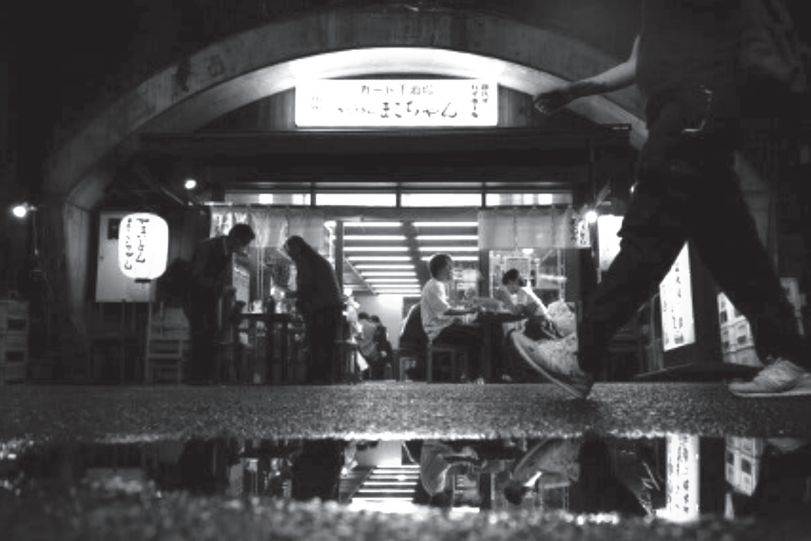
TOKYO — Among the casualties of the pandemic is one that many young people in Japan say they do not miss: the drinking culture.
Sobriety, they have decided after two years of less socializing and nightcrawling, has its advantages. And that’s why a new message from the Japanese government — drink up! — seems to be putting few in the spirit.
To bolster its ailing alcohol industry, Japan’s National Tax Agency has kicked off a contest inviting those ages 20 to 39 to submit ideas for encouraging people to consume more alcohol. It named the project after the national beverage: “Sake Viva!”
The agency says it hopes to “revitalize the industry” with the contest, whose winner is to be selected in a tournament later this year. But its entreaty is clashing with more than two years of actions by the government, which discouraged alcohol sales at restaurants and bars and put up signs forbidding drinking in parks and in the streets.
With Japan reaching new highs in coronavirus infections, including over 255,000 new cases on Thursday, many young people are wondering why the government is now saying it’s OK to go out and drink.
“The media is announcing record Covid cases, while restaurants are like, don’t talk while eating, wear a mask,” said
Chika Kato, a 27-year-old consultant in Tokyo. “But the government is at the same time asking us to go all out and drink.”
“It’s an awkward situation,” she added. “Who do I listen to?”
To some, any official encouragement to drink — pandemic or not — is a bad idea.
“I don’t think it is a good thing to make people who don’t drink, drink,” said Mima Matsumaru, 25, who works in advertising. After using the pandemic as a chance to stop drinking, she said she didn’t miss it very much anyway.
None of the Japanese alcohol makers have signed on to the initiative. But bar owners praised it.
In Ginza, one of Tokyo’s popular nightlife districts, the pubs remained dimly lit and mostly quiet on Thursday night. “I hope this helps Ginza come alive again,” said Kenta Kobayashi, 34, a bartender who has seen a drastic drop in sales since the pandemic began.
On average, people in Japan drank about 20 gallons of alcohol in 2020, down from 26 gallons in 1995, according to government data. The decline has hurt lucrative tax revenues: Levies on alcohol accounted for 1.7 percent of Japan’s tax revenue (about $8 billion) in 2020, down from 3 percent in 2011 and 5 percent in 1980.
Under the Japan tax agency’s contest, participants may propose new products and designs targeting young people, even sales techniques involving artificial intelligence or the metaverse. As long as submissions are written in Japanese, they may come from anywhere. The winning entry will be commercialized.
The contest’s organizers said that overindulgence was not the goal, adding that people should drink only “the appropriate amount” and take “common sense” measures against contracting the virus. “We are in no way promoting excessive drinking among young people,” said Ryo Tsukamoto, a spokesman for the agency’s alcohol tax division.
But critics worried about unintended consequences. Hidetomi Tanaka, an economist, called the effort an “irresponsible and unorthodox drinking campaign.” About one million Japanese suffer from alcoholism, while about 9.8 million others are potentially addicted, according to research by the Japanese Health Ministry.
Worldwide, the pandemic has brought down alcohol consumption among younger adults. In South Korea, consumption of soju dropped by 14 percent from 2019 to 2020 and beer consumption by 23 percent, leading to the nation’s lowest revenue in alcohol taxes in 10 years. In the United States, the prevalence of binge drinking among young adults surveyed dropped to 26 percent in 2020, after remaining at about 30 percent from 2015 to 2019, a study showed.
Neither country’s government has gone as far as to promote drinking. In France, though, lawmakers once considered promoting wine consumption when wine exports and domestic sales fell off the table in 2004. Included in their recommendations was a program encouraging young people to “educate their tastes.”
Disponível em: https://www.nytimes.com/2022/08/19/ world/asia/japan-alcohol-contest.html. Acesso em 30/08/2022
The contest, run by Japan’s National Tax Agency,
Questão 44 9513990
ESPM 2023/1Drink Up, Japan Tells Young People. I’ll Pass, Many Reply.
The country’s tax agency, hoping to reverse the alcohol industry’s pandemic doldrums, is holding a contest to encourage more drinking among the young.
By Hikari Hida and John Yoon Aug. 19, 2022
TOKYO — Among the casualties of the pandemic is one that many young people in Japan say they do not miss: the drinking culture.
Sobriety, they have decided after two years of less socializing and nightcrawling, has its advantages. And that’s why a new message from the Japanese government — drink up! — seems to be putting few in the spirit.
To bolster its ailing alcohol industry, Japan’s National Tax Agency has kicked off a contest inviting those ages 20 to 39 to submit ideas for encouraging people to consume more alcohol. It named the project after the national beverage: “Sake Viva!”
The agency says it hopes to “revitalize the industry” with the contest, whose winner is to be selected in a tournament later this year. But its entreaty is clashing with more than two years of actions by the government, which discouraged alcohol sales at restaurants and bars and put up signs forbidding drinking in parks and in the streets.
With Japan reaching new highs in coronavirus infections, including over 255,000 new cases on Thursday, many young people are wondering why the government is now saying it’s OK to go out and drink.
“The media is announcing record Covid cases, while restaurants are like, don’t talk while eating, wear a mask,” said
Chika Kato, a 27-year-old consultant in Tokyo. “But the government is at the same time asking us to go all out and drink.”
“It’s an awkward situation,” she added. “Who do I listen to?”
To some, any official encouragement to drink — pandemic or not — is a bad idea.
“I don’t think it is a good thing to make people who don’t drink, drink,” said Mima Matsumaru, 25, who works in advertising. After using the pandemic as a chance to stop drinking, she said she didn’t miss it very much anyway.
None of the Japanese alcohol makers have signed on to the initiative. But bar owners praised it.
In Ginza, one of Tokyo’s popular nightlife districts, the pubs remained dimly lit and mostly quiet on Thursday night. “I hope this helps Ginza come alive again,” said Kenta Kobayashi, 34, a bartender who has seen a drastic drop in sales since the pandemic began.
On average, people in Japan drank about 20 gallons of alcohol in 2020, down from 26 gallons in 1995, according to government data. The decline has hurt lucrative tax revenues: Levies on alcohol accounted for 1.7 percent of Japan’s tax revenue (about $8 billion) in 2020, down from 3 percent in 2011 and 5 percent in 1980.
Under the Japan tax agency’s contest, participants may propose new products and designs targeting young people, even sales techniques involving artificial intelligence or the metaverse. As long as submissions are written in Japanese, they may come from anywhere. The winning entry will be commercialized.
The contest’s organizers said that overindulgence was not the goal, adding that people should drink only “the appropriate amount” and take “common sense” measures against contracting the virus. “We are in no way promoting excessive drinking among young people,” said Ryo Tsukamoto, a spokesman for the agency’s alcohol tax division.
But critics worried about unintended consequences. Hidetomi Tanaka, an economist, called the effort an “irresponsible and unorthodox drinking campaign.” About one million Japanese suffer from alcoholism, while about 9.8 million others are potentially addicted, according to research by the Japanese Health Ministry.
Worldwide, the pandemic has brought down alcohol consumption among younger adults. In South Korea, consumption of soju dropped by 14 percent from 2019 to 2020 and beer consumption by 23 percent, leading to the nation’s lowest revenue in alcohol taxes in 10 years. In the United States, the prevalence of binge drinking among young adults surveyed dropped to 26 percent in 2020, after remaining at about 30 percent from 2015 to 2019, a study showed.
Neither country’s government has gone as far as to promote drinking. In France, though, lawmakers once considered promoting wine consumption when wine exports and domestic sales fell off the table in 2004. Included in their recommendations was a program encouraging young people to “educate their tastes.”
Disponível em: https://www.nytimes.com/2022/08/19/ world/asia/japan-alcohol-contest.html. Acesso em 30/08/2022
Japan’s National Tax Agency initiative is seen as controversial by many. The alternatives below all justify the controversy, except:
06