


![[Marketing] Questao Topo - deslogado](https://storage.estuda.com.br/banners/0_6b7ebee90b03af1c560c73bb8bcce34a_banner_deslogado_70_dias.png)
Questões de Inglês
19.971 Questões
Questão 45 13276141
FMJ 2024Leia o texto para responder à questão.
In almost every discipline, success comes from a combination of talent and determination. But if you listen to most famous figures describe their life journeys, you’ll soon hear them exaggerating their hard work, while strangely diminishing the role of their innate abilities.
Thomas Edison may be the most often quoted, with his claim that “genius is one percent inspiration and ninety-nine percent perspiration”, but many other variations exist. Just consider Octavia Butler’s advice for new writers. “Forget talent. If you have it, fine. Use it. If you don’t have it, it doesn’t matter. As habit is more reliable than inspiration, continued learning is more reliable than talent.” The Portuguese footballer Cristiano Ronaldo also emphasises the blood, sweat and tears that went into his training. “Talent without work is nothing,” he said, when asked about the secrets of his success.

Such narratives may be beneficial for celebrated figures who wish to appear humble and wise. But recent psychological research shows overemphasising the importance of hard work would be prejudicial in many professional situations — thanks to a phenomenon known as the “naturalness bias”. These studies suggest people have greater respect for those with an innate gift than for those who have had to strive for their success.
In consumer psychology, the term “naturalness bias” is often used to describe our preference for natural over synthetic goods. “On some fundamental level, we believe that the closer something is to its original state, the less adulterated it is, the more desirable it is,” declared Malcolm Gladwell, the author of a study on the topic. As says Chia-Jung Tsay, a professor at University College London School, “The naturalness bias is very generalizable across domains, ages and cultures.”
(David Robson. www.bbc.com, 22.05.2023. Adaptado.)
In the context of the fourth paragraph, the underlined term in “‘On some fundamental level, we believe that the closer something is to its original state, the less adulterated it is, the more desirable it is’” refers to
Questão 12 13243323
UNICENTRO 2024Leia o texto a seguir e responda à questão.
What does ‘brain dead’ really mean? The battle over how science defines the end of life
Ideological differences threaten to muddy the definition of death in the United States – with potentially negative consequences for clinicians and people awaiting organ transplants.
• Max Kozlov
• Published on 11 July 2023
Dead in California but alive in New Jersey: that was the status of 13-year-old Jahi McMath after physicians in Oakland, California, declared her brain dead in 2013, after complications from a tonsillectomy. Unhappy with the care that their daughter received and unwilling to remove life support, McMath’s family moved with her to New Jersey, where the law allowed them to lodge a religious objection to the declaration of brain death and keep McMath connected to life-support systems for another four and a half years. Prompted by such legal discrepancies and a growing number of lawsuits around the United States, a group of neurologists, physicians, lawyers and bioethicists is attempting to harmonize state laws surrounding the determination of death. They say that imprecise language in existing laws – as well as research done since the laws were passed – threatens to undermine public confidence in how death is defined worldwide. “It doesn’t really make a lot of sense,” says Ariane Lewis, a neurocritical care clinician at NYU Langone Health in New York City. “Death is something that should be a set, finite thing. It shouldn’t be something that’s left up to interpretation.” Since 2021, a committee in the Uniform Law Commission (ULC), a non-profit organization in Chicago, Illinois, that drafts model legislation for states to adopt, has been revising its recommendation for the legal determination of death. The drafting committee hopes to clarify the definition of brain death, determine whether consent is required to test for it, specify how to handle family objections and provide guidance on how to incorporate future changes to medical standards. The broader membership of the ULC will offer feedback on the first draft of the revised law at a meeting on 26 July. After members vote on it, the text could be ready for state legislatures to consider by the middle of next year.
(Disponível em: https://www.nature.com/articles/d41586-023-02226-z. Acesso em: 12 set. 2023.)
Em relação à discussão sobre morte cerebral, atribua V (verdadeiro) ou F (falso) às afirmativas a seguir.
( ) A discussão sobre o tema não tem avançado, uma vez que só é de interesse de médicos diretamente envolvidos e familiares de pacientes considerados, em alguns estados, como mortos.
( ) Mudanças nas leis estaduais enfrentam, contudo, resistência de grupos religiosos.
( ) Há quem considere que a definição de morte não deveria estar aberta a interpretações.
( ) Legislações estaduais que consideram certos grupos de pessoas mortas não refletem resultados de estudos recentes.
( ) Um comitê estadunidense trabalha na proposição de um texto-base para padronizar, na medida do possível, a redação de leis estaduais sobre o assunto.
Assinale a alternativa que contém, de cima para baixo, a sequência correta.
Questão 26 13243017
ITA 1 Fase 2024Leia o texto a seguir para responder à questão.
Read Your Way Through Salvador
By Itamar Vieira Junior and translated by Johnny Lorenz. July 19, 2023.
I was born in Salvador, in the Brazilian state of Bahia, and lived in the general vicinity until I reached the age of 15. But it was when I left that I really came to know my city. How was I able to discover more about my birthplace while traveling far from home? It might sound rather clichéd but, I assure you, literature made this possible: It took me on a journey, long and profound, back home, enveloping me in words and imagination.
To understand the formation of our unique society and, consequently, the cityscape of Salvador, one should read, before anything else, "The Story of Rufino: Slavery, Freedom and Islam in the Black Atlantic," by João José Reis, Flávio dos Santos Gomes and Marcus J.M. de Carvalho. Rufino was an alufá, or Muslim spiritual leader, born in the Oyo empire in present-day Nigeria and enslaved during his adolescence. "The Story of Rufino" is an epic tale, encapsulating the life of one man in search of freedom as well as the history of the development of Salvador itself, a place inextricably linked with the diaspora across the Black Atlantic. Another book for which I have deep affection is "The City of Women," by the American anthropologist Ruth Landes. It offers an intriguing perspective, focusing on matriarchal power in candomblé, an Afro-Brazilian sacred practice, and revealing how the social organization of its spiritual communities reverberates across the city.
If you want to feel the intensity of life on the streets of Salvador, these two books, both by Amado, are indispensable: "Captains of the Sands" and "Dona Flor and Her Two Husbands." The first is a coming-of-age story in which we follow a group of children and adolescents living on the streets and on the beaches around the Bay of All Saints. Written more than 80 years ago, the book was banned and even burned in the public square during the dictatorship of Getúlio Vargas in the first half of the 20th century. As a portrait of Salvador, it is still relevant and reveals our deep inequalities. "Dona Flor and her Two Husbands" is one of Amado's most popular novels, translated into more than 30 languages and adapted many times for theater, cinema, and television. The book is a kind of manifesto for a woman's liberation. Dona Flor possesses great culinary talent, and oppressed by a patriarchal society, finds herself divided between two men, one being her deceased husband. While the novel captures the daily life of the city in the 1940s, it is also a wonderful guide to the cuisine of Salvador, with its African and Portuguese influences.
I invite readers to travel into the interior of Bahia, many hours by car from Salvador to the region known as the Sertão, whose name translates loosely to "backwoods." Two books can also transport you there, and they are sides of the same story: "Backlands: The Canudos Campaign," by Euclides da Cunha, and "The War of the End of the World," by Mario Vargas Llosa.
"Backlands" is one of the most important works in the history of Brazilian literature. It is a journalistic telling that introduces us not only to the brutal War of Canudos, but also to the intriguing landscape of the Sertão, a place so full of contradictions. In his writing of the conflict, da Cunha tells the story of the genesis of the tough sertanejo: a mythic, cowboyesque figure of the drought-stricken, lawless interior. "The War of the End of the World" is an essential epic that amplifies the narrative of "Backlands," bringing a more imaginative, creative aspect to the story of Antônio Conselheiro, the spiritual leader of a rebellion, and of the multitude that followed him to their deaths.
[Fonte: "Read Your Way Through Salvador". In: The New York Times, 19/07/2023, .Adaptado, Data de acesso: 01/09/2023.]
According to the text, the author recommends the book “The Story of Rufino: Slavery, Freedom and Islam in the Black Atlantic” for the reader to
Questão 90 13230771
UFPR 2024The following text is reference to question.
When the Guggenheim Museum Bilbao opened in northern Spain 25 years ago, architect Frank Gehry’s curvy titanium-clad building was itself as much a part of the attraction for many art lovers as the exhibits inside.
As Spain opens the long-awaited Royal Collections Gallery in Madrid next week, its sleek new eight-story building, perched on an iconic hillside next to the Royal Palace, may also steal some of the attention from the Old Masters on display. Spanish architects Emilio Tuñon and Luis Mansilla won the 2017 American Architecture Prize and a dozen other awards for this design, built with white concrete, granite and oak and featuring hundreds of windows overlooking the leafy gardens below the Royal Palace and the expansive Casa de Campo park beyond.
Available in: https://edition.cnn.com/2023/06/23/style/madrid-royal-collections-museum/index.html.
Consider the following sentences about the building of the Royal Collections Gallery:
1. It has eight floors.
2. It has won several architecture awards.
3. It has no wood in its construction.
4. It is placed on the top of a hill with a view of the impressive Casa de Campo park.
Mark the correct alternative.
Questão 24 13111081
UESB 1º dia 2024O texto seguinte servirá de base para responder à questão.
When Green Spaces Displace Residents, Our Cities' Health Suffers
Cities are working to improve residents' well-being with more urban green spaces. But they must be on the watch for green gentrification and its negative health consequences.
Again and again, researchers have found that access to urban green spaces − from parks to gardens to greenways − positively impacts multiple measures of health, such as community satisfaction, social cohesion and access to healthy foods. Having a stable, quality place to call home is associated with various positive life outcomes, from lower mortality rates to lower rates of drug use.
However, in a process known as ecological, green or environmental gentrification, green amenities can contribute to gentrification and, over time, the displacement of low-income residents. But, perhaps counterintuitively, green gentrification can also exacerbate inequities in health, finances, quality of life and — ironically — access to green spaces.
Increasing urban green spaces can help improve well-being. However, displacing and pricing out residents can cause serious public health concerns. For example, scholars describe how green gentrification and possible displacement can lead to psychosocial and physical health consequences. A scoping review on green gentrification and health examines numerous studies wherein residents experience a lower sense of community, diminished sense of belonging and less green space usage among long-term residents.
This collection of circumstances results in the potential for greener cities to become out of residential reach for many people. Green gentrification, then, may produce the inequalities that perpetuate environmental injustice and health disparities, endangering the very residents these greening projects were originally designed to benefit.
Let's be clear. Improving neighborhoods is not the fundamental problem with gentrification and possible residential displacement. It's the systemic force that aims to set the bar of who has long-term access to quality environments and affordable housing. In working to mitigate the consequences of green gentrification, we can allow people across the socioeconomic spectrum to access quality environments where they can live, thrive and build a life they've worked hard to create.
JENNINGS, Viniece; RIGOLON, Alessandro; JELKS, Na'Taki Osborne. When Green Spaces Displace Residents, Our Cities' Health Prova Matriz - 1 12
Suffers. Next City, p. Urbanist News, Health Safety, 8 set. 2023.
Disponível em: . Acesso em: 19 nov. 2023. (Adaptado).
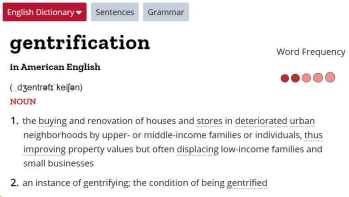
Considering the reference text and the dictionary entry provided, what are some of the impacts on public health are associated with green gentrification?
Questão 18 13099305
UESB 1º dia 2024O texto seguinte servirá de base para responder à questão.
A wildlife refuge pond in Hawaii mysteriously turns bright pink. And drought may be to blame
A pond in Hawaii has turned so bubble-gum pink it could be from the set of "Barbie," but the bizarre phenomenon is no cause for a dance party. Drought may be to blame for the strange hue, scientists say, and they're warning against entering the water or drinking it.
Bret Wolfe, the refuge manager, was concerned the bright pink could be a sign of an algae bloom, but lab tests found toxic algae was not causing the color. Instead an organism called halobacteria might be the culprit.
Halobacteria are a type of archaea or single-celled organism that thrive in bodies of water with high levels of salt. The salinity inside the Kealia Pond outlet area is currently greater than 70 parts per thousand, which is twice the salinity of seawater. Wolfe said the lab will need to conduct a DNA analysis to definitively identify the organism.
Maui's drought is likely contributing to the situation. Normally Waikapu Stream feeds into Kealia Pond and raises water levels there, but Wolfe said that hasn't happened in a long time. When it rains, the stream will flow into Kealia's main pond and then into the outlet area that's now pink. This will reduce the salinity and potentially change the water's color.
No one at the refuge has seen the pond this color before — not even volunteers who have been around it for 70 years. The pond has been through periods of drought and high salinity before, though, and Wolfe isn't sure why the color has changed now.
The wildlife refuge is a wetland that provides nesting, feeding and resting habitat to the endangered Hawaiian stilt, known as aeo, and the Hawaiian coot or alae keokeo. It also hosts migratory birds during the winter. The water doesn't appear to be harming the birds, Wolfe said.
As a wildlife refuge, people aren't supposed to wade into the pond or let their pets in the water regardless of its color. But officials are taking an extra precaution to warn people not to enter the water or eat any fish caught there because the source of the color has yet to be identified.
MCAVOY, Audrey. Hawaii wildlife refuge pond mysteriously turns bright pink. And drought may be to blame. AP News, New York, 10 out. 2023. Climate.
Disponível em: .Acesso em: 19 nov. 2023. (Adaptado)
What advice is mentioned in the text, regarding Kealia Pond's wildlife?
06