


![[Marketing] Questao Topo - deslogado](https://storage.estuda.com.br/banners/0_6b7ebee90b03af1c560c73bb8bcce34a_banner_deslogado_70_dias.png)
Questões de Inglês
19.971 Questões
Questão 21 15214705
UPF Verão 2025[1] ___________________________________________________________________ (title)
Aug. 7, 2024, 10:06 AM GMT-3 / Source: The Associated Press
By The Associated Press
As she practiced her complex moves and somersaults, aspiring gymnast 14-year-old Manuela Kriegel kept gazing at one of
the walls of the Bonifácio Cardoso gym outside the Brazilian metropolis of Sao Paulo. It featured a painting of a national hero
— Olympic champion and hometown favorite Rebeca Andrade — with two medals, a gold and a silver, that Andrade won at
[5] the Tokyo Games three years ago. “This is outdated now,” Kriegel told The Associated Press on Tuesday after she finished
her warm-up routines
Outdated indeed. The 25-year-old Andrade won four more medals at the Paris Olympics, including gold in the floor
exercise with a narrow victory over star U.S. gymnast Simone Biles. The Guarulhos native has become the most decorated
Olympian in the history of the South American nation, with six medals.
[10] Dozens of girls lined up with their parents in the early hours of Tuesday at the public gymnasium where Andrade started her
career 15 years ago. Some of those hopeful athletes in Guarulhos train there every day. Andrade’s early life in Guarulhos has
inspired locals who copy her audacious moves and also those who love her resilience — she used to walk about one hour to
get to the gym and had three ACL surgeries in her career. Andrade left Guarulhos for Brazil’s national team in 2010, moved to
Rio de Janeiro shortly after and then started her rise in the sport.
[15] Kriegel, who took up the sport in 2019, wanted to give it up during the pandemic. But then Andrade’s performances in Tokyo
— a gold medal in the vault event and a silver in the all-round competition — changed her mind and convinced her that Brazilian
gymnasts can win at the Olympics. She is even more convinced now after her compatriot beat Biles in the floor exercise. “It is
what Rebeca says. We have to trust the work we do here every day, get our training right and become confident in what we do
when we are doing it,” said Kriegel, as 10 children aged between 5 and 10 years old entered the gym for a trial. “Before her it
[20] wasn’t possible. And now it is much beyond what we expected.”
Mônica dos Anjos, a gymnastics teacher at the Bonifácio Cardoso and a referee in official competitions, was one of the first to
see Andrade in action — when Andrade was 5. She said it didn’t take long for all staffers to be sure she would become a star.
“I saw a little girl with that biotype. Strong, explosive, just playing,” Dos Anjos said. “Many girls started coming in 2021 because
of Rebeca. Now they know it is possible. Rebeca was here, she jumped the same vault, performed on the same floor. Not all
[25] will make it, but just dreaming about it and trying hard will open many doors for them in the future.”
Kelly Mendes brought her daughter Lara Vicente to the gym five years ago, when Lara was only 7. There was no Andrade to
inspire them then, but Brazil was already falling in love with gymnastics. Now, that passion is set to grow even more, she
believes. “Guarulhos could have another Rebeca.”
Retrieved and adapted from https://www.nbcnews.com/news/latino/brazil-olympic-gymnast-andrade-hometown-rcna165519 Access on September 20th, 2024.
The main argument of the text is
Questão 20 15214697
UPF Verão 2025Social Issues and Problems That Trouble Today's Teens
Technology and social media can amplify the struggles teens face, but they aren't the only issues they encounter.
By Amy Morin, LCSW
[1] Teens today face unique social challenges due to rapid physical and brain development, compounded by technological
advancements. Digital communication and social media have transformed peer and romantic interactions, potentially impairing
interpersonal skills, such as recognizing social cues. The extensive use of electronic devices, averaging over eight hours daily,
contributes to this issue. Nonetheless, not all teen social problems are technology-related. Teens also grapple with risks such as
[5] drug overdose, unsafe sexual practices, and heightened academic pressures. These combined factors create a complex social
landscape that differs significantly from that of previous generations. Some other social issues involved in this process affecting
teens today include peer pressure and depression.
Peer Pressure and wrong options: While peer pressure has affected teens for generations, social media brings it to a
whole new level. Sexting, for example, is a major cause for concern. Many teens don't understand the lifelong consequences that
[10] sharing explicit photos can have. But sending inappropriate photos isn't the only thing kids are coerced into doing. Teens face
pressure to have sex, use drugs or alcohol, and even bully others. […]
Depression: According to the National Institute of Mental Health (NIMH), an estimated 5 million adolescents in the U.S. have
had at least one major depressive episode. That means 20% of American teenagers may experience depression before reaching
adulthood. […]
[15] Spending too much time on electronic devices may be preventing young people from in-person activities with their peers, such
as sports or other physical activities, that can help ward off depression. They're also experiencing new conditions like "fear of
missing out", which further leads to feelings of loneliness and isolation.
How to Talk to them
Bringing up any difficult subjects with a teen can feel uncomfortable. A teen isn't likely to respond well to a lengthy lecture or too
[20] many direct questions. However, having a conversation about these troubles isn't something to shy away from. Even when it
seems like they're not listening, parents are the most influential people in a teen's life. It's important to lay a strong foundation
before the window of opportunity closes. A good way to strike up a conversation about drugs, sex, vaping, or other uncomfortable
situations is to ask a question like, "Do you think this is a big issue at your school?" It's necessary to listen to what the teen has
to say. Not to be judgmental, but to make expectations and opinions clear. The teen must understand that certain behaviors are
[25] not condoned and that there are consequences for breaking the rules. That said, it is also important to communicate that if they
do make a poor choice, it is not the end of the world and that conversation is always the best option.
Retrieved and adapted from https://www.parents.com/problems-for-teens-today-8575462. Access on September 19th, 2024
Read the following sentences about the text:
I. It is crucial for teens to understand both the expectations set by their parents and the importance of maintaining open communication, even if they make mistakes.
II. Parents should avoid discussing difficult subjects with teens because they have little influence over their decisions.
III. A lengthy lecture is the best way to communicate expectations and opinions to a teen about difficult topics.
IV. Teens benefit from open discussions about challenging topics, where expectations are clearly communicated.
V. Teens should be made to feel that any poor choices they make are unforgivable and will lead to severe consequences.
The statements that do not align with the content presented in the text are:
Questão 2 15187534
UEG Medicina 2025/2Leia o texto a seguir para responder à questão.
Language Teaching New Worlds/New Words
Like desire, language disrupts, refuses to be contained within boundaries. It speaks itself against our will, in words and thoughts that intrude, even violate the most private spaces of mind and body. It was in my first year of college that I read Adrienne Rich’s poem, “The Burning of Paper Instead of Children.” That poem, speaking against domination, against racism and class oppression, attempts to illustrate graphically that stopping the political persecution and torture of living beings is a more vital issue than censorship, than burning books. One line of this poem that moved and disturbed something within me: “This is the oppressor’s language yet I need it to talk to you.” I’ve never forgotten it. Perhaps I could not have forgotten it even if I tried to erase it from memory. Words impose themselves, take root in our memory against our will. The words of this poem begat a life in my memory that I could not abort or change.
When I find myself thinking about language now, these words are there, as if they were always waiting to challenge and assist me. I find myself silently speaking them over and over again with the intensity of a chant. They startle me, shaking me into an awareness of the link between languages and domination. Initially, I resist the idea of the “oppressor’s language,” certain that this construct has the potential to disempower those of us who are just learning to speak, who are just learning to claim language as a place where we make ourselves subject. “This is the oppressor’s languages yet I need it to talk to you.” Adrienne Rich’s words. Then, when I first read these words, and now, they make me think of standard English, of learning to speak against black vernacular, against the ruptured and broken speech of a dispossessed and displaced people. Standard English is not the speech of exile. It is the language of conquest and domination; in the United States, it is the mask which hides the loss of so many tongues, all those sounds of diverse, native communities we will never hear, the speech of the Gullah, Yiddish, and so many other unremembered tongues.
Reflecting on Adrienne Rich’s words, I know that it is not the English language that hurts me, but what the oppressors do with it, how they shape it to become a territory that limits and defines, how they make it a weapon that can shame, humiliate, colonize.
[…]
To recognize that we touch one another in language seems particularly difficult in a society that would have us believe that there is no dignity in the experience of passion, that to feel deeply is to be inferior, for within the dualism of Western metaphysical thought, ideas are always more important than language. To heal the splitting of mind and body, we marginalized and oppressed people attempt to recover ourselves and our experiences in language. We seek to make a place for intimacy. Unable to find such a place in standard English, we create the ruptured, broken, unruly speech of the vernacular. When I need to say words that do more than simply mirror or address the dominant reality, I speak black vernacular. There, in that location, we make English do what we want it to do. We take the oppressor’s language and turn it against itself. We make our words a counter-hegemonic speech, liberating ourselves in language.
HOOKS, bell. Teaching to Transgress: Education as the Practice of Freedom. New York: Routledge. 1994, p.167-175. (Adaptado).
In this text, bell hooks
Questão 2 15183894
UEG 2025/1Leia o texto abaixo para responder à questão.
The Chamber of Commerce Brazil-Canada (CCBC) hosted Canada Day 2024, aimed at providing opportunities for young Brazilians who wish to do an exchange program, study, and explore the Canadian job market. The event featured representatives from the Consulate General of Canada in Brazil, who highlighted the efficiency of visa processing, allowing students to begin their studies in the country.
During the event, experts from various universities and educational institutions in Canada shared information and provided clarifications for students, offering a comprehensive view of the available opportunities.
Canada leads the list of the most sought-after destinations by Brazilians for studying abroad. According to the 2023 Belta Survey released by the Brazilian Association of Exchange Agencies, the number of Brazilian students seeking to study abroad grew by 18% in 2022 compared to the pre-pandemic period. This is because the region offers excellent quality of life, safety, and academic options, as well as work opportunities during and after studies, and the possibility of obtaining permanent residency in Canada.
For those who are thinking about studying in Canada, it is essential to pay attention to the registration deadlines offered by the institutions and to prepare the documentation, such as sending transcripts, English test results and necessary proof of income. The institutions present at the event highlighted the importance of starting the application process in advance, as soon as each university opens its applications.
Furthermore, to obtain a student visa for Canada it is necessary to follow a series of steps after receiving the acceptance letter from the educational institution and the scholarship. There are different types of visa, each suited to specific situations: the SX-1, for short term courses (up to 24 weeks), which requires an acceptance letter; the V-1, a tourist visa that can also be used for courses of up to 24 weeks; and the S-1 Study Permit, required for courses longer than 24 weeks.
To speed up the process, it is recommended to seek help from an exchange agency that offers guidance and support during all stages. In addition to the acceptance letter, you must have a passport valid for at least six months, demonstrate family ties in your country of origin, prove your financial capacity to support yourself in Canada during the study period and send all the necessary documentation, detailing your plans. For courses lasting more than six months, a medical examination is also required.
Disponível em: ccbc.org.br/en/publicacoes/news-ccbc/canada-offers-great-study-opportunities-for-brazilians-who-want-to-do-an-exchange-program. 17 July 2024 / news CCBC [adapted]. Acesso em: 04 out. 2024.
Considering the lexicon in the text above, it can be stated without changing in meaning that
Questão 1 15183865
UEG 2025/1The text above informs that
Questão 21 15177956
UPE SSA 2ª Fase - 1° Dia 2025Text 9
Biking Little Venice: A Bike Tour of London’s Beautiful Regent’s Canal
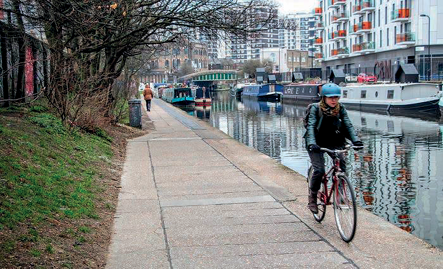
[1] If you were under the impression that the Thames has a monopoly on London’s waterfront biking scene, allow us to introduce you to one of the city’s hidden cycling treasures: The Regent’s Canal.
[5] Or as it’s affectionately known around these parts, Little Venice.
[3] To be accurate, “Little Venice” only technically refers to the meeting point between the Regent’s and Paddington Arm Canals, located about a five-minute stroll northwest of the Paddington underground station in West London. However, this narrow, picturesque channel of moored boats and lush English foliage serves as the all-important trailhead for a surprisingly enjoyable 10 mile bike ride , guiding visitors past beautiful parks, regal estates, lively districts, hidden cafes, and some of the most cramped bridge underpasses you’ve ever pedaled beneath.
[4] Hey, this is 1820’s London we’re talking about, here. You’ll have to forgive them for not putting the newly invented bicycle front and center in their construction plans. Though it’s not uncommon for residents to use the canal as a direct, traffic-free means of transportation from Point A to Point B, if you’re a first timer you’ll probably want to take your time to explore some of the unique stops along the way.
[5] Take Granary Square, for example. This trendy addition to King’s Cross is marked by its telltale tiered green steps that descend down to the canal, but just above you’ll find terraced restaurants, cafes, and a series of choreographed fountains you can control from an app on your smartphone. On warm summer afternoons and evenings, consider this plaza a must see.
[6] […]
In all, though there are no dedicated bike lanes and you’ll more than likely have to contend with a few crowded stretches, the Regent’s Canal is undeniably one of the highlights of the London cycling scene. Check out Spinlister’s detailed bike map to get oriented, then give yourself a day to come experience this hidden gem for yourself.
By John Wachunas@Spinlister
Disponível em: https://medium.com/@JohnWachunasSpinlister/biking-little-venice-a-bike-tour-of-london-s-beautiful-regent-s-canal. Acesso em: 22 jul. 2024. Adaptado.
Observe o início do 6º parágrafo: In all though there are no dedicated bike lanes and you’ll more than likely have to contend with a few crowded stretches […].
A expressão grifada pode ser substituída, sem mudança de sentido, por
06