


![[Marketing] Questao Topo - deslogado](https://storage.estuda.com.br/banners/0_6b7ebee90b03af1c560c73bb8bcce34a_banner_deslogado_70_dias.png)
Questões de Inglês
19.971 Questões
Questão 41 48789
ESPM 2009/2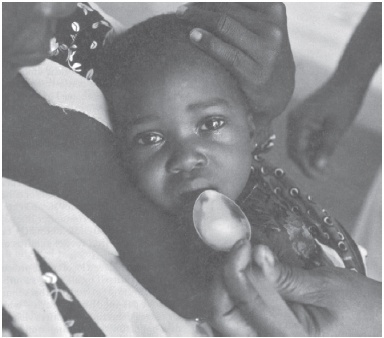
A BETTER DEAL ON MALARIA
Novartis is breaking even selling Coartem. But it chose to lose money to save more lives.
For the past nine years, the drug company Novartis has been selling Coartem, one of the most effective antimalarials on the market, to public-health officials in the developing world at a loss totaling more than $253 million - not counting the millions spent on Research & Development. That’s added up, the firm reports, to more than 550,000 lives saved. In late January, the company unveiled the first pediatric dose of Coartem – less bitter and easier to swallow than the adult version - which is expected to help in the battle against a disease that kills more than 700,000 children under 5 each year. (…) “Novartis could be making a lot more money making hypertension or diabetes medications that the people in the U.S. and Europe would buy,” says Awa Coll-Seck, executive director of Roll Back Malaria, a global partnership founded with the goal of halving the world’s malaria cases by 2010. “Instead, it’s investing real funds in finding medicines that will never be profitable.”
Though malaria is both preventable and curable, many of those in the developing world struggle to get affordable treatment, particularly in sub-Saharan Africa, where the mosquito-borne disease is most prevalent.(Time, March 9, 2009)
You can infer from the text that Novartis:
Questão 50 48718
ESPM 2009/1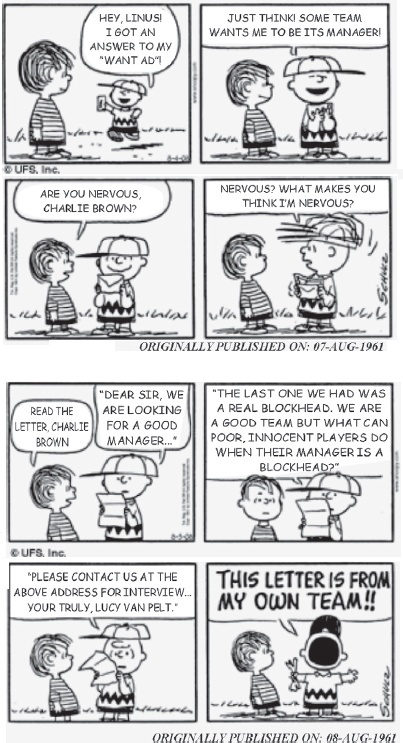
Rewrite in indirect speech: “read the letter Charlie Brown”:
Questão 47 48715
ESPM 2009/1Everyone knows industry needs oil.
Now people are worrying about water, too
“Water is the oil of the 21st century,” declares Andrew Liveris, the chief executive of Dow, a chemical company. Like oil, water is a critical lubricant of the global economy. And as with oil, supplies of water – at least, the clean, easily accessible sort – are coming under enormous strain because of the growing global population and an emerging middleclass in Asia that hankers for the water-intensive life enjoyed by people in the West.
Oil prices have fallen from their recent peaks, but concerns about the availability of freshwater show no sign of abating. Goldman Sachs, an investment bank, estimates that global water consumption is doubling every 20 years, which it calls an “unsustainable” rate of growth. Water, unlike oil, has no substitute. Climate change is altering the patterns of freshwater availability in complex ways that can lead to more frequent and severe droughts.
Untrammeled industrialization, particularly in poor countries, is contaminating rivers and aquifers. America’s generous subsidies for biofuels have increased the harvest of water-intensive crops that are now used for energy as well as food. And heavy subsidies for water in most parts of the world mean it is often grossly underpriced - and hence squandered.
All of this poses a problem, first and foremost, for human welfare. At the annual World Water Week conference in Stockholm this week, delegates focused on measures to extend access to clean water and sanitation to the world’s poor. But it also poses a problem for industry. “For business, water is not discretionary,” says Dominic Waughray of the World Economic Forum, a think-tank. “Without it, industry and the global economy falter.”
Water is an essential ingredient in many of the products that line supermarket shelves. JPMorgan, a bank, reckons that five big food and beverage giants-Nestlé, Unilever, Coca-Cola, Anheuser-Busch and Danone – consume almost 575 billion litres of water a year, enough to satisfy the daily water needs of every person on the planet.(The Economist, August 23rd-29th 2008)
According to the text, which of the following is to be blamed for more frequent and severe droughts?
Questão 44 48712
ESPM 2009/1

In 1865 Friedrich August Kekulé woke up from a strange dream: he imagined a snake forming a circle and biting its own tail. Like many organic chemists of the time, Kekulé had been working feverishly to describe the true chemical structure of benzene, a problem that continually eluded understanding. But Kekulé’s dream of a snake swallowing its tail, so the story goes, helped him to accurately realize that benzene’s structure formed a ring. This insight paved the way for a new understanding of organic chemistry and earned Kekulé a title of nobility in Germany.
Although most of us have not been ennobled, there is something undeniably familiar about Kekulé’s problemsolving method. Whether deciding to go to a particular college, accept a challenging job offer or propose to a future spouse, “sleeping on it” seems to provide the clarity we need to piece together life’s puzzles. But how does slumber present us with answers?
The latest research suggests that while we are peacefully asleep our brain is busily processing the day’s information. It combs through recently formed memories, stabilizing, copying and filing them, so that they will be more useful the next day. A night of sleep can make memories resistant to interference from other information and allow us to recall them for use more effectively the next morning. And sleep not only strengthens memories, it also lets the brain sift through newly formed memories, possibly even identifying what is worth keeping and selectively maintaining or enhancing these aspects of a memory. When a picture contains both emotional and unemotional elements, sleep can save the important emotional parts and let the less relevant background drift away. It can analyze collections of memories to discover relations among them or identify the gist of a memory while the unnecessary details fade—perhaps even helping us find the meaning in what we have learned.
(Scientific American Mind - August 7, 2008)
The word “them” in the third paragraph refers to:
Questão 43 48711
ESPM 2009/1
In 1865 Friedrich August Kekulé woke up from a strange dream: he imagined a snake forming a circle and biting its own tail. Like many organic chemists of the time, Kekulé had been working feverishly to describe the true chemical structure of benzene, a problem that continually eluded understanding. But Kekulé’s dream of a snake swallowing its tail, so the story goes, helped him to accurately realize that benzene’s structure formed a ring. This insight paved the way for a new understanding of organic chemistry and earned Kekulé a title of nobility in Germany.
Although most of us have not been ennobled, there is something undeniably familiar about Kekulé’s problemsolving method. Whether deciding to go to a particular college, accept a challenging job offer or propose to a future spouse, “sleeping on it” seems to provide the clarity we need to piece together life’s puzzles. But how does slumber present us with answers?
The latest research suggests that while we are peacefully asleep our brain is busily processing the day’s information. It combs through recently formed memories, stabilizing, copying and filing them, so that they will be more useful the next day. A night of sleep can make memories resistant to interference from other information and allow us to recall them for use more effectively the next morning. And sleep not only strengthens memories, it also lets the brain sift through newly formed memories, possibly even identifying what is worth keeping and selectively maintaining or enhancing these aspects of a memory. When a picture contains both emotional and unemotional elements, sleep can save the important emotional parts and let the less relevant background drift away. It can analyze collections of memories to discover relations among them or identify the gist of a memory while the unnecessary details fade—perhaps even helping us find the meaning in what we have learned.
(Scientific American Mind - August 7, 2008)
Which of the following is supported by the information in the article?
Questão 42 48710
ESPM 2009/1
In 1865 Friedrich August Kekulé woke up from a strange dream: he imagined a snake forming a circle and biting its own tail. Like many organic chemists of the time, Kekulé had been working feverishly to describe the true chemical structure of benzene, a problem that continually eluded understanding. But Kekulé’s dream of a snake swallowing its tail, so the story goes, helped him to accurately realize that benzene’s structure formed a ring. This insight paved the way for a new understanding of organic chemistry and earned Kekulé a title of nobility in Germany.
Although most of us have not been ennobled, there is something undeniably familiar about Kekulé’s problemsolving method. Whether deciding to go to a particular college, accept a challenging job offer or propose to a future spouse, “sleeping on it” seems to provide the clarity we need to piece together life’s puzzles. But how does slumber present us with answers?
The latest research suggests that while we are peacefully asleep our brain is busily processing the day’s information. It combs through recently formed memories, stabilizing, copying and filing them, so that they will be more useful the next day. A night of sleep can make memories resistant to interference from other information and allow us to recall them for use more effectively the next morning. And sleep not only strengthens memories, it also lets the brain sift through newly formed memories, possibly even identifying what is worth keeping and selectively maintaining or enhancing these aspects of a memory. When a picture contains both emotional and unemotional elements, sleep can save the important emotional parts and let the less relevant background drift away. It can analyze collections of memories to discover relations among them or identify the gist of a memory while the unnecessary details fade—perhaps even helping us find the meaning in what we have learned.
(Scientific American Mind - August 7, 2008)
The text mentions Kekulé’s dream to suggest that:
06