


![[Marketing] Questao Topo - deslogado](https://storage.estuda.com.br/banners/0_6b7ebee90b03af1c560c73bb8bcce34a_banner_deslogado_70_dias.png)
Questões de Inglês
19.971 Questões
Questão 42 45961
PUC-SP Inverno 2010Brasilia: Fifty years of the future
By Gary Duffy ,BBC News, Brasilia
Published: April 06, 2010
Brasilia was a city built at high speed in the late 1950s, fulfilling a long held Brazilian dream to have a new capital in the heart of the country. The president at the time, Juscelino Kubitschek, had promised his people 50 years of progress in five, and work proceeded at a frenetic pace. While Brasilia was under construction, it is said the president used to travel at night to inspect the project, before returning to the then capital in Rio de Janeiro to fulfill a normal round of engagements the next day.
The new capital, located in the state of Goias, was inaugurated on 21 April 1960 after barely three and a half years of rapid development. Many of the city's most striking buildings were designed by architect Oscar Niemeyer, with his trademark use of concrete and curves. Among them were the National Congress, with its concave and convex domes symbolising the two houses of the legislature, and the city's cathedral with 16 columns coming together to represent hands outstretched to heaven.
'Accidental' capital
It was a bold and dramatic statement that was meant to represent a new vision for the future. "The idea of the new buildings and the plan of Brasilia itself was to create an image of a modern Brazil," says Professor Jose Galbinski, at the Centre University of Brasilia. "It was a contrast with the old tradition, the old Brazil."
However, he says this dramatic change finally came about by accident, even though the proposal had been around for a long time. "The idea of a new capital in the interior had stayed like a dead item in the constitution for decades. Nobody cared about this issue, until the time of Juscelino Kubitschek," says Professor Galbinski. "When he was campaigning for president he was asked by a young man at a public meeting if he would obey the constitution, to which he replied, 'of course I will, I am running for president'." The young guy pointed out there was an article in the constitution which said the capital should be changed from Rio de Janeiro to the interior of Brazil. "Kubitschek was astonished with this, as he had never thought about it. And he replied, 'ok, I will answer you, I will obey all the articles of the constitution, and I will make the move'."
Disponível em: http://news.bbc.co.uk/go/pr/fr/2/hi/americas/8569349.stm (texto adaptado).

The wide Esplanade of Ministeries exempiífies Brasilia's design
According to the text, one of the characteristics of Niemeyer's architecture is
Questão 18 45380
Mackenzie 2010/2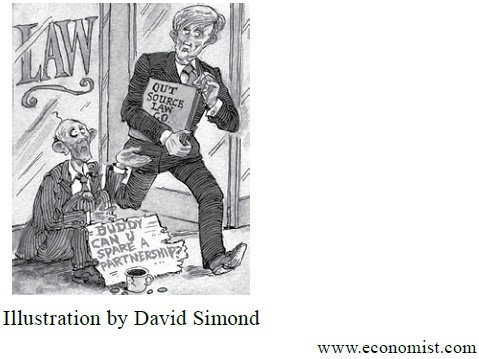
According to the cartoon,
Questão 17 45379
Mackenzie 2010/2
Home prices keep falling, but productivity is rising fast. GDP grew 5.6 percent in the fourth quarter, yet unemployment remains stubbornly high. Inflation is nonexistent, while the consumer confidence index just rose to 55.9 from 53.6—whatever that means. Can’t make sense of these economic indicators? Don’t worry, because nobody else can, either.
Here is what you really need to know: a Sonic Boom is coming. It will be caused by globalization. And while globalization may be driving you crazy, it’s just getting started. Thirty years ago, Shenzhen, China, did not exist; today, it has nearly 9 million residents, roughly the same as New York City. In a single generation, it has grown from a village of tarpaper shacks into an important urban center. It has become the world’s fourth-busiest port, busier than Los Angeles and Long Beach combined. Never before has a great city been built so fast, nor a productive economy established from so little.
The international recession that began in 2008 has made the Sonic Boom quieter, but history shows that when a crisis ends, the larger trends in place before the crisis usually resume. Shenzhen represents the larger trend of growth, change, and transformation at unprecedented velocity. Thanks to vast increases in productivity, worldwide economic growth soon will pick up, creating rising prosperity and higher living standards for most people in most nations. The world will be far more interconnected, leading to better and more affordable products, as well as ever better communication among nations.
But there’s a big catch: just as favorable economic and social trends are likely to resume, many problems that have characterized recent decades are likely to get worse, too. Job instability, economic insecurity, a sense of turmoil, the fear that even when things seem good a hammer is about to fall—these are also part of the larger trend. As world economies become ever more linked by computers, job stress will become a 24/7 affair. Frequent shakeups in industries will cause increasing uncertainty. The horizon has never been brighter, but we may not feel particularly happy about it.www.newsweek.com
In the title of the article, the word nigh
Questão 15 45377
Mackenzie 2010/2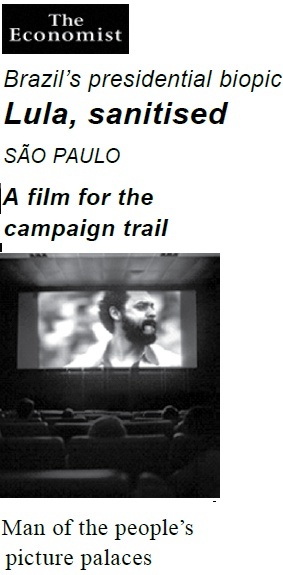
ONCE upon a time it was considered indecent to turn living people into myths, or even into films, with too much haste. The cycle seems to be shorter now. Gandhi had to wait until 34 years after his death before he appeared on cinema screens around the world. George Bush junior, by contrast, was the victim of an Oliver Stone biopic during the last year of his presidency. Now a Brazilian director, Fábio Barreto, has done the same for Brazil’s president, Luiz Inácio Lula da Silva, as he starts his final year of office.
“Lula, Son of Brazil” is the tale of a poor boy made good, his flaws left on the cutting table and his virtues in close-up. Since Lula hopes to secure the election of his chosen successor, Dilma Rousseff, in October, it is controversial. The film “promotes the worship of a political myth,” said Eugênio Bucci, a critic and journalism professor. Before it was even released Veja, a magazine, pointed out that many of the companies that funded its production (the most expensive in the history of Brazilian cinema) have either won or hope to win contracts from the government.
For all that, the film is very watchable. It opens in the poor north- -east, where Lula was born into a landscape of bright red soil and cacti, and ends with his rise as a metalworkers’ union leader in the industrial belt of São Paulo in the 1970s. This is a candyfloss version of the story, however. Lula’s reverses are shown: the little finger lost to a lathe, the death of his first wife and child in childbirth. But he is too good to be true: a perfect student, perfect husband and political moderate who abhorred violence.
The book on which the film is based, by contrast, quotes Lula as approving of an incident in which a director of a factory that is on strike is thrown out of a window. In the film he runs from the factory appalled. That is a shame. A more nuanced telling would not detract from Lula’s remarkable life story and achievement.
The film is doing well at the box office. Its producers say it is running more strongly in the north-east than in the populous south-east, which means it mirrors Ms Rousseff’s fortunes in the polls. There are plans to show the film on mobile screens in places with no cinema. It may get an airing on television, though there is no such deal in place yet.
All this helps a process of mythmaking around Lula that is already well under way. Catching some of Lula’s stardust is Ms Rousseff’s best hope for capturing the presidency in October, and there are some signs that this is happening. The gap between her and José Serra, her main rival, halved between March and December last year and now stands at 14 points. Competing against a celluloid legend is not easy.www.economist.com
Read the following statements about the text and choose the appropriate alternative.
I. Not only Fábio Barreto but also Oliver Stone have turned living politicians into myths.
II. Dilma Rousseff will surely benefit from the release of the movie.
III. An incident that took place in a factory is depicted differently from the way it really happened.
IV. The film is about to be available for cell phones next year.
V. Until now producers have had no idea of how well the film is doing in the movie theaters.
Questão 14 45376
Mackenzie 2010/2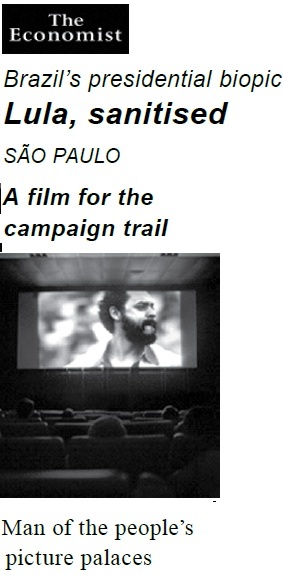
ONCE upon a time it was considered indecent to turn living people into myths, or even into films, with too much haste. The cycle seems to be shorter now. Gandhi had to wait until 34 years after his death before he appeared on cinema screens around the world. George Bush junior, by contrast, was the victim of an Oliver Stone biopic during the last year of his presidency. Now a Brazilian director, Fábio Barreto, has done the same for Brazil’s president, Luiz Inácio Lula da Silva, as he starts his final year of office.
“Lula, Son of Brazil” is the tale of a poor boy made good, his flaws left on the cutting table and his virtues in close-up. Since Lula hopes to secure the election of his chosen successor, Dilma Rousseff, in October, it is controversial. The film “promotes the worship of a political myth,” said Eugênio Bucci, a critic and journalism professor. Before it was even released Veja, a magazine, pointed out that many of the companies that funded its production (the most expensive in the history of Brazilian cinema) have either won or hope to win contracts from the government.
For all that, the film is very watchable. It opens in the poor north- -east, where Lula was born into a landscape of bright red soil and cacti, and ends with his rise as a metalworkers’ union leader in the industrial belt of São Paulo in the 1970s. This is a candyfloss version of the story, however. Lula’s reverses are shown: the little finger lost to a lathe, the death of his first wife and child in childbirth. But he is too good to be true: a perfect student, perfect husband and political moderate who abhorred violence.
The book on which the film is based, by contrast, quotes Lula as approving of an incident in which a director of a factory that is on strike is thrown out of a window. In the film he runs from the factory appalled. That is a shame. A more nuanced telling would not detract from Lula’s remarkable life story and achievement.
The film is doing well at the box office. Its producers say it is running more strongly in the north-east than in the populous south-east, which means it mirrors Ms Rousseff’s fortunes in the polls. There are plans to show the film on mobile screens in places with no cinema. It may get an airing on television, though there is no such deal in place yet.
All this helps a process of mythmaking around Lula that is already well under way. Catching some of Lula’s stardust is Ms Rousseff’s best hope for capturing the presidency in October, and there are some signs that this is happening. The gap between her and José Serra, her main rival, halved between March and December last year and now stands at 14 points. Competing against a celluloid legend is not easy.www.economist.com
According to the text, “Lula, Son of Brazil”
Questão 18 45317
Mackenzie 2010/1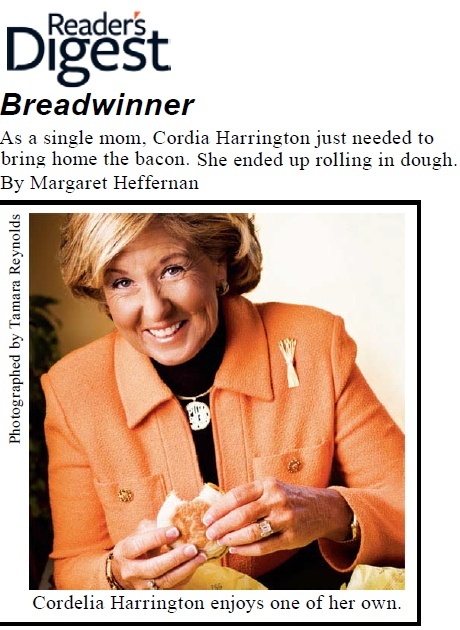
Cordia Harrington was tired __( I )__ standing up all day and smelling like french fries __( II )__night. A proper ty developer, she also owned and operated three McDonald’s franchises in Illinois, but as a divorced mother __( III )__ three boys, she yearned __( IV )__ a business that would provide __( V )__ her children and let her spend more time __(VI) __ them.
Her aha moment struck, strangely enough, after she was nominated in 1992 to be on the McDonald’s bun committee. “The other franchisees, all men, thought that was hilarious because of the word bun,” she recalls. “But the joke was on them: They didn’t know the company would be picking me up in a corporate jet to see bakeries around the world. Every time I went to a meeting, I loved it. This was global!”
The experience opened her eyes to business possibilities. When McDonald’s decided it wanted a new bun supplier, Harrington became determined to win the contract, even though she had no experience running a bakery. “You see a tiny crack in the door, and you have to run through it,” she says. “I really believed I could do this.”
Harrington studied the bakery business and made sure she was never off executives’ radar. “If you have a dream, you can’t wait for people to call you,” she says. “So I’d visit a mill and send them photos of myself in a baker’s hat and jacket, holding a sign that said ‘I want to be your baker.’” After four years and 32 interviews, her persistence paid off.
Harrington sealed the deal with a handshake, sold her franchises, invested everything she owned, and borrowed $13.5 million. She was ready to buildthe fastest, most automated bakery in the world.
Reader’s Digest
The prepositions that appropriately fill in blanks I, II, III, IV, V and VI, in the text, are
06