


![[Marketing] Questao Topo - deslogado](https://storage.estuda.com.br/banners/0_6b7ebee90b03af1c560c73bb8bcce34a_banner_deslogado_70_dias.png)
Questões de Inglês
19.971 Questões
Questão 36 48509
UFMG 1ª Fase 2010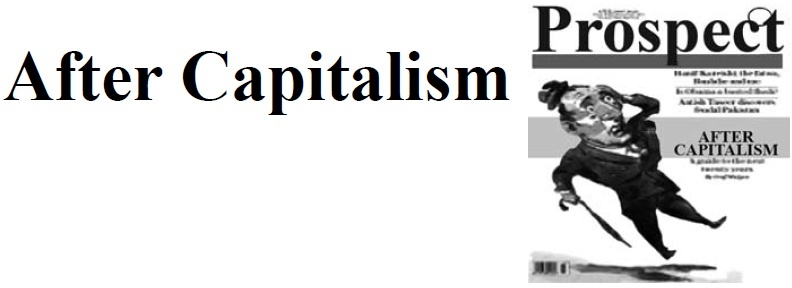
The era of transition that we are entering will be disruptive – but
it may bring a world where markets are servants, not masters.
To understand what capitalism might become, we first have
to understand what it is. This is not so simple. Capitalism includes
a market economy, but many traditional market economies are
not capitalistic. It includes trade, but trade, too, long precedes
capitalism. It includes capital – but Egyptian pharaohs and fascist
dictators commanded surpluses too.
The French historian Fernand Braudel offered perhaps the best
description of capitalism when he wrote of it as a series of layers
built on top of the everyday market economy of onions and wood,
plumbing and cooking. These layers, local, regional, national and
global, are characterised by ever greater abstraction, until at the top
sits disembodied finance, seeking returns anywhere, uncommitted
to any particular place or industry, and commodifying anything
and everything.
Only a few decades ago there was great interest in what would
supersede capitalism. The answers ranged from communism
to managerialism, and from hopes of a golden age of leisure to
dreams of a return to community and ecological harmony. Today
these utopias can be found in the movements around the World
Social Forum, on the edges of all of the major religions, in the
radical sub-cultures that surround the net, and in moderated form
in thousands of civic ventures across the world.
MULGAN, Geoff. Available at: <http://www.prospect-magazine.co.uk/article_details.php?id=10680> Access on June 17th, 2009
Braudel suggests that capitalism is
Questão 35 48508
UFMG 1ª Fase 2010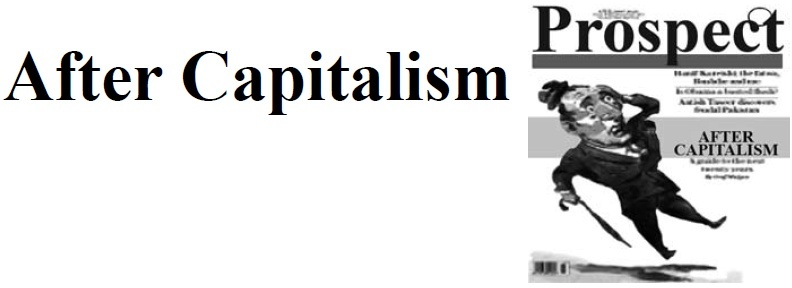
The era of transition that we are entering will be disruptive – but
it may bring a world where markets are servants, not masters.
To understand what capitalism might become, we first have
to understand what it is. This is not so simple. Capitalism includes
a market economy, but many traditional market economies are
not capitalistic. It includes trade, but trade, too, long precedes
capitalism. It includes capital – but Egyptian pharaohs and fascist
dictators commanded surpluses too.
The French historian Fernand Braudel offered perhaps the best
description of capitalism when he wrote of it as a series of layers
built on top of the everyday market economy of onions and wood,
plumbing and cooking. These layers, local, regional, national and
global, are characterised by ever greater abstraction, until at the top
sits disembodied finance, seeking returns anywhere, uncommitted
to any particular place or industry, and commodifying anything
and everything.
Only a few decades ago there was great interest in what would
supersede capitalism. The answers ranged from communism
to managerialism, and from hopes of a golden age of leisure to
dreams of a return to community and ecological harmony. Today
these utopias can be found in the movements around the World
Social Forum, on the edges of all of the major religions, in the
radical sub-cultures that surround the net, and in moderated form
in thousands of civic ventures across the world.
MULGAN, Geoff. Available at: Access on June 17th, 2009
According to the text, market economy, trade and capital (1st paragraph) are
Questão 34 48507
UFMG 1ª Fase 2010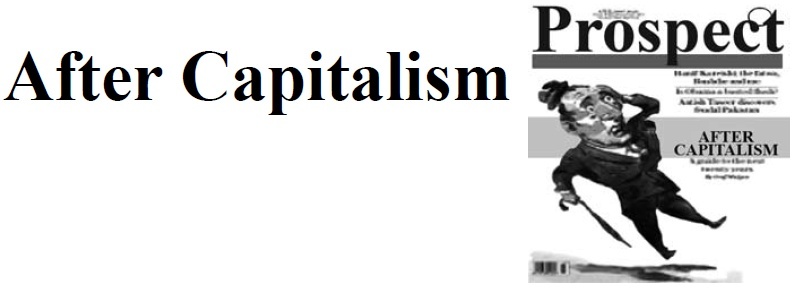
The era of transition that we are entering will be disruptive – but
it may bring a world where markets are servants, not masters.
To understand what capitalism might become, we first have
to understand what it is. This is not so simple. Capitalism includes
a market economy, but many traditional market economies are
not capitalistic. It includes trade, but trade, too, long precedes
capitalism. It includes capital – but Egyptian pharaohs and fascist
dictators commanded surpluses too.
The French historian Fernand Braudel offered perhaps the best
description of capitalism when he wrote of it as a series of layers
built on top of the everyday market economy of onions and wood,
plumbing and cooking. These layers, local, regional, national and
global, are characterised by ever greater abstraction, until at the top
sits disembodied finance, seeking returns anywhere, uncommitted
to any particular place or industry, and commodifying anything
and everything.
Only a few decades ago there was great interest in what would
supersede capitalism. The answers ranged from communism
to managerialism, and from hopes of a golden age of leisure to
dreams of a return to community and ecological harmony. Today
these utopias can be found in the movements around the World
Social Forum, on the edges of all of the major religions, in the
radical sub-cultures that surround the net, and in moderated form
in thousands of civic ventures across the world.
MULGAN, Geoff. Available at: Access on June 17th, 2009
The best topic for the first paragraph is that
Questão 33 48506
UFMG 1ª Fase 2010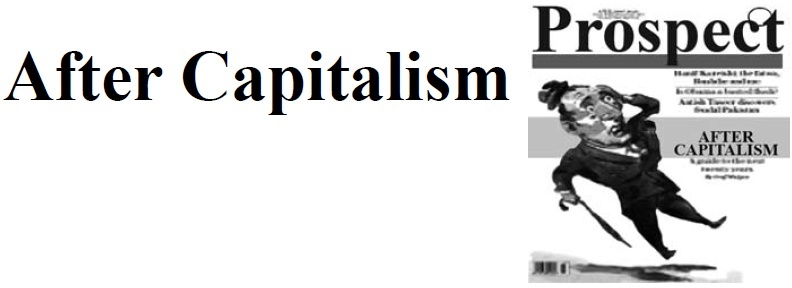
The era of transition that we are entering will be disruptive – but
it may bring a world where markets are servants, not masters.
To understand what capitalism might become, we first have
to understand what it is. This is not so simple. Capitalism includes
a market economy, but many traditional market economies are
not capitalistic. It includes trade, but trade, too, long precedes
capitalism. It includes capital – but Egyptian pharaohs and fascist
dictators commanded surpluses too.
The French historian Fernand Braudel offered perhaps the best
description of capitalism when he wrote of it as a series of layers
built on top of the everyday market economy of onions and wood,
plumbing and cooking. These layers, local, regional, national and
global, are characterised by ever greater abstraction, until at the top
sits disembodied finance, seeking returns anywhere, uncommitted
to any particular place or industry, and commodifying anything
and everything.
Only a few decades ago there was great interest in what would
supersede capitalism. The answers ranged from communism
to managerialism, and from hopes of a golden age of leisure to
dreams of a return to community and ecological harmony. Today
these utopias can be found in the movements around the World
Social Forum, on the edges of all of the major religions, in the
radical sub-cultures that surround the net, and in moderated form
in thousands of civic ventures across the world.
MULGAN, Geoff. Available at: Access on June 17th, 2009
The introduction to the text (lines 1-2) implies that, at present, the capitalist system
Questão 49 47455
UDESC Manhã 2010/1Text 2
Seasons
(by wikipedia)
[1] A season is a division of the year, marked by changes in weather.
Seasons result from the yearly revolution of the Earth around the Sun and the tilt of the
Earth's axis relative to the plane of revolution. In temperate and polar regions, the
seasons are marked by changes in the intensity of sunlight that reaches the Earth's
[5] surface, variations of which may cause animals to go into hibernation or to migrate, and
plants to be dormant.
During June, July and August, the northern hemisphere is exposed to more direct
sunlight because the hemisphere faces the sun. The same is true of the southern
hemisphere in December, January, and February. It is the tilt of the Earth that causes the
[10] Sun to be higher in the sky during the summer months which increases the solar flux.
In temperate and polar regions generally four seasons are recognized: spring, summer,
autumn, winter.
In some tropical and subtropical regions it is more common to speak of the rainy (or wet,
or monsoon) season versus the dry season, because the amount of precipitation may
[15] vary more dramatically than the average temperature. For example, in Nicaragua, the dry
season is called Summer (Oct to May) and the rainy season is called Winter (Apr to Nov)
even though it is located in the northern hemisphere.
In other tropical areas a three-way division into hot, rainy and cool season is used.
In some parts of the world, special "seasons" are loosely defined based upon important
[20] events such as a hurricane season, tornado season or a wildfire season.
Chinese seasons are traditionally based on 24 periods known as solar terms, and begin
at the midpoint of solstices and equinoxes.
It’s correct to say that:
Questão 45 47451
UDESC Manhã 2010/1Touched by An Angel
By Maya Angelou
[5] We, unaccustomed to courage
exiles from delight
live coiled in shells of loneliness
until love leaves its high holy temple
[10] and comes into our sight
to liberate us into life.
Love arrives
and in its train come ecstasies
old memories of pleasure
[15] ancient histories of pain.
Yet if we are bold,
love strikes away the chains of fear
from our souls.
We are weaned from our timidity
[20] In the flush of love's light
we dare be brave
And suddenly we see
that love costs all we are
and will ever be.
[25] Yet it is only love
which sets us free.
The text above is about:
06