


![[Marketing] Questao Topo - deslogado](https://storage.estuda.com.br/banners/0_6b7ebee90b03af1c560c73bb8bcce34a_banner_deslogado_70_dias.png)
Questões de Inglês
19.971 Questões
Questão 49 48908
ESPM 2010/1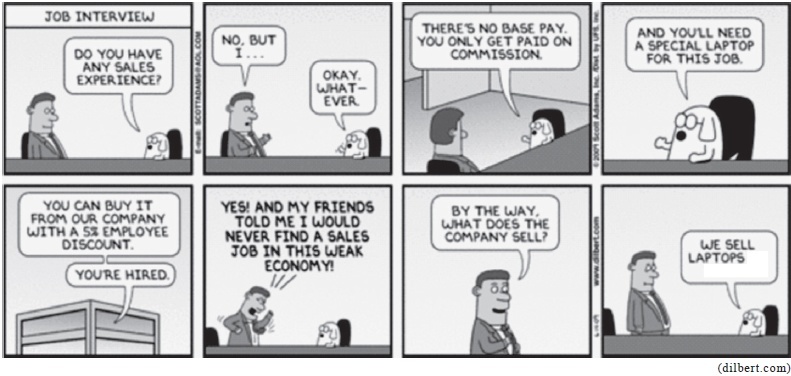
According to the comic strip, the interviewer considers as a prerequisite for the job:
Questão 48 48907
ESPM 2010/1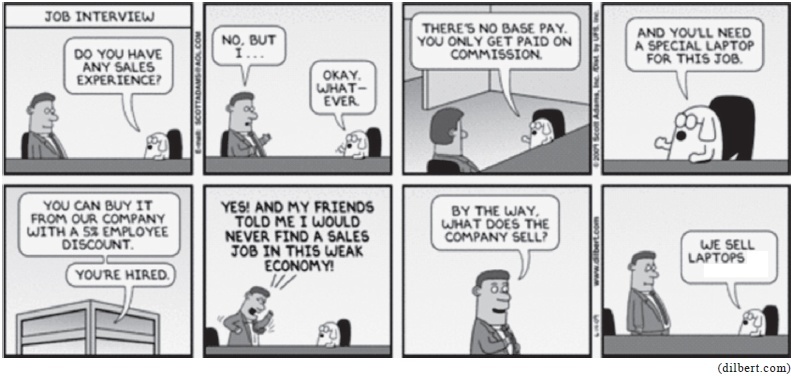
You can infer from the comic strip that the candidate:
Questão 42 48901
ESPM 2010/1When it comes to what makes us happy at work, job satisfaction surveys have been showing for years that the size of our paycheck is losing ground to intangibles like autonomy, mobility, low stress, flexible hours, job security, health coverage, paid time off and other benefits. Does pay matter? Of course it does. But as China and other emerging markets have gained ground on the U.S. economically, American workers have begun to come to grips with what that means: in many cases, finding a standard of living that is declining relative to other nations and saying bye-bye to generous and automatic pay raises across industries. The recession has only deepened this trend. Workers who are elated to simply have a job aren’t complaining about money, and according to a Randstad survey, they now name job security and benefits among the top factors in their happiness.
(www.time.com TIME in partnership with CNN, May 29, 2009)
The word “trend” in the text most likely means:
Questão 40 48513
UFMG 1ª Fase 2010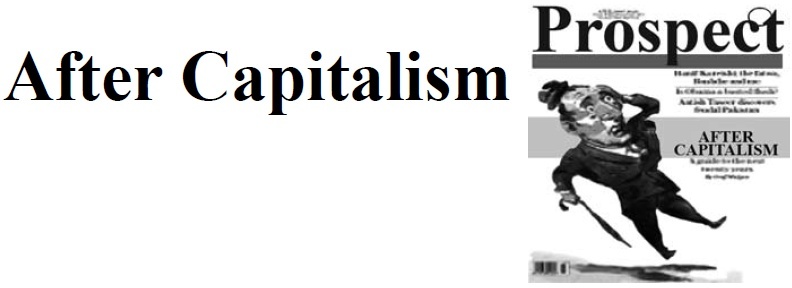
The era of transition that we are entering will be disruptive – but
it may bring a world where markets are servants, not masters.
To understand what capitalism might become, we first have
to understand what it is. This is not so simple. Capitalism includes
a market economy, but many traditional market economies are
not capitalistic. It includes trade, but trade, too, long precedes
capitalism. It includes capital – but Egyptian pharaohs and fascist
dictators commanded surpluses too.
The French historian Fernand Braudel offered perhaps the best
description of capitalism when he wrote of it as a series of layers
built on top of the everyday market economy of onions and wood,
plumbing and cooking. These layers, local, regional, national and
global, are characterised by ever greater abstraction, until at the top
sits disembodied finance, seeking returns anywhere, uncommitted
to any particular place or industry, and commodifying anything
and everything.
Only a few decades ago there was great interest in what would
supersede capitalism. The answers ranged from communism
to managerialism, and from hopes of a golden age of leisure to
dreams of a return to community and ecological harmony. Today
these utopias can be found in the movements around the World
Social Forum, on the edges of all of the major religions, in the
radical sub-cultures that surround the net, and in moderated form
in thousands of civic ventures across the world.
MULGAN, Geoff. Available at: Access on June 17th, 2009
Study this cartoon:
We can infer that the cartoon above says that socialism

Questão 39 48512
UFMG 1ª Fase 2010
The era of transition that we are entering will be disruptive – but
it may bring a world where markets are servants, not masters.
To understand what capitalism might become, we first have
to understand what it is. This is not so simple. Capitalism includes
a market economy, but many traditional market economies are
not capitalistic. It includes trade, but trade, too, long precedes
capitalism. It includes capital – but Egyptian pharaohs and fascist
dictators commanded surpluses too.
The French historian Fernand Braudel offered perhaps the best
description of capitalism when he wrote of it as a series of layers
built on top of the everyday market economy of onions and wood,
plumbing and cooking. These layers, local, regional, national and
global, are characterised by ever greater abstraction, until at the top
sits disembodied finance, seeking returns anywhere, uncommitted
to any particular place or industry, and commodifying anything
and everything.
Only a few decades ago there was great interest in what would
supersede capitalism. The answers ranged from communism
to managerialism, and from hopes of a golden age of leisure to
dreams of a return to community and ecological harmony. Today
these utopias can be found in the movements around the World
Social Forum, on the edges of all of the major religions, in the
radical sub-cultures that surround the net, and in moderated form
in thousands of civic ventures across the world.
MULGAN, Geoff. Available at: <http://www.prospect-magazine.co.uk/article_details.php?id=10680> Access on June 17th, 2009
We can say that the author of the text thinks that religion
Questão 38 48511
UFMG 1ª Fase 2010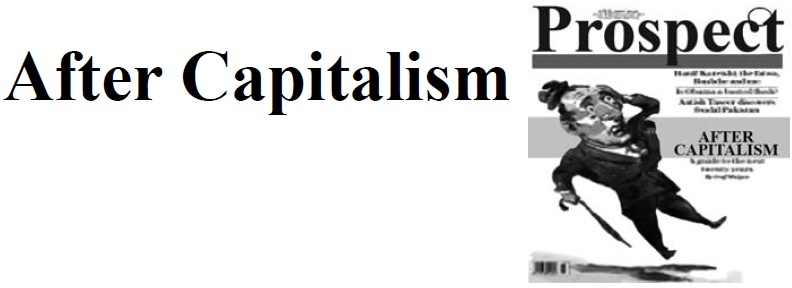
The era of transition that we are entering will be disruptive – but
it may bring a world where markets are servants, not masters.
To understand what capitalism might become, we first have
to understand what it is. This is not so simple. Capitalism includes
a market economy, but many traditional market economies are
not capitalistic. It includes trade, but trade, too, long precedes
capitalism. It includes capital – but Egyptian pharaohs and fascist
dictators commanded surpluses too.
The French historian Fernand Braudel offered perhaps the best
description of capitalism when he wrote of it as a series of layers
built on top of the everyday market economy of onions and wood,
plumbing and cooking. These layers, local, regional, national and
global, are characterised by ever greater abstraction, until at the top
sits disembodied finance, seeking returns anywhere, uncommitted
to any particular place or industry, and commodifying anything
and everything.
Only a few decades ago there was great interest in what would
supersede capitalism. The answers ranged from communism
to managerialism, and from hopes of a golden age of leisure to
dreams of a return to community and ecological harmony. Today
these utopias can be found in the movements around the World
Social Forum, on the edges of all of the major religions, in the
radical sub-cultures that surround the net, and in moderated form
in thousands of civic ventures across the world.
MULGAN, Geoff. Available at: <http://www.prospect-magazine.co.uk/article_details.php?id=10680> Access on June 17th, 2009
Communism (line 19) and managerialism (line 20) are mentioned in the text as systems that
06