


![[Marketing] Questao Topo - deslogado](https://storage.estuda.com.br/banners/0_6b7ebee90b03af1c560c73bb8bcce34a_banner_deslogado_70_dias.png)
Questões de Inglês
19.971 Questões
Questão 42 80045
FMABC 2010SABIÁ VIRUS
Epidemiology and History
Only one known case of naturally contracted Sabiá virus infection has been documented, yet the virus remains important due to at least two laboratory infections that have occurred.
The original natural case of Sabiá virus infection occurred in a woman staying in the village of Sabiá (Cotia), outside of Sao Paulo, Brazil, in 1990. In this instance, severe liver damage led physicians to an initial diagnosis of yellow fever. However, this was soon ruled out through a thorough blood test. Following the patient's death, the agent was identified as a then unknown Arenavirus.
The virologist who was responsible for this identification, however, contracted the disease as during the course of his research; he, fortunately, survived. Four years later, while working under level 3 biohazard conditions, a researcher at the Tropical Medicine Clinic at Yale-New Haven Hospital was exposed to the virus. Exposure apparently resulted when a centrifuge bottle containing infected tissue cracked and leaked into the spinning centrifuge, releasing aerosolized virus particles into the air. New World Arenaviruses, or those members of the family that are endemic to the Americas, are being discovered at a rate of close to one every three years, a fact that brands Sabiá and its cousins as some of the most important emerging viruses of their regions.
Transmission
Like other New World Arenaviruses, transmission is assumed to be via aerosolized virus particles. Close contact with infected individuals or suspected animal reservoirs or vectors are key factors in Sabiá diagnosis. Though the animal reservoir is as yet unknown, a rodent found throughout the region surrounding the small village of Sabiá has been implicated. In the history of the virus, laboratory-related infection has been a primary method of transmission; therefore, utmost caution is needed when handling the virus in a laboratory setting.
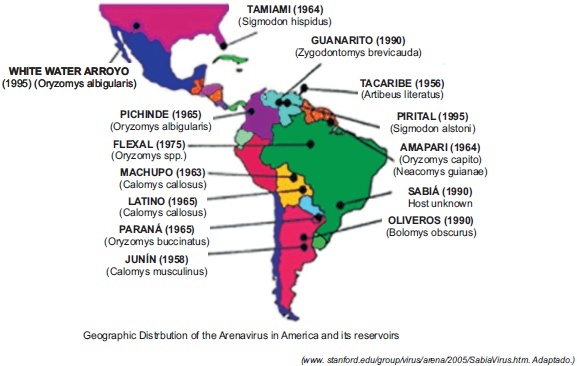
Os Arenavirus do Novo Mundo
Questão 41 80044
FMABC 2010SABIÁ VIRUS
Epidemiology and History
Only one known case of naturally contracted Sabiá virus infection has been documented, yet the virus remains important due to at least two laboratory infections that have occurred.
The original natural case of Sabiá virus infection occurred in a woman staying in the village of Sabiá (Cotia), outside of Sao Paulo, Brazil, in 1990. In this instance, severe liver damage led physicians to an initial diagnosis of yellow fever. However, this was soon ruled out through a thorough blood test. Following the patient's death, the agent was identified as a then unknown Arenavirus.
The virologist who was responsible for this identification, however, contracted the disease as during the course of his research; he, fortunately, survived. Four years later, while working under level 3 biohazard conditions, a researcher at the Tropical Medicine Clinic at Yale-New Haven Hospital was exposed to the virus. Exposure apparently resulted when a centrifuge bottle containing infected tissue cracked and leaked into the spinning centrifuge, releasing aerosolized virus particles into the air. New World Arenaviruses, or those members of the family that are endemic to the Americas, are being discovered at a rate of close to one every three years, a fact that brands Sabiá and its cousins as some of the most important emerging viruses of their regions.
Transmission
Like other New World Arenaviruses, transmission is assumed to be via aerosolized virus particles. Close contact with infected individuals or suspected animal reservoirs or vectors are key factors in Sabiá diagnosis. Though the animal reservoir is as yet unknown, a rodent found throughout the region surrounding the small village of Sabiá has been implicated. In the history of the virus, laboratory-related infection has been a primary method of transmission; therefore, utmost caution is needed when handling the virus in a laboratory setting.
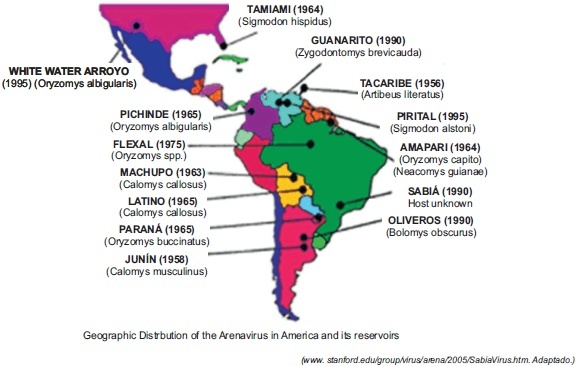
O vírus sabiá
Questão 18 76815
FATEC 2010/2FOOTBALL'S RED CARD
THE WORLD'S MOST VALUABLE SPORTS TEAM IS drowning in debt. English football powerhouse Manchester United (Forbes estimates its worth at $1.8 billion) had to raise some $800 million in a bond issue last month, which is still $340 million shy of its total debts. Man U needed the bond to pay off the millions that American businessman
Malcolm Glazer borrowed to purchase the team in 2005. But in the first three weeks since the bond was issued it lost nearly 10 percent of its value, a sign that, even though Man U's revenues reached a record $444 million last year, the market is growing wary of debt, particularly the European variety.
Man U isn't alone. Debt levels have also skyrocketed among rivals like liverpool, calling into question the business model of English Premier League football. Each year the three worst teams are banished to a lower league, where vital broadcasting revenues are dramatically reduced. This puts huge pressure on clubs to compete for the best players, who now regularly fetch more than $50 million a year. Unlike in the U.S., there's no system of collective bargaining to restrain wages. As a result, the total salary bill for the Premier League has risen more than 20 percent since 2008. This has created a vicious cycle of rising debt among clubs that must spend extravagantly on players to ensure increased revenue. Any team attempting to be frugal becomes more likely to end up with lower revenue. It's become a game of who can spend the most, and it probably won't end well.
(BY WILLIAM UNDERHILL - Newsweek)
Assinale a alternativa em que há um exemplo de grau de comparação
Questão 16 76813
FATEC 2010/2HAITI'S INDENTURED CHIlDREN
THE DAYS AFTER HAITI'S EARTHQUAKE brought joyous reunions for some families. Others faced the grim reality that they'd been suddenly robbed of parents or offspring. But for Haiti's 225,000 restaveks, or indentured children, the quake brought only an uncertain future.
Slavery-which ended with independence in 1804-is illegal in Haiti. And technically, restaveks are not slaves. The institution has its roots in the Caribbean tradition of child lending between families (usually relatives) to pitch in with extra work, care for the elderly or sick, or to provide opportunity to a child from a poor family. Generally, rural parents send their children to live with wealthier families in the cities. In exchange for domestic labor, the children are supposed to receive lodging, food, clothing, medicine, and-most importantly-education. In as many as half of the cases, they do (though classifying treatment in private homes is notoriously difficult). The unlucky ones, called restaveks-from the French rester avec, or "to stay with" -are loaned through normal channels but denied schooling and subject to abuse and degradation. This phenomenon has spiked in modern Haiti, as more and more children end up with equally impoverished families in the slums.
Before the quake, up to 22 percent of Haitian homes contained restaveks, according to a study funded by USAID. Keeping restaveks is illegal, but child loans are not and, given the extent of Haiti's governmental dysfunction, it's hard to tell which cases are which. Now that the quake has thrown family networks into disarray, the flimsy social ties supporting restaveks are likely to break down. "For families struggling in the wake of a catastrophe, restavek kids are the first to go; says Glenn Smucker, an anthropologist who specializes in development work in Haiti. "Their parents are not there to watch out for them, so they're far more vulnerable" to desertion and trafficking.
But even as the numbers of abandoned restaveks swell, the demand for their services is likely to decrease. A mass exodus of residents from Port-au-Prince is reversing decades of migratory trends. If the shift sticks, it means there will be less need for restaveks in the city. But it's also possible that families suffering from the quake's economic aftershocks will feel extra pressure to lend out their children, even as it becomes more likely they'll end up as restaveks. Which, combined with a spike in new orphans, means Haiti will likely see a rise in the number of its street children in the years to come.
(By Katie Paul - Newsweek)
O texto afirma que a cidade de Porto Príncipe está
Questão 15 76812
FATEC 2010/2HAITI'S INDENTURED CHIlDREN
THE DAYS AFTER HAITI'S EARTHQUAKE brought joyous reunions for some families. Others faced the grim reality that they'd been suddenly robbed of parents or offspring. But for Haiti's 225,000 restaveks, or indentured children, the quake brought only an uncertain future.
Slavery-which ended with independence in 1804-is illegal in Haiti. And technically, restaveks are not slaves. The institution has its roots in the Caribbean tradition of child lending between families (usually relatives) to pitch in with extra work, care for the elderly or sick, or to provide opportunity to a child from a poor family. Generally, rural parents send their children to live with wealthier families in the cities. In exchange for domestic labor, the children are supposed to receive lodging, food, clothing, medicine, and-most importantly-education. In as many as half of the cases, they do (though classifying treatment in private homes is notoriously difficult). The unlucky ones, called restaveks-from the French rester avec, or "to stay with" -are loaned through normal channels but denied schooling and subject to abuse and degradation. This phenomenon has spiked in modern Haiti, as more and more children end up with equally impoverished families in the slums.
Before the quake, up to 22 percent of Haitian homes contained restaveks, according to a study funded by USAID. Keeping restaveks is illegal, but child loans are not and, given the extent of Haiti's governmental dysfunction, it's hard to tell which cases are which. Now that the quake has thrown family networks into disarray, the flimsy social ties supporting restaveks are likely to break down. "For families struggling in the wake of a catastrophe, restavek kids are the first to go; says Glenn Smucker, an anthropologist who specializes in development work in Haiti. "Their parents are not there to watch out for them, so they're far more vulnerable" to desertion and trafficking.
But even as the numbers of abandoned restaveks swell, the demand for their services is likely to decrease. A mass exodus of residents from Port-au-Prince is reversing decades of migratory trends. If the shift sticks, it means there will be less need for restaveks in the city. But it's also possible that families suffering from the quake's economic aftershocks will feel extra pressure to lend out their children, even as it becomes more likely they'll end up as restaveks. Which, combined with a spike in new orphans, means Haiti will likely see a rise in the number of its street children in the years to come.
(By Katie Paul - Newsweek)
A palavra flimsy, no 3º parágrafo do texto, pode ser substituída por
Questão 14 76811
FATEC 2010/2HAITI'S INDENTURED CHIlDREN
THE DAYS AFTER HAITI'S EARTHQUAKE brought joyous reunions for some families. Others faced the grim reality that they'd been suddenly robbed of parents or offspring. But for Haiti's 225,000 restaveks, or indentured children, the quake brought only an uncertain future.
Slavery-which ended with independence in 1804-is illegal in Haiti. And technically, restaveks are not slaves. The institution has its roots in the Caribbean tradition of child lending between families (usually relatives) to pitch in with extra work, care for the elderly or sick, or to provide opportunity to a child from a poor family. Generally, rural parents send their children to live with wealthier families in the cities. In exchange for domestic labor, the children are supposed to receive lodging, food, clothing, medicine, and-most importantly-education. In as many as half of the cases, they do (though classifying treatment in private homes is notoriously difficult). The unlucky ones, called restaveks-from the French rester avec, or "to stay with" -are loaned through normal channels but denied schooling and subject to abuse and degradation. This phenomenon has spiked in modern Haiti, as more and more children end up with equally impoverished families in the slums.
Before the quake, up to 22 percent of Haitian homes contained restaveks, according to a study funded by USAID. Keeping restaveks is illegal, but child loans are not and, given the extent of Haiti's governmental dysfunction, it's hard to tell which cases are which. Now that the quake has thrown family networks into disarray, the flimsy social ties supporting restaveks are likely to break down. "For families struggling in the wake of a catastrophe, restavek kids are the first to go; says Glenn Smucker, an anthropologist who specializes in development work in Haiti. "Their parents are not there to watch out for them, so they're far more vulnerable" to desertion and trafficking.
But even as the numbers of abandoned restaveks swell, the demand for their services is likely to decrease. A mass exodus of residents from Port-au-Prince is reversing decades of migratory trends. If the shift sticks, it means there will be less need for restaveks in the city. But it's also possible that families suffering from the quake's economic aftershocks will feel extra pressure to lend out their children, even as it becomes more likely they'll end up as restaveks. Which, combined with a spike in new orphans, means Haiti will likely see a rise in the number of its street children in the years to come.
(By Katie Paul - Newsweek)
O antropólogo Glenn Smucker
06