


![[Marketing] Questao Topo - deslogado](https://storage.estuda.com.br/banners/0_6b7ebee90b03af1c560c73bb8bcce34a_banner_deslogado_70_dias.png)
Questões de Inglês
19.971 Questões
Questão 39 90609
UEFS Caderno 1 2010/2TEXTO:
Jurassic fossil discovery
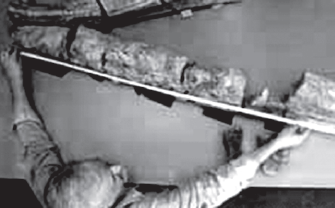
A 150-million-year-old fossilized skull belonging to
a creature called a pliosaur has been unearthed along
the Jurassic Coast in Dorset in England.
While dinosaurs roamed the land, pliosaurs terrorized
5 the oceans. These giant, crocodile-shaped creatures
were fearsome hunters, their immense jaws and
razor-sharp teeth made easy work of passing prey. Now
an 8ft-long skull has been found in Dorset by a local
fossil collector. And scientists say it could be one of the
10 biggest ever found, belonging to a creature that would
have measured up to 50ft long.
Paleontologist Richard Forrest has been examining
the specimen. He says: ‘To get a whole skull like this is
like Christmas and Easter and everything rolled into one,
15 because we actually can see, yes this really was an
absolutely enormous animal, and realistically, probably
the most powerful predator that ever lived.’
The fossilized skull has now been bought by Dorset
County Council using Heritage Lottery Funds. They plan
20 to eventually put it on public display.
MORELLE, Rebecca. Jurassic fossil discovery. Disponível em: . Acesso em: 30 maio 2010.
When examining the creature’s skull, Richard Forrest
Questão 34 90604
UEFS Caderno 1 2010/2TEXTO:
Record blow for teenage sailor
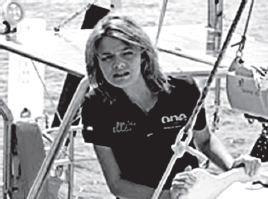
A 16-year-old Australian girl is nearly home after
sailing around the world. But she may not have sailed
far enough to get the record as the youngest person to
make the journey.
5 After more than six months at sea Jessica Watson
is in the final stretch of her epic voyage around the globe.
She’s hoping to reach Sydney Harbor later this month a
couple of days shy of her seventeenth birthday.
But although there’s no question that she’s
10 circumnavigated the globe, sailing experts say she hasn’t
gone far enough to claim the record of being the youngest
person to sail solo non-stop and unassisted around the
world.
The influential Sail World website has praised her heroic
15 achievement but is a stickler for the rules of what it calls
“true circumnavigation”. To have achieved that, it says,
the teenager should have sailed much farther north into
the Atlantic to a point in line with France, rather than
simply crossing the Equator and then returning south.
20 “We don’t want to take away from what the kid’s
done,” said the editor of the website “but it’s one thing to
be a hero and another to be a record holder. Had she
sailed three thousand seven hundred kilometers further
she could have made that boast.”
BRYANT, Nick. Record blow for teenage sailor. Disponível em: . Acesso em: 5 jun.
In the fragment “rather than simply crossing the Equator” (l. 18-19), the expression in bold is synonymous with
Questão 33 90603
UEFS Caderno 1 2010/2TEXTO:
Record blow for teenage sailor
A 16-year-old Australian girl is nearly home after
sailing around the world. But she may not have sailed
far enough to get the record as the youngest person to
make the journey.
5 After more than six months at sea Jessica Watson
is in the final stretch of her epic voyage around the globe.
She’s hoping to reach Sydney Harbor later this month a
couple of days shy of her seventeenth birthday.
But although there’s no question that she’s
10 circumnavigated the globe, sailing experts say she hasn’t
gone far enough to claim the record of being the youngest
person to sail solo non-stop and unassisted around the
world.
The influential Sail World website has praised her heroic
15 achievement but is a stickler for the rules of what it calls
“true circumnavigation”. To have achieved that, it says,
the teenager should have sailed much farther north into
the Atlantic to a point in line with France, rather than
simply crossing the Equator and then returning south.
20 “We don’t want to take away from what the kid’s
done,” said the editor of the website “but it’s one thing to
be a hero and another to be a record holder. Had she
sailed three thousand seven hundred kilometers further
she could have made that boast.”
BRYANT, Nick. Record blow for teenage sailor. Disponível em: . Acesso em: 5 jun.
The sentence “the teenager should have sailed much farther north” (l. 17) describes
Questão 27 90601
UEFS Caderno 1 2010/2TEXTO:
Earthquake science

A team of scientists say they can explain why many
more people died in the earthquake in Haiti compared to
the much larger quake in Chile.
The geophysicists, from the U.S. Geological Survey
5 and from Harvard University, said that strict building
regulations in Chile had undoubtedly saved lives. The
country has a long history of earthquakes and as a
consequence has some of the toughest building codes
in the world.
10 But Doctor Walter Mooney, who’s studied dozens
of earthquakes around the globe, said there were also
other factors behind the relatively low death toll: “First
and foremost, people are used to earthquakes in Chile
and so they did know that they have to evacuate from
15 dangerous structures. Secondly, this earthquake had a
slow and gradual build-up.They had some 20 or 30
seconds to look at each other, realize that the ground
shaking was crescendoing, and building up, and they
made the right decision in almost all cases by getting
20 out of the dangerous structures and running out into the
open area. Thus, education, and a bit of luck is the
answer to why so many people survived.”
Doctor Mooney contrasted that with the Haitian
quake, which split open the hard rock beneath the capital
25 Port Au Prince within seconds. Buildings collapsed
instantly, giving people no time to escape.
Despite the relatively low loss of life in Chile,
Dr Mooney said the country must learn from this disaster,
particularly with regards to building along the coast. Many
30 of those who died were killed not by the quake, but by
the tsunamis that followed it, which swept away coastal
villages.
And the geophysicists said that even if Chile took
precautions, it would remain highly vulnerable to
35 earthquakes. They said that the north of the country was
a particular worry. It hasn’t suffered a big quake for around
a hundred years and is probably due for one soon, they
said.
LONG, Gideon. Earthquake science. Disponível em: . Acesso em: 6 jun. 2010.
The only alternative in which the word has totally regular plural form is
Questão 29 90598
UEFS Caderno 1 2010/2TEXTO:
Earthquake science
A team of scientists say they can explain why many
more people died in the earthquake in Haiti compared to
the much larger quake in Chile.
The geophysicists, from the U.S. Geological Survey
5 and from Harvard University, said that strict building
regulations in Chile had undoubtedly saved lives. The
country has a long history of earthquakes and as a
consequence has some of the toughest building codes
in the world.
10 But Doctor Walter Mooney, who’s studied dozens
of earthquakes around the globe, said there were also
other factors behind the relatively low death toll: “First
and foremost, people are used to earthquakes in Chile
and so they did know that they have to evacuate from
15 dangerous structures. Secondly, this earthquake had a
slow and gradual build-up.They had some 20 or 30
seconds to look at each other, realize that the ground
shaking was crescendoing, and building up, and they
made the right decision in almost all cases by getting
20 out of the dangerous structures and running out into the
open area. Thus, education, and a bit of luck is the
answer to why so many people survived.”
Doctor Mooney contrasted that with the Haitian
quake, which split open the hard rock beneath the capital
25 Port Au Prince within seconds. Buildings collapsed
instantly, giving people no time to escape.
Despite the relatively low loss of life in Chile,
Dr Mooney said the country must learn from this disaster,
particularly with regards to building along the coast. Many
30 of those who died were killed not by the quake, but by
the tsunamis that followed it, which swept away coastal
villages.
And the geophysicists said that even if Chile took
precautions, it would remain highly vulnerable to
35 earthquakes. They said that the north of the country was
a particular worry. It hasn’t suffered a big quake for around
a hundred years and is probably due for one soon, they
said.
LONG, Gideon. Earthquake science. Disponível em: . Acesso em: 6 jun. 2010.
“so they did know that they have to evacuate from dangerous structures.” (l. 14-15)
The verb form did is being used in this sentence
Questão 28 90597
UEFS Caderno 1 2010/2TEXTO:
Earthquake science
A team of scientists say they can explain why many
more people died in the earthquake in Haiti compared to
the much larger quake in Chile.
The geophysicists, from the U.S. Geological Survey
5 and from Harvard University, said that strict building
regulations in Chile had undoubtedly saved lives. The
country has a long history of earthquakes and as a
consequence has some of the toughest building codes
in the world.
10 But Doctor Walter Mooney, who’s studied dozens
of earthquakes around the globe, said there were also
other factors behind the relatively low death toll: “First
and foremost, people are used to earthquakes in Chile
and so they did know that they have to evacuate from
15 dangerous structures. Secondly, this earthquake had a
slow and gradual build-up.They had some 20 or 30
seconds to look at each other, realize that the ground
shaking was crescendoing, and building up, and they
made the right decision in almost all cases by getting
20 out of the dangerous structures and running out into the
open area. Thus, education, and a bit of luck is the
answer to why so many people survived.”
Doctor Mooney contrasted that with the Haitian
quake, which split open the hard rock beneath the capital
25 Port Au Prince within seconds. Buildings collapsed
instantly, giving people no time to escape.
Despite the relatively low loss of life in Chile,
Dr Mooney said the country must learn from this disaster,
particularly with regards to building along the coast. Many
30 of those who died were killed not by the quake, but by
the tsunamis that followed it, which swept away coastal
villages.
And the geophysicists said that even if Chile took
precautions, it would remain highly vulnerable to
35 earthquakes. They said that the north of the country was
a particular worry. It hasn’t suffered a big quake for around
a hundred years and is probably due for one soon, they
said.
LONG, Gideon. Earthquake science. Disponível em: . Acesso em: 6 jun. 2010.
The word or expression from the text can be grammatically and semantically replaced by the one on the right in
06