


![[Marketing] Questao Topo - deslogado](https://storage.estuda.com.br/banners/0_6b7ebee90b03af1c560c73bb8bcce34a_banner_deslogado_70_dias.png)
Questões de Inglês
19.971 Questões
Questão 74 92066
UNIFESO 2010/1In 1946 a young U.S. diplomat named John Fischer wrote
an earnest little book called Why They Behave like Russians.
Fischer, who’d served with the United Nations in postwar Kiev
and Moscow, was attempting to explain to a bewildered U.S.
[5] public why their wartime ally Joseph Stalin, recipient of billions
of dollars in American Lend-Lease aid, had suddenly turned on
Washington, declaring it a deadly enemy, and seemed hellbent
on starting a Third World War.
The book is still a fascinating reading – not least because
[10] so many of its conclusions continue to ring true today. Fischer
calls Russia’s leaders “ the scared men in the Kremlin,” deeply
insecure behind their aggressive bluster and suspicious of any
internal political threat to their power. Russia is traumatized by
catastrophic historical upheavals and far weaker than it likes to
[15] pretend. The nation, he warns, “may blunder into war as it
strives to build up a protective belt of satellite states outside
its vulnerable borders.” Today, with tensions rising again over
two Georgian breakaway regions effectively annexed by
Russia last summer, that line rings as true as it did at the dawn
[20] of the Cold War.
(from The World According to Russia, in NEWSWEEK, September 7, 2009)
From paragraph 1 we infer that at the end of World War II, Stalin seemed
Questão 72 92064
UNIFESO 2010/1In 1946 a young U.S. diplomat named John Fischer wrote
an earnest little book called Why They Behave like Russians.
Fischer, who’d served with the United Nations in postwar Kiev
and Moscow, was attempting to explain to a bewildered U.S.
[5] public why their wartime ally Joseph Stalin, recipient of billions
of dollars in American Lend-Lease aid, had suddenly turned on
Washington, declaring it a deadly enemy, and seemed hellbent
on starting a Third World War.
The book is still a fascinating reading – not least because
[10] so many of its conclusions continue to ring true today. Fischer
calls Russia’s leaders “ the scared men in the Kremlin,” deeply
insecure behind their aggressive bluster and suspicious of any
internal political threat to their power. Russia is traumatized by
catastrophic historical upheavals and far weaker than it likes to
[15] pretend. The nation, he warns, “may blunder into war as it
strives to build up a protective belt of satellite states outside
its vulnerable borders.” Today, with tensions rising again over
two Georgian breakaway regions effectively annexed by
Russia last summer, that line rings as true as it did at the dawn
[20] of the Cold War.
(from The World According to Russia, in NEWSWEEK, September 7, 2009)
According to paragraph 1,
Questão 75 91951
UNIFESO 2010/2More than 200 European writers toured the United States in
the decades after the Napoleonic Wars, publishing mostly
contemptuous accounts of the makeshift nation for the delight of
their own provincial readers back home. Perhaps none of them
[5] was so ill equipped as the ambivalent aristocrat Alexis de
Tocqueville, and perhaps no work so unlikely to endure as his
portrait Democracy in America. Tocqueville was just 25 when he
began his journey in 1831, a capable but undistinguished student
who had become a provincial administrator. He lacked the literary
[10] stature of Charles Dickens or Frances Trollope or his cousin
Chautebriand whose reveries for the majestic American
landscape largely invented the Romantic tradition in France.
Tocquerville's purpose was somewhat narrower. He had come to
prepare an administrative report on American prisons.
[15] It was not his book on prisons that mesmerized American
audiences, however. Edward Banfield called Democracy in
America "certainly the greatest book ever written by anyone about
America" - to which Gordon Wood has added, " not only on
America but also on democracy itself." George Wilson Pierson,
[20] praised Tocqueville's "essentially 'binocular' " vision, and
presented the man who possessed it, a royalist scion, as a
prophet of the democratic era. Tocqueville has been cited so
often and so variously that the critic Caleb Crain has called him
cheekily, " the Nostradamus of democracy ".
[25] In fact, Tocqueville seems nothing more than an
impressionable amanuensis. Tocqueville praised New England
meetings but never bothered to observe one. Nor any revival
camp meetings. He didn't visit a single American college.
Tocqueville stayed a month in Boston but declined to visit the
[30] factories in Lowell. Or any other factories. A putative prophet of
the American century, Tocqueville was remarkably blind to the
unfolding 19th-century revolution in American industry and as a
celebrated chronicler of the American character he missed
perhaps the most striking feature of the nation in the age of
[35] Jackson - that it was changing, and very fast.
(from Democracy in America, by David Wallace-Wells in NEWSWEEK, April 26, 2010)
According to George Wilson Pierson and Caleb Crain, Tocqueville should be seen as
Questão 73 91949
UNIFESO 2010/2More than 200 European writers toured the United States in
the decades after the Napoleonic Wars, publishing mostly
contemptuous accounts of the makeshift nation for the delight of
their own provincial readers back home. Perhaps none of them
[5] was so ill equipped as the ambivalent aristocrat Alexis de
Tocqueville, and perhaps no work so unlikely to endure as his
portrait Democracy in America. Tocqueville was just 25 when he
began his journey in 1831, a capable but undistinguished student
who had become a provincial administrator. He lacked the literary
[10] stature of Charles Dickens or Frances Trollope or his cousin
Chautebriand whose reveries for the majestic American
landscape largely invented the Romantic tradition in France.
Tocquerville's purpose was somewhat narrower. He had come to
prepare an administrative report on American prisons.
[15] It was not his book on prisons that mesmerized American
audiences, however. Edward Banfield called Democracy in
America "certainly the greatest book ever written by anyone about
America" - to which Gordon Wood has added, " not only on
America but also on democracy itself." George Wilson Pierson,
[20] praised Tocqueville's "essentially 'binocular' " vision, and
presented the man who possessed it, a royalist scion, as a
prophet of the democratic era. Tocqueville has been cited so
often and so variously that the critic Caleb Crain has called him
cheekily, " the Nostradamus of democracy ".
[25] In fact, Tocqueville seems nothing more than an
impressionable amanuensis. Tocqueville praised New England
meetings but never bothered to observe one. Nor any revival
camp meetings. He didn't visit a single American college.
Tocqueville stayed a month in Boston but declined to visit the
[30] factories in Lowell. Or any other factories. A putative prophet of
the American century, Tocqueville was remarkably blind to the
unfolding 19th-century revolution in American industry and as a
celebrated chronicler of the American character he missed
perhaps the most striking feature of the nation in the age of
[35] Jackson - that it was changing, and very fast.
(from Democracy in America, by David Wallace-Wells in NEWSWEEK, April 26, 2010)
From lines 11 and 12 we infer that Chauteaubriand
Questão 72 91948
UNIFESO 2010/2More than 200 European writers toured the United States in
the decades after the Napoleonic Wars, publishing mostly
contemptuous accounts of the makeshift nation for the delight of
their own provincial readers back home. Perhaps none of them
[5] was so ill equipped as the ambivalent aristocrat Alexis de
Tocqueville, and perhaps no work so unlikely to endure as his
portrait Democracy in America. Tocqueville was just 25 when he
began his journey in 1831, a capable but undistinguished student
who had become a provincial administrator. He lacked the literary
[10] stature of Charles Dickens or Frances Trollope or his cousin
Chautebriand whose reveries for the majestic American
landscape largely invented the Romantic tradition in France.
Tocquerville's purpose was somewhat narrower. He had come to
prepare an administrative report on American prisons.
[15] It was not his book on prisons that mesmerized American
audiences, however. Edward Banfield called Democracy in
America "certainly the greatest book ever written by anyone about
America" - to which Gordon Wood has added, " not only on
America but also on democracy itself." George Wilson Pierson,
[20] praised Tocqueville's "essentially 'binocular' " vision, and
presented the man who possessed it, a royalist scion, as a
prophet of the democratic era. Tocqueville has been cited so
often and so variously that the critic Caleb Crain has called him
cheekily, " the Nostradamus of democracy ".
[25] In fact, Tocqueville seems nothing more than an
impressionable amanuensis. Tocqueville praised New England
meetings but never bothered to observe one. Nor any revival
camp meetings. He didn't visit a single American college.
Tocqueville stayed a month in Boston but declined to visit the
[30] factories in Lowell. Or any other factories. A putative prophet of
the American century, Tocqueville was remarkably blind to the
unfolding 19th-century revolution in American industry and as a
celebrated chronicler of the American character he missed
perhaps the most striking feature of the nation in the age of
[35] Jackson - that it was changing, and very fast.
(from Democracy in America, by David Wallace-Wells in NEWSWEEK, April 26, 2010)
According to paragraph 1, Tocqueville
Questão 39 90851
UEFS Caderno 1 2010/1TEXTO:
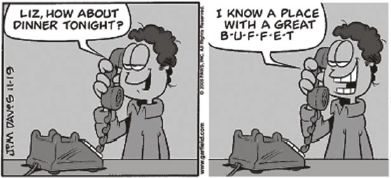
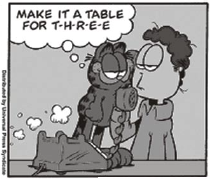
DAVIS, Jim. Disponível em: Acesso em: 10 jan. 2010.
In the 3rd picture, Garfield
06