


![[Marketing] Questao Topo - deslogado](https://storage.estuda.com.br/banners/0_6b7ebee90b03af1c560c73bb8bcce34a_banner_deslogado_70_dias.png)
Questões de Inglês
19.971 Questões
Questão 59 240541
UECE 2010TEXT
[1] Humans make errors. We make errors of
fact and errors of judgment. We have blind
spots in our field of vision and gaps in our
stream of attention. Sometimes we can’t
[5] even answer the simplest questions. Where
was I last week at this time? How long have
I had this pain in my knee? How much
money do I typically spend in a day? These
weaknesses put us at a disadvantage. We
[10] make decisions with partial information. We
are forced to steer by guesswork. We go
with our gut.
That is, some of us do. Others use data.
A timer running on Robin Barooah’s
[15] computer tells him that he has been living
in the United States for 8 years, 2 months
and 10 days. At various times in his life,
Barooah — a 38-year-old self-employed
software designer from England who now
[20] lives in Oakland, Calif. — has also made
careful records of his work, his sleep and
his diet.
"People have such very poor sense of
time," Barooah says, and without good time
[25] calibration, it is much harder to see the
consequences of your actions. If you want
to replace the vagaries of intuition with
something more reliable, you first need to
gather data. Once you know the facts, you
[30] can live by them.
A fetish for numbers is the defining trait
of the modern manager. Corporate
executives facing down hostile shareholders
load their pockets full of numbers. So do
[35] politicians on the hustings, doctors
counseling patients and fans abusing their
local sports franchise on talk radio.
We tolerate the pathologies of
quantification — a dry, abstract, mechanical
[40] type of knowledge — because the results
are so powerful. Numbering things allows
tests, comparisons, experiments. Numbers
make problems less resonant emotionally
but more tractable intellectually. In science,
[45] in business and in the more reasonable
sectors of government, numbers have won
fair and square.
Almost imperceptibly, numbers are now
infiltrating the last redoubts of the
[50] personal. Sleep, exercise, sex, food, mood,
location, alertness, productivity, even
spiritual well-being are being tracked and
measured, shared and displayed. On
MedHelp, one of the largest Internet forums
[55] for health information, more than 30,000
new personal tracking projects are started
by users every month.
We use numbers when we want to tune
up a car, analyze a chemical reaction,
[60] predict the outcome of an election. We use
numbers to optimize an assembly line. Why
not use numbers on ourselves?
For many self-trackers, the goal is
unknown. Although they may take up
[65] tracking with a specific question in mind,
they continue because they believe their
numbers hold secrets that they can’t afford
to ignore, including answers to questions
they have not yet thought to ask.
[70] Until a few years ago it would have been
pointless to seek self-knowledge through
numbers.
Then four things changed. First,
electronic sensors got smaller and better.
[75] Second, people started carrying powerful
computing devices, typically disguised as
mobile phones. Third, social media made it
seem normal to share everything. And
fourth, we began to get an inkling of the
[80] rise of a global superintelligence known as
the cloud.
Millions of us track ourselves all the
time. We step on a scale and record our
weight. We balance a checkbook. We count
[85] calories. But when the familiar pen-and
paper methods of self-analysis are
enhanced by sensors that monitor our
behavior automatically, the process of self
tracking becomes both more alluring and
[90] more meaningful. Automated sensors do
more than give us facts; they also remind
us that our ordinary behavior contains
obscure quantitative signals that can be
used to inform our behavior, once we learn
[95] to read them.
At the center of this personal laboratory
is the mobile phone. During the years that
personal-data systems were making their
rapid technical progress, many people
[100] started entering small reports about their
lives into a phone. Sharing became the
term for the quick post to a social network:
a status update to Facebook, a reading list
on Goodreads, a location on Dopplr, Web
[105] tags to Delicious, songs to Last.fm, your
breakfast menu on Twitter. "People got
used to sharing," says David Lammers
Meis, who leads the design work on the
fitness-tracking products at Garmin. "The
[110] more they want to share, the more they
want to have something to share." Personal
data are ideally suited to a social life of
sharing. You might not always have
something to say, but you always have a
[115] number to report.
From: The New York Times. www.nytimes.com. April 26, 2010.
One of the reasons why we make so many errors is the fact that
Questão 58 240540
UECE 2010TEXT
[1] Humans make errors. We make errors of
fact and errors of judgment. We have blind
spots in our field of vision and gaps in our
stream of attention. Sometimes we can’t
[5] even answer the simplest questions. Where
was I last week at this time? How long have
I had this pain in my knee? How much
money do I typically spend in a day? These
weaknesses put us at a disadvantage. We
[10] make decisions with partial information. We
are forced to steer by guesswork. We go
with our gut.
That is, some of us do. Others use data.
A timer running on Robin Barooah’s
[15] computer tells him that he has been living
in the United States for 8 years, 2 months
and 10 days. At various times in his life,
Barooah — a 38-year-old self-employed
software designer from England who now
[20] lives in Oakland, Calif. — has also made
careful records of his work, his sleep and
his diet.
"People have such very poor sense of
time," Barooah says, and without good time
[25] calibration, it is much harder to see the
consequences of your actions. If you want
to replace the vagaries of intuition with
something more reliable, you first need to
gather data. Once you know the facts, you
[30] can live by them.
A fetish for numbers is the defining trait
of the modern manager. Corporate
executives facing down hostile shareholders
load their pockets full of numbers. So do
[35] politicians on the hustings, doctors
counseling patients and fans abusing their
local sports franchise on talk radio.
We tolerate the pathologies of
quantification — a dry, abstract, mechanical
[40] type of knowledge — because the results
are so powerful. Numbering things allows
tests, comparisons, experiments. Numbers
make problems less resonant emotionally
but more tractable intellectually. In science,
[45] in business and in the more reasonable
sectors of government, numbers have won
fair and square.
Almost imperceptibly, numbers are now
infiltrating the last redoubts of the
[50] personal. Sleep, exercise, sex, food, mood,
location, alertness, productivity, even
spiritual well-being are being tracked and
measured, shared and displayed. On
MedHelp, one of the largest Internet forums
[55] for health information, more than 30,000
new personal tracking projects are started
by users every month.
We use numbers when we want to tune
up a car, analyze a chemical reaction,
[60] predict the outcome of an election. We use
numbers to optimize an assembly line. Why
not use numbers on ourselves?
For many self-trackers, the goal is
unknown. Although they may take up
[65] tracking with a specific question in mind,
they continue because they believe their
numbers hold secrets that they can’t afford
to ignore, including answers to questions
they have not yet thought to ask.
[70] Until a few years ago it would have been
pointless to seek self-knowledge through
numbers.
Then four things changed. First,
electronic sensors got smaller and better.
[75] Second, people started carrying powerful
computing devices, typically disguised as
mobile phones. Third, social media made it
seem normal to share everything. And
fourth, we began to get an inkling of the
[80] rise of a global superintelligence known as
the cloud.
Millions of us track ourselves all the
time. We step on a scale and record our
weight. We balance a checkbook. We count
[85] calories. But when the familiar pen-and
paper methods of self-analysis are
enhanced by sensors that monitor our
behavior automatically, the process of self
tracking becomes both more alluring and
[90] more meaningful. Automated sensors do
more than give us facts; they also remind
us that our ordinary behavior contains
obscure quantitative signals that can be
used to inform our behavior, once we learn
[95] to read them.
At the center of this personal laboratory
is the mobile phone. During the years that
personal-data systems were making their
rapid technical progress, many people
[100] started entering small reports about their
lives into a phone. Sharing became the
term for the quick post to a social network:
a status update to Facebook, a reading list
on Goodreads, a location on Dopplr, Web
[105] tags to Delicious, songs to Last.fm, your
breakfast menu on Twitter. "People got
used to sharing," says David Lammers
Meis, who leads the design work on the
fitness-tracking products at Garmin. "The
[110] more they want to share, the more they
want to have something to share." Personal
data are ideally suited to a social life of
sharing. You might not always have
something to say, but you always have a
[115] number to report.
From: The New York Times. www.nytimes.com. April 26, 2010.
As to the objectives of self-tracking, it is stated in the text that
Questão 57 240539
UECE 2010TEXT
[1] Humans make errors. We make errors of
fact and errors of judgment. We have blind
spots in our field of vision and gaps in our
stream of attention. Sometimes we can’t
[5] even answer the simplest questions. Where
was I last week at this time? How long have
I had this pain in my knee? How much
money do I typically spend in a day? These
weaknesses put us at a disadvantage. We
[10] make decisions with partial information. We
are forced to steer by guesswork. We go
with our gut.
That is, some of us do. Others use data.
A timer running on Robin Barooah’s
[15] computer tells him that he has been living
in the United States for 8 years, 2 months
and 10 days. At various times in his life,
Barooah — a 38-year-old self-employed
software designer from England who now
[20] lives in Oakland, Calif. — has also made
careful records of his work, his sleep and
his diet.
"People have such very poor sense of
time," Barooah says, and without good time
[25] calibration, it is much harder to see the
consequences of your actions. If you want
to replace the vagaries of intuition with
something more reliable, you first need to
gather data. Once you know the facts, you
[30] can live by them.
A fetish for numbers is the defining trait
of the modern manager. Corporate
executives facing down hostile shareholders
load their pockets full of numbers. So do
[35] politicians on the hustings, doctors
counseling patients and fans abusing their
local sports franchise on talk radio.
We tolerate the pathologies of
quantification — a dry, abstract, mechanical
[40] type of knowledge — because the results
are so powerful. Numbering things allows
tests, comparisons, experiments. Numbers
make problems less resonant emotionally
but more tractable intellectually. In science,
[45] in business and in the more reasonable
sectors of government, numbers have won
fair and square.
Almost imperceptibly, numbers are now
infiltrating the last redoubts of the
[50] personal. Sleep, exercise, sex, food, mood,
location, alertness, productivity, even
spiritual well-being are being tracked and
measured, shared and displayed. On
MedHelp, one of the largest Internet forums
[55] for health information, more than 30,000
new personal tracking projects are started
by users every month.
We use numbers when we want to tune
up a car, analyze a chemical reaction,
[60] predict the outcome of an election. We use
numbers to optimize an assembly line. Why
not use numbers on ourselves?
For many self-trackers, the goal is
unknown. Although they may take up
[65] tracking with a specific question in mind,
they continue because they believe their
numbers hold secrets that they can’t afford
to ignore, including answers to questions
they have not yet thought to ask.
[70] Until a few years ago it would have been
pointless to seek self-knowledge through
numbers.
Then four things changed. First,
electronic sensors got smaller and better.
[75] Second, people started carrying powerful
computing devices, typically disguised as
mobile phones. Third, social media made it
seem normal to share everything. And
fourth, we began to get an inkling of the
[80] rise of a global superintelligence known as
the cloud.
Millions of us track ourselves all the
time. We step on a scale and record our
weight. We balance a checkbook. We count
[85] calories. But when the familiar pen-and
paper methods of self-analysis are
enhanced by sensors that monitor our
behavior automatically, the process of self
tracking becomes both more alluring and
[90] more meaningful. Automated sensors do
more than give us facts; they also remind
us that our ordinary behavior contains
obscure quantitative signals that can be
used to inform our behavior, once we learn
[95] to read them.
At the center of this personal laboratory
is the mobile phone. During the years that
personal-data systems were making their
rapid technical progress, many people
[100] started entering small reports about their
lives into a phone. Sharing became the
term for the quick post to a social network:
a status update to Facebook, a reading list
on Goodreads, a location on Dopplr, Web
[105] tags to Delicious, songs to Last.fm, your
breakfast menu on Twitter. "People got
used to sharing," says David Lammers
Meis, who leads the design work on the
fitness-tracking products at Garmin. "The
[110] more they want to share, the more they
want to have something to share." Personal
data are ideally suited to a social life of
sharing. You might not always have
something to say, but you always have a
[115] number to report.
From: The New York Times. www.nytimes.com. April 26, 2010.
In the sentence "Corporate executives facing down hostile shareholders load their pockets full of numbers.” (lines 32-34), the part in italics means
Questão 19 190839
ITA 2010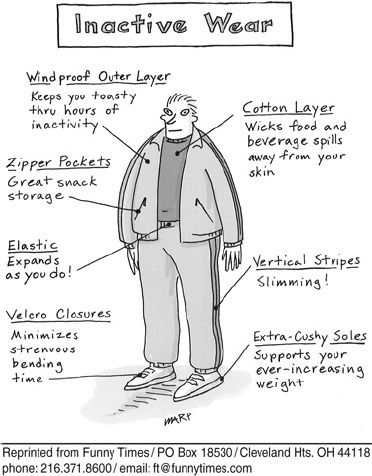
Assinale a opção que NÃO descreve benefícios apontados na figura.
Questão 18 190838
ITA 2010In August of 2000, a Japanese scientist named Toshiyuki Nakagaki announced that he had trained an amoebalike organism called slime mold to find the shortest route through a maze. Nakagaki had placed the mold in a small maze comprising four possible routes and planted pieces of food at two of the exits. Despite its being an incredibly primitive organism (a close relative of ordinary fungi) with no centralized brain whatsoever, the slime mold managed to plot the most efficient route to the food, stretching its body through the maze so that it connected directly to the two food sources. Without any apparent cognitive resources, the slime mold had “solved” the maze puzzle.
For such a simple organism, the slime mold has an impressive intellectual pedigree. Nakagaki’s announcement was only the latest in a long chain of investigations into the subtleties of slime mold behavior. For scientists trying to understand systems that use relatively simple components to build higher-level intelligence, the slime mold may someday be seen as the equivalent of the finches and tortoises that Darwin observed on the Galapagos Islands.
How did such a lowly organism come to play such an important scientific role? That story begins in the late sixties in New York City, with a scientist named Evelyn Fox Keller. A Harvard Ph.D. in physics, Keller had written her dissertation on molecular biology, and she had spent some time exploring the nascent field of “non-equilibrium thermodynamics”, which in later years would come to be associated with complexity theory. By 1968, she was working as an associate at Sloan-Kettering in Manhattan, thinking about the application of mathematics to biological problems. Mathematics had played such a tremendous role in expanding our understanding of physics, Keller thought – so perhaps it might also be useful for understanding living systems.
In the spring of 1968, Keller met a visiting scholar named Lee Segel, an applied mathematician who shared her interests. It was Segel who first introduced her to the bizarre conduct of the slime mold, and together they began a series of investigations that would help transform not just our understanding of biological development but also the disparate worlds of brain science, software design, and urban studies.
(…)
Johson, Steven. Emergence. Peguin Books Ltd. 2001, pp. 11-12.
Indique a opção em que a reescrita do trecho “Despite its being an incredibly primitive organism (a close relative of ordinary fungi) with no centralized brain whatsoever, the slime mold managed to plot the most efficient route to the food, …” (parágrafo 1) está correta e mantém o mesmo significado do texto.
Questão 17 190837
ITA 2010In August of 2000, a Japanese scientist named Toshiyuki Nakagaki announced that he had trained an amoebalike organism called slime mold to find the shortest route through a maze. Nakagaki had placed the mold in a small maze comprising four possible routes and planted pieces of food at two of the exits. Despite its being an incredibly primitive organism (a close relative of ordinary fungi) with no centralized brain whatsoever, the slime mold managed to plot the most efficient route to the food, stretching its body through the maze so that it connected directly to the two food sources. Without any apparent cognitive resources, the slime mold had “solved” the maze puzzle.
For such a simple organism, the slime mold has an impressive intellectual pedigree. Nakagaki’s announcement was only the latest in a long chain of investigations into the subtleties of slime mold behavior. For scientists trying to understand systems that use relatively simple components to build higher-level intelligence, the slime mold may someday be seen as the equivalent of the finches and tortoises that Darwin observed on the Galapagos Islands.
How did such a lowly organism come to play such an important scientific role? That story begins in the late sixties in New York City, with a scientist named Evelyn Fox Keller. A Harvard Ph.D. in physics, Keller had written her dissertation on molecular biology, and she had spent some time exploring the nascent field of “non-equilibrium thermodynamics”, which in later years would come to be associated with complexity theory. By 1968, she was working as an associate at Sloan-Kettering in Manhattan, thinking about the application of mathematics to biological problems. Mathematics had played such a tremendous role in expanding our understanding of physics, Keller thought – so perhaps it might also be useful for understanding living systems.
In the spring of 1968, Keller met a visiting scholar named Lee Segel, an applied mathematician who shared her interests. It was Segel who first introduced her to the bizarre conduct of the slime mold, and together they began a series of investigations that would help transform not just our understanding of biological development but also the disparate worlds of brain science, software design, and urban studies.
(…)
Johson, Steven. Emergence. Peguin Books Ltd. 2001, pp. 11-12.
Assinale a opção que, de acordo com o texto, contempla somente as áreas para as quais as pesquisas de Keller e Segel contribuíram.
06