


![[Marketing] Questao Topo - deslogado](https://storage.estuda.com.br/banners/0_6b7ebee90b03af1c560c73bb8bcce34a_banner_deslogado_70_dias.png)
Questões de Inglês
19.971 Questões
Questão 37 7357989
UNITAU Verão Medicina 1ª Fase 2021Read the cartoon to answer question
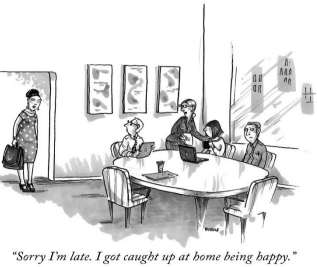
The sentence “I got caught up at home being happy” could be replaced without change in meaning by:
Questão 34 7357972
UNITAU Verão Medicina 1ª Fase 2021How deforestation can lead to more infectious diseases
29.04.2020 - Nadia Pontes
Scientists have been repeating the warning for at least two decades: As humans encroach upon forests, their risk of contracting viruses circulating among wild animals increases. That's why Ana Lucia Tourinho wasn't surprised when she heard about the novel coronavirus. An ecologist at the Federal University of Mato Grosso in Brazil, Tourinho studies how an environmental imbalance can cause forests and societies to become sick.
Before it infected the first humans and spread through the world by living in travelers' bodies, the novel coronavirus, officially named SARS-CoV-2, inhabited other hosts in a wild environment — most likely bats. When such viruses are isolated and in equilibrium in their habitat, for example a closed forest, they are not a threat to humans. The problem arises when this natural reservoir is cut down, destroyed and occupied.
Scientific studies published before the current pandemic had already showed a connection between deforestation, the proliferation of bats in the damaged areas and the family of coronaviruses, which includes the current lethal strain.
The scenario is similar in the Amazon. In 2019, deforestation reached a record-breaking 9,762 square kilometers (3,769 square miles). Reports of deforestation increased by 51.4% between January and March 2020 in comparison to the same period the previous year. An analysis by Columbia University in New York showed that the region, which houses the biggest tropical forest in the world, is also considered a likely center for epidemics. It also found that bats in Brazil carried at least 3,204 types of coronaviruses.
"If the Amazon turns into a great savannah, we can't even imagine what kind of diseases [could] come out of there. It's unpredictable," Tourinho said. "Besides being important to us because of the climate, the fauna, it is important for our health."
Adapted from: https://www.dw.com/en/howdeforestation-can-lead-to-more-infectiousdiseases/a53282244. Access: 05 out. 202.
The general meaning of the text is best summarized by:
Questão 55 7325894
UNIPAM 2021I am Malala
First the Taliban took our music, then our Buddhas, then our history. One of our favourite things was going on school trips. We were lucky to live in a paradise like Swat with so many beautiful places to visit – waterfalls, lakes, the ski resort, the wali‘s palace, the Buddha statues, the tomb of Akhund of Swat. All these places told our special story. We would talk about the trips for weeks beforehand, then, when the day finally came, we dressed up in our best clothes and piled into buses along with pots of chicken and rice for a picnic. Some of us had cameras and took photographs. At the end of the day my father would make us all take turns standing on a rock and tell stories about what we had seen. When Fazlullah came there were no more school trips. Girls were not supposed to be seen outside.
The Taliban destroyed the Buddhist statues and stupas where we played, which had been there for thousands of years and were a part of our history from the time of the Kushan kings. They believed any statue or painting was haram, sinful and therefore prohibited. One black day they even dynamited the face of the Jehanabad Buddha, which was carved into a hillside just half an hour‘s drive from Mingora and towered twenty-three feet into the sky. Archaeologists say it was almost as important as the Buddhas of Bamiyan, which the Afghan Taliban blew up.
It took them two goes to destroy it. The first time they drilled holes in the rock and filled them with dynamite, but that didn‘t work. A few weeks later, on 8 October 2007, they tried again. This time they obliterated the Buddha‘s face, which had watched over the valley since the seventh century. The Taliban became the enemy of fine arts, culture and our history. The Swat museum moved its collection away for safekeeping. They destroyed everything old and brought nothing new. The Taliban took over the Emerald Mountain with its mine and began selling the beautiful stones to buy their ugly weapons. They took money from the people who chopped down our precious trees for timber and then demanded more money to let their trucks pass.
Their radio coverage spread across the valley and neighbouring districts. Though we still had our television they had switched off the cable channels. Moniba and I could no longer watch our favourite Bollywood shows like Shararat or Making Mischief. It seemed like the Taliban didn‘t want us to do anything. They even banned one of our favourite board games called Carrom in which we flick counters across a wooden board. We heard stories that the Taliban would hear children laughing and burst into the room and smash the boards. We felt like the Taliban saw us as little dolls to control, telling us what to do and how to dress. I thought if God wanted us to be like that He wouldn‘t have made us all different.
(Malala Yousafzai & Christina Lamb. I am Malala: The Girl Who Stood Up for Education and Was Shot by the Taliban. Boston: Little, Brown and Co., 2013).
At the end of her text, Malala proposes a kind of theological and humanistic investigation, in which she thinks about what God really wants us to be. In her conclusion, by criticizing the regime of Fazlullah‘s Taliban, the author suggests a religious concept that has social and political implications as well.
This curious blend of perspectives can be interpreted as a mixture of
Questão 9 7325622
UNICEUB Medicina 2021/1Leia o texto para responder a questão.
There’s still something magical about the idea of browsing a world of products online, choosing what you want and having it delivered to your door, sometimes within hours. You may give a brief thought to the environmental impact when you are drowning in excess packaging (nearly a third of solid waste in the US comes from e-commerce packaging) but it’s easy to ignore the rest of it. Such as the fact that Amazon, in figures released last year, emits nearly as much carbon dioxide as a small country. We are buying more online than ever – and younger age groups are less likely to shop locally than people over 55, according to a new survey.
Our rapidly growing delivery culture is a challenge, says Tim Anderson, head of transport at the Energy Saving Trust. “It’s easy to go online and buy things cheaply. They might have been shipped from far off countries, manufactured from raw materials and they arrive at our homes at little or no cost.”
In an ideal world, online shopping could be a better option than making individual trips to the store, large weekly grocery deliveries can be the better choice – as long as we don’t make additional supermarket trips ourselves. We do not live in an ideal world, however, but one in which profit and consumerism are uncontrolled. We don’t behave – and online retailers don’t encourage us to behave – in a sensible way, says Julian Allen, researcher at the transport studies department at the University of Westminster
Once, we were prepared to wait, but now we want same-day delivery. That, says Allen, “tends to mean stuff gets moved in smaller and smaller quantities. We have vehicles shooting all over the place making single deliveries. We have the concept of ‘free’ delivery, which is a selling point for retailers, but it’s not really free in the sense of what it costs them and what it costs in environmental terms.”
People also buy things, particularly clothes, with the intention of returning much of the order, resulting in more carriage and mileage. “They are not being penalised financially for doing that,” says Allen.
So what should we do? “Shop locally, especially if you can use sustainable transport,” is Anderson’s advice.
And Allen thinks we should be more patient and consolidate orders into one delivery at a time. “Rather than having them delivered to your home, choose to pick them up at a nearby collection point. [Couriers] can bring a lot of stuff to one place.” Don’t then make a special trip by car to collect it, says Allen: “Work it into your daily commute.” Perhaps best of all would be to think before you click.
(Emine Saner. www.theguardian.com, 17.02.2020. Adaptado.)
O trecho do primeiro parágrafo “Amazon, in figures released last year, emits nearly as much carbon dioxide as a small country” indica que a emissão de dióxido de carbono da Amazon
Questão 14 7320114
FCM PB Medicina 2021/1TEXTO
Children Produce Weaker Coronavirus Antibodies.
Children infected with the coronavirus produce weaker antibodies and fewer types of them than adults do, suggesting they clear their infection much faster, according to a new study. Other studies have suggested that an overly strong immune response may be to blame in people who get severely ill or die from Covid-19. A weaker immune response in children may paradoxically indicate that they vanquish the virus before it has had a chance to wreak havoc in the body, and may help explain why children are mostly spared severe symptoms of Covid, the disease caused by the coronavirus. It may also show why they are less likely to spread the virus to others. “They may be infectious for a shorter time,” said Donna Farber, an immunologist at Columbia University in New York who led the study reported in the journal Nature Immunology.
Having weaker and fewer antibodies does not mean that children would be more at risk of re-infections, other experts said.
“You don’t really need a huge, overly robust immune response to maintain protections over some period of time,” said Deepta Bhattacharya, an immunologist at the University of Arizona in Tucson. “I don’t know that I would be especially worried that kids have a little bit lower antibody response.”
The study looked at children’s antibody levels at a single point in time, and was too small to provide insights into how the levels may vary with age. But it could pose questions for certain antibody tests that may be missing children who have been infected.
Dr. Farber and her colleagues analyzed antibodies to the coronavirus in four groups of patients: 19 adult convalescent plasma donors who had recovered from Covid without being hospitalized; 13 adults hospitalized with acute respiratory distress syndrome resulting from severe Covid; 16 children hospitalized with multi-system inflammatory syndrome, the rare condition affecting some infected children; and 31 infected children who did not have the syndrome. About half of this last group of children had no symptoms at all.
Individuals in each group had antibodies, consistent with other studies showing that the vast majority of people infected with the coronavirus mount a robust immune response. “This further emphasizes that this viral infection in itself, and the immune response to this virus, is not that different from what we would expect” from any virus, said Petter Brodin, an immunologist at Karolinska Institutet in Stockholm. But the range of antibodies differed between children and adults. The children made primarily one type of antibody, called IgG, that recognizes the spike protein on the surface of the virus. Adults, by contrast, made several types of antibodies to the spike and other viral proteins, and these antibodies were more powerful at neutralizing the virus.
(Adapted from: www.www.nytimes.com)
The preposition “weaker” from the second paragraph, can be replaced by
Having ______________ and fewer antibodies does not mean that children would be more at risk of re-infections, other experts said.”
Questão 12 7320110
FCM PB Medicina 2021/1TEXTO
Children Produce Weaker Coronavirus Antibodies.
Children infected with the coronavirus produce weaker antibodies and fewer types of them than adults do, suggesting they clear their infection much faster, according to a new study. Other studies have suggested that an overly strong immune response may be to blame in people who get severely ill or die from Covid-19. A weaker immune response in children may paradoxically indicate that they vanquish the virus before it has had a chance to wreak havoc in the body, and may help explain why children are mostly spared severe symptoms of Covid, the disease caused by the coronavirus. It may also show why they are less likely to spread the virus to others. “They may be infectious for a shorter time,” said Donna Farber, an immunologist at Columbia University in New York who led the study reported in the journal Nature Immunology.
Having weaker and fewer antibodies does not mean that children would be more at risk of re-infections, other experts said.
“You don’t really need a huge, overly robust immune response to maintain protections over some period of time,” said Deepta Bhattacharya, an immunologist at the University of Arizona in Tucson. “I don’t know that I would be especially worried that kids have a little bit lower antibody response.”
The study looked at children’s antibody levels at a single point in time, and was too small to provide insights into how the levels may vary with age. But it could pose questions for certain antibody tests that may be missing children who have been infected.
Dr. Farber and her colleagues analyzed antibodies to the coronavirus in four groups of patients: 19 adult convalescent plasma donors who had recovered from Covid without being hospitalized; 13 adults hospitalized with acute respiratory distress syndrome resulting from severe Covid; 16 children hospitalized with multi-system inflammatory syndrome, the rare condition affecting some infected children; and 31 infected children who did not have the syndrome. About half of this last group of children had no symptoms at all.
Individuals in each group had antibodies, consistent with other studies showing that the vast majority of people infected with the coronavirus mount a robust immune response. “This further emphasizes that this viral infection in itself, and the immune response to this virus, is not that different from what we would expect” from any virus, said Petter Brodin, an immunologist at Karolinska Institutet in Stockholm. But the range of antibodies differed between children and adults. The children made primarily one type of antibody, called IgG, that recognizes the spike protein on the surface of the virus. Adults, by contrast, made several types of antibodies to the spike and other viral proteins, and these antibodies were more powerful at neutralizing the virus.
(Adapted from: www.www.nytimes.com)
In the adaptation from the last paragraph, “But the range of antibodies differed between children and adults.” Means that:
06