


![[Marketing] Questao Topo - deslogado](https://storage.estuda.com.br/banners/0_6b7ebee90b03af1c560c73bb8bcce34a_banner_deslogado_70_dias.png)
Questões de Inglês
19.971 Questões
Questão 17 45440
Mackenzie 2011/1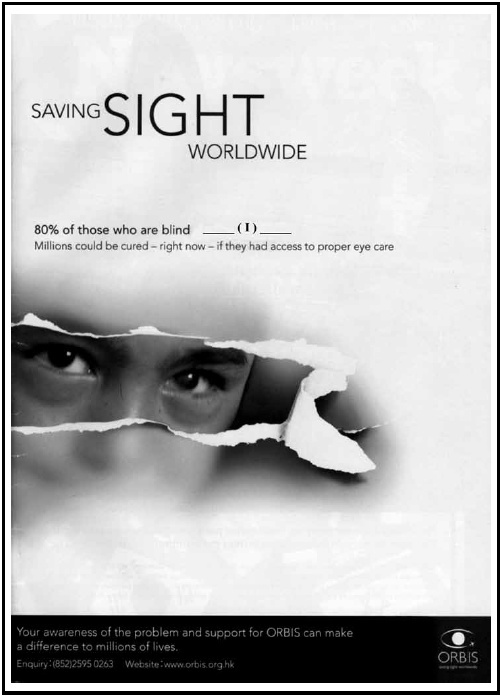
The message conveyed by the advertisement states that
Questão 15 45438
Mackenzie 2011/1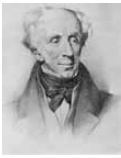
“The little__( I )__acts of __( II )__and love are the __( III )__parts of a person’s life”.
William Wordsworth
The right form of the words remember, kind and good which appropriately complete blanks I, II and III in the quotation are:
Questão 13 45436
Mackenzie 2011/1In The Beginning Was the Word … Now Come the Drawings
By Malcolm Jones

For the better part of the Christian era in Western civilization, illustrating scenes from the Bible was not a job for artists. It was the job. As late as the Renaissance, Michelangelo, Leonardo, and their wannabes spent their days illustrating ceilings and altarpieces, painting frescoes, and chiseling images of Moses, David, and Madonna and child out of every scrap of available marble. But as the church lost some of its hold on the Western imagination, artists felt free to look elsewhere for inspiration. Now and then an artist would undertake a religious theme (Chagall, Rouault), but excepting the English painter Stanley Spencer or outsider artist Howard Finster, it’s hard to think of a major modern artist who’s spent much time on holy ground. It’s even harder to think of an artist who could significantly alter our perceptions of the events, previously illustrated or not, in the Bible. But then, who could have foreseen that R. Crumb would tackle the Book of Genesis? Yes, this is the man a publisher has entrusted with the task of illustrating the firstbook of the Bible.
Unlikely as it might seem, this was trust well repaid. Without a trace of irony, and certainly no mockery, Crumb delivers a literal—one might even say traditional—rendition of the events in the Judeo-Christian account of Creation and its aftermath. Frame by frame, comic-book fashion, The Book of Genesis shows a white-bearded, patriarchal God creating the heavens and the earth and all that walk upon it. We see Adam and Eve exiled from the Garden of Eden. We observe the first murder, as Cain kills his brother, and then Noah and the Flood, the travails of Abraham—every verse of every chapter carefully rendered, right through to the story of Joseph and the Israelite migration to Egypt.
www.newsweek.com
The word mockery in the text means
Questão 45 45166
UNIFESP 2011To Scientists, Laughter Is No Joke - It’s Serious
March 31, 2010.
So a scientist walks into a shopping mall to watch people laugh. There’s no punchline. Laughter is a serious scientific subject, one that researchers are still trying to figure out. Laughing is primal, our first way of communicating. Apes laugh. So do dogs and rats. Babies laugh long before they speak. No one teaches you how to laugh. You just do. And often you laugh involuntarily, in a specific rhythm and in certain spots in conversation.
You may laugh at a prank on April Fools’ Day. But surprisingly, only 10 to 15 percent of laughter is the result of someone making a joke, said Baltimore neuroscientist Robert Provine, who has studied laughter for decades. Laughter is mostly about social responses rather than reaction to a joke. “Laughter above all else is a social thing,’’ Provine said. “The requirement for laughter is another person.’’
Over the years, Provine, a professor with the University of Maryland Baltimore County, has boiled laughter down to its basics. “All language groups laugh ‘ha-ha-ha’ basically the same way,’’ he said. “Whether you speak Mandarin, French or English, everyone will understand laughter. ... There’s a pattern generator in our brain that produces this sound.’’
Each “ha’’ is about one-15th of a second, repeated every fifth of a second, he said. Laugh faster or slower than that and it sounds more like panting or something else. Deaf people laugh without hearing, and people on cell phones laugh without seeing, illustrating that laughter isn’t dependent on a single sense but on social interactions, said Provine, author of the book “Laughter: A Scientific Investigation.’’
“It’s joy, it’s positive engagement with life,’’ said Jaak Panksepp, a Bowling Green University psychology professor. “It’s deeply social.’’ And it’s not just a people thing either. Chimps tickle each other and even laugh when another chimp pretends to tickle them. By studying rats, Panksepp and other scientists can figure out what’s going on in the brain during laughter. And it holds promise for human ills.
Northwestern biomedical engineering professor Jeffrey Burgdorf has found that laughter in rats produces an insulin-like growth factor chemical that acts as an antidepressant and anxietyreducer. He thinks the same thing probably happens in humans, too. This would give doctors a new chemical target in the brain in their effort to develop drugs that fight depression and anxiety in people. Even so, laughter itself hasn’t been proven to be the best medicine, experts said.
(www.nytimes.com. Adaptado.)
No trecho do quarto parágrafo – Laugh faster or slower than that and it sounds more like panting or something else. – a palavra like indica
Questão 44 45165
UNIFESP 2011To Scientists, Laughter Is No Joke - It’s Serious
March 31, 2010.
So a scientist walks into a shopping mall to watch people laugh. There’s no punchline. Laughter is a serious scientific subject, one that researchers are still trying to figure out. Laughing is primal, our first way of communicating. Apes laugh. So do dogs and rats. Babies laugh long before they speak. No one teaches you how to laugh. You just do. And often you laugh involuntarily, in a specific rhythm and in certain spots in conversation.
You may laugh at a prank on April Fools’ Day. But surprisingly, only 10 to 15 percent of laughter is the result of someone making a joke, said Baltimore neuroscientist Robert Provine, who has studied laughter for decades. Laughter is mostly about social responses rather than reaction to a joke. “Laughter above all else is a social thing,’’ Provine said. “The requirement for laughter is another person.’’
Over the years, Provine, a professor with the University of Maryland Baltimore County, has boiled laughter down to its basics. “All language groups laugh ‘ha-ha-ha’ basically the same way,’’ he said. “Whether you speak Mandarin, French or English, everyone will understand laughter. ... There’s a pattern generator in our brain that produces this sound.’’
Each “ha’’ is about one-15th of a second, repeated every fifth of a second, he said. Laugh faster or slower than that and it sounds more like panting or something else. Deaf people laugh without hearing, and people on cell phones laugh without seeing, illustrating that laughter isn’t dependent on a single sense but on social interactions, said Provine, author of the book “Laughter: A Scientific Investigation.’’
“It’s joy, it’s positive engagement with life,’’ said Jaak Panksepp, a Bowling Green University psychology professor. “It’s deeply social.’’ And it’s not just a people thing either. Chimps tickle each other and even laugh when another chimp pretends to tickle them. By studying rats, Panksepp and other scientists can figure out what’s going on in the brain during laughter. And it holds promise for human ills.
Northwestern biomedical engineering professor Jeffrey Burgdorf has found that laughter in rats produces an insulin-like growth factor chemical that acts as an antidepressant and anxietyreducer. He thinks the same thing probably happens in humans, too. This would give doctors a new chemical target in the brain in their effort to develop drugs that fight depression and anxiety in people. Even so, laughter itself hasn’t been proven to be the best medicine, experts said.
(www.nytimes.com. Adaptado.)
No trecho do terceiro parágrafo – Whether you speak Mandarin, French or English, everyone will understand laughter. – a palavra whether pode ser substituída, sem alteração de sentido, por
Questão 43 45164
UNIFESP 2011To Scientists, Laughter Is No Joke - It’s Serious
March 31, 2010.
So a scientist walks into a shopping mall to watch people laugh. There’s no punchline. Laughter is a serious scientific subject, one that researchers are still trying to figure out. Laughing is primal, our first way of communicating. Apes laugh. So do dogs and rats. Babies laugh long before they speak. No one teaches you how to laugh. You just do. And often you laugh involuntarily, in a specific rhythm and in certain spots in conversation.
You may laugh at a prank on April Fools’ Day. But surprisingly, only 10 to 15 percent of laughter is the result of someone making a joke, said Baltimore neuroscientist Robert Provine, who has studied laughter for decades. Laughter is mostly about social responses rather than reaction to a joke. “Laughter above all else is a social thing,’’ Provine said. “The requirement for laughter is another person.’’
Over the years, Provine, a professor with the University of Maryland Baltimore County, has boiled laughter down to its basics. “All language groups laugh ‘ha-ha-ha’ basically the same way,’’ he said. “Whether you speak Mandarin, French or English, everyone will understand laughter. ... There’s a pattern generator in our brain that produces this sound.’’
Each “ha’’ is about one-15th of a second, repeated every fifth of a second, he said. Laugh faster or slower than that and it sounds more like panting or something else. Deaf people laugh without hearing, and people on cell phones laugh without seeing, illustrating that laughter isn’t dependent on a single sense but on social interactions, said Provine, author of the book “Laughter: A Scientific Investigation.’’
“It’s joy, it’s positive engagement with life,’’ said Jaak Panksepp, a Bowling Green University psychology professor. “It’s deeply social.’’ And it’s not just a people thing either. Chimps tickle each other and even laugh when another chimp pretends to tickle them. By studying rats, Panksepp and other scientists can figure out what’s going on in the brain during laughter. And it holds promise for human ills.
Northwestern biomedical engineering professor Jeffrey Burgdorf has found that laughter in rats produces an insulin-like growth factor chemical that acts as an antidepressant and anxietyreducer. He thinks the same thing probably happens in humans, too. This would give doctors a new chemical target in the brain in their effort to develop drugs that fight depression and anxiety in people. Even so, laughter itself hasn’t been proven to be the best medicine, experts said.
(www.nytimes.com. Adaptado.)
The excerpt of the first paragraph – You just do. – means that
06