


![[Marketing] Questao Topo - deslogado](https://storage.estuda.com.br/banners/0_6b7ebee90b03af1c560c73bb8bcce34a_banner_deslogado_70_dias.png)
Questões de Inglês
19.971 Questões
Questão 12 190213
ITA 2011Our Imaginary, Hotter Selves
Avatars might serve therapeutic purposes, helping those with social phobia become more confident.
by Sharon Begley
[1] Anyone who has ever had a bad hair day, when looking like a latter-day Medusa makes you feel cranky and antisocial and
plodding, can sympathize with the Oakland Raiders - and not because the players get helmet hair. The Raiders alternated between
mostly black and mostly white uniforms, depending on whether they were playing at home or away. Knowing that appearance
affects people's mood and outlook, psychologists wondered whether uniform color influenced the Raiders' aggressiveness. Using
[5] data from the 1970s and 1980s, they found that the team racked up way more penalty yards - a measure of aggression - when they
wore black than when they wore white, for infractions both minor (encroachment) and major (roughing the kicker). The pattern held
even when the scientists took into account different conditions and styles of play at home and away. But while the 1988 finding has
become a classic in psychology, the explanation remains controversial. Do referees, because of black's cultural baggage, see
black-clad players as meaner and badder than those in, say, baby blue? Or does wearing black make players see themselves as
[10] tougher and meaner - and therefore cause them to play that way?
Jeremy Bailenson and Nick Yee of Stanford University had this and other classic studies in mind when they started wondering
about the effect of being able to alter one's appearance. They weren't going to study wardrobe choices, however. Their quarry is
avatars, digital representations of players in such games as Second Life. "Your physical appearance changes how people treat
you," says Bailenson. "But independent of that, when you perceive yourself in a certain way, you act differently." He and Yee call it
[15] "the Proteus effect," after the shape-changing Greek god. The effect of appearance on behavior, they find, carries over from the
virtual world to the real one, with intriguing consequences. (…)
http://www.newsweek.com. Acesso em 5/6/2010.
Assinale a opção em que o termo em negrito apresenta função gramatical diferente das demais
Questão 11 190212
ITA 2011Our Imaginary, Hotter Selves
Avatars might serve therapeutic purposes, helping those with social phobia become more confident.
by Sharon Begley
[1] Anyone who has ever had a bad hair day, when looking like a latter-day Medusa makes you feel cranky and antisocial and
plodding, can sympathize with the Oakland Raiders - and not because the players get helmet hair. The Raiders alternated between
mostly black and mostly white uniforms, depending on whether they were playing at home or away. Knowing that appearance
affects people's mood and outlook, psychologists wondered whether uniform color influenced the Raiders' aggressiveness. Using
[5] data from the 1970s and 1980s, they found that the team racked up way more penalty yards - a measure of aggression - when they
wore black than when they wore white, for infractions both minor (encroachment) and major (roughing the kicker). The pattern held
even when the scientists took into account different conditions and styles of play at home and away. But while the 1988 finding has
become a classic in psychology, the explanation remains controversial. Do referees, because of black's cultural baggage, see
black-clad players as meaner and badder than those in, say, baby blue? Or does wearing black make players see themselves as
[10] tougher and meaner - and therefore cause them to play that way?
Jeremy Bailenson and Nick Yee of Stanford University had this and other classic studies in mind when they started wondering
about the effect of being able to alter one's appearance. They weren't going to study wardrobe choices, however. Their quarry is
avatars, digital representations of players in such games as Second Life. "Your physical appearance changes how people treat
you," says Bailenson. "But independent of that, when you perceive yourself in a certain way, you act differently." He and Yee call it
[15] "the Proteus effect," after the shape-changing Greek god. The effect of appearance on behavior, they find, carries over from the
virtual world to the real one, with intriguing consequences. (…)
http://www.newsweek.com. Acesso em 5/6/2010.
a measure of aggression (linha 5), encroachment (linha 6), roughing the kicker (linha 6) e digital representations of players (linha 13) têm, respectivamente, valor semântico de:
Questão 10 190211
ITA 2011Our Imaginary, Hotter Selves
Avatars might serve therapeutic purposes, helping those with social phobia become more confident.
by Sharon Begley
[1] Anyone who has ever had a bad hair day, when looking like a latter-day Medusa makes you feel cranky and antisocial and
plodding, can sympathize with the Oakland Raiders - and not because the players get helmet hair. The Raiders alternated between
mostly black and mostly white uniforms, depending on whether they were playing at home or away. Knowing that appearance
affects people's mood and outlook, psychologists wondered whether uniform color influenced the Raiders' aggressiveness. Using
[5] data from the 1970s and 1980s, they found that the team racked up way more penalty yards - a measure of aggression - when they
wore black than when they wore white, for infractions both minor (encroachment) and major (roughing the kicker). The pattern held
even when the scientists took into account different conditions and styles of play at home and away. But while the 1988 finding has
become a classic in psychology, the explanation remains controversial. Do referees, because of black's cultural baggage, see
black-clad players as meaner and badder than those in, say, baby blue? Or does wearing black make players see themselves as
[10] tougher and meaner - and therefore cause them to play that way?
Jeremy Bailenson and Nick Yee of Stanford University had this and other classic studies in mind when they started wondering
about the effect of being able to alter one's appearance. They weren't going to study wardrobe choices, however. Their quarry is
avatars, digital representations of players in such games as Second Life. "Your physical appearance changes how people treat
you," says Bailenson. "But independent of that, when you perceive yourself in a certain way, you act differently." He and Yee call it
[15] "the Proteus effect," after the shape-changing Greek god. The effect of appearance on behavior, they find, carries over from the
virtual world to the real one, with intriguing consequences. (…)
http://www.newsweek.com. Acesso em 5/6/2010.
Assinale a opção em que o referente do pronome está INCORRETO.
Questão 6 190206
ITA 2011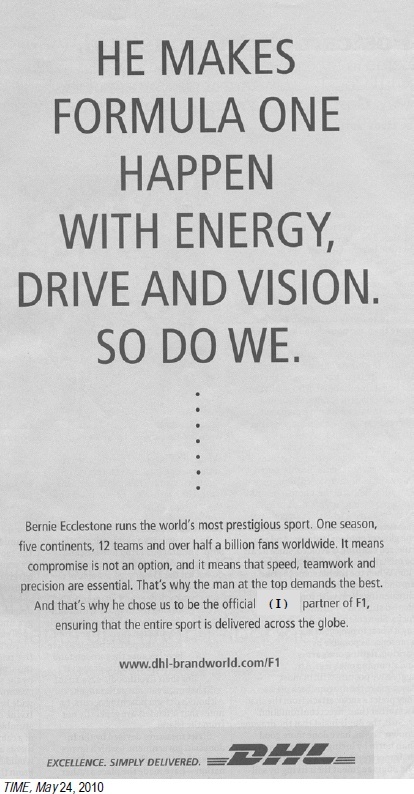
Escolha o termo cuja função gramatical e significado se aproximam do vocábulo drive, na chamada do anúncio.
Questão 3 190192
ITA 2011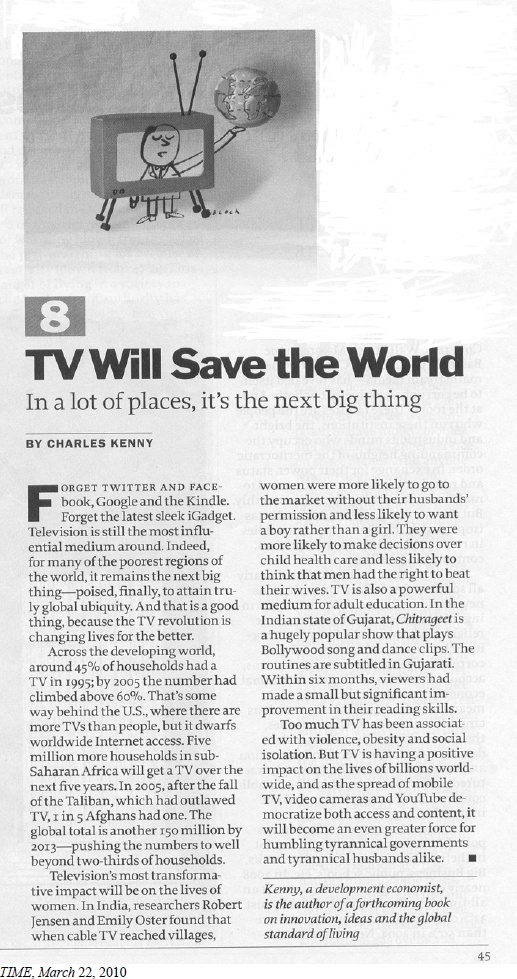
Segundo o texto, um dos impactos que a TV a cabo trouxe para a vida das mulheres indianas foi que elas
Questão 38 161635
PUC-PR Curso Tecnológico 2011Read the text below and answer questions 37-38:
Small talk means pleasant conversation about things that aren’t very important. North Americans often make small talk with people such as business acquaintances, neighbors, or others that they don’t know very well. They even make small talk while waiting for a bus or standing in line, just to pass the time or be friendly. In North America, one very common topic for small talk with strangers is the weather. You can start a conversation just by saying, “It’s really hot today, isn’t it?”
Source: JOHANNSEN, K.L. English for the Humanities. Professional English. Boston: Thomson ELT, 2006, p. 67.
Read the sentences given:
I. How are you doing?
II. What are you doing?
III. How are you?
IV. Who are you?
V. How’s everything?
Based on these sentences, it might be stated that:
06