


![[Marketing] Questao Topo - deslogado](https://storage.estuda.com.br/banners/0_6b7ebee90b03af1c560c73bb8bcce34a_banner_deslogado_70_dias.png)
Questões de Inglês
19.971 Questões
Questão 49 274785
CESUPA 2011Read the text below and answer the following question according to it:
Losing Touch With the Patient
By PAULINE W. CHEN, M.D.
Published in the NYTimes.com: October 21, 2010
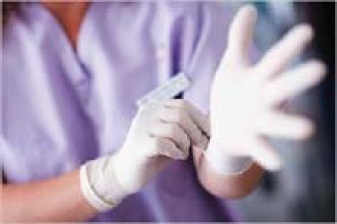
Several years ago I helped care for a man who had been hospitalized with a severe infection of the abdominal wall. When his primary doctors discovered that the bacteria responsible was resistant to most antibiotics, they quickly isolated him, moving him into a single room with a sign on the door proclaiming “Contact Precautions” and directing visitors to put on gloves, mask and gown before entering.
As the weeks wore on, we clinicians found ourselves minimizing our interactions, designating one team member to suit up and complete the work needed or shouting out updates and questions to the patient from the sterile safety of the doorway.
Increasingly isolated in these ways, he began to withdraw from everyone except his wife. His once daily declarations that he was going to “beat this infection” became less vocal, dimming to whispers, then disappearing altogether. He stopped turning to face us when we called out to him, choosing instead to continue staring blankly at the ceiling.
When he finally died, from cardiac arrest, more than two months later, it was hard not to remember the weeks leading up to his death and to wonder about one thing. In trying so hard to contain the infection, had we lost sight of the person?
According to Dr. Leif Hass, a family practice physician working as a hospitalist at the Alta Bates Summit Medical Center in Oakland, California, some type of contact barrier is definitely in the life of doctors and patients, even though, “there are times when an Intensive Care Unit looks like an assembly plant in Silicon Valley.” And while physicians will be forced to rely less on touch and more on other communication skills like listening and acknowledging, the risk remains that the presence of these physical — and technological — barriers will further eclipse some of the most effective ways in which doctors can alleviate the suffering of their patients.
“We just have to make sure, he said, that in the age of technology and rapid reforms, some of our best tools for healing — simple things like touching people and telling them you care and making them feel you are there for them — don’t get lost.”
Adapted from http://www.nytimes.com/2010/10/21/health/views/21chen.html?ref=health
Glossary
gown: veste de proteção
wore on: passavam
suit up: adaptar-se
withdraw: retrair-se
assembly plant: industria de montagem
healing: cura
In “barriers will further eclipse some of the most effective ways in which doctors can alleviate the suffering of their patients” (5th paragraph), the underlined word means___.
Questão 48 274782
CESUPA 2011Read the text below and answer the following question according to it:
Losing Touch With the Patient
By PAULINE W. CHEN, M.D.
Published in the NYTimes.com: October 21, 2010
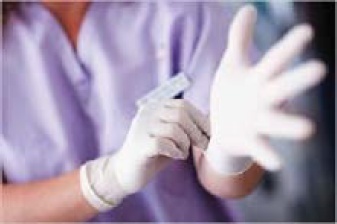
Several years ago I helped care for a man who had been hospitalized with a severe infection of the abdominal wall. When his primary doctors discovered that the bacteria responsible was resistant to most antibiotics, they quickly isolated him, moving him into a single room with a sign on the door proclaiming “Contact Precautions” and directing visitors to put on gloves, mask and gown before entering.
As the weeks wore on, we clinicians found ourselves minimizing our interactions, designating one team member to suit up and complete the work needed or shouting out updates and questions to the patient from the sterile safety of the doorway.
Increasingly isolated in these ways, he began to withdraw from everyone except his wife. His once daily declarations that he was going to “beat this infection” became less vocal, dimming to whispers, then disappearing altogether. He stopped turning to face us when we called out to him, choosing instead to continue staring blankly at the ceiling.
When he finally died, from cardiac arrest, more than two months later, it was hard not to remember the weeks leading up to his death and to wonder about one thing. In trying so hard to contain the infection, had we lost sight of the person?
According to Dr. Leif Hass, a family practice physician working as a hospitalist at the Alta Bates Summit Medical Center in Oakland, California, some type of contact barrier is definitely in the life of doctors and patients, even though, “there are times when an Intensive Care Unit looks like an assembly plant in Silicon Valley.” And while physicians will be forced to rely less on touch and more on other communication skills like listening and acknowledging, the risk remains that the presence of these physical — and technological — barriers will further eclipse some of the most effective ways in which doctors can alleviate the suffering of their patients.
“We just have to make sure, he said, that in the age of technology and rapid reforms, some of our best tools for healing — simple things like touching people and telling them you care and making them feel you are there for them — don’t get lost.”
Adapted from http://www.nytimes.com/2010/10/21/health/views/21chen.html?ref=health
Glossary
gown: veste de proteção
wore on: passavam
suit up: adaptar-se
withdraw: retrair-se
assembly plant: industria de montagem
healing: cura
In “He stopped turning to face us when we called out to him, choosing instead to continue staring blankly at the ceiling.” (3rd paragraph), the underlined word refers to ___.
Questão 47 274777
CESUPA 2011Read the text below and answer the following question according to it:
Losing Touch With the Patient
By PAULINE W. CHEN, M.D.
Published in the NYTimes.com: October 21, 2010
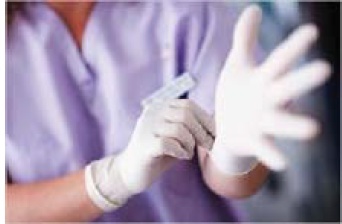
Several years ago I helped care for a man who had been hospitalized with a severe infection of the abdominal wall. When his primary doctors discovered that the bacteria responsible was resistant to most antibiotics, they quickly isolated him, moving him into a single room with a sign on the door proclaiming “Contact Precautions” and directing visitors to put on gloves, mask and gown before entering.
As the weeks wore on, we clinicians found ourselves minimizing our interactions, designating one team member to suit up and complete the work needed or shouting out updates and questions to the patient from the sterile safety of the doorway.
Increasingly isolated in these ways, he began to withdraw from everyone except his wife. His once daily declarations that he was going to “beat this infection” became less vocal, dimming to whispers, then disappearing altogether. He stopped turning to face us when we called out to him, choosing instead to continue staring blankly at the ceiling.
When he finally died, from cardiac arrest, more than two months later, it was hard not to remember the weeks leading up to his death and to wonder about one thing. In trying so hard to contain the infection, had we lost sight of the person?
According to Dr. Leif Hass, a family practice physician working as a hospitalist at the Alta Bates Summit Medical Center in Oakland, California, some type of contact barrier is definitely in the life of doctors and patients, even though, “there are times when an Intensive Care Unit looks like an assembly plant in Silicon Valley.” And while physicians will be forced to rely less on touch and more on other communication skills like listening and acknowledging, the risk remains that the presence of these physical — and technological — barriers will further eclipse some of the most effective ways in which doctors can alleviate the suffering of their patients.
“We just have to make sure, he said, that in the age of technology and rapid reforms, some of our best tools for healing — simple things like touching people and telling them you care and making them feel you are there for them — don’t get lost.”
Adapted from http://www.nytimes.com/2010/10/21/health/views/21chen.html?ref=health
Glossary
gown: veste de proteção
wore on: passavam
suit up: adaptar-se
withdraw: retrair-se
assembly plant: industria de montagem
healing: cura
The text’s central idea is: the use of contact barriers in medical treatment ___.
Questão 24 240988
UESB Caderno 1 2011
According to a government study released this
week, the number of Brazilians suffering from obesity is
growing. And the trend toward the fuller figure is most
prevalent among women. “Obesity among women had
[5] stabilized in previous studies, and now there is an
expressive increase,” says Deborah Malta, the study’s
coordinator. “That is very worrying.”
The study covered many health-related topics and
offered some contradictory figures as well. Although
[10] Brazilians are getting fatter, they are eating less red meat
and more fruits and vegetables, Malta reports. They are
smoking less and taking more preventive tests such as
mammograms and pap smears. But they are using less
sunscreen and drinking more, especially to excess and
[15] often when driving.
Nevertheless, in body-conscious Brazil, the nation
of Gisele Bündchen, plastic surgery and minuscule
bikinis, it was the obesity figures that caused the most
anxiety. When the New York Times reported in 2005
[20] that Brazilians were getting fatter, the correspondent
came under attack in the media as a gay, Brazilian-hating
heretic.
According to Malta, Brazilians are relatively slim
compared with their counterparts in the West. “I think
[25] Brazilians are still worried about their bodies. When we
compare ourselves to the rest of the world, we are still
much thinner,” she tells TIME. “And remember, this is
not just Brazilians that are getting fatter — this is a
worldwide phenomenon.”
[30] Independent experts, however, caution against such
nationalistic one-upmanship. Already one-quarter of
hospital beds are taken up by people suffering from
weight-related ailments such as heart attacks, back
surgeries and hip and joint replacements, says Luiz
[35] Vicente Berti, president of the Brazilian Society of
Metabolic and Bariatric Surgery. Unless preventive action
is taken to educate people, he warns, Brazil faces a
sick and expensive future. “If we don’t teach people how
to eat properly and exercise, then in 10 years no one
[40] will have the money to pay the hospital bills that
will arise,” Berti says, adding that the number of
stomach-reduction surgeries carried out in Brazil had
risen 500%. “The U.S. can’t solve its problem, and it is
the biggest economy in the world.”
DOWNIE, Andrew . Brazilian obesity : the big girl from Ipanema. São Paulo Friday, Apr. 10, 2009. Disponível em: <http://www.time.com/time/ world/article/>. Acesso em: 3 nov. 2010.
According to Deborah Malta, Brazilians are
Questão 99 238775
UECE 2° Fase 1° Dia 2011/2Text
[1] Prof. Katherine Rowe‘s blue-haired
avatar was flying across a grassy landscape
to a virtual three-dimensional re-creation of
the Globe Theater, where some students
[5] from her introductory Shakespeare class at
Bryn Mawr College had already gathered
online. Their assignment was to create
characters on the Web site Theatron3 and
use them to block scenes from the gory
[10] revenge tragedy ''Titus Andronicus,'' to see
how setting can heighten the drama. ''I‘ve
done this class before in a theater and a
lecture hall, but it doesn‘t work as well,'' Ms.
Rowe said, explaining that it was difficult
[15] for students to imagine what it would be like
to put on a production in the 16th-century
Globe, a circular open-air theater without
electric lights, microphones and a curtain.
Jennifer Cook, a senior, used her laptop
[20] to move a black-clad avatar center stage.
She and the other half-dozen students
agreed that in ''Titus,'' the rape, murders and
final banquet — when the Queen
unknowingly eats the remains of her two
[25] children — should all take place in the same
spot. ''Every time someone is in that space,''
Ms. Cook said, ''the audience is going to say,
''Uh oh, you don‘t want to be there.‘ ''
Students like Ms. Cook are among the
[30] first generation of undergraduates at dozens
of colleges to take humanities courses '
even Shakespeare ''that are deeply
influenced by a new array of powerful digital
tools and vast online archives. Ms. Rowe‘s
[35] students, who have occasionally met with
her on the virtual Globe stage while wearing
pajamas in their dorm rooms, are
enthusiastic about the technology.
At the University of Virginia, history
[40] undergraduates have produced a digital
visualization of the college‘s first library
collection, allowing them to consider what
the selection of books says about how
knowledge was classified in the early 18th
[45] century. At Hamilton College, students can
explore a virtual re-creation of the South
African township of Soweto during the 1976
student uprisings, or sign up for ''e-black
studies'' to examine how cyberspace reflects
[50] and shapes the portrayal of minorities.
Many teachers and administrators are
only beginning to figure out the contours of
this emerging field of digital humanities, and
how it should be taught. In the classroom,
[55] however, digitally savvy undergraduates are
not just ready to adapt to the tools but also
to explore how new media may alter the very
process of reading, interpretation and
analysis. ''There‘s a very exciting generation
[60] gap in the classroom,'' said Ms. Rowe, who
developed the digital components of her
Shakespeare course with a graduate student
who now works at Google. ''Students are
fluent in new media, and the faculty bring
[65] sophisticated knowledge of a subject. It‘s a
gap that won‘t last more than a decade. In
10 years these students will be my
colleagues, but now it presents unusual
learning opportunities.'' As Ms. Cook said,
[70] ''The Internet is less foreign to me than a
Shakespeare play written 500 years ago.''
Bryn Mawr‘s unusually close partnership
with Haverford College and Swarthmore
College has enabled the three institutions to
[75] pool their resources, students and faculty. In
November students from all three
participated in the first Digital Humanities
Conference for Undergraduates.
Jen Rajchel, one of the conference
[80] organizers, is the first undergraduate at Bryn
Mawr to have a digital senior thesis accepted
by the English department: a Web site and
archive on the American poet Marianne
Moore, who attended the college nearly a
[85] century ago. Presenting a Moore poem on
the Web site while simultaneously displaying
commentary in different windows next to the
text (as opposed to listing them in a paper)
more accurately reflects the work‘s multiple
[90] meanings, according to Ms. Rajchel. After all,
she argued in the thesis, Moore was acutely
aware of her audience and made subtle
alterations in her poems for different
publications — changes that are more easily
[95] illustrated by displaying the various versions.
The Web presentation of Moore‘s poetry also
allows readers to add comments and talk to
one another, which Ms. Rajchel believes
matches the poet‘s interest in opening a
[100] dialogue with her readers.
Particularly inspiring to Ms. Rajchel is
that her work doesn‘t disappear after being
deposited in a professor‘s in box. The site,
which includes scans of original documents
[105] from Bryn Mawr‘s library, was (and remains)
viewable. ''It really can go outside of the
classroom,'' she said, adding that an
established Marianne Moore scholar at
another university had left a comment.
[110] Doing research that lives outside the
classroom is also what drew Anna Levine, a
junior at Swarthmore, to digital humanities.
Over the summer and after class, she and
Richard Li, a senior at Swarthmore, worked
[115] with Rachel Buurma, an assistant professor
of literature there, to develop the Early
Novels Database for the University of
Pennsylvania‘s Rare Book and Manuscript
Library, which enables users to search more
[120] thoroughly through fiction published between
1660 and 1830. ''I am the one doing all the
grunt work,'' Ms. Levine said of her tasks,
which largely involve entering details about a
novel into the database. ''But one of the
[125] great things is as an undergraduate, it really
enables me to participate in a scholarly
community.''
In a Swarthmore lounge where Ms.
Buurma‘s weekly research seminar on
[130] Victorian literature and culture meets, Ms.
Levine and a handful of other students
recently settled into a cozy circle on stuffed
chairs and couches. As part of their class
work, they have been helping to correct the
[135] transcribed online versions of Household
Words and All the Year Round, two 19th-
century periodicals in which Charles Dickens
initially published some novels, including
''Great Expectations,'' in serial form. On a
[140] square coffee table sat a short stack of
original issues of the magazine that a
librarian had brought from the college‘s
discussed how the experience of reading
[145] differs, depending on whether the text is
presented in discrete segments, surrounded
by advertisements or in a leather binding;
whether you are working in an archive,
editing online or reading for pleasure.
[150] Those skeptical of the digital humanities
worry that the emphasis on data analysis will
distract students from delving deeply into the
heart and soul of literary texts. But Ms.
Buurma contends that these undergraduates
[155] are in fact reading quite closely.
Source: http://www.nytimes.com/March 21, 2011.
In terms of tense, the sentences ''Katherine Rowe’s blue-haired avatar was flying across a grassy landscape'', ''Some students had already gathered online.'' and ''On a square coffee table sat a short stack of original issues of the magazine…'' are respectively in the
Questão 98 238774
UECE 2° Fase 1° Dia 2011/2Text
[1] Prof. Katherine Rowe‘s blue-haired
avatar was flying across a grassy landscape
to a virtual three-dimensional re-creation of
the Globe Theater, where some students
[5] from her introductory Shakespeare class at
Bryn Mawr College had already gathered
online. Their assignment was to create
characters on the Web site Theatron3 and
use them to block scenes from the gory
[10] revenge tragedy ''Titus Andronicus,'' to see
how setting can heighten the drama. ''I‘ve
done this class before in a theater and a
lecture hall, but it doesn‘t work as well,'' Ms.
Rowe said, explaining that it was difficult
[15] for students to imagine what it would be like
to put on a production in the 16th-century
Globe, a circular open-air theater without
electric lights, microphones and a curtain.
Jennifer Cook, a senior, used her laptop
[20] to move a black-clad avatar center stage.
She and the other half-dozen students
agreed that in ''Titus,'' the rape, murders and
final banquet — when the Queen
unknowingly eats the remains of her two
[25] children — should all take place in the same
spot. ''Every time someone is in that space,''
Ms. Cook said, ''the audience is going to say,
''Uh oh, you don‘t want to be there.‘ ''
Students like Ms. Cook are among the
[30] first generation of undergraduates at dozens
of colleges to take humanities courses '
even Shakespeare ''that are deeply
influenced by a new array of powerful digital
tools and vast online archives. Ms. Rowe‘s
[35] students, who have occasionally met with
her on the virtual Globe stage while wearing
pajamas in their dorm rooms, are
enthusiastic about the technology.
At the University of Virginia, history
[40] undergraduates have produced a digital
visualization of the college‘s first library
collection, allowing them to consider what
the selection of books says about how
knowledge was classified in the early 18th
[45] century. At Hamilton College, students can
explore a virtual re-creation of the South
African township of Soweto during the 1976
student uprisings, or sign up for ''e-black
studies'' to examine how cyberspace reflects
[50] and shapes the portrayal of minorities.
Many teachers and administrators are
only beginning to figure out the contours of
this emerging field of digital humanities, and
how it should be taught. In the classroom,
[55] however, digitally savvy undergraduates are
not just ready to adapt to the tools but also
to explore how new media may alter the very
process of reading, interpretation and
analysis. ''There‘s a very exciting generation
[60] gap in the classroom,'' said Ms. Rowe, who
developed the digital components of her
Shakespeare course with a graduate student
who now works at Google. ''Students are
fluent in new media, and the faculty bring
[65] sophisticated knowledge of a subject. It‘s a
gap that won‘t last more than a decade. In
10 years these students will be my
colleagues, but now it presents unusual
learning opportunities.'' As Ms. Cook said,
[70] ''The Internet is less foreign to me than a
Shakespeare play written 500 years ago.''
Bryn Mawr‘s unusually close partnership
with Haverford College and Swarthmore
College has enabled the three institutions to
[75] pool their resources, students and faculty. In
November students from all three
participated in the first Digital Humanities
Conference for Undergraduates.
Jen Rajchel, one of the conference
[80] organizers, is the first undergraduate at Bryn
Mawr to have a digital senior thesis accepted
by the English department: a Web site and
archive on the American poet Marianne
Moore, who attended the college nearly a
[85] century ago. Presenting a Moore poem on
the Web site while simultaneously displaying
commentary in different windows next to the
text (as opposed to listing them in a paper)
more accurately reflects the work‘s multiple
[90] meanings, according to Ms. Rajchel. After all,
she argued in the thesis, Moore was acutely
aware of her audience and made subtle
alterations in her poems for different
publications — changes that are more easily
[95] illustrated by displaying the various versions.
The Web presentation of Moore‘s poetry also
allows readers to add comments and talk to
one another, which Ms. Rajchel believes
matches the poet‘s interest in opening a
[100] dialogue with her readers.
Particularly inspiring to Ms. Rajchel is
that her work doesn‘t disappear after being
deposited in a professor‘s in box. The site,
which includes scans of original documents
[105] from Bryn Mawr‘s library, was (and remains)
viewable. ''It really can go outside of the
classroom,'' she said, adding that an
established Marianne Moore scholar at
another university had left a comment.
[110] Doing research that lives outside the
classroom is also what drew Anna Levine, a
junior at Swarthmore, to digital humanities.
Over the summer and after class, she and
Richard Li, a senior at Swarthmore, worked
[115] with Rachel Buurma, an assistant professor
of literature there, to develop the Early
Novels Database for the University of
Pennsylvania‘s Rare Book and Manuscript
Library, which enables users to search more
[120] thoroughly through fiction published between
1660 and 1830. ''I am the one doing all the
grunt work,'' Ms. Levine said of her tasks,
which largely involve entering details about a
novel into the database. ''But one of the
[125] great things is as an undergraduate, it really
enables me to participate in a scholarly
community.''
In a Swarthmore lounge where Ms.
Buurma‘s weekly research seminar on
[130] Victorian literature and culture meets, Ms.
Levine and a handful of other students
recently settled into a cozy circle on stuffed
chairs and couches. As part of their class
work, they have been helping to correct the
[135] transcribed online versions of Household
Words and All the Year Round, two 19th-
century periodicals in which Charles Dickens
initially published some novels, including
''Great Expectations,'' in serial form. On a
[140] square coffee table sat a short stack of
original issues of the magazine that a
librarian had brought from the college‘s
discussed how the experience of reading
[145] differs, depending on whether the text is
presented in discrete segments, surrounded
by advertisements or in a leather binding;
whether you are working in an archive,
editing online or reading for pleasure.
[150] Those skeptical of the digital humanities
worry that the emphasis on data analysis will
distract students from delving deeply into the
heart and soul of literary texts. But Ms.
Buurma contends that these undergraduates
[155] are in fact reading quite closely.
Source: http://www.nytimes.com/March 21, 2011.
The following –ing ending words explaining, allowing, reading, exciting, and binding are respectively classified according to their function in the text as
06