


![[Marketing] Questao Topo - deslogado](https://storage.estuda.com.br/banners/0_6b7ebee90b03af1c560c73bb8bcce34a_banner_deslogado_70_dias.png)
Questões de Inglês
19.971 Questões
Questão 12 312308
UFVJM 2011/2Read the text below and answer question.
Stay away from energy drinks, doctors say
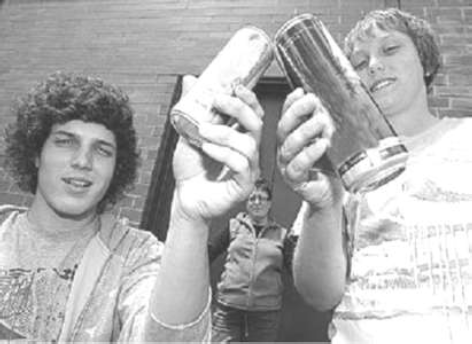
[1] (Reuters Health) - In a new report, a large group of American doctors urge kids and
teens to avoid energy drinks and only consume sports drinks in limited amount. The
recommendations come in the wake of a national debate over energy drinks, which experts
fear may have side effects."Children never need energy drinks," said Dr. Holly Benjamin, of
[5] the American Academy of Pediatrics, who worked on the new report. "They contain caffeine
and other stimulant substances that aren't nutritional, so you don't need them."And kids
might be more vulnerable to the contents of energy drinks than grownups."If you drink them
on a regular basis, it stresses the body," Benjamin told Reuters Health. "You don't really want
to stress the body of a person that's growing."
[10] For the new recommendations, published in the journal Pediatrics, researchers went
through earlier studies and reports on both energy drinks and sports drinks, which don't
contain any stimulants. They note that energy drinks contain a jumble of ingredients --
including vitamins and herbal extracts -- with possible side effects that aren't always well
understood. While there aren't many documented cases of harm directly linked to the
[15] beverages, stimulants can disturb the heart's rhythm and may lead to seizures in very rare
cases, Benjamin said. Recently, she saw a 15-year-old boy with attention deficit hyperactivity
disorder who came into the hospital with a seizure after having drunk two 24-ounce bottles of
Mountain Dew, a soft drink that contains caffeine. The boy was already taking stimulant
ADHD medication, and the extra caffeine in principle might have pushed him over the edge,
[20] according to Benjamin. "You just never know," she said. "It's definitely a concern."
Earlier this year, Pediatrics published another review of the literature on energy
drinks. In it, Florida pediatricians described cases of seizures, delusions, heart problems and
kidney or liver damage in people who had drunk one or more non-alcoholic energy drinks --
including brands like Red Bull, Spike Shooter and Redline. While they acknowledged that
[25] such cases are very rare, and can't be conclusively linked to the drinks, they urged caution,
especially in kids with medical conditions. U.S. sales of non-alcoholic energy drinks are
expected to hit $9 billion this year, with children and young adults accounting for half the
market. Manufacturers claim their products will enhance both mental and physical
performance, and were quick to downplay the February report."The effects of caffeine are
[30] well-known and as an 8.4 oz can of Red Bull contains about the same amount of caffeine as
a cup of coffee (80 mg), it should be treated accordingly," Red Bull said in an emailed
statement to Reuters Health.
Benjamin said that for most kids, water is the best thing to quench their thirst. If they
happen to be young athletes training hard, a sports drink might be helpful, too, because it
[35] contains sugar. But for kids who lead less-active lives, sports and energy drinks might just
serve to pile on extra pounds, fueling the national obesity epidemic. While she acknowledged
that more research is needed, Benjamin said the safest thing to drink is water.
Source / text : bit.ly/cxXOG Pediatrics, online May 30, 2011. http://www.reuters.com/article/2011/05/30/us-energy-drinks-idUSTRE74T11O20110530 (adapted)
Source / picture: http://www.impactlab.net/2011/02/14/doctors-warn-energy-drinks-putting consumers-at-risk-as-sales-soar/ NEW YORK | Mon May 30, 2011 4:12am EDT By Frederik Joelving
Glossary:
Acknowledged: reconhecer
Avoid: evitar
Beverages: bebidas
Caution: precaução
Concern: preocupação
Delusions: alucinações
Downplay: minimizar a importância
Enhance: aumentar, intensificar
Fear: temer
Fueling: contribuindo
Harm: dano
Kidney: rim
Liver: fígado
Quench: saciar
Sales: vendas
Seizures: ataques, convulsões
Thirst: sede
Two 24-ounce-bottles: duas garrafas de aproximadamente 750 ml
Urge: recomendar
8,4 oz can: lata de aproximadamente 250 ml
According to text, energy drinks can cause the following health problems, EXCEPT:
Questão 24 303914
UFRR Módulo 1 2011READ TEXT 01 AND ANSWER QUESTION:
Water Has No Substitute; Share It Wisely
Water is the basis of life, and on this planet only a tiny share— less than one percent of all water—is available for nearly 7 billion people and a myriad of freshwater aquatic ecosystems. It's that tiny share of freshwater that we have to use to meet all of our needs —irrigation, industry, drinking water, and sanitation—and the needs of thousands, if not millions, of other species that we share the planet with.
(http://environment.nationalgeographic.com/environment/freshwater/top-ten/)
03. In the subtitle, “Share It Wisely” the author offers a:
Questão 23 303913
UFRR Módulo 1 2011READ TEXT 01 AND ANSWER QUESTION:
Water Has No Substitute; Share It Wisely
Water is the basis of life, and on this planet only a tiny share— less than one percent of all water—is available for nearly 7 billion people and a myriad of freshwater aquatic ecosystems. It's that tiny share of freshwater that we have to use to meet all of our needs —irrigation, industry, drinking water, and sanitation—and the needs of thousands, if not millions, of other species that we share the planet with.
(http://environment.nationalgeographic.com/environment/freshwater/top-ten/)
The underlined word in “It's that tiny share of freshwater” (l.) can be replaced by:
Questão 22 303912
UFRR Módulo 1 2011READ TEXT 01 AND ANSWER QUESTION:
Water Has No Substitute; Share It Wisely
Water is the basis of life, and on this planet only a tiny share— less than one percent of all water—is available for nearly 7 billion people and a myriad of freshwater aquatic ecosystems. It's that tiny share of freshwater that we have to use to meet all of our needs —irrigation, industry, drinking water, and sanitation—and the needs of thousands, if not millions, of other species that we share the planet with.
(http://environment.nationalgeographic.com/environment/freshwater/top-ten/)
The objective of the first sentence is to:
Questão 23 303878
UFRR Módulo 2 2011READ TEXT 2 AND ANSWER QUESTION:
Music produces profound and lasting changes in the brain. Schools should add classes, not cut them
Studies have shown that assiduous instrument training from an early age can help the brain to process sounds better, making it easier to stay focused when absorbing other subjects, from literature to tensor calculus. The musically adept are better able to concentrate on a biology lesson despite the racket in the classroom or, a few years later, to finish a call with a client when a colleague in the next cubicle starts screaming at an underling. They can attend to several things at once in the mental scratch pad called working memory, an essential skill in this era of multitasking […]Sadly, fewer schools are giving students an opportunity to learn an instrument.
(adapted from http://www.scientificamerican.com/article.cfm?id=hearing-themusic- honing)
In “Studies have shown”, the correct forms of the underlined verb are:
Questão 50 274788
CESUPA 2011Read the text below and answer the following question according to it:
Losing Touch With the Patient
By PAULINE W. CHEN, M.D.
Published in the NYTimes.com: October 21, 2010
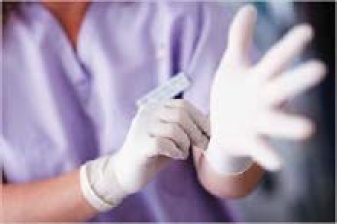
Several years ago I helped care for a man who had been hospitalized with a severe infection of the abdominal wall. When his primary doctors discovered that the bacteria responsible was resistant to most antibiotics, they quickly isolated him, moving him into a single room with a sign on the door proclaiming “Contact Precautions” and directing visitors to put on gloves, mask and gown before entering.
As the weeks wore on, we clinicians found ourselves minimizing our interactions, designating one team member to suit up and complete the work needed or shouting out updates and questions to the patient from the sterile safety of the doorway.
Increasingly isolated in these ways, he began to withdraw from everyone except his wife. His once daily declarations that he was going to “beat this infection” became less vocal, dimming to whispers, then disappearing altogether. He stopped turning to face us when we called out to him, choosing instead to continue staring blankly at the ceiling.
When he finally died, from cardiac arrest, more than two months later, it was hard not to remember the weeks leading up to his death and to wonder about one thing. In trying so hard to contain the infection, had we lost sight of the person?
According to Dr. Leif Hass, a family practice physician working as a hospitalist at the Alta Bates Summit Medical Center in Oakland, California, some type of contact barrier is definitely in the life of doctors and patients, even though, “there are times when an Intensive Care Unit looks like an assembly plant in Silicon Valley.” And while physicians will be forced to rely less on touch and more on other communication skills like listening and acknowledging, the risk remains that the presence of these physical — and technological — barriers will further eclipse some of the most effective ways in which doctors can alleviate the suffering of their patients.
“We just have to make sure, he said, that in the age of technology and rapid reforms, some of our best tools for healing — simple things like touching people and telling them you care and making them feel you are there for them — don’t get lost.”
Adapted from http://www.nytimes.com/2010/10/21/health/views/21chen.html?ref=health
Glossary
gown: veste de proteção
wore on: passavam
suit up: adaptar-se
withdraw: retrair-se
assembly plant: industria de montagem
healing: cura
In the last paragraph, the idea about healing tools is that ___.
06