


![[Marketing] Questao Topo - deslogado](https://storage.estuda.com.br/banners/0_6b7ebee90b03af1c560c73bb8bcce34a_banner_deslogado_70_dias.png)
Questões de Inglês
19.971 Questões
Questão 49 603330
UCPEL Verão 2011Leia o texto e responda a pergunta.
[1] TURNING THOUGHTS INTO WORDS
[2] A new approach allows more information to be extracted from the brain.
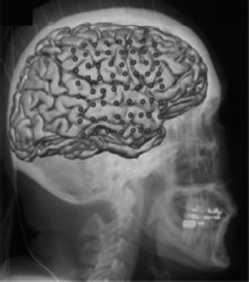
[3] Brain-computer interfaces could someday provide a lifeline to “locked-in”
[4] patients, who are unable to talk or move but are aware and awake. Many
[5] of these patients can communicate by blinking their eyes, but turning blinks
[6] into words is time-consuming and exhausting. Scientists in Utah have now
[7] demonstrated a way to determine which of 10 distinct words a person is
[8] thinking by recording the electrical activity from the surface of the brain.
[9] The new technique involves training algorithms to recognize specific brain
[10] signals picked up by an array of nonpenetrating electrodes placed over the
[11] language centers of the brain, says Spencer Kellis, one of the bioengineers
[12] who carried out the work at the University of Utah, in Salt Lake City. The
[13] approach used is known as electrocorticography (ECoG). The group was
[14] able to identify the words “yes,” “no,” “hot, “cold,” “thirsty,” “hungry,”
[15] “hello,” “goodbye,” “more,” and “less” with an accuracy of 48 percent.
[16] “The accuracy definitely needs to be improved,” says Kellis. “But we have
[17] shown the information is there.”
[18] Individual words have been decoded from brain signals in the past using
[19] functional magnetic resonance imaging (fMRI), says Eric Leuthardt, director of the Center for Innovation in Neuroscience
[20] and Technology at Washington University School of Medicine in St. Louis, Missouri. This is the first time that the feat
[21] has been performed using ECoG, a far more practical and portable approach than fMRI, he says.
[22] Working with colleagues Bradley Greger and Paul House, Kellis placed 16 electrodes on the surface of the brain of a
[23] patient being treated for epilepsy. The electrodes recorded signals from the facial motor cortex—an area of the brain
[24] that controls face muscles during speech—and over the Wernicke’s area, part of the cerebral cortex that is linked with
[25] language. To train the algorithm, signals were analyzed as the patient was asked to repeatedly utter the 10 words.
[26] It’s possible to use less invasive techniques, such as electroencephalography (EEG), which places electrodes _____
[27] the scalp, to enable brain-to-computer communications. Adrian Owen, a senior scientist in the Cognition and Brain
[28] Sciences Unit at the University of Cambridge, UK, has shown that EEG signals can be used to allow people in a
[29] persistent vegetative state to communicate “yes” and “no.”
[30] But with EEG, many of the signals are filtered out by the skull, says Leuthardt. “What’s really nice about ECoG is its
[31] potential to give us a lot more information,” he says.
[32] Decoding 10 words is “very cool,” says Owen, but the accuracy will need to improve dramatically, given the patients
[33] the technology is aimed at. “I don’t think even 60 percent or 70 percent accuracy is going to work for patients who
[34] cannot communicate in any other way and where there is no other margin for verification,” he says.
[35] Ultimately, the hope is that ECoG will enable much more sophisticated communication. Last year Leuthardt showed
[36] that ECoG could be used to decode vowel and consonant sounds—an approach that might eventually be used to
[37] reconstruct a much larger number of complete words.
[38] By Duncan Graham-Rowe / Massachusetts, Technology Review, MIT, 09/23/2010
[39] Adapted from http://www.technologyreview.com/communications/26332/?p1=Headlines&a=f#afteradbody
Na linha 26, há um espaço em branco no trecho “…electrodes _____ the scalp…”. De acordo com o contexto dessa sentença (linhas 25 e 26), qual a preposição mais adequada?
Questão 50 603070
UCPEL Fevereiro 2011Leia o texto e responda a pergunta.
[1] ACID RAIN

[2] Acid rain is a form of precipitation containing a heavy
[3] concentration of sulfuric and nitric acids. When fossil
[4] fuels such as coal, gasoline, and fuel oils are burned,
[5] they emit oxides of sulfur, carbon, and nitrogen into the
[6] air. These oxides combine with moisture in the air to
[7] form sulfuric acid, carbonic acid, and nitric acid. The
[8] term acid rain is also applied to other forms of
[9] precipitation - snow, hail, sleet, and fog - that are
[10] similarly acidic. Such precipitation has become an
[11] increasingly serious environmental problem in many
[12] areas of North America, Europe, and Asia. Although
[13] this form of pollution is most severe in and around large
[14] urban and industrial areas, substantial amounts of acid
[15] precipitation may be transported great distances.
[16] The process that results in the formation of acid rain
[17] generally begins with emissions into the atmosphere of sulfur dioxide and nitrogen oxide. These gases are released by
[18] automobiles, certain industrial operations, and electric power plants that burn fossil fuels such as coal and oil. The
[19] gases combine with water vapour in clouds to form sulfuric and nitric acids. When precipitation falls from the clouds,
[20] it is highly acidic, having a pH value of about 5.6 or lower.
[21] Precipitation and fog of high acidity contaminate lakes and streams; they are particularly harmful to fish and other
[22] aquatic life in regions with thin soil and granitic rock, which provide little buffering to acidic inputs. It also has been
[23] discovered that aluminum is leached from the soil in regions subjected to such acid precipitation, and that dissolved
[24] aluminum seems to be extremely toxic to aquatic organisms. All forms of acid precipitation have been found to
[25] damage various kinds of vegetation, including agricultural crops and trees, chiefly by inhibiting nitrogen fixation and
[26] leaching nutrients from foliage. ________, these pollutants can corrode the external surfaces of buildings and other
[27] man-made structures; marble structures and statues are especially vulnerable to their damaging effects.
[28] The problem of acid rain has been mainly dealt with in two ways. Adherents to the “cost-sharing” principle believe acid
[29] rain is a regional problem that should be dealt with collectively by all countries affected by the problem. Supporters of
[30] the “polluter pays” approach highlight the actions and responsibility of the polluter, which they believe should pay for
[31] the damages caused by its habits and institutions.
[32] From the Encyclopædia Britannica
[33] http://www.britannica.com/EBchecked/topic/3761/acid-rain
A expressão correta que completa, no texto, o espaço na linha 26 é
Questão 49 603068
UCPEL Fevereiro 2011Leia o texto e responda a pergunta.
[1] ACID RAIN
[2] Acid rain is a form of precipitation containing a heavy
[3] concentration of sulfuric and nitric acids. When fossil
[4] fuels such as coal, gasoline, and fuel oils are burned,
[5] they emit oxides of sulfur, carbon, and nitrogen into the
[6] air. These oxides combine with moisture in the air to
[7] form sulfuric acid, carbonic acid, and nitric acid. The
[8] term acid rain is also applied to other forms of
[9] precipitation - snow, hail, sleet, and fog - that are
[10] similarly acidic. Such precipitation has become an
[11] increasingly serious environmental problem in many
[12] areas of North America, Europe, and Asia. Although
[13] this form of pollution is most severe in and around large
[14] urban and industrial areas, substantial amounts of acid
[15] precipitation may be transported great distances.
[16] The process that results in the formation of acid rain
[17] generally begins with emissions into the atmosphere of sulfur dioxide and nitrogen oxide. These gases are released by
[18] automobiles, certain industrial operations, and electric power plants that burn fossil fuels such as coal and oil. The
[19] gases combine with water vapour in clouds to form sulfuric and nitric acids. When precipitation falls from the clouds,
[20] it is highly acidic, having a pH value of about 5.6 or lower.
[21] Precipitation and fog of high acidity contaminate lakes and streams; they are particularly harmful to fish and other
[22] aquatic life in regions with thin soil and granitic rock, which provide little buffering to acidic inputs. It also has been
[23] discovered that aluminum is leached from the soil in regions subjected to such acid precipitation, and that dissolved
[24] aluminum seems to be extremely toxic to aquatic organisms. All forms of acid precipitation have been found to
[25] damage various kinds of vegetation, including agricultural crops and trees, chiefly by inhibiting nitrogen fixation and
[26] leaching nutrients from foliage. ________, these pollutants can corrode the external surfaces of buildings and other
[27] man-made structures; marble structures and statues are especially vulnerable to their damaging effects.
[28] The problem of acid rain has been mainly dealt with in two ways. Adherents to the “cost-sharing” principle believe acid
[29] rain is a regional problem that should be dealt with collectively by all countries affected by the problem. Supporters of
[30] the “polluter pays” approach highlight the actions and responsibility of the polluter, which they believe should pay for
[31] the damages caused by its habits and institutions.
[32] From the Encyclopædia Britannica
[33] http://www.britannica.com/EBchecked/topic/3761/acid-rain
Conforme o texto, a afirmação correta acerca de como o problema da chuva ácida tem sido tratado é que
Questão 50 450038
UCPEL Inverno 2011[1] “BING” GETS FRIENDLIER WITH “FACEBOOK”
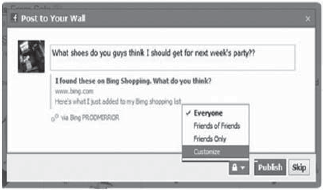
[2] New features will push the Microsoft search engine ahead of Google in the race to make search more social.
[3] Starting tomorrow, recommendations from your Facebook
[4] friends will become a regular part of Web search results, at
[5] least if you use Microsoft’s Bing search engine. A slew of new
[6] Bing features will use Facebook data to make its results more
[7] personalized, and to create opportunities to discuss what you
[8] are searching for with friends.
[9] “All the stuff we’ve deployed previously for Web search doesn’t
[10] acknowledge the human, social side of our users,” says Stefan
[11] Weitz, director of Bing search. “We were looking at it like
[12] engineers, and built a purely logic-based experience,” Weitz
[13] says. Web search should support people’s instincts to consult
[14] and discuss things with other people. A survey of Bing users found that 90 percent would talk with a friend before they
[15] acted on any information they found when searching online for product information, he says.
[16] The new features will push Bing ahead of Google in the race to make search more social. Last month, Google launched
[17] +1, its own close analogue of the Like button, with the intention of using it to shape search results. However, +1 is off to
[18] a slow start, because it is not hitched to a large social network, giving users little motivation to use it.
[19] Bing’s new features primarily use data that comes from the clicks on Facebook’s Like buttons. These buttons appear on
[20] sites across the Web. The Like button started as a low-cost way to communicate recommendations with friends online,
[21] but in recent years, it’s been adapted by Facebook to drive the ambitious “open graph” project, whose goal is to
[22] intertwine Facebook’s network of connections with the Web.
[23] Bing has been using data on the likes of users’ friends in its results since October, adding a box featuring relevant links
[24] liked by Facebook friends to some search results. Now these likes will have a much more visible effect on search results.
[25] The profile pictures of friends will appear next to search results that they have liked. Those likes will also be used to
[26] promote pages that otherwise may not have appeared on the first page of results.
[27] Other new features are intended to make search into a communication tool that can connect you with existing Facebook
[28] contacts or new ones. Searching for people – even those you are not linked with directly – may now return a short bio taken
[29] from Facebook profiles. This could include information like the person’s location, school, and employer.
[30] When a user searches for a city, Bing will highlight friends that Facebook says are located nearby. This presumably
[31] would allow you to connect with people who might have recommendations about places to stay or visit, or friends you
[32] might want to inform about your visit.
[33] Bing’s product search engine will also include new Facebook features. It will be possible to post a short list of possible
[34] purchases to your Facebook wall, to encourage friends to help you choose. “This turns search into a conversation, and
[35] makes it a less passive experience,” says Weitz.
[36] Bing’s new features can only access information if your Facebook privacy settings will allow it. Research on neurobiology
[37] and social psychology helped guide Bing’s new direction, says Weitz, who claims the approach will help make decision
[38] making easier. Traditional Web search triggers an unhelpful phenomenon known as “decision quicksand,” says Weitz.
[39] The term describes how people come to think of decisions as more important _________ they really are because of the
[40] complexity of weighing all the evidence. “When you use traditional Web search, your brain thinks everything is really
[41] important because there are half a million results you are told are relevant and have to deal with,” says Weitz. “What
[42] we’re doing now is using social signals to simplify that so your brain isn’t tricked.”
By Tom Simonite / Massachusetts, Technology Review, MIT, 16/05/2011
Adapted from http://www.technologyreview.com/web/37585/?mod=chfeatured
Na linha 39, há um espaço em branco no trecho “…more important _________ they really are …”. De acordo com o contexto da sentença, para completar a comparação, o termo mais adequado é
Questão 49 450036
UCPEL Inverno 2011[1] “BING” GETS FRIENDLIER WITH “FACEBOOK”
[2] New features will push the Microsoft search engine ahead of Google in the race to make search more social.
[3] Starting tomorrow, recommendations from your Facebook
[4] friends will become a regular part of Web search results, at
[5] least if you use Microsoft’s Bing search engine. A slew of new
[6] Bing features will use Facebook data to make its results more
[7] personalized, and to create opportunities to discuss what you
[8] are searching for with friends.
[9] “All the stuff we’ve deployed previously for Web search doesn’t
[10] acknowledge the human, social side of our users,” says Stefan
[11] Weitz, director of Bing search. “We were looking at it like
[12] engineers, and built a purely logic-based experience,” Weitz
[13] says. Web search should support people’s instincts to consult
[14] and discuss things with other people. A survey of Bing users found that 90 percent would talk with a friend before they
[15] acted on any information they found when searching online for product information, he says.
[16] The new features will push Bing ahead of Google in the race to make search more social. Last month, Google launched
[17] +1, its own close analogue of the Like button, with the intention of using it to shape search results. However, +1 is off to
[18] a slow start, because it is not hitched to a large social network, giving users little motivation to use it.
[19] Bing’s new features primarily use data that comes from the clicks on Facebook’s Like buttons. These buttons appear on
[20] sites across the Web. The Like button started as a low-cost way to communicate recommendations with friends online,
[21] but in recent years, it’s been adapted by Facebook to drive the ambitious “open graph” project, whose goal is to
[22] intertwine Facebook’s network of connections with the Web.
[23] Bing has been using data on the likes of users’ friends in its results since October, adding a box featuring relevant links
[24] liked by Facebook friends to some search results. Now these likes will have a much more visible effect on search results.
[25] The profile pictures of friends will appear next to search results that they have liked. Those likes will also be used to
[26] promote pages that otherwise may not have appeared on the first page of results.
[27] Other new features are intended to make search into a communication tool that can connect you with existing Facebook
[28] contacts or new ones. Searching for people – even those you are not linked with directly – may now return a short bio taken
[29] from Facebook profiles. This could include information like the person’s location, school, and employer.
[30] When a user searches for a city, Bing will highlight friends that Facebook says are located nearby. This presumably
[31] would allow you to connect with people who might have recommendations about places to stay or visit, or friends you
[32] might want to inform about your visit.
[33] Bing’s product search engine will also include new Facebook features. It will be possible to post a short list of possible
[34] purchases to your Facebook wall, to encourage friends to help you choose. “This turns search into a conversation, and
[35] makes it a less passive experience,” says Weitz.
[36] Bing’s new features can only access information if your Facebook privacy settings will allow it. Research on neurobiology
[37] and social psychology helped guide Bing’s new direction, says Weitz, who claims the approach will help make decision
[38] making easier. Traditional Web search triggers an unhelpful phenomenon known as “decision quicksand,” says Weitz.
[39] The term describes how people come to think of decisions as more important _________ they really are because of the
[40] complexity of weighing all the evidence. “When you use traditional Web search, your brain thinks everything is really
[41] important because there are half a million results you are told are relevant and have to deal with,” says Weitz. “What
[42] we’re doing now is using social signals to simplify that so your brain isn’t tricked.”
By Tom Simonite / Massachusetts, Technology Review, MIT, 16/05/2011
Adapted from http://www.technologyreview.com/web/37585/?mod=chfeatured
De acordo com o quarto parágrafo, o botão “Like” do Facebook será útil para
Questão 47 450003
UCPEL Inverno 2011[1] “BING” GETS FRIENDLIER WITH “FACEBOOK”
[2] New features will push the Microsoft search engine ahead of Google in the race to make search more social.
[3] Starting tomorrow, recommendations from your Facebook
[4] friends will become a regular part of Web search results, at
[5] least if you use Microsoft’s Bing search engine. A slew of new
[6] Bing features will use Facebook data to make its results more
[7] personalized, and to create opportunities to discuss what you
[8] are searching for with friends.
[9] “All the stuff we’ve deployed previously for Web search doesn’t
[10] acknowledge the human, social side of our users,” says Stefan
[11] Weitz, director of Bing search. “We were looking at it like
[12] engineers, and built a purely logic-based experience,” Weitz
[13] says. Web search should support people’s instincts to consult
[14] and discuss things with other people. A survey of Bing users found that 90 percent would talk with a friend before they
[15] acted on any information they found when searching online for product information, he says.
[16] The new features will push Bing ahead of Google in the race to make search more social. Last month, Google launched
[17] +1, its own close analogue of the Like button, with the intention of using it to shape search results. However, +1 is off to
[18] a slow start, because it is not hitched to a large social network, giving users little motivation to use it.
[19] Bing’s new features primarily use data that comes from the clicks on Facebook’s Like buttons. These buttons appear on
[20] sites across the Web. The Like button started as a low-cost way to communicate recommendations with friends online,
[21] but in recent years, it’s been adapted by Facebook to drive the ambitious “open graph” project, whose goal is to
[22] intertwine Facebook’s network of connections with the Web.
[23] Bing has been using data on the likes of users’ friends in its results since October, adding a box featuring relevant links
[24] liked by Facebook friends to some search results. Now these likes will have a much more visible effect on search results.
[25] The profile pictures of friends will appear next to search results that they have liked. Those likes will also be used to
[26] promote pages that otherwise may not have appeared on the first page of results.
[27] Other new features are intended to make search into a communication tool that can connect you with existing Facebook
[28] contacts or new ones. Searching for people – even those you are not linked with directly – may now return a short bio taken
[29] from Facebook profiles. This could include information like the person’s location, school, and employer.
[30] When a user searches for a city, Bing will highlight friends that Facebook says are located nearby. This presumably
[31] would allow you to connect with people who might have recommendations about places to stay or visit, or friends you
[32] might want to inform about your visit.
[33] Bing’s product search engine will also include new Facebook features. It will be possible to post a short list of possible
[34] purchases to your Facebook wall, to encourage friends to help you choose. “This turns search into a conversation, and
[35] makes it a less passive experience,” says Weitz.
[36] Bing’s new features can only access information if your Facebook privacy settings will allow it. Research on neurobiology
[37] and social psychology helped guide Bing’s new direction, says Weitz, who claims the approach will help make decision
[38] making easier. Traditional Web search triggers an unhelpful phenomenon known as “decision quicksand,” says Weitz.
[39] The term describes how people come to think of decisions as more important _________ they really are because of the
[40] complexity of weighing all the evidence. “When you use traditional Web search, your brain thinks everything is really
[41] important because there are half a million results you are told are relevant and have to deal with,” says Weitz. “What
[42] we’re doing now is using social signals to simplify that so your brain isn’t tricked.”
By Tom Simonite / Massachusetts, Technology Review, MIT, 16/05/2011
Adapted from http://www.technologyreview.com/web/37585/?mod=chfeatured
Neste artigo, o título “Bing” gets friendlier with “Facebook” (linha 1) significa que
06