


![[Marketing] Questao Topo - deslogado](https://storage.estuda.com.br/banners/0_6b7ebee90b03af1c560c73bb8bcce34a_banner_deslogado_70_dias.png)
Questões de Inglês
19.971 Questões
Questão 70 7344612
UFF 2011/1Text I
Cultural Differences?
Or, are we really that different?
Differences between people within any given nation or culture are much greater than differences between
groups. Education, social standing, religion, personality, belief structure, past experience, affection shown in
the home, and a myriad of other factors will affect human behavior and culture.
Sure there are differences in approach as to what is considered polite and appropriate behavior both on
[5] and off the job. In some cultures “yes” means “l hear you” more than “I agree”. Length of pleasantries and
greetings before getting down to business; level of tolerance for being around someone speaking a foreign
(not-understood) language; politeness measured in terms of gallantry or etiquette (e.g., standing up for a
woman who approaches a table, yielding1 a seat on the bus to an older person, etc.); and of expected dress
are all examples of possible cultural differences and traditions.
[10] In Mexico it is customary for the arriving person to greet the others. For instance, someone who walks into a
group of persons eating would say provecho (enjoy your meal). In Chile, women often greet both other
women and men with a kiss on the cheek. In Russia, women often walk arm in arm with their female
friends. Paying attention to customs and cultural differences can give someone outside that culture a
better chance of assimilation or acceptance. Ignoring these can get an unsuspecting person into trouble.
[15] There are cultural and ideological differences and it is good to have an understanding about a culture’s
customs and ways. Aaron Pun, a Canadian ODCnet correspondent, wrote: “In studying cross cultural
differences, we are not looking at individuals but a comparison of one ethnic group against others. Hence,
we are comparing two bell curves2 and generalization cannot be avoided.” Another correspondent explained
the human need to categorize. True and true, but the danger comes when we act on some of
[20] these generalizations, especially when they are based on faulty3 observation. Acting on generalizations
about such matters as eye contact, personal space, touch, and interest in participation can have serious
negative consequences.
Stereotyping can have intense negative effects, especially when educators or managers make fewer
attempts to involve those of other cultures because they have been taught not to expect participation. Or
[25] they do not realize there may be something wrong when a student or employee of a different ethnicity makes
little eye contact with them. Faye Lee, a concerned Japanese-American wrote: “How anyone can try to make
generalizations about an entire continent of people, plus all the Asian Americans and the infinite
permutations of people’s differing experiences, is beyond me.”
As we interact with others of different cultures, there is no good substitute for receptiveness to
[30] interpersonal feedback, good observation skills, effective questions, and some horse sense4. There is much
to be gained by observing how people of the same culture interact with each other. Don’t be afraid to ask
questions as most people respond very positively to inquiries5 about their culture. Ask a variety of people so
you can get a balanced view.
Making a genuine effort to find the positive historical, literary, and cultural contributions of a society;
[35] learning a few polite expressions in another person’s language; and showing appreciation for the food and
music of another culture can have especially positive effects.
Differences between cultures and peoples are real and can add richness (and humor) to the fabric of life.
People everywhere have much in common, such as a need for affiliation and love, participation, and
contribution. When the exterior is peeled off6, there are not so many differences after all.
(Adapted from an article by Gregorio Billikopf - University of California - 2009, in Party-Directed Mediation: Helping Others Resolve Differences, California: The Regents, 1999)
Glossary
1 yielding - ceder, dar
2 bell curves - gráficos em forma de sino
3 faulty - equivocada
4 horse sense - senso comum
5 inquiries - perguntas
6 peeled off - desnudado
Text II
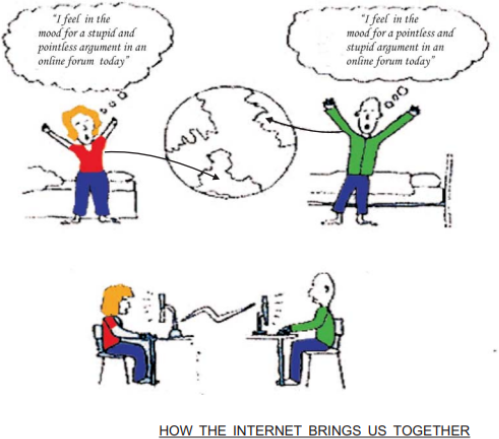
http:/www.weblogcartoons.com/
The meaning of unsuspecting (line 14) is
Questão 69 7344611
UFF 2011/1Text I
Cultural Differences?
Or, are we really that different?
Differences between people within any given nation or culture are much greater than differences between
groups. Education, social standing, religion, personality, belief structure, past experience, affection shown in
the home, and a myriad of other factors will affect human behavior and culture.
Sure there are differences in approach as to what is considered polite and appropriate behavior both on
[5] and off the job. In some cultures “yes” means “l hear you” more than “I agree”. Length of pleasantries and
greetings before getting down to business; level of tolerance for being around someone speaking a foreign
(not-understood) language; politeness measured in terms of gallantry or etiquette (e.g., standing up for a
woman who approaches a table, yielding1 a seat on the bus to an older person, etc.); and of expected dress
are all examples of possible cultural differences and traditions.
[10] In Mexico it is customary for the arriving person to greet the others. For instance, someone who walks into a
group of persons eating would say provecho (enjoy your meal). In Chile, women often greet both other
women and men with a kiss on the cheek. In Russia, women often walk arm in arm with their female
friends. Paying attention to customs and cultural differences can give someone outside that culture a
better chance of assimilation or acceptance. Ignoring these can get an unsuspecting person into trouble.
[15] There are cultural and ideological differences and it is good to have an understanding about a culture’s
customs and ways. Aaron Pun, a Canadian ODCnet correspondent, wrote: “In studying cross cultural
differences, we are not looking at individuals but a comparison of one ethnic group against others. Hence,
we are comparing two bell curves2 and generalization cannot be avoided.” Another correspondent explained
the human need to categorize. True and true, but the danger comes when we act on some of
[20] these generalizations, especially when they are based on faulty3 observation. Acting on generalizations
about such matters as eye contact, personal space, touch, and interest in participation can have serious
negative consequences.
Stereotyping can have intense negative effects, especially when educators or managers make fewer
attempts to involve those of other cultures because they have been taught not to expect participation. Or
[25] they do not realize there may be something wrong when a student or employee of a different ethnicity makes
little eye contact with them. Faye Lee, a concerned Japanese-American wrote: “How anyone can try to make
generalizations about an entire continent of people, plus all the Asian Americans and the infinite
permutations of people’s differing experiences, is beyond me.”
As we interact with others of different cultures, there is no good substitute for receptiveness to
[30] interpersonal feedback, good observation skills, effective questions, and some horse sense4. There is much
to be gained by observing how people of the same culture interact with each other. Don’t be afraid to ask
questions as most people respond very positively to inquiries5 about their culture. Ask a variety of people so
you can get a balanced view.
Making a genuine effort to find the positive historical, literary, and cultural contributions of a society;
[35] learning a few polite expressions in another person’s language; and showing appreciation for the food and
music of another culture can have especially positive effects.
Differences between cultures and peoples are real and can add richness (and humor) to the fabric of life.
People everywhere have much in common, such as a need for affiliation and love, participation, and
contribution. When the exterior is peeled off6, there are not so many differences after all.
(Adapted from an article by Gregorio Billikopf - University of California - 2009, in Party-Directed Mediation: Helping Others Resolve Differences, California: The Regents, 1999)
Glossary
1 yielding - ceder, dar
2 bell curves - gráficos em forma de sino
3 faulty - equivocada
4 horse sense - senso comum
5 inquiries - perguntas
6 peeled off - desnudado
Text II
http:/www.weblogcartoons.com/
According to Text I, in order to interact successfully with people from a different culture, one must
Questão 58 7330896
UNIPAM 2011Understanding Bipolar Disorder
Signs, Symptoms, and Treatment of Manic Depression
1 We all have our ups and downs, our "off" days and our "on" days, but if you're suffering from bipolar disorder, these peaks and valleys are more severe. The symptoms of bipolar disorder can hurt your job and school performance, damage your relationships, and disrupt your daily life. And although bipolar disorder is treatable, many people don’t recognize the warning signs and get the help they need. Since bipolar disorder tends to worsen without treatment, it’s important to learn what the symptoms look like. Recognizing the problem is the first step to getting it under control.
What is Bipolar Disorder?
7 Bipolar disorder (also known as manic depression) causes serious shifts in mood, energy, thinking, and behavior–from the highs of mania on one extreme, to the lows of depression on the other. More than just a fleeting good or bad mood, the cycles of bipolar disorder last for days, weeks, or months. And unlike ordinary mood swings, the mood changes of bipolar disorder are so intense that they interfere with your ability to function.
12 During a manic episode, a person might impulsively quit a job, charge up huge amounts on credit cards, or feel rested after sleeping two hours. During a depressive episode, the same person might be too tired to get out of bed and full of self-loathing and hopelessness over being unemployed and in debt.
16 The causes of bipolar disorder aren’t completely understood, but it often runs in families. The first manic or depressive episode of bipolar disorder usually occurs in the teenage years or early adulthood. The symptoms can be subtle and confusing, so many people with bipolar disorder are overlooked or misdiagnosed–resulting in unnecessary suffering. But with proper treatment and support, you can lead a rich and fulfilling life.
Signs and symptoms of Bipolar Disorder
21 Bipolar disorder can look very different in different people. The symptoms vary widely in their pattern, severity, and frequency. Some people are more prone to either mania or depression, while others alternate equally between the two types of episodes. Some have frequent mood disruptions, while others experience only a few over a lifetime.
25 There are four types of mood episodes in bipolar disorder: mania, hypomania, depression, and mixed episodes. Each type of bipolar disorder mood episode has a unique set of symptoms.
Treatment for bipolar disorder
27 If you spot the symptoms of bipolar depression in yourself or someone else, don’t wait to get help. Ignoring the problem won’t make it go away; in fact, it will almost certainly get worse. Living with untreated bipolar disorder can lead to problems in everything from your career to your relationships to your health. Diagnosing the problem as early as possible and getting into treatment can help prevent these complications.
32 If you’re reluctant to seek treatment because you like the way you feel when you’re manic, remember that the energy and euphoria come with a price. Mania and hypomania often turn destructive, hurting you and the people around you.
Basics of bipolar disorder treatment
35 Bipolar disorder requires long-term treatment. Since bipolar disorder is a chronic, relapsing illness, it’s important to continue treatment even when you’re feeling better. Most people with bipolar disorder need medication to prevent new episodes and stay symptom-free.
38 There is more to treatment than medication. Medication alone is usually not enough to fully control the symptoms of bipolar disorder. The most effective treatment strategy for bipolar disorder involves a combination of medication, therapy, lifestyle changes, and social support.
41 It’s best to work with an experienced psychiatrist. Bipolar disorder is a complex condition. Diagnosis can be tricky and treatment is often difficult. For safety reasons, medication should be closely monitored. A psychiatrist who is skilled in bipolar disorder treatment can help you navigate these twists and turns.
(http://www.helpguide.org/mental/bipolar_disorder_symptoms_treatment.htm)
In the sentence
Bipolar disorder (also known as manic depression) causes serious shifts in mood, energy, thinking… (line 7)
the underlined word shifts has the same meaning as
Questão 57 7330895
UNIPAM 2011Understanding Bipolar Disorder
Signs, Symptoms, and Treatment of Manic Depression
1 We all have our ups and downs, our "off" days and our "on" days, but if you're suffering from bipolar disorder, these peaks and valleys are more severe. The symptoms of bipolar disorder can hurt your job and school performance, damage your relationships, and disrupt your daily life. And although bipolar disorder is treatable, many people don’t recognize the warning signs and get the help they need. Since bipolar disorder tends to worsen without treatment, it’s important to learn what the symptoms look like. Recognizing the problem is the first step to getting it under control.
What is Bipolar Disorder?
7 Bipolar disorder (also known as manic depression) causes serious shifts in mood, energy, thinking, and behavior–from the highs of mania on one extreme, to the lows of depression on the other. More than just a fleeting good or bad mood, the cycles of bipolar disorder last for days, weeks, or months. And unlike ordinary mood swings, the mood changes of bipolar disorder are so intense that they interfere with your ability to function.
12 During a manic episode, a person might impulsively quit a job, charge up huge amounts on credit cards, or feel rested after sleeping two hours. During a depressive episode, the same person might be too tired to get out of bed and full of self-loathing and hopelessness over being unemployed and in debt.
16 The causes of bipolar disorder aren’t completely understood, but it often runs in families. The first manic or depressive episode of bipolar disorder usually occurs in the teenage years or early adulthood. The symptoms can be subtle and confusing, so many people with bipolar disorder are overlooked or misdiagnosed–resulting in unnecessary suffering. But with proper treatment and support, you can lead a rich and fulfilling life.
Signs and symptoms of Bipolar Disorder
21 Bipolar disorder can look very different in different people. The symptoms vary widely in their pattern, severity, and frequency. Some people are more prone to either mania or depression, while others alternate equally between the two types of episodes. Some have frequent mood disruptions, while others experience only a few over a lifetime.
25 There are four types of mood episodes in bipolar disorder: mania, hypomania, depression, and mixed episodes. Each type of bipolar disorder mood episode has a unique set of symptoms.
Treatment for bipolar disorder
27 If you spot the symptoms of bipolar depression in yourself or someone else, don’t wait to get help. Ignoring the problem won’t make it go away; in fact, it will almost certainly get worse. Living with untreated bipolar disorder can lead to problems in everything from your career to your relationships to your health. Diagnosing the problem as early as possible and getting into treatment can help prevent these complications.
32 If you’re reluctant to seek treatment because you like the way you feel when you’re manic, remember that the energy and euphoria come with a price. Mania and hypomania often turn destructive, hurting you and the people around you.
Basics of bipolar disorder treatment
35 Bipolar disorder requires long-term treatment. Since bipolar disorder is a chronic, relapsing illness, it’s important to continue treatment even when you’re feeling better. Most people with bipolar disorder need medication to prevent new episodes and stay symptom-free.
38 There is more to treatment than medication. Medication alone is usually not enough to fully control the symptoms of bipolar disorder. The most effective treatment strategy for bipolar disorder involves a combination of medication, therapy, lifestyle changes, and social support.
41 It’s best to work with an experienced psychiatrist. Bipolar disorder is a complex condition. Diagnosis can be tricky and treatment is often difficult. For safety reasons, medication should be closely monitored. A psychiatrist who is skilled in bipolar disorder treatment can help you navigate these twists and turns.
(http://www.helpguide.org/mental/bipolar_disorder_symptoms_treatment.htm)
The only sentence which has the same meaning of
Since bipolar disorder tends to worsen without treatment… ( line 5)
is:
Questão 55 7330893
UNIPAM 2011Understanding Bipolar Disorder
Signs, Symptoms, and Treatment of Manic Depression
1 We all have our ups and downs, our "off" days and our "on" days, but if you're suffering from bipolar disorder, these peaks and valleys are more severe. The symptoms of bipolar disorder can hurt your job and school performance, damage your relationships, and disrupt your daily life. And although bipolar disorder is treatable, many people don’t recognize the warning signs and get the help they need. Since bipolar disorder tends to worsen without treatment, it’s important to learn what the symptoms look like. Recognizing the problem is the first step to getting it under control.
What is Bipolar Disorder?
7 Bipolar disorder (also known as manic depression) causes serious shifts in mood, energy, thinking, and behavior–from the highs of mania on one extreme, to the lows of depression on the other. More than just a fleeting good or bad mood, the cycles of bipolar disorder last for days, weeks, or months. And unlike ordinary mood swings, the mood changes of bipolar disorder are so intense that they interfere with your ability to function.
12 During a manic episode, a person might impulsively quit a job, charge up huge amounts on credit cards, or feel rested after sleeping two hours. During a depressive episode, the same person might be too tired to get out of bed and full of self-loathing and hopelessness over being unemployed and in debt.
16 The causes of bipolar disorder aren’t completely understood, but it often runs in families. The first manic or depressive episode of bipolar disorder usually occurs in the teenage years or early adulthood. The symptoms can be subtle and confusing, so many people with bipolar disorder are overlooked or misdiagnosed–resulting in unnecessary suffering. But with proper treatment and support, you can lead a rich and fulfilling life.
Signs and symptoms of Bipolar Disorder
21 Bipolar disorder can look very different in different people. The symptoms vary widely in their pattern, severity, and frequency. Some people are more prone to either mania or depression, while others alternate equally between the two types of episodes. Some have frequent mood disruptions, while others experience only a few over a lifetime.
25 There are four types of mood episodes in bipolar disorder: mania, hypomania, depression, and mixed episodes. Each type of bipolar disorder mood episode has a unique set of symptoms.
Treatment for bipolar disorder
27 If you spot the symptoms of bipolar depression in yourself or someone else, don’t wait to get help. Ignoring the problem won’t make it go away; in fact, it will almost certainly get worse. Living with untreated bipolar disorder can lead to problems in everything from your career to your relationships to your health. Diagnosing the problem as early as possible and getting into treatment can help prevent these complications.
32 If you’re reluctant to seek treatment because you like the way you feel when you’re manic, remember that the energy and euphoria come with a price. Mania and hypomania often turn destructive, hurting you and the people around you.
Basics of bipolar disorder treatment
35 Bipolar disorder requires long-term treatment. Since bipolar disorder is a chronic, relapsing illness, it’s important to continue treatment even when you’re feeling better. Most people with bipolar disorder need medication to prevent new episodes and stay symptom-free.
38 There is more to treatment than medication. Medication alone is usually not enough to fully control the symptoms of bipolar disorder. The most effective treatment strategy for bipolar disorder involves a combination of medication, therapy, lifestyle changes, and social support.
41 It’s best to work with an experienced psychiatrist. Bipolar disorder is a complex condition. Diagnosis can be tricky and treatment is often difficult. For safety reasons, medication should be closely monitored. A psychiatrist who is skilled in bipolar disorder treatment can help you navigate these twists and turns.
(http://www.helpguide.org/mental/bipolar_disorder_symptoms_treatment.htm)
We can say that the only symptoms related to Bipolar disorder are
Questão 54 7330890
UNIPAM 2011Understanding Bipolar Disorder
Signs, Symptoms, and Treatment of Manic Depression
1 We all have our ups and downs, our "off" days and our "on" days, but if you're suffering from bipolar disorder, these peaks and valleys are more severe. The symptoms of bipolar disorder can hurt your job and school performance, damage your relationships, and disrupt your daily life. And although bipolar disorder is treatable, many people don’t recognize the warning signs and get the help they need. Since bipolar disorder tends to worsen without treatment, it’s important to learn what the symptoms look like. Recognizing the problem is the first step to getting it under control.
What is Bipolar Disorder?
7 Bipolar disorder (also known as manic depression) causes serious shifts in mood, energy, thinking, and behavior–from the highs of mania on one extreme, to the lows of depression on the other. More than just a fleeting good or bad mood, the cycles of bipolar disorder last for days, weeks, or months. And unlike ordinary mood swings, the mood changes of bipolar disorder are so intense that they interfere with your ability to function.
12 During a manic episode, a person might impulsively quit a job, charge up huge amounts on credit cards, or feel rested after sleeping two hours. During a depressive episode, the same person might be too tired to get out of bed and full of self-loathing and hopelessness over being unemployed and in debt.
16 The causes of bipolar disorder aren’t completely understood, but it often runs in families. The first manic or depressive episode of bipolar disorder usually occurs in the teenage years or early adulthood. The symptoms can be subtle and confusing, so many people with bipolar disorder are overlooked or misdiagnosed–resulting in unnecessary suffering. But with proper treatment and support, you can lead a rich and fulfilling life.
Signs and symptoms of Bipolar Disorder
21 Bipolar disorder can look very different in different people. The symptoms vary widely in their pattern, severity, and frequency. Some people are more prone to either mania or depression, while others alternate equally between the two types of episodes. Some have frequent mood disruptions, while others experience only a few over a lifetime.
25 There are four types of mood episodes in bipolar disorder: mania, hypomania, depression, and mixed episodes. Each type of bipolar disorder mood episode has a unique set of symptoms.
Treatment for bipolar disorder
27 If you spot the symptoms of bipolar depression in yourself or someone else, don’t wait to get help. Ignoring the problem won’t make it go away; in fact, it will almost certainly get worse. Living with untreated bipolar disorder can lead to problems in everything from your career to your relationships to your health. Diagnosing the problem as early as possible and getting into treatment can help prevent these complications.
32 If you’re reluctant to seek treatment because you like the way you feel when you’re manic, remember that the energy and euphoria come with a price. Mania and hypomania often turn destructive, hurting you and the people around you.
Basics of bipolar disorder treatment
35 Bipolar disorder requires long-term treatment. Since bipolar disorder is a chronic, relapsing illness, it’s important to continue treatment even when you’re feeling better. Most people with bipolar disorder need medication to prevent new episodes and stay symptom-free.
38 There is more to treatment than medication. Medication alone is usually not enough to fully control the symptoms of bipolar disorder. The most effective treatment strategy for bipolar disorder involves a combination of medication, therapy, lifestyle changes, and social support.
41 It’s best to work with an experienced psychiatrist. Bipolar disorder is a complex condition. Diagnosis can be tricky and treatment is often difficult. For safety reasons, medication should be closely monitored. A psychiatrist who is skilled in bipolar disorder treatment can help you navigate these twists and turns.
(http://www.helpguide.org/mental/bipolar_disorder_symptoms_treatment.htm)
It is INCORRECT to say about Bipolar Disorder that
06