


![[Marketing] Questao Topo - deslogado](https://storage.estuda.com.br/banners/0_6b7ebee90b03af1c560c73bb8bcce34a_banner_deslogado_70_dias.png)
Questões de Inglês
19.971 Questões
Questão 38 49741
USF 2012/1My elder brother, Armando Herrera Corral, was this month sent a tube of dynamite by terrorists who oppose his scientific research. The home-made bomb, I was in a shoe-box-sized package labeled as an award for his personal attention, exploded when he pulled II the adhesive tape wrapped around it. My brother, director of the technology park at the Monterrey Institute of Technology in Mexico, was standing III the time, and suffered burns to his legs and a perforated eardrum.
More severely injured by the blast was his colleague Alejandro Aceves López, IV my brother had gone to see in his office to share a cup of coffee and open the award. Aceves López was sitting down when my brother opened the package; he took the brunt of the explosion in his chest, and shrapnel pierced one of his lungs.
Both scientists are now recovering from their injuries, but they were extremely fortunate to survive. The bomb failed to explode properly, and only a fraction of the 20-centimetre-long cylinder of dynamite ignited.
The next day, I, too, was sent a suspicious package. It arrived by an unusual procedure, and on a Sunday. It tested positive for explosives, and was taken away by the bomb squad, which declared a false alarm after finding that the parcel contained only books. My first reaction was to leave the country. Now, I would like to stand up and speak in this way because I believe that terror should not succeed in establishing fear and imposing conduct that takes us far from the freedom we enjoy. I would like the police to take these events seriously; they are becoming a real threat to society.
As an academic scientist, why was my brother singled out in this way? He does not work in a field that is usually considered high-risk for terrorist activity, such as medical research on animals but rather on computer science. Aceves López is an expert in robotics. I am a high-energy physicist and I have been working in the field for 15 years.
From: <http://www.nature.com/news/2011/110822/full/476373a.html> Access Sep7 19th.
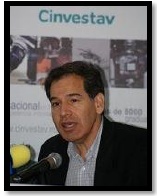
Gerardo Herrera Corral is a
physicist at the Research and
Advanced Studies Centre of the
National Polytechnic Institute of
Mexico in Mexico City.
The pronoun ‘it’ (paragraph 4) refers to
Questão 49 49384
ESPM 2012/2New Worries About Sleeping Pills
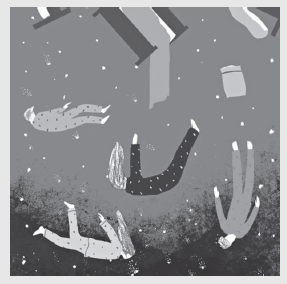
Talk about sleepless nights.
Patients taking prescription sleep aids on a regular basis were nearly five times as likely as non-users to die over a period of two and a half years, according to a recent study. Even those prescribed fewer than 20 pills a year were at risk, the researchers found; heavy users also were more likely to develop cancer.
Unsurprisingly, the findings, published online in the journal BMJ, have caused a quite a stir. Americans filled some 60 million prescriptions for sleeping pills last year, up from 47 million in 2006, according to IMS Health, a health care services company. Panicked patients have been calling doctors’ offices seeking reassurance; some others simply quit the pills cold turkey.
Some experts were quick to point out the study’s shortcomings. The analysis did not prove that sleeping pills cause death, critics noted, only that there may be a correlation between the two. And while the authors suggested the sleeping pills were a factor in the deaths, those who use sleep aids tend as a group to be sicker than those who don’t use them. The deaths may simply be a reflection of poorer health.
Still, the findings underscore concern about the exploding use of sleeping pills. Experts say that many patients, especially the elderly, should exercise more caution when using sleep medications, including the non-benzodiazepine hypnotics so popular today, like zolpidem (brand name Ambien), eszopiclone (Lunesta) and zaleplon (Sonata).
“If someone comes to me on a sleeping pill, usually my tactic is to try to take them off it,” said Dr. Nancy A. Collop, president of the American Academy of Sleep Medicine and director of the Emory Sleep Center in Atlanta, who was an investigator in a clinical trial of Lunesta five years ago.
The non-benzodiazepine sedative hypnotics, on the market since the late 1980s, are believed to be safer and less likely to be abused than benzodiazepines or barbiturates. But many people take them for years, even though most are approved only for short-term use and generally their safety and effectiveness have not been evaluated beyond several weeks in clinical trials. (One exception is Lunesta, which was tested for up to six months.)
Some data suggest that the medications do not even do what they promise all that well, said Dr. Steven Woloshin, a professor of medicine at the Dartmouth Institute for Health Policy and Clinical Practice.
“The definition of insomnia is that you get less than six and a half hours of sleep, and it takes you 30 minutes or more to fall asleep,” said Dr. Woloshin, who is advocating for new labeling that spells out how well a drug actually works compared with a placebo. “But even when the drugs work better than placebos, and they don’t always, people still don’t fall asleep in less than 30 minutes, and they still don’t sleep much longer than six hours.”
March 12, 2012 / www.nytimes.com
The underlined word “still” in “Still, the findings underscore concern about the exploding use of sleeping pills.” could be replaced, without changing its meaning, by:
Questão 46 49381
ESPM 2012/2
According to the comic strip, Roosevelt meant that:
Questão 45 49380
ESPM 2012/2
Turning the first frame of the comic strip into the Reported Speech, we would have:
Questão 42 49377
ESPM 2012/2Rolling back the nanny state Live free and pay more tax
The need for revenue has encouraged cash-strapped state and local governments to scrap restrictions on alcohol sales, gambling and even fireworks

LAST week the state of Washington began auctioning the licences to 167 of the liquor stores it runs. By June 1st Washington will be out of the liquor business altogether, freeing private businesses to sell spirits in the state for the first time since Prohibition. Last year, despite dire warnings about corporate profiteers, drunk drivers and surging policing costs, voters in the state approved the privatisation in a referendum by 59% to 41%.
Something similar happened in Georgia on March 6th, when voters lifted the ban on sales of alcohol on Sundays in 24 of the 27 cities and counties that had put the issue on the ballot, alongside the state’s presidential primary. Since Georgia first allowed local governments to hold referendums on Sunday sales last year, voters have approved the practice in 129 out of 154 instances, often by huge margins. Last year in Texas, attempts to turn “dry” localities “wet” succeeded on 57 out of 64 occasions. In West Virginia meanwhile, the state legislature has just passed a bill allowing liquor stores to hold tasting sessions. It is the ninth state to approve such a measure since 2009. “The world is getting wetter,” exults Frank Coleman of the Distilled Spirits Council of the United States (DISCUS), an industry group.
It is not just drinkers who are benefiting from a loosening of puritanical regulations around America. Massachusetts last year became the 24th state to allow casinos in some form. Ohio did the same in 2009, and Maryland did in 2008. Maine, not to be outdone, has just issued its first casino licence, and also lifted a ban on fireworks at the beginning of the year. Rhode Island legalised fireworks in 2010, and will hold a referendum in November about expanding gambling.
This trend is not, sadly, the result of a sudden renunciation of paternalism by state governments. Rather, it stems from the states’ dire fiscal straits in the aftermath of the recession. “States are looking for a source of revenue beyond [directly] taxing their residents,” says Holly Wetzel of the American Gaming Association, which represents gambling interests. Mandy Rafool of the National Conference of State Legislatures puts it more bluntly: “States have been so desperate over the last few years that they’re looking at everything.”
Mar 17th 2012 | www.economist.com
The underlined word ‘rather’ in ‘Rather, it stems from the states’ dire fiscal straits in the aftermath of the recession.’ could be replaced, without changing its meaning, by:
Questão 48 49300
ESPM 2012/1New riot-control technology
The sound and the fury
Quelling unrest is a lucrative trade
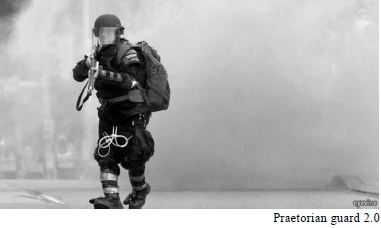
MOBS are bad for businesses—unless you are selling riot-control gear, that is. Even before this week’s riots in Britain governments were bracing themselves against protests stoked by the economic downturn. Firms such as Israel’s Hagor Industries are doing a roaring trade in antiriot shields, batons and helmets. David Frenkel, the firm’s production manager, says demand is growing from police and military services in Europe, South America and Africa, bolstered by “war, unrest and natural disasters”.
Ochlocracy—mob rule—was a term coined in ancient times, when grain prices or a celebrity murder could spark a riot. The Roman emperors’ Praetorian Guard used cavalry and swords against stone-throwers. Their latter-day counterparts (human and equine) are better protected, with goggles, shields and other kit made of lightweight, flameresistant, unshatterable and stab-proof materials.
They also have more ways of disrupting the rioters. Police in India spray unruly crowds with coloured water: stained and sodden agitators are easier to identify. America’s forces have developed (but not used) a “heat ray” designed to clear crowds by painfully zapping the skin. The unfamiliar tones of classical music can disperse loiterers, while big sound-blasters, known as “long-range acoustic devices” (LRADS), have been deployed against protesters in some American states. At a cost of up to $30,000 they can emit sound at 150-plus decibels (like a roaring jet engine at close range). Israel has a fancier version known as the “Scream” that affects the inner ear and induces nausea. When ochlophonics fail, authorities there have been known to douse Palestinian protesters with “skunk bombs” of smelly liquid.
Eyes are as vulnerable as ears and noses. A firm called Intelligent Optical Systems, based in California, is developing, with government backing, a strobe torch that makes targets dizzy and disoriented (at least within a range of 15 metres). Laser Energetics, in New Jersey, sells “Dazer Lasers” that emit a green beam capable of dazzling people up to 2.4 km away.
(Aug 13th 2011 | www.economist.com)
The underlined pronoun ‘they’ in ‘At a cost of up to $ 30,000 they can emit sound at 150-plus decibels.’, refers to:
06