


![[Marketing] Questao Topo - deslogado](https://storage.estuda.com.br/banners/0_6b7ebee90b03af1c560c73bb8bcce34a_banner_deslogado_70_dias.png)
Questões de Inglês
19.971 Questões
Questão 37 89846
UEFS Caderno 1 2012/1TEXTO:
Denmark’s fat tax

Denmark has become the first country in the world
to introduce a tax on foods seen as being harmful to
health. There will be an extra charge on items that contain
more than 2.3% of a particular type of fat.
5 When you think of Denmark, you think of pastries,
butter and bacon. So perhaps a fat tax isn’t a bad idea,
a levy that will be added to any foods that are high in
saturated fat; milk, cheese and meat, for instance.
Make it more expensive, reduce consumption,
10 improve health. Well, that is the theory. Some shops
have reported increased sales, people hoarding food to
beat the price rise. The Danish Food and Drink Federation
says some might just cross the border to do their
shopping.
15 There is certainly some skepticism. Scientists insist
that saturated fat is not the right target. Salt and sugar
cause more health problems. But one study claims close
to 4% of premature deaths in Denmark are caused by
people consuming too much saturated fat. So hit
20 shoppers in the pocket, not the waistband.
ALLMAN, Tim. Denmark’s fat tax. BBC News. Disponível em: . Acesso em: 8 dez. 2011.
The only alternative without a pair of opposites is
Questão 34 89843
UEFS Caderno 1 2012/1TEXTO:
Brazil’s time bomb
President Dilma Rousseff is raising eyebrows with
her plans for Brazil. She is winning agreement even from
the political opposition for an agenda that includes
eradicating absolute poverty, trimming the national
5 budget, and safeguarding freedom of the press. But she
is also shocking everyone with what she plans to ignore:
the social-security time bomb.
Brazil’s social-welfare system is an unrivaled mess.
Though Brazil has one of the world’s youngest
10 populations, it shells out the same share of its GDP (11
percent) as the grayest nations of Europe. Worse, it’s
aging faster than the rich countries ever did — twice as
fast as Europe in the last century. And the problem is
getting worse: federal, state, and local governments write
15 checks to private-sector pensioners worth more than 7
percent of GDP, up from 2.5 percent 30 years ago. With
the economy surging again, even the ballooning
social-security debt seems almost manageable. But to
unleash its full potential, Brazil has little choice but to
20 disarm the pension bomb. While Rousseff says she’s
got no such appetite, she well knows that the average
retirement age in Brazil is a tender 53 … and that France
was in flames because Parliament voted to raise the
retirement age from 60 to 62.
MARGOLIS, Mac. Brazil’s time bomb. Newsweek, Nov 29, 2010, p. 8. GDP: Gross Domestic Product
Considering language use in the text, it’s correct to say:
Questão 33 89842
UEFS Caderno 1 2012/1TEXTO:
Brazil’s time bomb
President Dilma Rousseff is raising eyebrows with
her plans for Brazil. She is winning agreement even from
the political opposition for an agenda that includes
eradicating absolute poverty, trimming the national
5 budget, and safeguarding freedom of the press. But she
is also shocking everyone with what she plans to ignore:
the social-security time bomb.
Brazil’s social-welfare system is an unrivaled mess.
Though Brazil has one of the world’s youngest
10 populations, it shells out the same share of its GDP (11
percent) as the grayest nations of Europe. Worse, it’s
aging faster than the rich countries ever did — twice as
fast as Europe in the last century. And the problem is
getting worse: federal, state, and local governments write
15 checks to private-sector pensioners worth more than 7
percent of GDP, up from 2.5 percent 30 years ago. With
the economy surging again, even the ballooning
social-security debt seems almost manageable. But to
unleash its full potential, Brazil has little choice but to
20 disarm the pension bomb. While Rousseff says she’s
got no such appetite, she well knows that the average
retirement age in Brazil is a tender 53 … and that France
was in flames because Parliament voted to raise the
retirement age from 60 to 62.
MARGOLIS, Mac. Brazil’s time bomb. Newsweek, Nov 29, 2010, p. 8. GDP: Gross Domestic Product
The phrase “she’s got” (l. 20-21) is the same as she
Questão 28 89837
UEFS Caderno 1 2012/1TEXTO:
Steve Jobs — early life and education
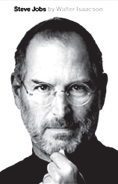
Steven Paul “Steve” Jobs was
an American businessman and
visionary widely recognized (along
with his Apple business partner
5 Steve Wozniak) as a charismatic
pioneer of the personal computer
revolution. He was co-founder,
chairman, and chief executive officer
of Apple Inc.
10 Steve Jobs was born in San
Francisco in 1955, and adopted
at birth by Paul Reinhold Jobs
(1922–1993) and Clara Jobs (1924–1986). When asked
about his “adoptive parents,” Jobs replied emphatically
15 that Paul and Clara Jobs “were my parents 1,000%.”
Asked in a 1995 interview what he wanted to pass on to
his children, Jobs replied, “Just to try to be as good a
father to them as my father was to me. I think about that
every day of my life.”
20 Jobs told an interviewer, “I was very lucky. My father,
Paul, was a pretty remarkable man, a genius with his
hands.” When his son was five or six, Paul Jobs
sectioned a piece of his workbench and gave it to Jobs,
25 saying ‘Steve, this is your workbench now.’ And he gave
me some of his smaller tools and showed me how to
use a hammer and saw and how to build things. It really
was very good for me. He spent a lot of time with me...
teaching me how to build things, how to take things apart,
30 put things back together.” Jobs also noted that while his
father “did not have a deep understanding of electronics
[...] he’d encountered electronics a lot in automobiles
and other things he would fix. He showed me the
rudiments of electronics and I got very interested in that.”
35 Jobs went to elementary school and high school in
Cupertino, California. He attended after-school lectures
at the Hewlett-Packard Company in Palo Alto, California,
and was later hired there, working with Steve Wozniak
as a summer employee. Following high school graduation
40 in 1972, Jobs enrolled at Reed College in Portland,
Oregon. Although he dropped out after only one
semester, he continued auditing classes at Reed, while
sleeping on the floor in friends’ rooms, returning Coke
bottles for food money, and getting weekly free meals at
45 the local Hare Krishna temple. Jobs later said, “If I had
never dropped in on that single calligraphy course in
college, the Mac would have never had multiple typefaces
or proportionally spaced fonts.”
STEVE Jobs — early life and education. Disponível em: . Acesso em: 8 dez. 2011.
“Paul Jobs[…] gave it to Jobs, saying ‘Steve, this is your workbench now.’ ” (l. 22-25)
This sentence can be exactly rephrased in Indirect Speech as:
Questão 27 89836
UEFS Caderno 1 2012/1TEXTO:
Steve Jobs — early life and education
Steven Paul “Steve” Jobs was
an American businessman and
visionary widely recognized (along
with his Apple business partner
5 Steve Wozniak) as a charismatic
pioneer of the personal computer
revolution. He was co-founder,
chairman, and chief executive officer
of Apple Inc.
10 Steve Jobs was born in San
Francisco in 1955, and adopted
at birth by Paul Reinhold Jobs
(1922–1993) and Clara Jobs (1924–1986). When asked
about his “adoptive parents,” Jobs replied emphatically
15 that Paul and Clara Jobs “were my parents 1,000%.”
Asked in a 1995 interview what he wanted to pass on to
his children, Jobs replied, “Just to try to be as good a
father to them as my father was to me. I think about that
every day of my life.”
20 Jobs told an interviewer, “I was very lucky. My father,
Paul, was a pretty remarkable man, a genius with his
hands.” When his son was five or six, Paul Jobs
sectioned a piece of his workbench and gave it to Jobs,
25 saying ‘Steve, this is your workbench now.’ And he gave
me some of his smaller tools and showed me how to
use a hammer and saw and how to build things. It really
was very good for me. He spent a lot of time with me...
teaching me how to build things, how to take things apart,
30 put things back together.” Jobs also noted that while his
father “did not have a deep understanding of electronics
[...] he’d encountered electronics a lot in automobiles
and other things he would fix. He showed me the
rudiments of electronics and I got very interested in that.”
35 Jobs went to elementary school and high school in
Cupertino, California. He attended after-school lectures
at the Hewlett-Packard Company in Palo Alto, California,
and was later hired there, working with Steve Wozniak
as a summer employee. Following high school graduation
40 in 1972, Jobs enrolled at Reed College in Portland,
Oregon. Although he dropped out after only one
semester, he continued auditing classes at Reed, while
sleeping on the floor in friends’ rooms, returning Coke
bottles for food money, and getting weekly free meals at
45 the local Hare Krishna temple. Jobs later said, “If I had
never dropped in on that single calligraphy course in
college, the Mac would have never had multiple typefaces
or proportionally spaced fonts.”
STEVE Jobs — early life and education. Disponível em: . Acesso em: 8 dez. 2011.
The word “while” (l. 30) can be suitably replaced by
Questão 26 89835
UEFS Caderno 1 2012/1TEXTO:
Steve Jobs — early life and education
Steven Paul “Steve” Jobs was
an American businessman and
visionary widely recognized (along
with his Apple business partner
5 Steve Wozniak) as a charismatic
pioneer of the personal computer
revolution. He was co-founder,
chairman, and chief executive officer
of Apple Inc.
10 Steve Jobs was born in San
Francisco in 1955, and adopted
at birth by Paul Reinhold Jobs
(1922–1993) and Clara Jobs (1924–1986). When asked
about his “adoptive parents,” Jobs replied emphatically
15 that Paul and Clara Jobs “were my parents 1,000%.”
Asked in a 1995 interview what he wanted to pass on to
his children, Jobs replied, “Just to try to be as good a
father to them as my father was to me. I think about that
every day of my life.”
20 Jobs told an interviewer, “I was very lucky. My father,
Paul, was a pretty remarkable man, a genius with his
hands.” When his son was five or six, Paul Jobs
sectioned a piece of his workbench and gave it to Jobs,
25 saying ‘Steve, this is your workbench now.’ And he gave
me some of his smaller tools and showed me how to
use a hammer and saw and how to build things. It really
was very good for me. He spent a lot of time with me...
teaching me how to build things, how to take things apart,
30 put things back together.” Jobs also noted that while his
father “did not have a deep understanding of electronics
[...] he’d encountered electronics a lot in automobiles
and other things he would fix. He showed me the
rudiments of electronics and I got very interested in that.”
35 Jobs went to elementary school and high school in
Cupertino, California. He attended after-school lectures
at the Hewlett-Packard Company in Palo Alto, California,
and was later hired there, working with Steve Wozniak
as a summer employee. Following high school graduation
40 in 1972, Jobs enrolled at Reed College in Portland,
Oregon. Although he dropped out after only one
semester, he continued auditing classes at Reed, while
sleeping on the floor in friends’ rooms, returning Coke
bottles for food money, and getting weekly free meals at
45 the local Hare Krishna temple. Jobs later said, “If I had
never dropped in on that single calligraphy course in
college, the Mac would have never had multiple typefaces
or proportionally spaced fonts.”
STEVE Jobs — early life and education. Disponível em: . Acesso em: 8 dez. 2011.
“If I had never dropped in on that single calligraphy course in college, the Mac would have never had multiple typefaces or proportionally spaced fonts.” (l. 45-48)
Based on this sentence, it’s correct to say that Steve Jobs
06