


![[Marketing] Questao Topo - deslogado](https://storage.estuda.com.br/banners/0_6b7ebee90b03af1c560c73bb8bcce34a_banner_deslogado_70_dias.png)
Questões de Inglês
19.971 Questões
Questão 57 98926
IMEPAC Medicina 2012/1SHARKS - THE ADAPTABLE OLD-TIMERS
By Peter T. Pugliese and John Heinerman
Sharks are cartilaginous fish (i.e., having a skeleton wholly or largely composed of cartilage). They vary greatly in size, behavior, and in the way they reproduce. They are found at all depths in all the oceans of the world except the Antarctic. However, they are most abundant in tropical and subtropical waters. A few species of shark inhabit freshwater lakes and rivers, and some migrate regularly from salt to freshwater.
Sharks are remarkably successful animals, with few parasites or diseases and almost no enemies except other sharks. As predators and scavengers, sharks play a major role in the ecosystems of the world‟s oceans.
Paleontologists believe that sharks evolved from some primitive, heavily armored, sluggish placoderm that became extinct about 350 million years ago, at the end of the Devonian era. This is approximately when the first shark-like creatures appeared. Sharks almost identical to those living today evolved about 160 million years ago, during the Jurassic period (same time period as represented in the movie Jurassic Park). His species has survived unchanged for 160 million years. In contrast, we poor Homo Sapiens have been around for less than one million years.
Well-attuned to most of the waters of the world, sharks appear to dominate the depths. Swimmers, water skiers, snorkelers, scuba divers, and sea fishermen are invading their habitats in ever-increasing numbers. Sharks have responded with predictable reflex reactions: they have attacked. The resulting notoriety has given sharks a bad reputation. The mass media have embellished the image, and now most people react with alarm to the word “shark”. However, the facts don‟t support this dread of sharks. Of the 100 or so unprovoked attacks that occur worldwide every year, fewer than 35 are fatal.
Internally, sharks are different than bony fish. Sharks have cartilaginous skeletons, skulls without sutures, no air ladder, and reserve rows of teeth attached to the skin of the jaws. Sharks‟ teeth are often found in the wounds of those attacked. An abundance of fossil teeth does not necessarily indicate the presence of multitudes of sharks. Instead, it may indicate multitudes of teeth that were frequently lost and replaced.
From Devour Disease with shark liver oil. Green Bay: IMAKT, 1999.
The natural enemies of sharks are
Questão 56 98925
IMEPAC Medicina 2012/1SHARKS - THE ADAPTABLE OLD-TIMERS
By Peter T. Pugliese and John Heinerman
Sharks are cartilaginous fish (i.e., having a skeleton wholly or largely composed of cartilage). They vary greatly in size, behavior, and in the way they reproduce. They are found at all depths in all the oceans of the world except the Antarctic. However, they are most abundant in tropical and subtropical waters. A few species of shark inhabit freshwater lakes and rivers, and some migrate regularly from salt to freshwater.
Sharks are remarkably successful animals, with few parasites or diseases and almost no enemies except other sharks. As predators and scavengers, sharks play a major role in the ecosystems of the world‟s oceans.
Paleontologists believe that sharks evolved from some primitive, heavily armored, sluggish placoderm that became extinct about 350 million years ago, at the end of the Devonian era. This is approximately when the first shark-like creatures appeared. Sharks almost identical to those living today evolved about 160 million years ago, during the Jurassic period (same time period as represented in the movie Jurassic Park). His species has survived unchanged for 160 million years. In contrast, we poor Homo Sapiens have been around for less than one million years.
Well-attuned to most of the waters of the world, sharks appear to dominate the depths. Swimmers, water skiers, snorkelers, scuba divers, and sea fishermen are invading their habitats in ever-increasing numbers. Sharks have responded with predictable reflex reactions: they have attacked. The resulting notoriety has given sharks a bad reputation. The mass media have embellished the image, and now most people react with alarm to the word “shark”. However, the facts don‟t support this dread of sharks. Of the 100 or so unprovoked attacks that occur worldwide every year, fewer than 35 are fatal.
Internally, sharks are different than bony fish. Sharks have cartilaginous skeletons, skulls without sutures, no air ladder, and reserve rows of teeth attached to the skin of the jaws. Sharks‟ teeth are often found in the wounds of those attacked. An abundance of fossil teeth does not necessarily indicate the presence of multitudes of sharks. Instead, it may indicate multitudes of teeth that were frequently lost and replaced.
From Devour Disease with shark liver oil. Green Bay: IMAKT, 1999.
According to the text, all the following are characteristics of sharks, EXCEPT
Questão 64 98327
FACERES Medicina 2012/2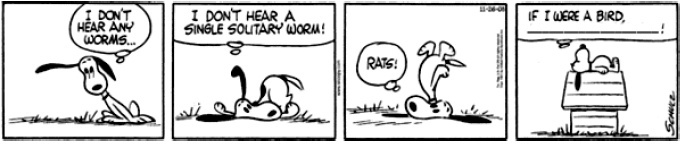
The sentence that most suitably would complete the gap in the last frame is:
Questão 58 98321
FACERES Medicina 2012/2Centuries of underwater volcanic activity have blanketed the ocean floor in precious metals. Now, with the aid of the world 's most powerful excavation ma-chines, a company called Nautilus Minerals is set to begin extracting those metals from the first large scale deep-sea mine. The Toronto-based firm teamed up with the deep-sea trencher specialist Soil Machine Dynamics to build three remotely operated machines. Hybrids of land excavators, sea robots, and vacuum cleaners, they will work together to harvest rock from the seafloor, smash it into bits, and then send it to the surface.
Last year, Nautilus won a 20-year lease from Papua New Guinea to mine in the Bismarck Sea. The compa-ny's first customer, Tangling Nonferrous Metals Group of China, has already claimed the entire contents of the first site, Solwara 1, which is roughly the size of 21 foot-ball fields and contains 240,000 tons of copper and 25,000 pounds of gold, plus silver and zinc. Although metal prices fluctuate, the total take could approach $3 billion. Nautilus plans to put its machines to work by the end of next year.
Popular Science Magazine. November, 2012 (adapted)
About Solwara 1, it is correct to say that:
Questão 39 97622
Unioeste 2012Brazil presidency website hacked, jammed in attack claimed by Lulz collective
A cyber attack blocked traffic to the website of the Brazilian presidency and two other government sites on Wednesday, authorities said.
The Brazilian branch of the Lulz Security hacking collective claimed responsibility for the attacks.
Lulz members have claimed responsibility for recent attacks on the site of electronics giant Sony, along with the CIA web page and the U.S. Senate computer system.
The Brazilian president’s office said in a statement that attacks on the website of the presidency, along with the nation’s internal revenue service and a government portal began around 12:30 a.m. and lasted until 3 a.m.
The government said it stopped the hackers from obtaining data from the websites, but that the attacks made them inaccessible for about an hour.
Hours later, people who claimed to be Lulz members said on Twitter that they had taken down the website of oil company Petrobras, whose website was down Wednesday afternoon. Petrobras would not confirm whether the problems with its website were caused by an attack.
On a Twitter page in the name of the Brazilian branch of Lulz, posters justified the apparent attack on the Petrobras website by complaining about the price of gasoline in Brazil.
“Wake up Brazil! We no longer want to buy gas at 2.75 to 2.78 reals ($1.73 to $1.75) and export for half of that price!” stated one tweet from the group.
Adapted from: http://www.washingtonpost.com/world/americas/brazil-presidency-website-hacked-jammedin-attack-claimed-by-lulz-collective/2011/06/22/AGb53KgH_story.html
Which verb form is used in the sentence: “Wake up Brazil!”.
Questão 35 97618
Unioeste 2012Argentina builds a tower of books
This is simply an audio and visual celebration of the book - any books, all books, in whichever language you like. Works by Jane Austen, Dickens, Henry Blake, Ernest Hemingway, Cervantes, Vargas Llosa, Tolstoy and Argentina's own favourites, Borges and Sabato, line the walls of this tower, each wrapped in plastic for its own protection.
The United Nations has designated the city as the 2011 World Book Capital.
This book tower is 25 metres high and lined with 30,000 donations from more than 50 embassies. It'll be dismantled at the end of the month and the books will form the beginning of a multi-lingual library.
The Buenos Aires Book Fair, one of the biggest in the world, has just ended, recording more visitors than ever before. The city boasts hundreds of bookshops and some cafes even supply works by Argentina's most renowned literary icon, Jorge Luis Borges, to read over coffee. Buenos Aires is a city that loves its books and now it has a tower to prove it.Daniel Schweimler, BBC News, Buenos Aires. Fonte:http://www.bbc.co.uk/worldservice/learningenglish/language/wordsinthenews/2011/05/110516_witn_bueno saires_books_page1.shtml
O pronome “it” em “It will be dismantled” refere-se a
06