


![[Marketing] Questao Topo - deslogado](https://storage.estuda.com.br/banners/0_6b7ebee90b03af1c560c73bb8bcce34a_banner_deslogado_70_dias.png)
Questões de Inglês
19.971 Questões
Questão 14 100503
UNISC Medicina 2012/2Right now, I am looking at a shelf full of relics, a collection of has-beens, old-timers, antiques, fossils. Right now I am looking at a shelf full of books. Yes, that's right. If you have some spare cash (the going rate is about $89) and are looking to enhance your reading experience, then I highly suggest you consider purchasing an e-reader. Ereaders are replacing the books of old, and I welcome them with open arms (as you should).
If you haven’t heard of an e-reader and don’t know what it is, then please permit the following explanation. An e-reader is a device that allows you to read e-books. An e-book is a book-length publication in digital form, consisting of text, images, or both, and produced on, published through, and readable on computers or other electronic devices. Sometimes the equivalent of a conventional printed book, e-books can also be born digital. The Oxford Dictionary of English defines the e-book as an electronic version of a printed book, but e-books can and do exist without any printed equivalent.
So now you know what an e-reader is. But you still may be wondering why they put printed books to shame. E-readers are superior to printed books because they save space, are environmentally friendly, and provide helpful reading tips and tools that printed books do not.
E-readers are superior to printed books because they save space. The average e-reader can store thousands of digital books, providing a veritable library at your fingertips. What is more, being the size and weight of a thin hardback, the ereader itself is relatively petite. It is easy to hold and can fit in a pocketbook or briefcase easily. This makes handling ponderous behemoths such as War and Peace, Anna Karenina, and Les Misérables a breeze. Perhaps the only drawback to the spacesaving aspect of an e-reader is that it requires you to find new things to put on your shelves.
In addition, e-readers are superior to books because they are environmentally friendly. The average novel is about 300 pages long. So, if a novel is printed 1000 times, it will use 300,000 pieces of paper. That’s a lot of paper! If there are about 80,000 pieces of paper in a tree, this means it takes almost 4 trees to make these 1000 books. Now, we know that the average bestseller sells about 20,000 copies per week. That means that it takes over 300 trees each month to sustain this rate. And for the super bestsellers, these figures increase dramatically. For example, the Harry Potter book series has sold over 450 million copies. That’s about 2 million trees! Upon viewing these figures, it is not hard to grasp the severe impact of printed books on the environment. Since e-readers use no trees, they represent a significant amount of preservation in terms of the environment and its resources.
Finally, e-readers are superior to books because they provide helpful reading tips and tools that printed books do not. The typical e-reader allows its user to customize letter size, font, and line spacing. It also allows highlighting and electronic bookmarking. Furthermore, it grants users the ability to get an overview of a book and then jump to a specific location based on that overview. While these are all nice features, perhaps the most helpful of all is the ability to get dictionary definitions at the touch of a finger. On even the most basic e-reader, users can conjure instant definitions without having to hunt through a physical dictionary.
It can be seen that e-readers are superior to pr int ed books . They save space , are environmentally friendly, and provide helpful reading tips and tools that printed books do not. So what good are printed books? Well, they certainly make nice decorations. ©
Adapted from: http://www.englishforeveryone.org
We can infer from the passage, in paragraph 4, that petite belongs to the following word families
Questão 20 99488
FCM PB Medicina 2012/2Text II
Researchers from Brazilian museum Emílio Goeldi, in the northern state of Pará, have launched an ambitious project: Making each of the thousands of animal and plant species that inhabit the Amazon forest available on the Internet. At the moment, the Center of Biodiversity has a list of some 3,000 species, from mammals to spiders, all of which are native to Pará. In the new list, researchers want to include images and sounds of each species. The Amazon forest project is intended to eventually be expanded to include other Brazilian states, as well as neighboring countries, like Peru and Colombia. Even in groups which have been broadly studied, such as mammals and birds, about 10% of Amazonian species are still unknown. ―And there are lots more if you think of reptiles and amphibians‖, says biologist Ulisses Galatti, one of the project’s coordinators. In addition to the website, the Goeldi Museum will publish a book named ―Species of the Millennium‖, which tallies the 130 new discoveries made by the museum researchers between 2000 and 2011.
(Adapted from: Folha de São Paulo, Maio/2012)
Which alternative below has the CORRECT information about the word and its function in the text?
Questão 19 99486
FCM PB Medicina 2012/2Text II
Researchers from Brazilian museum Emílio Goeldi, in the northern state of Pará, have launched an ambitious project: Making each of the thousands of animal and plant species that inhabit the Amazon forest available on the Internet. At the moment, the Center of Biodiversity has a list of some 3,000 species, from mammals to spiders, all of which are native to Pará. In the new list, researchers want to include images and sounds of each species. The Amazon forest project is intended to eventually be expanded to include other Brazilian states, as well as neighboring countries, like Peru and Colombia. Even in groups which have been broadly studied, such as mammals and birds, about 10% of Amazonian species are still unknown. ―And there are lots more if you think of reptiles and amphibians‖, says biologist Ulisses Galatti, one of the project’s coordinators. In addition to the website, the Goeldi Museum will publish a book named ―Species of the Millennium‖, which tallies the 130 new discoveries made by the museum researchers between 2000 and 2011.
(Adapted from: Folha de São Paulo, Maio/2012)
Choose the appropriate question tag for the following sentence:
“Researchers want to include images and sounds of each species, ____________?”
Questão 18 99484
FCM PB Medicina 2012/2Text II
Researchers from Brazilian museum Emílio Goeldi, in the northern state of Pará, have launched an ambitious project: Making each of the thousands of animal and plant species that inhabit the Amazon forest available on the Internet. At the moment, the Center of Biodiversity has a list of some 3,000 species, from mammals to spiders, all of which are native to Pará. In the new list, researchers want to include images and sounds of each species. The Amazon forest project is intended to eventually be expanded to include other Brazilian states, as well as neighboring countries, like Peru and Colombia. Even in groups which have been broadly studied, such as mammals and birds, about 10% of Amazonian species are still unknown. ―And there are lots more if you think of reptiles and amphibians‖, says biologist Ulisses Galatti, one of the project’s coordinators. In addition to the website, the Goeldi Museum will publish a book named ―Species of the Millennium‖, which tallies the 130 new discoveries made by the museum researchers between 2000 and 2011.
(Adapted from: Folha de São Paulo, Maio/2012)
According to text, what will the Goeldi Museum publish along with its website?
Questão 16 99481
FCM PB Medicina 2012/2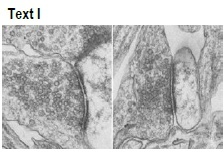
Every millisecond of every day, a remarkable sequence of events occurs in the brain: billions of brain cells called neurons transmit signals to each other. And they do it at trillions of junctions called synapses. It is an extremely fast and efficient process — one central to everything the brain does, including learning, memorizing, planning, reasoning, and enabling movement.
When even one part of the process breaks down, the results can be devastating. Many brain disorders and nervous system diseases, including autism, schizophrenia, Alzheimer’s disease, epilepsy, and even botulinum poisoning, have been linked to problems at the synapse.
Thanks to advances in molecular cell biology, neuroscientists have pieced together many of the step-by-step details going on at synapses. They discovered different molecules play special roles to make sure neurotransmitters — the chemicals that carry the messages from one neuron to another — are released. This exciting research is leading to:
• A deeper understanding of the cellular processes involved in neural communication.
• Awareness of breakdowns in neurotransmitter release that may contribute to brain diseases and disorders.
How the neuron releases neurotransmitters has been the focus of considerable research. Scientists discovered neurotransmitters are stored in small, bubble-like compartments called vesicles. Each vesicle tends to hold a single kind of neurotransmitter — say, dopamine, which is associated with memory and other cognitive skills, or serotonin, which helps regulate mood.
The vesicles travel like tiny ferryboats to the end of the neuron, where they dock, waiting to be released. When it is time for the neuron to release neurotransmitters, the vesicles fuse with the membrane of the neuron and dump their contents into the synapse gap. The delicate fusion process — described as the merging of two soap bubbles into one — is highly complex and involves the work of many different and specialized molecules within the neuron. After neurotransmitter release, the neuron recycles the empty vesicles, refilling and reusing them several more times before they need to be replaced.
If any part of this process goes awry — if a molecule fails to do its job properly or if the vesicles release their neurotransmitters at the wrong speed — serious problems may develop. Neurotransmitter release problems may also contribute to certain psychiatric disorders. By identifying such breakdowns in neurotransmitter release, scientists hope to develop treatments that may one day reverse the symptoms of several devastating brain disorders. Ongoing research on neurotransmitter release continues to unlock the mysteries of brain health and disease.
(Adapted from: http://www.brainfacts.org/)
We can say the author sounds:
Questão 60 98929
IMEPAC Medicina 2012/1SHARKS - THE ADAPTABLE OLD-TIMERS
By Peter T. Pugliese and John Heinerman
Sharks are cartilaginous fish (i.e., having a skeleton wholly or largely composed of cartilage). They vary greatly in size, behavior, and in the way they reproduce. They are found at all depths in all the oceans of the world except the Antarctic. However, they are most abundant in tropical and subtropical waters. A few species of shark inhabit freshwater lakes and rivers, and some migrate regularly from salt to freshwater.
Sharks are remarkably successful animals, with few parasites or diseases and almost no enemies except other sharks. As predators and scavengers, sharks play a major role in the ecosystems of the world‟s oceans.
Paleontologists believe that sharks evolved from some primitive, heavily armored, sluggish placoderm that became extinct about 350 million years ago, at the end of the Devonian era. This is approximately when the first shark-like creatures appeared. Sharks almost identical to those living today evolved about 160 million years ago, during the Jurassic period (same time period as represented in the movie Jurassic Park). His species has survived unchanged for 160 million years. In contrast, we poor Homo Sapiens have been around for less than one million years.
Well-attuned to most of the waters of the world, sharks appear to dominate the depths. Swimmers, water skiers, snorkelers, scuba divers, and sea fishermen are invading their habitats in ever-increasing numbers. Sharks have responded with predictable reflex reactions: they have attacked. The resulting notoriety has given sharks a bad reputation. The mass media have embellished the image, and now most people react with alarm to the word “shark”. However, the facts don‟t support this dread of sharks. Of the 100 or so unprovoked attacks that occur worldwide every year, fewer than 35 are fatal.
Internally, sharks are different than bony fish. Sharks have cartilaginous skeletons, skulls without sutures, no air ladder, and reserve rows of teeth attached to the skin of the jaws. Sharks‟ teeth are often found in the wounds of those attacked. An abundance of fossil teeth does not necessarily indicate the presence of multitudes of sharks. Instead, it may indicate multitudes of teeth that were frequently lost and replaced.
From Devour Disease with shark liver oil. Green Bay: IMAKT, 1999.
The text states that sharks
06