


![[Marketing] Questao Topo - deslogado](https://storage.estuda.com.br/banners/0_6b7ebee90b03af1c560c73bb8bcce34a_banner_deslogado_70_dias.png)
Questões de Inglês
19.971 Questões
Questão 33 105376
FAMEVAÇO Caderno G01 2012/2TEXT: Growing Up With a Fat Dad
(DAWN LERMAN)
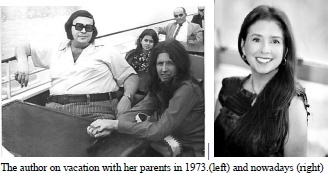
1 I grew up with a fat dad — 450 pounds at his heaviest. Every week he would rotate to a new fad diet, and my family ended up eating whatever freeze-dried, saccharin-loaded concoction he was trying at that moment. By the time I was 9, I was an expert on Atkins, Pritikin and Weight Watchers, just to name a few. Did I mention spending four weeks at Duke University’s “Fat Farm” consuming only minuscule bowls of white rice, while my 10-year-old peers were home eating ice cream cones?
2 In spite of being shorter and scrawnier than my classmates, I was eating calorie-free astronaut mystery powders and drinking diet sodas, which were the only staples in our kitchen. My dad was obsessed with his career in advertising and his fluctuating weight, which was fluctuating mostly in the wrong direction. Every new diet, no matter how stringent or odd, was the potential solution for his expanding waistline.
3 My mother, on the other hand, never understood what the big deal with food was and ate only one small meal a day while standing up and chatting on the phone. She had no interest in preparing food. Most of our meals consisted of my dad’s diet foods, a meal replacement shake, a frozen dinner, or a bagel or pizza in the car. We never had meals together as a family; in fact, we never ate sitting down. At home, we never used silverware or dishes, only plastic forks and paper plates. My mom loved the fact that in India they never used silverware at all. Of course, she missed the part that Indian families actually ate together and sat down while eating.
4 What I remember most about those years is that I was always hungry — hungry for food, hungry for nice clean clothes, hungry for someone to notice when I ran away from home or hid in the closet for hours. I was just hungry — hungry for someone to care for me because I was a child and I yearned to be cared for.
5 But on Friday nights, I was never hungry. My maternal grandfather would pick me up for the weekend, and when we arrived at my grandparents’ home, the table was always set with beautiful china. There was always a pot of something cooking on the stove, a freshly drawn bath, and a fluffy, lavender-smelling nightgown waiting for me. It was at my grandmother’s house where I learned what true nourishment was. It is where my tears were dried.
6 When I walked into her kitchen, life transformed from processed packages of salty MSG instant soup to the delicious warm, fragrant smell of homemade chicken soup. Giant salads, fresh fruits and the aroma of just-baked muffins filled the air and my world. It was the only place I can remember feeling happy, safe and nourished. It was what I craved.
7 My grandmother, who was nicknamed Beauty, taught me how good it felt to be cared for, and how to care for myself and others through cooking. It was always about the ingredients for her. If I asked her how much celery to chop for a soup, she’d wave off the question. “Just use your creativity,” she’d say. “You can’t go wrong when you use fresh ingredients.” She’d throw a few carrots, sweet potatoes, a few veal bones — whatever looked best at the market that day — into a pot, and two hours later, it was the most delicious thing I’d ever tasted.
8 My grandmother Beauty was always extremely skeptical of my parents’ wacky eating habits and reliance on processed diet foods, and made it her mission to teach me how to feed myself and my sister. My grandmother was my mentor and my savior. She poured love and stability into my life, one recipe at a time.
9 After my third-grade year, my dad landed a life-changing job in Manhattan. My mom, my little sister and I had to move away from our hometown, Chicago, and leave my grandmother and her beautiful food behind.
10 Leaving my grandmother was far scarier than the move to New York City. There would be no more special weekends at my grandmother’s house, no more homemade food, no more car rides to school. It was the subway, a latchkey, total independence and self-reliance for survival. In this new city, I felt extremely alone and lost, and I missed my grandmother terribly.
11 My grandmother knew just how I felt — and she knew the cure. Every week, she would send me a card with a $20 bill, a recipe and a list of what to buy at the market. It kept us bonded, and her recipes filled my body and soul.
12 Over the years, I have grown to better understand my father’s struggles with weight and the toll it took on him and those who love him. I have come to realize he was driven not by vanity or selfishness as much as by a deep pain. And in spite of growing up in such an unhealthy eating environment (or perhaps because of it), as an adult I found a passion and a career as a nutrition consultant.
13 Today, my father weighs 220 pounds and is a vegan. How he got there is a story I hope to share in the coming weeks. More important, food is no longer a barrier that keeps us apart, but a bridge that keeps us connected. There is nothing my dad enjoys more than talking with me about dietary theories and his weight-loss victories. And now I am the one regularly sending recipe cards to my father’s house, just as my grandmother did for me.
14 Dawn Lerman is a New York-based health and nutrition consultant and founder of Magnificent Mommies, which provides school lectures, cooking classes and workshops. Her series on growing up with a fat father will appear on occasional Fridays on Well in June and July.
(FONTE: http://well.blogs.nytimes.com. Acesso: 15/06/ 2012)
É prática comum que os pais cuidem da alimentação e desenvolvimento de seus filhos. No texto em questão, a autora sofria de:
Questão 95 101285
ENEM PPL 2° Dia 2012Ebonics
The word ebonics is made up of two words. Ebony, which means black and phonics, which refers to sound. It is a systematic rule–governed natural speech that is consistent as any other language in sentence structure. This is referred to as syntax. What makes this speech pattern uniquely different to “so called" American Standard English is its verb tense or lack of it. An example of this can be seen in the sentence, “He is sick today". This same sentence translated in ebonics would read, “He sick today". As you can see the verb has been omitted. However, this speech pattern is consistently used. Major controversy has arisen whether or not ebonics is a separate language or simply a dialect. In doing my research, I have found that most linguists take the position that ebonics is a dialect. What distinguishes dialect from language is that in dialect two speakers share most or some of the same vocabulary and is recognizable and understandable. In contrast, separate languages are present only when the inability to communicate verbally occurs.
A linguística é a ciência que se interessa pela linguagem humana em seus mais diferentes aspectos, e assim nos ajuda a pensar sobre a diversidade cultural e linguística. Nesse texto, a questão da diversidade linguística é discutida por meio
Questão 94 101284
ENEM PPL 2° Dia 2012Our currency
Australia was the first country in the world to have a complete system of bank notes made from plastic (polymer). These notes provide much greater security against counterfeiting. They also last four times as long as conventional paper (fibrous) notes.
The innovative technology with which Australian bank notes are produced — developed entirely in Australia — offers artists brilliant scope for the creation of images that reflect the history and natural environment of Australia. At the same time, the polymer notes are cleaner than paper notes and easily recyclable. Australia's currency comprises coins of 5, 10, 20 and 50 cent and one and two dollar denominations; and notes of 5, 10, 20, 50 and 100 dollar denominations.
AUSTRALIA GOVERNMENT. About Australia. Disponível em: www.newzealand.com. Acesso em: 7 dez. 2011.
O governo da Austrália, por meio de seu Departamento de Assuntos Estrangeiros, divulga inovações tecnológicas desse país.
Associando as informações apresentadas na busca pelo tema, percebe-se que o texto se refere
Questão 14 100570
UNISC Medicina 2012/1Most people can remember a phone number for
up to thirty seconds. When this short amount of time
elapses, however, the numbers are erased from the
memory. How did the information get there in the
first place? Information that makes its way to the
short term memory (STM) does so via the sensory
storage area. The brain has a filter which only allows
stimuli that is of immediate interest to pass on to the
STM, also known as the working memory.
There is much debate about the capacity and
duration of the short term memory. The most
accepted theory comes from George A. Miller, a
cognitive psychologist who suggested that humans
can remember approximately seven chunks of
information. A chunk is defined as a meaningful unit
of information, such as a word or name rather than
just a letter or number. Modern theorists suggest that
one can increase the capacity of the short term
memory by chunking, or classifying similar
information together. By organizing information,
one can optimize the STM, and improve the chances
of a memory being passed on to long term storage.
When making a conscious effort to memorize
something, such as information for an exam, many
people engage in ‘‘rote rehearsal’’. By repeating
something over and over again, one is able to keep a
memory alive. Unfortunately, this type of memory
maintenance only succeeds if there are no
interruptions. As soon as a person stops rehearsing
the information, it has the tendency to disappear.
When a pen and paper are not handy, people often
attempt to remember a phone number by repeating it
aloud. If the doorbell rings or the dog barks to come
in before a person has the opportunity to make a
phone call, he will likely forget the number instantly.
Therefore, rote rehearsal is not an efficient way to
pass information from the short term to long term
memory. A better way is to practice ‘‘elaborate
rehearsal’’. This involves assigning semantic
meaning to a piece of information so that it can be
filed along with other pre-existing long term
memories.
Encoding information semantically also makes it
more retrievable. Retrieving information can be
done by recognition or recall. Humans can easily
recall memories that are stored in the long term
memory and used often; however, if a memory seems
to be forgotten, it may eventually be retrieved by
prompting. The more cues a person is given (such as
pictures), the more likely a memory can be retrieved.
This is why multiple choice tests are often used for
subjects that require a lot of memorization.
Fonte: http://www.englishclub.com/esl-exams/ets-toefl-practice-reading.htm (Adaptado)
The word one in paragraph 3, line 26 refers to
Questão 17 100506
UNISC Medicina 2012/2Right now, I am looking at a shelf full of relics, a collection of has-beens, old-timers, antiques, fossils. Right now I am looking at a shelf full of books. Yes, that's right. If you have some spare cash (the going rate is about $89) and are looking to enhance your reading experience, then I highly suggest you consider purchasing an e-reader. Ereaders are replacing the books of old, and I welcome them with open arms (as you should).
If you haven’t heard of an e-reader and don’t know what it is, then please permit the following explanation. An e-reader is a device that allows you to read e-books. An e-book is a book-length publication in digital form, consisting of text, images, or both, and produced on, published through, and readable on computers or other electronic devices. Sometimes the equivalent of a conventional printed book, e-books can also be born digital. The Oxford Dictionary of English defines the e-book as an electronic version of a printed book, but e-books can and do exist without any printed equivalent.
So now you know what an e-reader is. But you still may be wondering why they put printed books to shame. E-readers are superior to printed books because they save space, are environmentally friendly, and provide helpful reading tips and tools that printed books do not.
E-readers are superior to printed books because they save space. The average e-reader can store thousands of digital books, providing a veritable library at your fingertips. What is more, being the size and weight of a thin hardback, the ereader itself is relatively petite. It is easy to hold and can fit in a pocketbook or briefcase easily. This makes handling ponderous behemoths such as War and Peace, Anna Karenina, and Les Misérables a breeze. Perhaps the only drawback to the spacesaving aspect of an e-reader is that it requires you to find new things to put on your shelves.
In addition, e-readers are superior to books because they are environmentally friendly. The average novel is about 300 pages long. So, if a novel is printed 1000 times, it will use 300,000 pieces of paper. That’s a lot of paper! If there are about 80,000 pieces of paper in a tree, this means it takes almost 4 trees to make these 1000 books. Now, we know that the average bestseller sells about 20,000 copies per week. That means that it takes over 300 trees each month to sustain this rate. And for the super bestsellers, these figures increase dramatically. For example, the Harry Potter book series has sold over 450 million copies. That’s about 2 million trees! Upon viewing these figures, it is not hard to grasp the severe impact of printed books on the environment. Since e-readers use no trees, they represent a significant amount of preservation in terms of the environment and its resources.
Finally, e-readers are superior to books because they provide helpful reading tips and tools that printed books do not. The typical e-reader allows its user to customize letter size, font, and line spacing. It also allows highlighting and electronic bookmarking. Furthermore, it grants users the ability to get an overview of a book and then jump to a specific location based on that overview. While these are all nice features, perhaps the most helpful of all is the ability to get dictionary definitions at the touch of a finger. On even the most basic e-reader, users can conjure instant definitions without having to hunt through a physical dictionary.
It can be seen that e-readers are superior to pr int ed books . They save space , are environmentally friendly, and provide helpful reading tips and tools that printed books do not. So what good are printed books? Well, they certainly make nice decorations. ©
Adapted from: http://www.englishforeveryone.org
According to the passage, which of the following statements represent opposition to the author’s argument in paragraph 5?
Questão 16 100505
UNISC Medicina 2012/2Right now, I am looking at a shelf full of relics, a collection of has-beens, old-timers, antiques, fossils. Right now I am looking at a shelf full of books. Yes, that's right. If you have some spare cash (the going rate is about $89) and are looking to enhance your reading experience, then I highly suggest you consider purchasing an e-reader. Ereaders are replacing the books of old, and I welcome them with open arms (as you should).
If you haven’t heard of an e-reader and don’t know what it is, then please permit the following explanation. An e-reader is a device that allows you to read e-books. An e-book is a book-length publication in digital form, consisting of text, images, or both, and produced on, published through, and readable on computers or other electronic devices. Sometimes the equivalent of a conventional printed book, e-books can also be born digital. The Oxford Dictionary of English defines the e-book as an electronic version of a printed book, but e-books can and do exist without any printed equivalent.
So now you know what an e-reader is. But you still may be wondering why they put printed books to shame. E-readers are superior to printed books because they save space, are environmentally friendly, and provide helpful reading tips and tools that printed books do not.
E-readers are superior to printed books because they save space. The average e-reader can store thousands of digital books, providing a veritable library at your fingertips. What is more, being the size and weight of a thin hardback, the ereader itself is relatively petite. It is easy to hold and can fit in a pocketbook or briefcase easily. This makes handling ponderous behemoths such as War and Peace, Anna Karenina, and Les Misérables a breeze. Perhaps the only drawback to the spacesaving aspect of an e-reader is that it requires you to find new things to put on your shelves.
In addition, e-readers are superior to books because they are environmentally friendly. The average novel is about 300 pages long. So, if a novel is printed 1000 times, it will use 300,000 pieces of paper. That’s a lot of paper! If there are about 80,000 pieces of paper in a tree, this means it takes almost 4 trees to make these 1000 books. Now, we know that the average bestseller sells about 20,000 copies per week. That means that it takes over 300 trees each month to sustain this rate. And for the super bestsellers, these figures increase dramatically. For example, the Harry Potter book series has sold over 450 million copies. That’s about 2 million trees! Upon viewing these figures, it is not hard to grasp the severe impact of printed books on the environment. Since e-readers use no trees, they represent a significant amount of preservation in terms of the environment and its resources.
Finally, e-readers are superior to books because they provide helpful reading tips and tools that printed books do not. The typical e-reader allows its user to customize letter size, font, and line spacing. It also allows highlighting and electronic bookmarking. Furthermore, it grants users the ability to get an overview of a book and then jump to a specific location based on that overview. While these are all nice features, perhaps the most helpful of all is the ability to get dictionary definitions at the touch of a finger. On even the most basic e-reader, users can conjure instant definitions without having to hunt through a physical dictionary.
It can be seen that e-readers are superior to pr int ed books . They save space , are environmentally friendly, and provide helpful reading tips and tools that printed books do not. So what good are printed books? Well, they certainly make nice decorations. ©
Adapted from: http://www.englishforeveryone.org
Which is the best synonym for purchasing (paragraph 1)?
06