


![[Marketing] Questao Topo - deslogado](https://storage.estuda.com.br/banners/0_6b7ebee90b03af1c560c73bb8bcce34a_banner_deslogado_70_dias.png)
Questões de Inglês
19.971 Questões
Questão 32 16422285
UFPel PAVE - Etapa 2 2021Leia o texto que segue para responder a questão.
BEIJING OLYMPICS:
WHAT’S WRONG WITH NATURAL SNOW?
By Wanyuan Song — Published 18th February
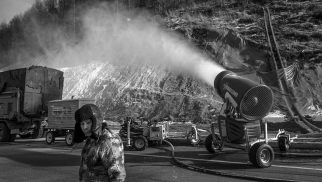
Fonte: https://www.gettyimages.com. Acesso em: 25/02/2022.
Why is Beijing using artificial snow?
The organizers have insisted on using it to "ensure the quality" at the Games remains high. Artificial snow was first used in winter sports in the 1980s. Vancouver 2010, Sochi 2014 and Pyeongchang 2018 all relied to some extent on artificial snow. Beijing has very limited winter snowfall, and the volume of artificial snow used at these Games has reached an unprecedented high of more than 90%. The Yanqing National Alpine Ski Center has relied almost entirely on the artificial variety. It is estimated that 49m gallons (222.8m liters) of water have been used to produce millions of cubic meters of snow.
Artificial v natural snow
Both are made of frozen water — but under the microscope the differences in their structure is clearly apparent. Natural snow starts as crystals in cold clouds, forming elegant sixsided symmetrical snowflakes that grow as they fall to the ground.
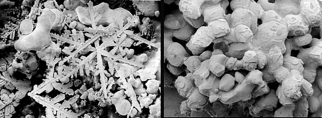
Fonte: https://www.gettyimages.com. Acesso em: 25/02/2022.
Which is better for winter sports?
With less air, and more ice, artificial snow is harder and wetter — and also icier, which makes it more suitable for some sports. It's also easier to maintain a consistent quality throughout competitions, providing as similar conditions as possible for all participants. (...) "Artificial snow offers consistent and predictable slope conditions," according to the International Olympic Committee (IOC). "The controllable and adaptable nature of manmade snow makes it a better fit than the natural version for developing ski courses for elite racing.".
How green is artificial snow?
The process of producing artificial snow is both energy and resourceintensive. This was an issue that concerned the IOC when it was evaluating candidate cities to host the 2022 Winter Olympics. It said Beijing's "reliance on artificial snowmaking would require the diversion of water from existing reservoirs and may impact other land uses". Beijing insists the water used for the Olympics accounts for less than 2% of the local supply. It also says the snow cannons being used need 20% less energy than ones used in previous games.
Referência: https://www.bbc.com/news/60406195. Acesso em: 25/02/2022.
De acordo com o texto: “Pequim insiste que a água usada para as Olimpíadas representa menos de 2% do abastecimento local. Também diz que os canhões de neve usados precisam de 20% de menos energia do que os usados nos jogos anteriores.”
Tais declarações podem ser compreendidas como justificativa para críticas quanto ao:
Questão 31 16422283
UFPel PAVE - Etapa 2 2021Leia o texto que segue para responder a questão.
BEIJING OLYMPICS:
WHAT’S WRONG WITH NATURAL SNOW?
By Wanyuan Song — Published 18th February
Fonte: https://www.gettyimages.com. Acesso em: 25/02/2022.
Why is Beijing using artificial snow?
The organizers have insisted on using it to "ensure the quality" at the Games remains high. Artificial snow was first used in winter sports in the 1980s. Vancouver 2010, Sochi 2014 and Pyeongchang 2018 all relied to some extent on artificial snow. Beijing has very limited winter snowfall, and the volume of artificial snow used at these Games has reached an unprecedented high of more than 90%. The Yanqing National Alpine Ski Center has relied almost entirely on the artificial variety. It is estimated that 49m gallons (222.8m liters) of water have been used to produce millions of cubic meters of snow.
Artificial v natural snow
Both are made of frozen water — but under the microscope the differences in their structure is clearly apparent. Natural snow starts as crystals in cold clouds, forming elegant sixsided symmetrical snowflakes that grow as they fall to the ground.
Fonte: https://www.gettyimages.com. Acesso em: 25/02/2022.
Which is better for winter sports?
With less air, and more ice, artificial snow is harder and wetter — and also icier, which makes it more suitable for some sports. It's also easier to maintain a consistent quality throughout competitions, providing as similar conditions as possible for all participants. (...) "Artificial snow offers consistent and predictable slope conditions," according to the International Olympic Committee (IOC). "The controllable and adaptable nature of manmade snow makes it a better fit than the natural version for developing ski courses for elite racing.".
How green is artificial snow?
The process of producing artificial snow is both energy and resourceintensive. This was an issue that concerned the IOC when it was evaluating candidate cities to host the 2022 Winter Olympics. It said Beijing's "reliance on artificial snowmaking would require the diversion of water from existing reservoirs and may impact other land uses". Beijing insists the water used for the Olympics accounts for less than 2% of the local supply. It also says the snow cannons being used need 20% less energy than ones used in previous games.
Referência: https://www.bbc.com/news/60406195. Acesso em: 25/02/2022.
Baseado no estudo do uso dos adjetivos da Língua Inglesa, as palavras sublinhadas no terceiro parágrafo têm a intenção de
Questão 30 16422274
UFPel PAVE - Etapa 2 2021Leia o texto que segue para responder a questão.
BEIJING OLYMPICS:
WHAT’S WRONG WITH NATURAL SNOW?
By Wanyuan Song — Published 18th February
Fonte: https://www.gettyimages.com. Acesso em: 25/02/2022.
Why is Beijing using artificial snow?
The organizers have insisted on using it to "ensure the quality" at the Games remains high. Artificial snow was first used in winter sports in the 1980s. Vancouver 2010, Sochi 2014 and Pyeongchang 2018 all relied to some extent on artificial snow. Beijing has very limited winter snowfall, and the volume of artificial snow used at these Games has reached an unprecedented high of more than 90%. The Yanqing National Alpine Ski Center has relied almost entirely on the artificial variety. It is estimated that 49m gallons (222.8m liters) of water have been used to produce millions of cubic meters of snow.
Artificial v natural snow
Both are made of frozen water — but under the microscope the differences in their structure is clearly apparent. Natural snow starts as crystals in cold clouds, forming elegant sixsided symmetrical snowflakes that grow as they fall to the ground.
Fonte: https://www.gettyimages.com. Acesso em: 25/02/2022.
Which is better for winter sports?
With less air, and more ice, artificial snow is harder and wetter — and also icier, which makes it more suitable for some sports. It's also easier to maintain a consistent quality throughout competitions, providing as similar conditions as possible for all participants. (...) "Artificial snow offers consistent and predictable slope conditions," according to the International Olympic Committee (IOC). "The controllable and adaptable nature of manmade snow makes it a better fit than the natural version for developing ski courses for elite racing.".
How green is artificial snow?
The process of producing artificial snow is both energy and resourceintensive. This was an issue that concerned the IOC when it was evaluating candidate cities to host the 2022 Winter Olympics. It said Beijing's "reliance on artificial snowmaking would require the diversion of water from existing reservoirs and may impact other land uses". Beijing insists the water used for the Olympics accounts for less than 2% of the local supply. It also says the snow cannons being used need 20% less energy than ones used in previous games.
Referência: https://www.bbc.com/news/60406195. Acesso em: 25/02/2022.
O primeiro parágrafo do texto descreve o motivo pelo qual os Comitês Olímpicos de Inverno adotaram o uso de neve artificial. Também informa a partir de quando isso ocorreu e a quantidade de água utilizada para fazê-la nos jogos de 2022.
Aponte a alternativa que contém essas informações.
Questão 32 16411024
UFPel PAVE - Etapa 1 2021Leia o texto que segue para responder a questão.
SOUTH AMERICAN ART
Modernism in Brazil: One Week That Has Changed It All
Vithória Konzen Dill 29 JULY 2021
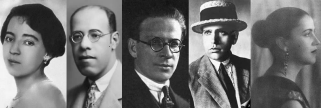
Modernism in Brazil: (left to right) Anita Malfatti, Mário de Andrade,
Menotti del Picchia, Oswald de Andrade, and Tarsila do Amaral. Fonte:
Image by Caio! via Wikimedia Commons (CC-BY-SA-4.0).
In 1922, the Semana de Arte Moderna (Modern Art Week) was held in Brazil. Marking the official beginning of Modernism in Brazil, the event lasted an entire week. From February 11th to 18th, modern tendencies of visual arts were on display in the city of São Paulo. It was the first collective public manifestation in favor of a new and modern spirit in the arts.
The Turning Point of Modernism in Brazil
Artistic manifestations of the group that became the Brazilian Modernist vanguard were already happening since the 1910s. Five influential artists were ahead of the movement: painters Anita Malfatti (1889–1964) and Tarsila do Amaral (1886–1973) along with writers Menotti Del Picchia (1892–1988), Oswald de Andrade (1890–1954), and Mário de Andrade (1893–1945). Known for their pivotal role in the arts, they were called the “Group of Five.”
The Modern Art Week, also called the Week of 22, defined the movement and introduced it to the general public. Organized by artists from São Paulo and Rio de Janeiro, the event took place in the Municipal Theater of São Paulo. In the year that marked 100 years of Independence of Brazil, their purpose was to transform this moment of celebration into one of artistic emancipation.
The organizers didn’t have a common project or an agreed artistic proposal. They were simply united by the desire of going against traditional art with a sense of artistic freedom. Modernism wasn’t a rigid movement with defined rules, but a group of artists that denied outdated art norms. They searched for a new language not only for visual arts, but also literature, music, architecture, and dance.
(...)
Referência: https://www.dailyartmagazine.com/ modernisminbrazil/. Acesso em: 05/03/2022.
Quando estudamos o Passado em Inglês, verificamos que alguns verbos mudam sua forma de escrever, sendo chamados de IRREGULARES.
Dentre os verbos destacados no texto, assinale a alternativa que traz sua forma base:
Questão 31 16411022
UFPel PAVE - Etapa 1 2021Leia o texto que segue para responder a questão.
SOUTH AMERICAN ART
Modernism in Brazil: One Week That Has Changed It All
Vithória Konzen Dill 29 JULY 2021
Modernism in Brazil: (left to right) Anita Malfatti, Mário de Andrade,
Menotti del Picchia, Oswald de Andrade, and Tarsila do Amaral. Fonte:
Image by Caio! via Wikimedia Commons (CC-BY-SA-4.0).
In 1922, the Semana de Arte Moderna (Modern Art Week) was held in Brazil. Marking the official beginning of Modernism in Brazil, the event lasted an entire week. From February 11th to 18th, modern tendencies of visual arts were on display in the city of São Paulo. It was the first collective public manifestation in favor of a new and modern spirit in the arts.
The Turning Point of Modernism in Brazil
Artistic manifestations of the group that became the Brazilian Modernist vanguard were already happening since the 1910s. Five influential artists were ahead of the movement: painters Anita Malfatti (1889–1964) and Tarsila do Amaral (1886–1973) along with writers Menotti Del Picchia (1892–1988), Oswald de Andrade (1890–1954), and Mário de Andrade (1893–1945). Known for their pivotal role in the arts, they were called the “Group of Five.”
The Modern Art Week, also called the Week of 22, defined the movement and introduced it to the general public. Organized by artists from São Paulo and Rio de Janeiro, the event took place in the Municipal Theater of São Paulo. In the year that marked 100 years of Independence of Brazil, their purpose was to transform this moment of celebration into one of artistic emancipation.
The organizers didn’t have a common project or an agreed artistic proposal. They were simply united by the desire of going against traditional art with a sense of artistic freedom. Modernism wasn’t a rigid movement with defined rules, but a group of artists that denied outdated art norms. They searched for a new language not only for visual arts, but also literature, music, architecture, and dance.
(...)
Referência: https://www.dailyartmagazine.com/ modernisminbrazil/. Acesso em: 05/03/2022.
Neste ano são comemorados os 100 anos da Semana de Arte Moderna de 22. Tal acontecimento é considerado o marco do Modernismo no país.
Levando em consideração o ano em que o evento se deu e o objetivo do mesmo é possível dizer que
Questão 30 16411008
UFPel PAVE - Etapa 1 2021Leia o texto que segue para responder a questão.
SOUTH AMERICAN ART
Modernism in Brazil: One Week That Has Changed It All
Vithória Konzen Dill 29 JULY 2021
Modernism in Brazil: (left to right) Anita Malfatti, Mário de Andrade,
Menotti del Picchia, Oswald de Andrade, and Tarsila do Amaral. Fonte:
Image by Caio! via Wikimedia Commons (CC-BY-SA-4.0).
In 1922, the Semana de Arte Moderna (Modern Art Week) was held in Brazil. Marking the official beginning of Modernism in Brazil, the event lasted an entire week. From February 11th to 18th, modern tendencies of visual arts were on display in the city of São Paulo. It was the first collective public manifestation in favor of a new and modern spirit in the arts.
The Turning Point of Modernism in Brazil
Artistic manifestations of the group that became the Brazilian Modernist vanguard were already happening since the 1910s. Five influential artists were ahead of the movement: painters Anita Malfatti (1889–1964) and Tarsila do Amaral (1886–1973) along with writers Menotti Del Picchia (1892–1988), Oswald de Andrade (1890–1954), and Mário de Andrade (1893–1945). Known for their pivotal role in the arts, they were called the “Group of Five.”
The Modern Art Week, also called the Week of 22, defined the movement and introduced it to the general public. Organized by artists from São Paulo and Rio de Janeiro, the event took place in the Municipal Theater of São Paulo. In the year that marked 100 years of Independence of Brazil, their purpose was to transform this moment of celebration into one of artistic emancipation.
The organizers didn’t have a common project or an agreed artistic proposal. They were simply united by the desire of going against traditional art with a sense of artistic freedom. Modernism wasn’t a rigid movement with defined rules, but a group of artists that denied outdated art norms. They searched for a new language not only for visual arts, but also literature, music, architecture, and dance.
(...)
Referência: https://www.dailyartmagazine.com/ modernisminbrazil/. Acesso em: 05/03/2022.
Ao contextualizar o momento em que a Semana de Arte Moderna de 22 ocorreu, a autora afirma que esta “Foi a primeira manifestação pública coletiva a favor de um espírito novo e moderno nas artes”. Entretanto, ao contrário dos movimentos anteriores, o Modernismo possui características únicas. Dentre elas:
I. Não havia um projeto ou proposta artística comum entre os organizadores.
II. O senso de liberdade artística era valorizado.
III. Propunha o rompimento com o estilo de arte tradicional.
IV. Não era um movimento artístico rígido com regras pré-estabelecidas.
V. Havia a busca por uma nova linguagem nas mais diversas expressões artísticas.
06