


![[Marketing] Questao Topo - deslogado](https://storage.estuda.com.br/banners/0_6b7ebee90b03af1c560c73bb8bcce34a_banner_deslogado_70_dias.png)
Questões de Inglês
19.971 Questões
Questão 72 7381579
UFF 2012/1Text I

the Huffington post|Catharine smith| First Posted: 02/11/11 03:36 PM ET
Shorthy after Egyptian President Hosni Mubarak stepped down from power on Friday, activist Wael Ghonim spoke with CNN's Wolf Blitzer and credited Facebook with the success of the Egyptian people's uprising.
Ghonim, a marketing manager for Google, played a key role in organizing the January 25 protest by reaching out to Egyptian youths on Facebook. Shorthy after that first protest, Ghonim was arrested in Cairo and imprisoned for 12 days.
Since his release, Ghonim has become a symbol for the Egyptian movement, although he has rejected this notion. “Im not a hero. | was writing on a keyboard on the Internet and | wasn't exposing
my life to danger,” he said in an interview immediately after his release. “The heroes are the ones who are in the street.”
Adapted from:
Text II

Facebook: why is the West switching off?
Writer Tim Lott said in The Independent on Sunday: “Last summer, | took a momentous step into the unknown:
at the age of 54, | joined Facebook. | thought subscribing to the online social network would open up new
frontiers of creativity by enabling me to exchange views and insights with like-minded people. In the event, |
mostly encountered a deluge of banal gossip, boasting, trivia and moronic links to skateboarding pandas. Yet
[5] for all its aggravations, | can't bring myself to quit the compulsively addictive site.” Other internet users,
however, do appear to be kicking the habit. Last month, around 100,000 British users deactivated their accounts,
as did a similar number of Russians and Norwegians. The decline was even more marked in the US, where no
fewer than six million users decided they had better things to do than check their Facebook page.
“After seven years of phenomenal growth, it seems the world's biggest social network may have reached its
[10] peak”, said Stephen Armstrong in The Sunday Times. People are leaving for various reasons. For some it's a
case of digital downsizing: reacting to the clutter of websites and smartphones by cutting time online.
Others are concerned about privacy issues. Alice Needham, a student in Newcastle, left after her mother
started posting affectionate messages on the public part of her page. The final straw was her mother's posting:
Good night, my darling girl, love you so very, very much. “Yes, itwas really sweet, but... Anyway, | thought it
[15] was easier to leave (Facebook) than argue with her”, says Alice.
Although the decline sounds bad for Facebook, the network is still growing in South America and Asia and will
likely cross the billion-user mark in the next year. With such a ubiquitous global presence, it won't be
disappearing any time soon.
(adapted from: The Week, 25 june 2011)
Glossary
Text I
• Stepped down from power: deixou o poder
• freaching out: alcançar
Text II
• boasting: contar vantagem
• the last straw: “a última gota”
In text II, Alice Needham decided to leave Facebook because she felt her mother's posting was
Questão 71 7381575
UFF 2012/1Text I
the Huffington post|Catharine smith| First Posted: 02/11/11 03:36 PM ET
Shorthy after Egyptian President Hosni Mubarak stepped down from power on Friday, activist Wael Ghonim spoke with CNN's Wolf Blitzer and credited Facebook with the success of the Egyptian people's uprising.
Ghonim, a marketing manager for Google, played a key role in organizing the January 25 protest by reaching out to Egyptian youths on Facebook. Shorthy after that first protest, Ghonim was arrested in Cairo and imprisoned for 12 days.
Since his release, Ghonim has become a symbol for the Egyptian movement, although he has rejected this notion. “Im not a hero. | was writing on a keyboard on the Internet and | wasn't exposing
my life to danger,” he said in an interview immediately after his release. “The heroes are the ones who are in the street.”
Adapted from:
Text II
Facebook: why is the West switching off?
Writer Tim Lott said in The Independent on Sunday: “Last summer, | took a momentous step into the unknown:
at the age of 54, | joined Facebook. | thought subscribing to the online social network would open up new
frontiers of creativity by enabling me to exchange views and insights with like-minded people. In the event, |
mostly encountered a deluge of banal gossip, boasting, trivia and moronic links to skateboarding pandas. Yet
[5] for all its aggravations, | can't bring myself to quit the compulsively addictive site.” Other internet users,
however, do appear to be kicking the habit. Last month, around 100,000 British users deactivated their accounts,
as did a similar number of Russians and Norwegians. The decline was even more marked in the US, where no
fewer than six million users decided they had better things to do than check their Facebook page.
“After seven years of phenomenal growth, it seems the world's biggest social network may have reached its
[10] peak”, said Stephen Armstrong in The Sunday Times. People are leaving for various reasons. For some it's a
case of digital downsizing: reacting to the clutter of websites and smartphones by cutting time online.
Others are concerned about privacy issues. Alice Needham, a student in Newcastle, left after her mother
started posting affectionate messages on the public part of her page. The final straw was her mother's posting:
Good night, my darling girl, love you so very, very much. “Yes, itwas really sweet, but... Anyway, | thought it
[15] was easier to leave (Facebook) than argue with her”, says Alice.
Although the decline sounds bad for Facebook, the network is still growing in South America and Asia and will
likely cross the billion-user mark in the next year. With such a ubiquitous global presence, it won't be
disappearing any time soon.
(adapted from: The Week, 25 june 2011)
Glossary
Text I
• Stepped down from power: deixou o poder
• freaching out: alcançar
Text II
• boasting: contar vantagem
• the last straw: “a última gota”
The aggravations (line 5) concerning Facebook are exemplified in Text Il by
Questão 69 7381568
UFF 2012/1Text I
the Huffington post|Catharine smith| First Posted: 02/11/11 03:36 PM ET
Shorthy after Egyptian President Hosni Mubarak stepped down from power on Friday, activist Wael Ghonim spoke with CNN's Wolf Blitzer and credited Facebook with the success of the Egyptian people's uprising.
Ghonim, a marketing manager for Google, played a key role in organizing the January 25 protest by reaching out to Egyptian youths on Facebook. Shorthy after that first protest, Ghonim was arrested in Cairo and imprisoned for 12 days.
Since his release, Ghonim has become a symbol for the Egyptian movement, although he has rejected this notion. “Im not a hero. | was writing on a keyboard on the Internet and | wasn't exposing
my life to danger,” he said in an interview immediately after his release. “The heroes are the ones who are in the street.”
Adapted from:
Text II
Facebook: why is the West switching off?
Writer Tim Lott said in The Independent on Sunday: “Last summer, | took a momentous step into the unknown:
at the age of 54, | joined Facebook. | thought subscribing to the online social network would open up new
frontiers of creativity by enabling me to exchange views and insights with like-minded people. In the event, |
mostly encountered a deluge of banal gossip, boasting, trivia and moronic links to skateboarding pandas. Yet
[5] for all its aggravations, | can't bring myself to quit the compulsively addictive site.” Other internet users,
however, do appear to be kicking the habit. Last month, around 100,000 British users deactivated their accounts,
as did a similar number of Russians and Norwegians. The decline was even more marked in the US, where no
fewer than six million users decided they had better things to do than check their Facebook page.
“After seven years of phenomenal growth, it seems the world's biggest social network may have reached its
[10] peak”, said Stephen Armstrong in The Sunday Times. People are leaving for various reasons. For some it's a
case of digital downsizing: reacting to the clutter of websites and smartphones by cutting time online.
Others are concerned about privacy issues. Alice Needham, a student in Newcastle, left after her mother
started posting affectionate messages on the public part of her page. The final straw was her mother's posting:
Good night, my darling girl, love you so very, very much. “Yes, itwas really sweet, but... Anyway, | thought it
[15] was easier to leave (Facebook) than argue with her”, says Alice.
Although the decline sounds bad for Facebook, the network is still growing in South America and Asia and will
likely cross the billion-user mark in the next year. With such a ubiquitous global presence, it won't be
disappearing any time soon.
(adapted from: The Week, 25 june 2011)
Glossary
Text I
• Stepped down from power: deixou o poder
• freaching out: alcançar
Text II
• boasting: contar vantagem
• the last straw: “a última gota”
According to Text I, Ghonim refused his role as a hero in the Egyptian protest by emphasizing that he was simply
Questão 68 7381524
UFF 2012/1Text I
the Huffington post|Catharine smith| First Posted: 02/11/11 03:36 PM ET
Shorthy after Egyptian President Hosni Mubarak stepped down from power on Friday, activist Wael Ghonim spoke with CNN's Wolf Blitzer and credited Facebook with the success of the Egyptian people's uprising.
Ghonim, a marketing manager for Google, played a key role in organizing the January 25 protest by reaching out to Egyptian youths on Facebook. Shorthy after that first protest, Ghonim was arrested in Cairo and imprisoned for 12 days.
Since his release, Ghonim has become a symbol for the Egyptian movement, although he has rejected this notion. “Im not a hero. | was writing on a keyboard on the Internet and | wasn't exposing
my life to danger,” he said in an interview immediately after his release. “The heroes are the ones who are in the street.”
Adapted from:
Text II
Facebook: why is the West switching off?
Writer Tim Lott said in The Independent on Sunday: “Last summer, | took a momentous step into the unknown:
at the age of 54, | joined Facebook. | thought subscribing to the online social network would open up new
frontiers of creativity by enabling me to exchange views and insights with like-minded people. In the event, |
mostly encountered a deluge of banal gossip, boasting, trivia and moronic links to skateboarding pandas. Yet
[5] for all its aggravations, | can't bring myself to quit the compulsively addictive site.” Other internet users,
however, do appear to be kicking the habit. Last month, around 100,000 British users deactivated their accounts,
as did a similar number of Russians and Norwegians. The decline was even more marked in the US, where no
fewer than six million users decided they had better things to do than check their Facebook page.
“After seven years of phenomenal growth, it seems the world's biggest social network may have reached its
[10] peak”, said Stephen Armstrong in The Sunday Times. People are leaving for various reasons. For some it's a
case of digital downsizing: reacting to the clutter of websites and smartphones by cutting time online.
Others are concerned about privacy issues. Alice Needham, a student in Newcastle, left after her mother
started posting affectionate messages on the public part of her page. The final straw was her mother's posting:
Good night, my darling girl, love you so very, very much. “Yes, itwas really sweet, but... Anyway, | thought it
[15] was easier to leave (Facebook) than argue with her”, says Alice.
Although the decline sounds bad for Facebook, the network is still growing in South America and Asia and will
likely cross the billion-user mark in the next year. With such a ubiquitous global presence, it won't be
disappearing any time soon.
(adapted from: The Week, 25 june 2011)
Glossary
Text I
• Stepped down from power: deixou o poder
• freaching out: alcançar
Text II
• boasting: contar vantagem
• the last straw: “a última gota”
In Text I, the author refers to the following events in Egypt:
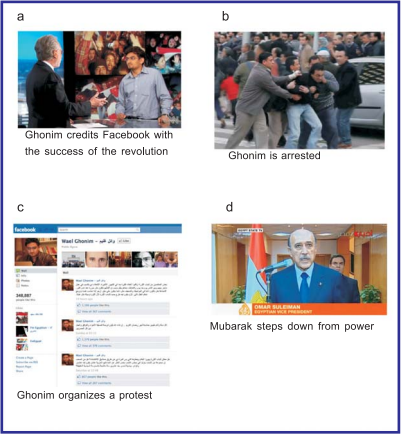
The chronological order in which these events took place, as described in the text, is
Questão 20 6402993
EFOMM 2012EXTRACT 1
Japan’s shipyards remain intact after quake
Japan’s major shipyards escaped the full impact of the March 11 earthquake and tsunami that struck the northeastern coast of the country with full force. An official at the Japan Ship Exporters’ Association said the devastating natural disaster “will have no impact on future export ship orders at all”. Although several small shipyards in the quake-hit areas were affected, major Japanese shipyards that build large vessels for exports are concentrated in western Japan and remain intact, the official said. Mitsui Engineering & Shipbuilding sustained “slight material damages” in the company’s Kasai Center and Chiba Works but did not consider such slight damages would cause serious impact on operations. “The rotational schedule of interruption of power supply due to the earthquake may affect our operation at our works and subsidiaries. However, the degree of the impact is not known now,” the company said in a statement. Japanese export ship orders rose for the 15th consecutive month in February o a year-on-year basis. Japanese shipbuilders received orders for 277 export vessels – 259 bulk carriers, 10 oil tankers and eight general cargo vessels – in the April-February period.
(Adapted from: www.australianmerchantnavy.com, March 2011)
EXTRACT 2
Tsnunami Debris Expected on U.S. Shores in 3 Years
The powerful tsunami triggered by the 9.0 Japanese earthquake destroyed coastal towns near Sendai, washing such things as houses and cars into the ocean. Projections of where this debris might head have been made at the international Pacific Research Center, university of Hawaii at Manoa. What their model predicts about the tsunami debris is that they first spread out eastward from the Japan Coast in the North Pacific Subtropical Gyre. In a year, the Papahanaumokuakea Marine National Monument will see pieces washing up on its shores; in two years, the remaining Hawaiian islands will see some effects; in three years, the plume will reach the US West Coast, dumping debris on Californian beaches and the beaches of British Columbia, Alaska, and Baja California. The debris will then drift into the famous floating junk yard, the North Pacific Garbage Patch, where it will wander around and break into smaller and smaller pieces. In five years, Hawaii shores can expect to see another barrage of debris that is stronger and longer-lasting than the first one. Much of the debris leaving the North Pacific Garbage Patch ends up on Hawaii’s reefs and beaches. These model projections will help to guide clean-up and tracking operations.
(Adapted from: www.geog.ucsb.edu, April 2011)
Choose the correct option to complete the sentences:
1. Where have you been? I ______ for you for two weeks!
2. Their bus __________at 3:00 p.m.
3. Tim __________to the beach, when he heard the weather forecast and changed his mind.
4. Research _____________ that excessive sue of cell phones may cause headaches.
5. When the police arrived, the thieves __________.
Questão 18 6402983
EFOMM 2012EXTRACT 1
Japan’s shipyards remain intact after quake
Japan’s major shipyards escaped the full impact of the March 11 earthquake and tsunami that struck the northeastern coast of the country with full force. An official at the Japan Ship Exporters’ Association said the devastating natural disaster “will have no impact on future export ship orders at all”. Although several small shipyards in the quake-hit areas were affected, major Japanese shipyards that build large vessels for exports are concentrated in western Japan and remain intact, the official said. Mitsui Engineering & Shipbuilding sustained “slight material damages” in the company’s Kasai Center and Chiba Works but did not consider such slight damages would cause serious impact on operations. “The rotational schedule of interruption of power supply due to the earthquake may affect our operation at our works and subsidiaries. However, the degree of the impact is not known now,” the company said in a statement. Japanese export ship orders rose for the 15th consecutive month in February o a year-on-year basis. Japanese shipbuilders received orders for 277 export vessels – 259 bulk carriers, 10 oil tankers and eight general cargo vessels – in the April-February period.
(Adapted from: www.australianmerchantnavy.com, March 2011)
EXTRACT 2
Tsnunami Debris Expected on U.S. Shores in 3 Years
The powerful tsunami triggered by the 9.0 Japanese earthquake destroyed coastal towns near Sendai, washing such things as houses and cars into the ocean. Projections of where this debris might head have been made at the international Pacific Research Center, university of Hawaii at Manoa. What their model predicts about the tsunami debris is that they first spread out eastward from the Japan Coast in the North Pacific Subtropical Gyre. In a year, the Papahanaumokuakea Marine National Monument will see pieces washing up on its shores; in two years, the remaining Hawaiian islands will see some effects; in three years, the plume will reach the US West Coast, dumping debris on Californian beaches and the beaches of British Columbia, Alaska, and Baja California. The debris will then drift into the famous floating junk yard, the North Pacific Garbage Patch, where it will wander around and break into smaller and smaller pieces. In five years, Hawaii shores can expect to see another barrage of debris that is stronger and longer-lasting than the first one. Much of the debris leaving the North Pacific Garbage Patch ends up on Hawaii’s reefs and beaches. These model projections will help to guide clean-up and tracking operations.
(Adapted from: www.geog.ucsb.edu, April 2011)
Choose the correct alternative to complete the following sentence:
“If she hadn’t been so bad-tempered, I _________ her.”
06