


![[Marketing] Questao Topo - deslogado](https://storage.estuda.com.br/banners/0_6b7ebee90b03af1c560c73bb8bcce34a_banner_deslogado_70_dias.png)
Questões de Inglês
19.971 Questões
Questão 18 46967
UPE 1° Dia 2013Texto
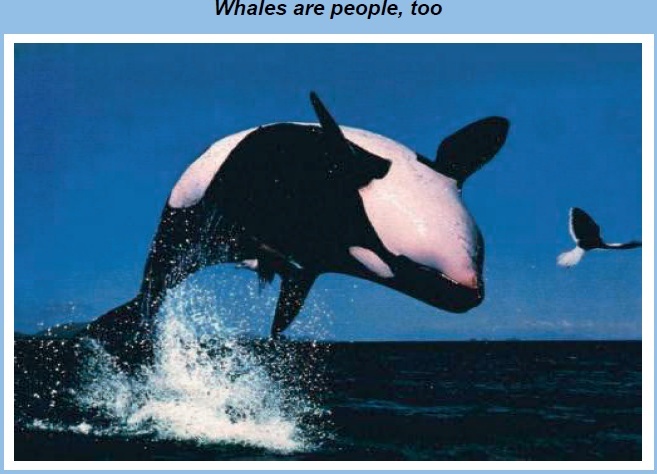
One of the most important features of science is that scientific progress regularly leads to important ethical questions. This is particularly true with research about cetaceans — whales, dolphins and the like — because it has become increasingly apparent that the inner life of these non humans is more complex than most humans realize. We have learned that their capacity for suffering is significantly greater than has been imagined — which makes much human behavior towards these non humans ethically problematic.
There is now ample scientific evidence that capacities once thought to be unique to humans are shared by these beings. Like humans, whales and dolphins are 'persons'. That is, they are self-aware beings with individual personalities and a rich inner life. They have the ability to think abstractly, feel deeply and choose their actions. Their lives are characterized by close, long-term relationships with conspecifics in communities characterized by culture. In short, whales and dolphins are a “who”, not a “what”.
However, as the saying goes, there is good news and there is bad news.
The good news is that the scientific community is gradually recognizing the importance of these ethical issues. For example, more marine mammal scientists are steering away from doing research on captive dolphins. More significantly, a small group of experts who met at the Helsinki Collegium for Advanced Studies in the spring of 2010 to evaluate the ethical implications of the scientific research on cetaceans concluded that the evidence merited issuing a Declaration of Rights for Cetaceans: Whales and Dolphins. This group included such prominent scientists as Lori Marino and Hal Whitehead. Particularly important in this declaration was the recognition that whales and dolphins are persons who are "beyond use". Treating them as 'property' is indefensible.
Unfortunately, while there has been consistent progress in scientists' sensitivity to the ethical issues, the same cannot be said for those who use cetaceans to generate revenue.
Disponível em: www.abc.net.au/ environment/articles. (Adaptado)
As palavras Like (linha 8) e However (linha13) estabelecem, respectivamente, relações de
Questão 30 46404
UNESP 2013/2Brazil wants to count trees in the Amazon rainforest
By Channtal Fleischfresser
February 11, 2013
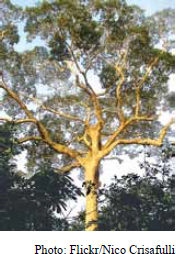
Brazil is home to roughly 60 percent of the Amazon, about half of what remains of the world’s tropical rainforests. And now, the country has plans to count its trees. A vast undertaking, the new National Forest Inventory hopes to gain “a broad panorama of the quality and the conditions in the forest cover”, according to Brazil’s Forestry Minister Antonio Carlos Hummel.
The census, set to take place over the next four years, will scour 3,288,000 square miles, sampling 20,000 points at 20 kilometer intervals and registering the number, height, diameter, and species of the trees, among other data.
The initiative, aimed to better allocate resources to the country’s forests, is part of a large-scale turnaround in Brazil’s relationship to its forests. While it once had one of the worst rates of deforestation in the world, last year only 1,797 square miles of the Amazon were destroyed – a reduction of nearly 80% compared to 2004.
(www.smartplanet.com. Adaptado.
No trecho do último parágrafo – While it once had one of the worst rates of deforestation in the world, last year only 1,797 square miles of the Amazon were destroyed –, a palavra once apresenta uma ideia de
Questão 29 46403
UNESP 2013/2Brazil wants to count trees in the Amazon rainforest
By Channtal Fleischfresser
February 11, 2013
Brazil is home to roughly 60 percent of the Amazon, about half of what remains of the world’s tropical rainforests. And now, the country has plans to count its trees. A vast undertaking, the new National Forest Inventory hopes to gain “a broad panorama of the quality and the conditions in the forest cover”, according to Brazil’s Forestry Minister Antonio Carlos Hummel.
The census, set to take place over the next four years, will scour 3,288,000 square miles, sampling 20,000 points at 20 kilometer intervals and registering the number, height, diameter, and species of the trees, among other data.
The initiative, aimed to better allocate resources to the country’s forests, is part of a large-scale turnaround in Brazil’s relationship to its forests. While it once had one of the worst rates of deforestation in the world, last year only 1,797 square miles of the Amazon were destroyed – a reduction of nearly 80% compared to 2004.
(www.smartplanet.com. Adaptado.
No trecho do último parágrafo – aimed to better allocate resources to the country’s forests –, aimed to indica
Questão 27 46401
UNESP 2013/2Brazil wants to count trees in the Amazon rainforest
By Channtal Fleischfresser
February 11, 2013
Brazil is home to roughly 60 percent of the Amazon, about half of what remains of the world’s tropical rainforests. And now, the country has plans to count its trees. A vast undertaking, the new National Forest Inventory hopes to gain “a broad panorama of the quality and the conditions in the forest cover”, according to Brazil’s Forestry Minister Antonio Carlos Hummel.
The census, set to take place over the next four years, will scour 3,288,000 square miles, sampling 20,000 points at 20 kilometer intervals and registering the number, height, diameter, and species of the trees, among other data.
The initiative, aimed to better allocate resources to the country’s forests, is part of a large-scale turnaround in Brazil’s relationship to its forests. While it once had one of the worst rates of deforestation in the world, last year only 1,797 square miles of the Amazon were destroyed – a reduction of nearly 80% compared to 2004.
(www.smartplanet.com. Adaptado.
O objetivo do Censo Florestal é
Questão 25 46397
UNESP 2013/2Brazil wants to count trees in the Amazon rainforest
By Channtal Fleischfresser
February 11, 2013
Brazil is home to roughly 60 percent of the Amazon, about half of what remains of the world’s tropical rainforests. And now, the country has plans to count its trees. A vast undertaking, the new National Forest Inventory hopes to gain “a broad panorama of the quality and the conditions in the forest cover”, according to Brazil’s Forestry Minister Antonio Carlos Hummel.
The census, set to take place over the next four years, will scour 3,288,000 square miles, sampling 20,000 points at 20 kilometer intervals and registering the number, height, diameter, and species of the trees, among other data.
The initiative, aimed to better allocate resources to the country’s forests, is part of a large-scale turnaround in Brazil’s relationship to its forests. While it once had one of the worst rates of deforestation in the world, last year only 1,797 square miles of the Amazon were destroyed – a reduction of nearly 80% compared to 2004.
(www.smartplanet.com. Adaptado.
O Governo brasileiro
Questão 24 46396
UNESP 2013/2
Instrução: Leia a tira para responder à questão de número 24.

O trecho do segundo quadrinho – I’m going to – introduz uma
06