


![[Marketing] Questao Topo - deslogado](https://storage.estuda.com.br/banners/0_6b7ebee90b03af1c560c73bb8bcce34a_banner_deslogado_70_dias.png)
Questões de Inglês
19.971 Questões
Questão 36 49612
USF 2013/2Yorkshire
Yorkshire is a large county (region) in the north-east of England. People from Yorkshire are famous in the popular imagination for many things – they speak their mind, they are cunning and clever, they are careful with money, they eat lots. They also make good beer. The “typical” Yorkshireman wears a flat cap, has a whippet (a small, thin, fast dog) and loves nothing better than a pint of good Yorkshire ale with his whippet at his feet.
Image from: <www.onewalesgovernament.blogspot.com>. Access: May 17th
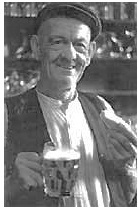
You can infer that a typical Yorkshireman
Questão 48 49544
ESPM 2013/2Online Ivory Trade Threatens Africa’s Elephants
(BANGKOK) — Conservationists say there’s a new threat to the survival of Africa’s endangered elephants that may be just as deadly as poachers’ bullets: the black-market trade of ivory in cyberspace.
Illegal tusks are being bought and sold on countless Internet forums and shopping websites worldwide, including Internet giant Google, with increasing frequency, according to activists. And wildlife groups attending the 178-nation Convention on International Trade in Endangered Species in Bangkok this week are calling on global law enforcement agencies to do something about it.
The elephant slaughter, which has reached crisis proportions unheard of in two decades, is largely being driven by skyrocketing demand in Asia, where tusks are often carved into tourist trinkets and ornaments.
“The Internet is anonymous, it’s open 24 hours a day for business, and selling illegal ivory online is a low-risk, high-profit activity for criminals,” Tania McCrea-Steele of the International Fund for Animal Welfare told The Associated Press on Tuesday from London.
In one investigation last year, IFAW found 17,847 elephant products listed on 13 websites in China. The country, which conservationists call the world’s top destination for “blood ivory” from Africa, is not alone.
IFAW says illegal ivory trading online is an issue within the U.S., including on eBay, and it is rife on some websites in Europe, particularly nations with colonial links to Africa.
“ox-bone,” ”white gold,” ”unburnable bone,” or “cold to the touch,” and shipped through the mail. Another conservation advocacy group, the Environmental Investigation Agency, said Tuesday that Google Japan’s shopping site now has 10,000 ads promoting ivory sales.
March 06, 2013 | www.time.com
The word it in the underlined sentence: ‘IFAW says illegal ivory trading online is an issue within the U.S., including on eBay, and it is rife on some websites in Europe, particularly nations with colonial links to Africa.’, refers to
Questão 45 49541
ESPM 2013/2Online Ivory Trade Threatens Africa’s Elephants
(BANGKOK) — Conservationists say there’s a new threat to the survival of Africa’s endangered elephants that may be just as deadly as poachers’ bullets: the black-market trade of ivory in cyberspace.
Illegal tusks are being bought and sold on countless Internet forums and shopping websites worldwide, including Internet giant Google, with increasing frequency, according to activists. And wildlife groups attending the 178-nation Convention on International Trade in Endangered Species in Bangkok this week are calling on global law enforcement agencies to do something about it.
The elephant slaughter, which has reached crisis proportions unheard of in two decades, is largely being driven by skyrocketing demand in Asia, where tusks are often carved into tourist trinkets and ornaments.
“The Internet is anonymous, it’s open 24 hours a day for business, and selling illegal ivory online is a low-risk, high-profit activity for criminals,” Tania McCrea-Steele of the International Fund for Animal Welfare told The Associated Press on Tuesday from London.
In one investigation last year, IFAW found 17,847 elephant products listed on 13 websites in China. The country, which conservationists call the world’s top destination for “blood ivory” from Africa, is not alone.
IFAW says illegal ivory trading online is an issue within the U.S., including on eBay, and it is rife on some websites in Europe, particularly nations with colonial links to Africa.
“ox-bone,” ”white gold,” ”unburnable bone,” or “cold to the touch,” and shipped through the mail. Another conservation advocacy group, the Environmental Investigation Agency, said Tuesday that Google Japan’s shopping site now has 10,000 ads promoting ivory sales.
March 06, 2013 | www.time.com
The expression ‘as deadly as’ in the underlined sentence: ‘Conservationists say there’s a new threat to the survival of Africa’s endangered elephants that may be just as deadly as poachers’ bullets’, conveys an idea of
Questão 44 49540
ESPM 2013/2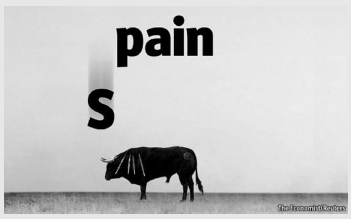
Can India become a great power?
India’s lack of a strategic culture hobbles its ambition to be a force in the world
NOBODY doubts that China has joined the ranks of the great powers: the idea of a G2 with America is mooted, albeit prematurely. India is often spoken of in the same breath as China because of its billion-plus population, economic promise, value as a trading partner and growing military capabilities. All five permanent members of the United Nations Security Council support—however grudgingly—India’s claim to join them. But whereas China’s rise is a given, India is still widely seen as a nearly-power that cannot quite get its act together
That is a pity, for as a great power, India would have much to offer. Although poorer and less economically dynamic than China, India has soft power in abundance. It is committed to democratic institutions, the rule of law and human rights. As a victim of jihadist violence, it is in the front rank of the fight against terrorism. It has a huge and talented diaspora. It may not want to be co-opted by the West but it shares many Western values. It is confident and culturally rich. If it had a permanent Security Council seat (which it has earned by being one of the most consistent contributors to UN peacekeeping operations) it would not instinctively excuse and defend brutal regimes. Unlike China and Russia, it has few skeletons in its cupboard. With its enormous coastline and respected navy (rated by its American counterpart, with which it often holds exercises, as up to NATO standard) India is well-placed to provide security in a critical part of the global commons.
The modest Power
Yet India’s huge potential to be a force for stability and an upholder of the rules-based international system is far from being realized. One big reason is that the country lacks the culture to pursue an active security policy. Despite a rapidly rising defense budget, forecast to be the world’s fourth-largest by 2020, India’s politicians and bureaucrats show little interest in grand strategy. The foreign service is ridiculously feeble— India’s 1.2 billion people are represented by about the same number of diplomats as Singapore’s 5m. The leadership of the armed forces and the political-bureaucratic establishment operate in different worlds. The defense ministry is chronically short of military expertise.
These weaknesses partly reflect a pragmatic desire to make economic development at home the priority. India has also wisely kept generals out of politics (a lesson ignored elsewhere in Asia, not least by Pakistan, with usually parlous results). But Nehruvian ideology also plays a role. At home, India mercifully gave up Fabian economics in the 1990s (and reaped the rewards). But diplomatically, 66 years after the British left, it still clings to the post-independence creeds of semi-pacifism and “non-alignment”: the West is not to be trusted.
Mar 30th 2013 |www.economist.com
According to the text,
Questão 42 49538
ESPM 2013/2
Can India become a great power?
India’s lack of a strategic culture hobbles its ambition to be a force in the world
NOBODY doubts that China has joined the ranks of the great powers: the idea of a G2 with America is mooted, albeit prematurely. India is often spoken of in the same breath as China because of its billion-plus population, economic promise, value as a trading partner and growing military capabilities. All five permanent members of the United Nations Security Council support—however grudgingly—India’s claim to join them. But whereas China’s rise is a given, India is still widely seen as a nearly-power that cannot quite get its act together
That is a pity, for as a great power, India would have much to offer. Although poorer and less economically dynamic than China, India has soft power in abundance. It is committed to democratic institutions, the rule of law and human rights. As a victim of jihadist violence, it is in the front rank of the fight against terrorism. It has a huge and talented diaspora. It may not want to be co-opted by the West but it shares many Western values. It is confident and culturally rich. If it had a permanent Security Council seat (which it has earned by being one of the most consistent contributors to UN peacekeeping operations) it would not instinctively excuse and defend brutal regimes. Unlike China and Russia, it has few skeletons in its cupboard. With its enormous coastline and respected navy (rated by its American counterpart, with which it often holds exercises, as up to NATO standard) India is well-placed to provide security in a critical part of the global commons.
The modest Power
Yet India’s huge potential to be a force for stability and an upholder of the rules-based international system is far from being realized. One big reason is that the country lacks the culture to pursue an active security policy. Despite a rapidly rising defense budget, forecast to be the world’s fourth-largest by 2020, India’s politicians and bureaucrats show little interest in grand strategy. The foreign service is ridiculously feeble— India’s 1.2 billion people are represented by about the same number of diplomats as Singapore’s 5m. The leadership of the armed forces and the political-bureaucratic establishment operate in different worlds. The defense ministry is chronically short of military expertise.
These weaknesses partly reflect a pragmatic desire to make economic development at home the priority. India has also wisely kept generals out of politics (a lesson ignored elsewhere in Asia, not least by Pakistan, with usually parlous results). But Nehruvian ideology also plays a role. At home, India mercifully gave up Fabian economics in the 1990s (and reaped the rewards). But diplomatically, 66 years after the British left, it still clings to the post-independence creeds of semi-pacifism and “non-alignment”: the West is not to be trusted.
Mar 30th 2013 |www.economist.com
The word albeit in the underlined sentence: ‘the idea of a G2 with America is mooted, albeit prematurely.’, could be replaced, without changing its meaning, by
Questão 47 49462
ESPM 2013/1WILDLIFE
Asia’s Biggest Wildlife Traffickers
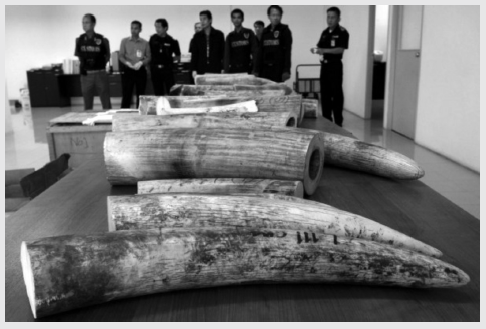
(BANGKOK) — Squealing tiger cubs stuffed into carry-on bags. Luggage packed with hundreds of squirming tortoises, elephant tusks, even water dragons and American paddlefish. Officials at Thailand‘s gateway airport proudly tick off the illegally trafficked wildlife they have seized over the past two years.
But Thai and foreign law enforcement officers tell another story: Officials working-hand-in-hand with traffickers ensure that other shipments through Suvarnabhumi International Airport are whisked off before they even reach customs inspection.
It’s a murky mix. A 10-fold increase in wildlife law enforcement actions, including seizures, has been reported in the past six years in Southeast Asia. Yet, the trade’s Mr.Bigs, masterful in taking advantage of pervasive corruption, appearimmune to arrest and continue to orchestrate the de cimation of wildlife in Thailand, the region and beyond.
And Southeast Asia’s honest cops don’t have it easy
“It is very difficult for me. I have to sit among people who are both good and some who are corrupt, says Chanvut Vajrabukka, a retired police general. “If I say, ‘You have to go out and arrest that target,’ some in the room may well warn them,’” says Chanvut, who now advises ASEAN-WEN, the regional wildlife enforcement network.
Several kingpins, says wildlife activist Steven Galster, have recently been confronted by authorities, “but in the end, good uniforms are running into, and often stopped by bad uniforms. It’s like a bad Hollywood cop movie.
“Most high-level traffickers remain untouched and continue to replace arrested underlings with new ones,” says Galster, who works for the FREELAND Foundation, an anti-trafficking group.
August 15, 2012 / www.time.com
In the underlined sentence ‘“If I say, ‘You have to go out and arrest that target,’ some in the room may well warn them,”’, the pronoun some refers to:
06