


![[Marketing] Questao Topo - deslogado](https://storage.estuda.com.br/banners/0_6b7ebee90b03af1c560c73bb8bcce34a_banner_deslogado_70_dias.png)
Questões de Inglês
19.971 Questões
Questão 38 80963
UNITAU Medicina 2013Dilma Rousseff's Fighting Words at the United Nation
For anyone listening in on the 67th United Nations General Assembly in New York last week, the answers are clearer now. The sharp, 23-minute speech that kicked off the assembly was not without its rhetorical flourishes. “To many, we women are half of heaven, but we want to be half of earth as well, with equal rights and opportunities,” she said. But in the balance of her address, Rousseff could have been channeling Lula as she flayed global decision makers for their mismanagement and shortsightedness in the teeth of crisis. Wearing a bold designer print and a power hairstyle, she scrolled through a laundry list of First World failings, from the quagmire in Syria to unbending fiscal orthodoxy and beggar-thy-neighbor protectionism.
Though she avoided naming names, Rousseff called out “industrial world central banks” for their loose money policies that flood the markets with cheap dollars and euros and so punish emerging markets, “which lose market share due to the artificial overpricing of their currencies,” she said. “Monetary policy cannot be the only response to remedy growing unemployment, rising poverty, and the despair that affects the world’s most vulnerable populations.”
What fueled Rousseff’s harsh words—essentially a reprise of her speech a year ago—was not just the sluggish global economy, but a reversal of fortunes at home. Five years ago, when world markets collapsed, Lula famously dismissed the gathering global recession as a “ripple” in Brazil. Now the crisis has battered the country in full. GDP growth has tumbled from 7.5 percent in 2010 to 2.7 percent last year and this year is heading to well under 2 percent. Brasilia’s favorite meme is no longer the ripple but the First World’s “monetary tsnunami” and “currency wars.” The octave change in rhetoric will not be lost on world diplomats.Adapted from: http://www.thedailybeast.com/newsweek/2012/09/30/dilma-rousseff-s-fighting-words-at-the-united-nations.html
Observe as palavras em negrito no texto e assinale a classe de palavras a que elas correspondem
Questão 37 80962
UNITAU Medicina 2013Dilma Rousseff's Fighting Words at the United Nation
For anyone listening in on the 67th United Nations General Assembly in New York last week, the answers are clearer now. The sharp, 23-minute speech that kicked off the assembly was not without its rhetorical flourishes. “To many, we women are half of heaven, but we want to be half of earth as well, with equal rights and opportunities,” she said. But in the balance of her address, Rousseff could have been channeling Lula as she flayed global decision makers for their mismanagement and shortsightedness in the teeth of crisis. Wearing a bold designer print and a power hairstyle, she scrolled through a laundry list of First World failings, from the quagmire in Syria to unbending fiscal orthodoxy and beggar-thy-neighbor protectionism.
Though she avoided naming names, Rousseff called out “industrial world central banks” for their loose money policies that flood the markets with cheap dollars and euros and so punish emerging markets, “which lose market share due to the artificial overpricing of their currencies,” she said. “Monetary policy cannot be the only response to remedy growing unemployment, rising poverty, and the despair that affects the world’s most vulnerable populations.”
What fueled Rousseff’s harsh words—essentially a reprise of her speech a year ago—was not just the sluggish global economy, but a reversal of fortunes at home. Five years ago, when world markets collapsed, Lula famously dismissed the gathering global recession as a “ripple” in Brazil. Now the crisis has battered the country in full. GDP growth has tumbled from 7.5 percent in 2010 to 2.7 percent last year and this year is heading to well under 2 percent. Brasilia’s favorite meme is no longer the ripple but the First World’s “monetary tsnunami” and “currency wars.” The octave change in rhetoric will not be lost on world diplomats.Adapted from: http://www.thedailybeast.com/newsweek/2012/09/30/dilma-rousseff-s-fighting-words-at-the-united-nations.html
Assinale a afirmativa mais adequada, de acordo com o texto.
Questão 35 80960
UNITAU Medicina 2013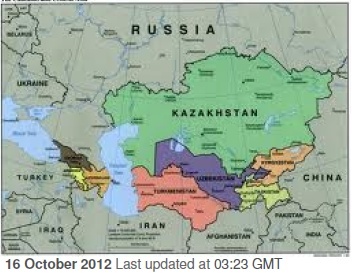
Doctors and nurses forced to pick cotton
By Ibrat Safo and William Kremer
BBC World Service
After some international clothing firms such as H&M, Adidas and Marks and Spencer boycotted cotton from Uzbekistan in protest at the use of child labour, this year most Uzbek children are able to get on with their schoolwork. But office workers, nurses and even surgeons are being forced into the fields instead.
Malvina, a nurse at a clinic in Tashkent, is angry.
"I am almost 50 years old and I've got asthma. We had to pick a lot of cotton, all by hand - and we were not paid anything!"
She has just returned from a 15-day stint picking cotton with other health professionals in rural Uzbekistan. It was hard toil and no-one was spared, whatever their seniority.
"Some people phoned our surgeon, who was with us in the fields”.
"They would say things like: 'You operated on me a week ago. I've got a temperature - what shall I do?'"
Uzbekistan is one of the world's main producers of cotton and the crop is a mainstay of its economy. The government controls production and enforces Soviet-style quotas to get the harvest off the fields as quickly as possible.
A history of using child and forced labour at harvest time has led to a number of retailers - including H&M, Marks and Spencer and Tesco - to pledge to source their cotton from elsewhere.
In response, earlier this year Uzbekistan's Prime Minister Shavkat Mirziyayev issued a decree banning children from working in the cotton fields. Yet many adults, including teachers, cleaners and office workers, are still forced to return to the land during October and November.
This year, like last year, medical staff have been ordered to join them. There are reports of patients in towns being turned away because their doctor is "in cotton".
The BBC is not allowed to report from Uzbekistan, but Malvina - not her real name - told us that since last year, Tashkent's authorities have required every district to contribute 330 medical staff.
There followed a bad-tempered meeting at her clinic to decide who would do the work. Unfortunately for Malvina, it became clear that having asthma wasn't enough to get out of the chore.
"It seemed that everybody had something - back pain or high blood pressure or whatever. And when the head doctor heard this list of illnesses she said: 'Stop it! I don't want to hear any more. Everybody is
going apart from pregnant women and those nursing babies.'"
Anyone who refused to go would be dismissed, she said.
Malvina says that the workers were woken up at 04:00 in the morning and had to walk for more than an hour before starting work. They finished around 18:00 in the evening.
"We had to pick 60kg of cotton each. If we didn't hit that target, then we had to buy the rest from locals,"
she says.
Malvina and her colleagues from the clinic were supposed to be put up in a school, but there wasn't
enough space. In the end they rented their own accommodation. To wash they had to pay another fee to
use a local bathhouse.
For many Uzbeks, the cotton season presents an unpredictable burden. A college lecturer from
Samarqand region, who did not wish to reveal his name, told us he was too ill to pick cotton this year.
"I had to find a labourer and pay him $100 to pick cotton for me," he says. "Then the college principal
withheld my monthly salary, saying it was going to be used to feed and house the labourers - so I lost
another $200."
But he is happy that schoolchildren are being spared this year and can carry on with their education.
The decree banning child labour does appear to have had some effect. Yelena Urlayeva, an activist who
travels across the country every year to document abuses, has noted a few incidents where children
have been drafted in to make up a shortfall.
The Uzbek authorities have so far refused to discuss cotton-picking with the BBC, but a website close to
the government recently denied the presence of any children among this year's cotton-pickers.
Under the terms of the decree, a "child" is anyone under the school-leaving age of 15. Students over this
age are still bussed out to help with the harvest, and all colleges and universities have closed their doors
as usual. For Urlayeva, these pickers are also too young.
"They are still children, and some of them get sick because the conditions are so harsh. It gets very cold
and the food is just not good enough." She says that parents who try to remove sick children from the
harvest are threatened with their expulsion from college.
One of the organisers of the boycott, the pressure group Responsible Sourcing Network, says the Uzbek
government has not yet done enough.
"What we were asking for in order to lift the boycott was for the Uzbek government to invite an ILO
[International Labour Organization] mission, to monitor the situation in the field," says Cotton Programme
Manager Valentina Gurney. "Despite our insistence, this has not happened."
Forced labour is found in a number of countries around the world, but it is only in Uzbekistan that it is
orchestrated by the government, Gurney says.
Vestibular UNITAU 2013 24
According to the International Cotton Advisory Committee, Uzbekistan accounts for about 4% of world
cotton production, and 10% of world cotton exports. At the same time cotton accounts for about 45% of
Uzbekistan's total exports.
For decades "white gold" has been important culturally too.
Uzbeks are encouraged from a young age to look forward to the time of year known simply as "pahta" -
cotton. The harvest is an opportunity for them to contribute to their nation's prosperity.
For Malvina, there is the certainty of further cotton-picking "opportunities" in the future. Her workplace
has signed an agreement with the farm for the next five years.
Malvina spoke to Outlook on the BBC World Service. Listen back to the interview via iPlayer or browse
the Outlook podcast archive.
http://www.bbc.co.uk/news/magazine-19931639
As far as the words in bold typeface are concerned, tick the correct alternative:
I. The barked dogs kept me awake all night.
II. The barking dogs kept me awake all night.
III. The abandoned child cried for three days without stopping.
IV. The abandoning child was so unhappy she cried for three days.
V. Alarmed houses afford some protection against burglary.
VI. Alarming reports are coming in that refugees are being racially abused.
Questão 34 80959
UNITAU Medicina 2013
Doctors and nurses forced to pick cotton
By Ibrat Safo and William Kremer
BBC World Service
After some international clothing firms such as H&M, Adidas and Marks and Spencer boycotted cotton from Uzbekistan in protest at the use of child labour, this year most Uzbek children are able to get on with their schoolwork. But office workers, nurses and even surgeons are being forced into the fields instead.
Malvina, a nurse at a clinic in Tashkent, is angry.
"I am almost 50 years old and I've got asthma. We had to pick a lot of cotton, all by hand - and we were not paid anything!"
She has just returned from a 15-day stint picking cotton with other health professionals in rural Uzbekistan. It was hard toil and no-one was spared, whatever their seniority.
"Some people phoned our surgeon, who was with us in the fields”.
"They would say things like: 'You operated on me a week ago. I've got a temperature - what shall I do?'"
Uzbekistan is one of the world's main producers of cotton and the crop is a mainstay of its economy. The government controls production and enforces Soviet-style quotas to get the harvest off the fields as quickly as possible.
A history of using child and forced labour at harvest time has led to a number of retailers - including H&M, Marks and Spencer and Tesco - to pledge to source their cotton from elsewhere.
In response, earlier this year Uzbekistan's Prime Minister Shavkat Mirziyayev issued a decree banning children from working in the cotton fields. Yet many adults, including teachers, cleaners and office workers, are still forced to return to the land during October and November.
This year, like last year, medical staff have been ordered to join them. There are reports of patients in towns being turned away because their doctor is "in cotton".
The BBC is not allowed to report from Uzbekistan, but Malvina - not her real name - told us that since last year, Tashkent's authorities have required every district to contribute 330 medical staff.
There followed a bad-tempered meeting at her clinic to decide who would do the work. Unfortunately for Malvina, it became clear that having asthma wasn't enough to get out of the chore.
"It seemed that everybody had something - back pain or high blood pressure or whatever. And when the head doctor heard this list of illnesses she said: 'Stop it! I don't want to hear any more. Everybody is
going apart from pregnant women and those nursing babies.'"
Anyone who refused to go would be dismissed, she said.
Malvina says that the workers were woken up at 04:00 in the morning and had to walk for more than an hour before starting work. They finished around 18:00 in the evening.
"We had to pick 60kg of cotton each. If we didn't hit that target, then we had to buy the rest from locals,"
she says.
Malvina and her colleagues from the clinic were supposed to be put up in a school, but there wasn't
enough space. In the end they rented their own accommodation. To wash they had to pay another fee to
use a local bathhouse.
For many Uzbeks, the cotton season presents an unpredictable burden. A college lecturer from
Samarqand region, who did not wish to reveal his name, told us he was too ill to pick cotton this year.
"I had to find a labourer and pay him $100 to pick cotton for me," he says. "Then the college principal
withheld my monthly salary, saying it was going to be used to feed and house the labourers - so I lost
another $200."
But he is happy that schoolchildren are being spared this year and can carry on with their education.
The decree banning child labour does appear to have had some effect. Yelena Urlayeva, an activist who
travels across the country every year to document abuses, has noted a few incidents where children
have been drafted in to make up a shortfall.
The Uzbek authorities have so far refused to discuss cotton-picking with the BBC, but a website close to
the government recently denied the presence of any children among this year's cotton-pickers.
Under the terms of the decree, a "child" is anyone under the school-leaving age of 15. Students over this
age are still bussed out to help with the harvest, and all colleges and universities have closed their doors
as usual. For Urlayeva, these pickers are also too young.
"They are still children, and some of them get sick because the conditions are so harsh. It gets very cold
and the food is just not good enough." She says that parents who try to remove sick children from the
harvest are threatened with their expulsion from college.
One of the organisers of the boycott, the pressure group Responsible Sourcing Network, says the Uzbek
government has not yet done enough.
"What we were asking for in order to lift the boycott was for the Uzbek government to invite an ILO
[International Labour Organization] mission, to monitor the situation in the field," says Cotton Programme
Manager Valentina Gurney. "Despite our insistence, this has not happened."
Forced labour is found in a number of countries around the world, but it is only in Uzbekistan that it is
orchestrated by the government, Gurney says.
Vestibular UNITAU 2013 24
According to the International Cotton Advisory Committee, Uzbekistan accounts for about 4% of world
cotton production, and 10% of world cotton exports. At the same time cotton accounts for about 45% of
Uzbekistan's total exports.
For decades "white gold" has been important culturally too.
Uzbeks are encouraged from a young age to look forward to the time of year known simply as "pahta" -
cotton. The harvest is an opportunity for them to contribute to their nation's prosperity.
For Malvina, there is the certainty of further cotton-picking "opportunities" in the future. Her workplace
has signed an agreement with the farm for the next five years.
Malvina spoke to Outlook on the BBC World Service. Listen back to the interview via iPlayer or browse
the Outlook podcast archive.
http://www.bbc.co.uk/news/magazine-19931639
Tick the correct alternative, according to comment below, summarized from the text above:
The cotton season presents an unpredictable burden for many Uzbeks. As an example features a college lecturer from Samarqand region, who was too ill to pick cotton this year. He had to find and pay a labourer to pick cotton for him. Then the college principal withheld his monthly salary, saying it was going to be used to feed and house the labourers. That made him lose, in total:
Questão 33 80958
UNITAU Medicina 2013
Tick the CORRECT alternative according to the text:
I. Uzbekistan\'s Prime Minister Shavkat Mirziyayev issued a decree banning children from working in the cotton fields in response to international protest at the history of child and forced labor, earlier this year.
II. In spite of the international protest at forced labor, nurses, teachers, cleaners, office workers and even doctors, are still forced to return to the land to pick cotton during October and November.
III. Patients in towns are being turned away because their doctor is "in cotton", say the reports.
IV. Medical staff have been ordered to join other professionals this year, like last year. Even surgeons – who had been operating people one week before – were taken to the fields.
Questão 45 80139
FMABC 2013Brazil maintains 95% vaccination coverage over the last 10 years
November 4, 2012
Vaccination coverage in Brazil over the last 10 years has averaged 95% for most vaccines on the child immunization schedule and in vaccination campaigns, according to a government press notice. Vaccines are made freely available in the 35,000 public health care units. Maintaining child immunization schedules up to date ensures health and helps Brazil to continue registering high rates of vaccination coverage against vaccine-preventable diseases.
Brazil's National Immunization Program (PNI) from the Ministry of Health has established schedules not only for the first year of life, but also for children, teenagers, adults and senior citizens. "Brazil has one of the best and most complex immunization programs in the world, offering vaccines against a range of diseases, free of charge. The vaccine is an important ally to control, combat and eliminate these diseases and Brazil is a model for other countries that have not managed to achieve vaccination coverage such as ours," said Jarbas Barbosa, Secretary of Health Monitoring.
As an example, in 2011, the BCG vaccine against tuberculosis achieved 107.7% vaccine coverage; the MMR vaccine against measles, mumps and rubella achieved 102.2% and meningococcal conjugate C, included in the schedule in 2011, achieved 105.5% vaccination coverage. In 2012, during the polio vaccination campaign for children under five years of age, more than 14 million children were vaccinated, attaining vaccination coverage of 98%. Vaccination campaigns against influenza also show the mobilization capacity of the PNI in terms of the population adhering to the call for vaccination. This year, more than 25 million vaccines were registered and total coverage reached 86.24% of the target population, estimated at around 30 million people.
Vaccines provided by Health Ministry
The Ministry of Health provides 43 different types of immunobiologics: 26 vaccines, 13 heterologous sera (animal immunoglobulin) and four homologous sera (human immunoglobulin) used in the prevention and/or treatment of diseases. Since the 1970s, different strategies including campaigns and routine immunization resulted in the elimination of smallpox in 1973, of polio in 1989 and, most recently, the elimination of measles across the country in 2001. In addition to the eradication of these diseases, through vaccination, the program is controlling neonatal tetanus, severe forms of tuberculosis, diphtheria, accidental tetanus and pertussis.
In 2010, two new vaccines were introduced into the vaccination schedule: the 10-valent pneumococcal and the meningococcal conjugate. Aiming to expand the use of combination vaccines, the Ministry of Health included the pentavalent vaccine (diphtheria, tetanus, pertussis, Haemophilus influenzae type B and hepatitis B) in the child immunization schedule in 2012, thereby decreasing the number of injections administered to children. The inactivated polio vaccine was also included in the child immunization schedule this year under a vaccine schedule of four sequential doses in children under one year of age who are starting their immunization schedule. For 2013, the Ministry of Health will offer two more vaccines in the routine immunization schedule: varicella and hepatitis A.
www.thepharmaletter.com
No trecho do último parágrafo – thereby decreasing the number of injections administered to children. – a palavra thereby pode ser substituída, sem alteração de sentido, por
06