


![[Marketing] Questao Topo - deslogado](https://storage.estuda.com.br/banners/0_6b7ebee90b03af1c560c73bb8bcce34a_banner_deslogado_70_dias.png)
Questões de Inglês
19.971 Questões
Questão 17 99373
FCM PB Medicina 2013/1TEXT II
Scientists say that a common ingredient found in Chinese herbal medicine is responsible for the very high incidence of some cancers and kidney disease in Taiwan. For thousands of years the aristolochia plant with its reddish-yellow flowers has been a support of Chinese herbal medicine. The toxic nature of the plant was discovered in the 1990s when dozens of Belgian women began developing kidney failure and urinary tract cancers. They had been using aristolochia-based slimming aids at clinic.
Now scientists say that the key element, aristolochic acid, is responsible for the very high levels of kidney disease and urinary tract tumors in Taiwan. It’s estimated that about one in three of the population there have used herbal medicines containing the toxin. The country has the world’s highest incidence of cancers of the upper urinary tract – and in their study the scientists say more than half can be directly linked to the ingredient.
While products containing aristolochic acid are banned in many countries, one of the big concerns is China. In 2004 a study suggests Chinese farmers produce enough of the plant to dose 100 million people. Scientists are concerned that in the decades to come, disease caused by the aristolochia will create an international public health problem of considerable magnitude.
Source: Adjusted from BBC.co.uk (http://www.bbc.co.uk/worldservice/, visited on October, 2012)
In the sentence: “The toxic nature of the plant was discovered in the 1990s when dozens of Belgian women began developing kidney failure and urinary tract cancers”, the words in bold could be respectively replaced by:
Questão 16 99372
FCM PB Medicina 2013/1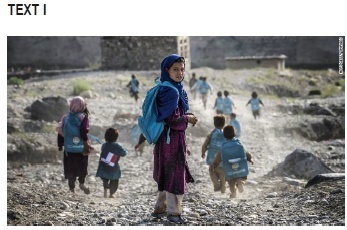
For many girls in Afghanistan, the simple act of walking to school can be a life-threatening journey. "You close the door behind you, and you enter a war zone," said Nushin Arbabzadah, an American-based author who was raised in Afghanistan. There were at least 185 documented attacks on schools and hospitals in Afghanistan last year, and the majority of those attacks were attributed to armed groups opposed to educating females. Some girls have been maimed by acid attacks. Others have had their drinking water poisoned or been targeted by bombers who think females should be forbidden from school -- as they were during the Taliban's rule.
Among the violence, however, there is promise: in a country where just 6% of women 25 and older have received any formal education, millions of girls are at long last enrolling in school. Today, more than 8.2 million children are going to schools like the one founded by Razia Jan. Jan and her team at the Zabuli Education Center are providing a free education to about 350 girls in rural Afghanistan. "Most of our students are the first generation of girls to get educated." Reports from humanitarian groups like UNICEF, Oxfam and Save the Children say that a great deal of progress has been made. "The overall education of girls in Afghanistan is a great success story," said Christine Roehrs, spokeswoman for Save the Children in Afghanistan.
One major area of focus is the number of female teachers. "In Afghan culture, parents don't consider it appropriate for girls to be educated by a man," Roehrs said. "There is a high dropout rate of young girls after the early grades because there are not enough female teachers". Another obstacle to girls' education is early marriage. The legal age for marriage is 16 in Afghanistan, but there have been many reports about girls being forced to marry well before that. In some cases, physical and emotional abuses keep girls out of the classroom. Many young women are accustomed to being hit and working as virtual slaves at home.
But female students still have high aspirations. In a recent Oxfam survey, more than 70% of the girls interviewed said they want to continue their education. "Once they enter the classroom, they are so involved being a student and trying to learn as much as they can," Jan said. "They want to learn. They want to get educated."
Source: Adjusted from CNN.com (http://edition.cnn.com/2012/09/26/world/asia/, visited on October, 2012)
Which of the following is NOT mentioned in the text?
Questão 15 99371
FCM PB Medicina 2013/1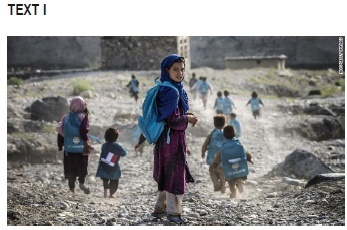
For many girls in Afghanistan, the simple act of walking to school can be a life-threatening journey. "You close the door behind you, and you enter a war zone," said Nushin Arbabzadah, an American-based author who was raised in Afghanistan. There were at least 185 documented attacks on schools and hospitals in Afghanistan last year, and the majority of those attacks were attributed to armed groups opposed to educating females. Some girls have been maimed by acid attacks. Others have had their drinking water poisoned or been targeted by bombers who think females should be forbidden from school -- as they were during the Taliban's rule.
Among the violence, however, there is promise: in a country where just 6% of women 25 and older have received any formal education, millions of girls are at long last enrolling in school. Today, more than 8.2 million children are going to schools like the one founded by Razia Jan. Jan and her team at the Zabuli Education Center are providing a free education to about 350 girls in rural Afghanistan. "Most of our students are the first generation of girls to get educated." Reports from humanitarian groups like UNICEF, Oxfam and Save the Children say that a great deal of progress has been made. "The overall education of girls in Afghanistan is a great success story," said Christine Roehrs, spokeswoman for Save the Children in Afghanistan.
One major area of focus is the number of female teachers. "In Afghan culture, parents don't consider it appropriate for girls to be educated by a man," Roehrs said. "There is a high dropout rate of young girls after the early grades because there are not enough female teachers". Another obstacle to girls' education is early marriage. The legal age for marriage is 16 in Afghanistan, but there have been many reports about girls being forced to marry well before that. In some cases, physical and emotional abuses keep girls out of the classroom. Many young women are accustomed to being hit and working as virtual slaves at home.
But female students still have high aspirations. In a recent Oxfam survey, more than 70% of the girls interviewed said they want to continue their education. "Once they enter the classroom, they are so involved being a student and trying to learn as much as they can," Jan said. "They want to learn. They want to get educated."
Source: Adjusted from CNN.com (http://edition.cnn.com/2012/09/26/world/asia/, visited on October, 2012)
“Among the violence, however, there is promise: in a country where just 6% of women 25 and older have received any formal education, millions of girls are at long last enrolling in school.” At long last introduces an idea of:
Questão 13 99369
FCM PB Medicina 2013/1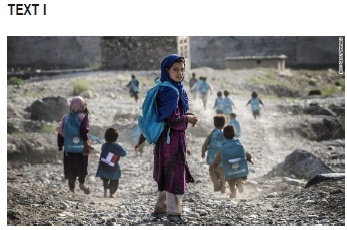
For many girls in Afghanistan, the simple act of walking to school can be a life-threatening journey. "You close the door behind you, and you enter a war zone," said Nushin Arbabzadah, an American-based author who was raised in Afghanistan. There were at least 185 documented attacks on schools and hospitals in Afghanistan last year, and the majority of those attacks were attributed to armed groups opposed to educating females. Some girls have been maimed by acid attacks. Others have had their drinking water poisoned or been targeted by bombers who think females should be forbidden from school -- as they were during the Taliban's rule.
Among the violence, however, there is promise: in a country where just 6% of women 25 and older have received any formal education, millions of girls are at long last enrolling in school. Today, more than 8.2 million children are going to schools like the one founded by Razia Jan. Jan and her team at the Zabuli Education Center are providing a free education to about 350 girls in rural Afghanistan. "Most of our students are the first generation of girls to get educated." Reports from humanitarian groups like UNICEF, Oxfam and Save the Children say that a great deal of progress has been made. "The overall education of girls in Afghanistan is a great success story," said Christine Roehrs, spokeswoman for Save the Children in Afghanistan.
One major area of focus is the number of female teachers. "In Afghan culture, parents don't consider it appropriate for girls to be educated by a man," Roehrs said. "There is a high dropout rate of young girls after the early grades because there are not enough female teachers". Another obstacle to girls' education is early marriage. The legal age for marriage is 16 in Afghanistan, but there have been many reports about girls being forced to marry well before that. In some cases, physical and emotional abuses keep girls out of the classroom. Many young women are accustomed to being hit and working as virtual slaves at home.
But female students still have high aspirations. In a recent Oxfam survey, more than 70% of the girls interviewed said they want to continue their education. "Once they enter the classroom, they are so involved being a student and trying to learn as much as they can," Jan said. "They want to learn. They want to get educated."
Source: Adjusted from CNN.com (http://edition.cnn.com/2012/09/26/world/asia/, visited on October, 2012)
Choose the item which best completes the sentence bellow:
“To see these girls walking to school, delighted to be _________ and spending time together in the classroom, writing their own names for the first time, reading their first words -- I felt hope for the future”
Questão 11 99367
FCM PB Medicina 2013/1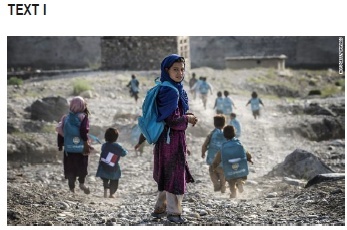
For many girls in Afghanistan, the simple act of walking to school can be a life-threatening journey. "You close the door behind you, and you enter a war zone," said Nushin Arbabzadah, an American-based author who was raised in Afghanistan. There were at least 185 documented attacks on schools and hospitals in Afghanistan last year, and the majority of those attacks were attributed to armed groups opposed to educating females. Some girls have been maimed by acid attacks. Others have had their drinking water poisoned or been targeted by bombers who think females should be forbidden from school -- as they were during the Taliban's rule.
Among the violence, however, there is promise: in a country where just 6% of women 25 and older have received any formal education, millions of girls are at long last enrolling in school. Today, more than 8.2 million children are going to schools like the one founded by Razia Jan. Jan and her team at the Zabuli Education Center are providing a free education to about 350 girls in rural Afghanistan. "Most of our students are the first generation of girls to get educated." Reports from humanitarian groups like UNICEF, Oxfam and Save the Children say that a great deal of progress has been made. "The overall education of girls in Afghanistan is a great success story," said Christine Roehrs, spokeswoman for Save the Children in Afghanistan.
One major area of focus is the number of female teachers. "In Afghan culture, parents don't consider it appropriate for girls to be educated by a man," Roehrs said. "There is a high dropout rate of young girls after the early grades because there are not enough female teachers". Another obstacle to girls' education is early marriage. The legal age for marriage is 16 in Afghanistan, but there have been many reports about girls being forced to marry well before that. In some cases, physical and emotional abuses keep girls out of the classroom. Many young women are accustomed to being hit and working as virtual slaves at home.
But female students still have high aspirations. In a recent Oxfam survey, more than 70% of the girls interviewed said they want to continue their education. "Once they enter the classroom, they are so involved being a student and trying to learn as much as they can," Jan said. "They want to learn. They want to get educated."
Source: Adjusted from CNN.com (http://edition.cnn.com/2012/09/26/world/asia/, visited on October, 2012)
What is the best title for the text?
Questão 20 99315
FCM PB Medicina 2013/2
When it comes to living a healthy, active lifestyle, the cards are stacked against many Americans. Environmental barriers prevent people from being able to easily make healthy choices and this often leads to obesity. The Leadership for Healthy Communities outlines key environmental factors that contribute to the obesity epidemic. Ten are listed below:
1. Lack of access to healthy, fresh, affordable foods;
2. Prevalence of cheap, high fat, processed foods and sugary, highly caloric beverages;
3. Higher rates of snacking at home, school and in the work place;
4. Larger portion sizes;
5. Abundance of Marketing for Unhealthy Foods and Beverages;
6. Sedentary lifestyles;
7. Social and cultural norms prioritizing ownership and convenience of technological goods;
8. Communities are not designed for active transportation;
9. Lack of safe areas for physical activity;
10. Lack of awareness surrounding healthy eating and active living.
(Source: Adapted from TED Med – http://www.tedmed.com/greatchallenges/challenge/)
Choose the appropriate question tag for the following sentence:
“Environmental barriers prevent people from being able to easily make healthy choices, ____________?”
06