


![[Marketing] Questao Topo - deslogado](https://storage.estuda.com.br/banners/0_6b7ebee90b03af1c560c73bb8bcce34a_banner_deslogado_70_dias.png)
Questões de Inglês
19.971 Questões
Questão 42 113447
UFGD 2013Shades of grey: grey income
In 2010, an academic from the China Reform Foundation, Wang Xiaolou, published an influential report on the extent of the unreported—or ―grey‖— income of China’s households. The report was controversial, as it suggested that the discrepancy between officially reported income and the actual wealth held by Chinese households was equivalente to nearly 30% of China’s GDP in 2008—a staggering amount. It also claimed that the under-reporting of income was most flagrant among China’s wealthier households, suggesting that levels of wealth inequality were much wider than officially recognised. Income tends to be understated in official household surveys, as individuals are concerned that the information they disclose might be passed to the authorities (tax evasion is rife in China).
© The Economist Intelligence Unit Limited 2012
De acordo com o texto, é correto afirmar que
Questão 41 113446
UFGD 2013HPV vaccine doesn’t alter sexual behavior, study finds
By ANAHAD O'CONNOR
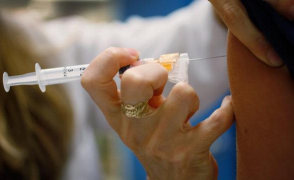
Joe Raedle/Getty Images
Coni Butler, an accountant in Austin, Tex., and a devout Catholic, encourages her three children to remain celibate before marriage. But that did not stop her from getting them vaccinated against human papillomavirus, or HPV, a sexually transmitted disease that raises the risk of some cancers.
Ms. Butler had her son and two daughters vaccinated between ages 12 and 15. She was not deterred by widespread concerns that the vaccine might encourage promiscuity.
―We talk about remaining chaste until they get married, but there’s always the possibility that one bad choice could lead to devastating consequences,‖ she said. ―I tell my friends that you pray for the best, but you plan for the worst.
Since public health officials began recommending in 2006 that young women be routinely vaccinated against HPV, many parents have hesitated over fears that doing so might give their children license to have sex. But research published on Monday in the journal Pediatrics may help ease those fears.
Looking at a sample of nearly 1,400 girls, the researchers found no evidence that those who were vaccinated beginning around age 11 went on to engage in more sexual activity than girls who were not vaccinated.
―We’re hopeful that once physicians see this, it will give them evidence that they can give to parents, said Robert A. Bednarczyk, the lead author of the report and a clinical investigator with the Kaiser Permanente Center for Health Research Southeast, in Atlanta. ―Hopefully when parents see this, it’ll be reassuring to them and we can start to overcome this barrier.
HPV, the most common sexually transmitted virus in the United States, can cause cancers of the cervix, anus and parts of the throat. Federal health officials began recommending in 2006 that girls be vaccinated as early as age 11 and last year made a similar recommendation for preadolescent boys. The idea is to immunize boys and girls before they become sexually active to maximize the vaccine’s protective effects.
[...]
Disponível em: http://well.blogs.nytimes.com/2012/10/15/hpv-vaccination-does-not-change-sexual-behavior/?ref=health Acesso em: 15 out. 2012
Based on the panorama of the text, the main contribution of the research related to it is that:
Questão 40 113445
UFGD 2013HPV vaccine doesn’t alter sexual behavior, study finds
By ANAHAD O'CONNOR
Joe Raedle/Getty Images
Coni Butler, an accountant in Austin, Tex., and a devout Catholic, encourages her three children to remain celibate before marriage. But that did not stop her from getting them vaccinated against human papillomavirus, or HPV, a sexually transmitted disease that raises the risk of some cancers.
Ms. Butler had her son and two daughters vaccinated between ages 12 and 15. She was not deterred by widespread concerns that the vaccine might encourage promiscuity.
―We talk about remaining chaste until they get married, but there’s always the possibility that one bad choice could lead to devastating consequences,‖ she said. ―I tell my friends that you pray for the best, but you plan for the worst.
Since public health officials began recommending in 2006 that young women be routinely vaccinated against HPV, many parents have hesitated over fears that doing so might give their children license to have sex. But research published on Monday in the journal Pediatrics may help ease those fears.
Looking at a sample of nearly 1,400 girls, the researchers found no evidence that those who were vaccinated beginning around age 11 went on to engage in more sexual activity than girls who were not vaccinated.
―We’re hopeful that once physicians see this, it will give them evidence that they can give to parents, said Robert A. Bednarczyk, the lead author of the report and a clinical investigator with the Kaiser Permanente Center for Health Research Southeast, in Atlanta. ―Hopefully when parents see this, it’ll be reassuring to them and we can start to overcome this barrier.
HPV, the most common sexually transmitted virus in the United States, can cause cancers of the cervix, anus and parts of the throat. Federal health officials began recommending in 2006 that girls be vaccinated as early as age 11 and last year made a similar recommendation for preadolescent boys. The idea is to immunize boys and girls before they become sexually active to maximize the vaccine’s protective effects.
[...]
Disponível em: http://well.blogs.nytimes.com/2012/10/15/hpv-vaccination-does-not-change-sexual-behavior/?ref=health Acesso em: 15 out. 2012
The HPV vaccine provides protection against a few types of cancer. Thus, it is extremely helpful for having a healthy sexual life. Why, then, is there a social paradox through its use in the USA?
Questão 39 113444
UFGD 2013
Assinale a alternativa que apresenta uma das interpretações possíveis para essa tirinha.
Questão 37 113442
UFGD 2013
Leia o texto a seguir:

Na tirinha, os elementos visuais e as expressões faciais dos personagens reforçam e dialogam com aspectos do texto escrito, indicando que
Questão 24 113124
UFT Manhã 2013/1Chimps and orangutans may experience midlife crises
By Ian Sample, science correspondent 19 November, 2012
There comes a time in some men’s lives when the days seem darker, death more certain, and the only sensible response is to blow the life savings on a sportscar.
Radical and often ill-advised changes in lifestyle are typical for the midlife crisis but, if it is more than a myth, then humans may not be the only animals to experience it.
Now an international team of scientists claims it has found evidence for a slump in well-being among middle-aged chimpanzees and orangutans. The lull in happiness in the middle years, they say, is the ape equivalent of the midlife crisis.
The findings of the study, which was published in the journal Proceedings of the National Academy of Sciences, suggest that the midlife crisis may have its roots in the biology humans share with our closest evolutionary cousins.
More than 500 apes were included in the study in three separate groups. The first two groups were chimpanzees, with the third made up of orangutans. “In all three groups we find evidence that well-being is lowest in chimpanzees and orangutans at an age that corresponds more or less to midlife in humans,” Weiss said.
Robin Dunbar, Professor of Evolutionary Psychology at Oxford University, was sceptical about the findings. “What can produce a sense of well-being that varies across their lifetimes like this? It’s hard to see anything in an ape’s life that would have that sort of pattern. They’re not particularly good at seeing far ahead into the future; that’s one of the big differences between them and us.”
But Weiss believes the findings could point to a deeper understanding of the emotional crisis some men may experience. “If we want to find the answer to the question of what’s going on with the midlife crisis, we should look at what is similar in middle-aged humans, chimps and orangutans,” he said.
Available at: http://www.onestopenglish.com. (Adapted)
I. Weiss thinks the study can help to understand what happen to human being when reaches the middle aged.
II. The results of the study will be published soon in the journal Proceedings of the National Academy of Sciences.
III. The research intended to find out whether the primates suffer from a crisis when they\'re middle aged.
IV. The study showed that gorillas don\'t suffer from a midlife crisis.
V. The researchers are skeptical about the findings.
VI. The results show that only human being reaches a middle aged crisis.
Mark the correct answer:
06