


![[Marketing] Questao Topo - deslogado](https://storage.estuda.com.br/banners/0_6b7ebee90b03af1c560c73bb8bcce34a_banner_deslogado_70_dias.png)
Questões de Inglês
19.971 Questões
Questão 30 142342
UPE 3° Fase / 1° Dia SSA 2013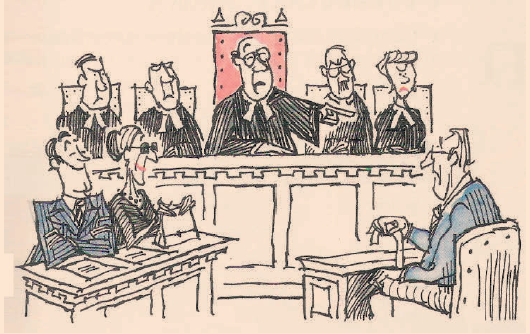
Children usually live with their parents – but until what age? 20? 25?
Stephen Richardson, a social psychologist, studies the lifestyles of young people in Britain and the US. He says that today many young people live at home when they are 25 or older. They are happy to live with their parents, go out at night, and spend their money on cell phones and designer clothes. It’s not only university students, but also young people who have jobs and earn money.
In many other European countries, children leave home later. In Italy, for example 30% of men and 18% of women between 30 and 34 live with their parents. This week in Naples a judge decided that Giuseppe Andreoli, aged 70, must pay $ 950 a month to his ex-wife for their son Marco. Marco lives with his mother – but he’s not a child, he’s a 30-year-old lawyer!
OXENDEN, C. & outros. American English File. Ed. Oxford. New York, 2008.
What does “designer” mean?
Questão 29 142341
UPE 3° Fase / 1° Dia SSA 2013Leia a tirinha e responda ao que se pede:

Considerando o contexto, o phrasal verb que completa corretamente a oração “You can’t just ................................ creativity like a faucet.” , no 2º quadrinho, é:
Questão 28 142338
UPE 3° Fase / 1° Dia SSA 2013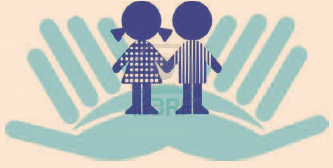
The global scandal of violence against children is a horror story too often untold. In investigating this issue, Human Rights Watch has found a disturbing but persistent theme – in every region of the world children suffer innumerable forms of violence, most often perpetrated by the individuals that are responsible for their safety and well-being.
Street children are often detained by police without sufficient cause, and are brutally interrogated and tortured in order to elicit confessions or information. Sometimes they are imprisoned in cells with adults or placed in juvenile and criminal correctional institutions where mistreatment is often part of the daily routine.
Seven or eight-year-old kids are recruited or kidnapped to serve as soldiers in armed conflict situations. Refugee children who are separated from their families become vulnerable to exploitation and sexual abuse.
Children as young as six years old are forced to work under extremely difficult conditions, as bonded laborers or in forced prostitution. They may be beaten for working too slowly, making mistakes, arriving late or simply as an instrument of intimidation. (…)
Even in schools, where education is supposed to be promoted, life in and outside the classroom may be intolerable. At the hands of peers and teachers, many students suffer under acts of abuse, sexual violence, harassment and discrimination because of their ethnicity, gender, sexual orientation, religion or social group.
Silence and inaction allow violence against children to continue. Children – particularly those most vulnerable – have few mechanisms for reporting violence. They may be reluctant to speak out for fear of reprisals. And because they are so young, their complains are usually not taken seriously. Even when reports are made or abuse is exposed, perpetrators are rarely investigated or prosecuted.
The Convention on the Rights of the Child, adopted by the United Nations in 1989, obliges governments to protect children from all forms of physical and mental violence. Since the adoption of the convention, many countries have made significant advances on this issue, such as the revision of domestic legislation. The next step towards finding a solution to this problem is to start facing violence against children as a global phenomenon which demands international responses.
PLATERO, Luciana e DONNINI, Lívia. All Set! Book 2. Boston: Heinly Cengage Learning, 2009. (Adaptado)
Na sentença “At the hands of peers and teachers,” a expressão em destaque pode ser traduzida como:
Questão 27 142337
UPE 3° Fase / 1° Dia SSA 2013
The global scandal of violence against children is a horror story too often untold. In investigating this issue, Human Rights Watch has found a disturbing but persistent theme – in every region of the world children suffer innumerable forms of violence, most often perpetrated by the individuals that are responsible for their safety and well-being.
Street children are often detained by police without sufficient cause, and are brutally interrogated and tortured in order to elicit confessions or information. Sometimes they are imprisoned in cells with adults or placed in juvenile and criminal correctional institutions where mistreatment is often part of the daily routine.
Seven or eight-year-old kids are recruited or kidnapped to serve as soldiers in armed conflict situations. Refugee children who are separated from their families become vulnerable to exploitation and sexual abuse.
Children as young as six years old are forced to work under extremely difficult conditions, as bonded laborers or in forced prostitution. They may be beaten for working too slowly, making mistakes, arriving late or simply as an instrument of intimidation. (…)
Even in schools, where education is supposed to be promoted, life in and outside the classroom may be intolerable. At the hands of peers and teachers, many students suffer under acts of abuse, sexual violence, harassment and discrimination because of their ethnicity, gender, sexual orientation, religion or social group.
Silence and inaction allow violence against children to continue. Children – particularly those most vulnerable – have few mechanisms for reporting violence. They may be reluctant to speak out for fear of reprisals. And because they are so young, their complains are usually not taken seriously. Even when reports are made or abuse is exposed, perpetrators are rarely investigated or prosecuted.
The Convention on the Rights of the Child, adopted by the United Nations in 1989, obliges governments to protect children from all forms of physical and mental violence. Since the adoption of the convention, many countries have made significant advances on this issue, such as the revision of domestic legislation. The next step towards finding a solution to this problem is to start facing violence against children as a global phenomenon which demands international responses.
PLATERO, Luciana e DONNINI, Lívia. All Set! Book 2. Boston: Heinly Cengage Learning, 2009. (Adaptado)
Sobre os aspectos linguísticos do texto, analise os itens a seguir:
I. Often, sometimes e usually são advérbios de modo.
II. Child, life e phenomenon são substantivos de plural irregular.
III. Untold, mistreatment e innumerable têm prefixos de conotação negativa.
IV. Em ‘And because they are so young,’ o termo destacado intensifica o adjetivo young.
V. No último parágrafo, ‘this problem’ se refere a ‘signicant advances’.
Estão CORRETOS
Questão 26 142335
UPE 3° Fase / 1° Dia SSA 2013
The global scandal of violence against children is a horror story too often untold. In investigating this issue, Human Rights Watch has found a disturbing but persistent theme – in every region of the world children suffer innumerable forms of violence, most often perpetrated by the individuals that are responsible for their safety and well-being.
Street children are often detained by police without sufficient cause, and are brutally interrogated and tortured in order to elicit confessions or information. Sometimes they are imprisoned in cells with adults or placed in juvenile and criminal correctional institutions where mistreatment is often part of the daily routine.
Seven or eight-year-old kids are recruited or kidnapped to serve as soldiers in armed conflict situations. Refugee children who are separated from their families become vulnerable to exploitation and sexual abuse.
Children as young as six years old are forced to work under extremely difficult conditions, as bonded laborers or in forced prostitution. They may be beaten for working too slowly, making mistakes, arriving late or simply as an instrument of intimidation. (…)
Even in schools, where education is supposed to be promoted, life in and outside the classroom may be intolerable. At the hands of peers and teachers, many students suffer under acts of abuse, sexual violence, harassment and discrimination because of their ethnicity, gender, sexual orientation, religion or social group.
Silence and inaction allow violence against children to continue. Children – particularly those most vulnerable – have few mechanisms for reporting violence. They may be reluctant to speak out for fear of reprisals. And because they are so young, their complains are usually not taken seriously. Even when reports are made or abuse is exposed, perpetrators are rarely investigated or prosecuted.
The Convention on the Rights of the Child, adopted by the United Nations in 1989, obliges governments to protect children from all forms of physical and mental violence. Since the adoption of the convention, many countries have made significant advances on this issue, such as the revision of domestic legislation. The next step towards finding a solution to this problem is to start facing violence against children as a global phenomenon which demands international responses.
PLATERO, Luciana e DONNINI, Lívia. All Set! Book 2. Boston: Heinly Cengage Learning, 2009. (Adaptado)
O tópico frasal que resume a ideia principal do 6º (penúltimo) parágrafo é:
Questão 25 142332
UPE 3° Fase / 1° Dia SSA 2013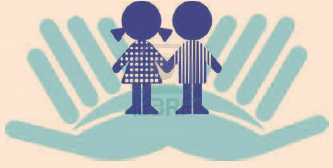
The global scandal of violence against children is a horror story too often untold. In investigating this issue, Human Rights Watch has found a disturbing but persistent theme – in every region of the world children suffer innumerable forms of violence, most often perpetrated by the individuals that are responsible for their safety and well-being.
Street children are often detained by police without sufficient cause, and are brutally interrogated and tortured in order to elicit confessions or information. Sometimes they are imprisoned in cells with adults or placed in juvenile and criminal correctional institutions where mistreatment is often part of the daily routine.
Seven or eight-year-old kids are recruited or kidnapped to serve as soldiers in armed conflict situations. Refugee children who are separated from their families become vulnerable to exploitation and sexual abuse.
Children as young as six years old are forced to work under extremely difficult conditions, as bonded laborers or in forced prostitution. They may be beaten for working too slowly, making mistakes, arriving late or simply as an instrument of intimidation. (…)
Even in schools, where education is supposed to be promoted, life in and outside the classroom may be intolerable. At the hands of peers and teachers, many students suffer under acts of abuse, sexual violence, harassment and discrimination because of their ethnicity, gender, sexual orientation, religion or social group.
Silence and inaction allow violence against children to continue. Children – particularly those most vulnerable – have few mechanisms for reporting violence. They may be reluctant to speak out for fear of reprisals. And because they are so young, their complains are usually not taken seriously. Even when reports are made or abuse is exposed, perpetrators are rarely investigated or prosecuted.
The Convention on the Rights of the Child, adopted by the United Nations in 1989, obliges governments to protect children from all forms of physical and mental violence. Since the adoption of the convention, many countries have made significant advances on this issue, such as the revision of domestic legislation. The next step towards finding a solution to this problem is to start facing violence against children as a global phenomenon which demands international responses.
PLATERO, Luciana e DONNINI, Lívia. All Set! Book 2. Boston: Heinly Cengage Learning, 2009. (Adaptado)
Pelo teor do texto, o título adequado que lhe deve ser atribuído é:
06