


![[Marketing] Questao Topo - deslogado](https://storage.estuda.com.br/banners/0_6b7ebee90b03af1c560c73bb8bcce34a_banner_deslogado_70_dias.png)
Questões de Inglês
19.971 Questões
Questão 24 174255
UEL 2° Fase 2013Old Mama Dot
Born on a sunday
In the kingdom of Asante
Sold on a monday
Into slavery
Ran away on tuesday
Cause she born free
Lost a foot on wednesday
When they catch she
Worked all thursday
Till her head grey
Dropped on friday
Where they burn she
Freed on saturday
In a new century
(D’AGUIAR, F. Old Mama Dot. In: BERRY, J. (ed.) News for Babylon: The Chatto book of West Indian-British Poetry, London: Chatto & Windus, 1984, p.26.)
Assinale a alternativa que apresenta, corretamente, o tema central do poema.
Questão 23 174254
UEL 2° Fase 2013The 8,000 volunteers who will welcome international visitors to London 2012 have received a 66-page instruction manual on how to behave while hosting the games. But what of the visitors themselves? Could the tourists survive without a manual outlining the customs, manners and practicalities of the islands they are visiting? We hereby present a simple guide to UK etiquette for the 2012 Olympics.
• British people may seem to apologise a lot, but it doesn’t quite mean the same thing here. In the UK, “I’m sorry” actually means either a) I didn’t hear you; b) I didn’t understand you; or c) I both heard and understood you, and I think you’re an idiot.
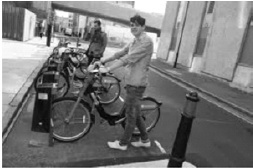
• London’s bike hire scheme couldn’t be simpler, by the way: just go up to the terminal at any docking station, pay by card and take away one of our so-called “Boris bikes”. When you’re done with it, simply throw it into the nearest canal. They’re disposable!
• Please aid the Olympic authorities and organisers by demonstrating at all times that you are not a terrorist. Do not perspire, take off your shoes, smile in a weird way while texting someone, or point and shout: “Hey! Look at all those missiles on that roof over there!”. In fact, if you’re not using your hands for anything, it’s probably best if you keep them in the air where everybody can see them.
(Adaptado de: DOWLING, T. London 2012: an etiquette guide for Olympics visitors. . Acesso em: 16 jul. 2012.)
De acordo com o segundo parágrafo, para o cidadão inglês, o ato de pedir desculpas
Questão 22 174253
UEL 2° Fase 2013The 8,000 volunteers who will welcome international visitors to London 2012 have received a 66-page instruction manual on how to behave while hosting the games. But what of the visitors themselves? Could the tourists survive without a manual outlining the customs, manners and practicalities of the islands they are visiting? We hereby present a simple guide to UK etiquette for the 2012 Olympics.
• British people may seem to apologise a lot, but it doesn’t quite mean the same thing here. In the UK, “I’m sorry” actually means either a) I didn’t hear you; b) I didn’t understand you; or c) I both heard and understood you, and I think you’re an idiot.
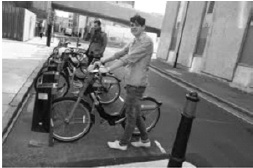
• London’s bike hire scheme couldn’t be simpler, by the way: just go up to the terminal at any docking station, pay by card and take away one of our so-called “Boris bikes”. When you’re done with it, simply throw it into the nearest canal. They’re disposable!
• Please aid the Olympic authorities and organisers by demonstrating at all times that you are not a terrorist. Do not perspire, take off your shoes, smile in a weird way while texting someone, or point and shout: “Hey! Look at all those missiles on that roof over there!”. In fact, if you’re not using your hands for anything, it’s probably best if you keep them in the air where everybody can see them.
(Adaptado de: DOWLING, T. London 2012: an etiquette guide for Olympics visitors. . Acesso em: 16 jul. 2012.)
Com relação ao último parágrafo do texto, considere as afirmativas a seguir.
I. As autoridades britânicas estão preocupadas com ataques terroristas.
II. Para evitar ser confundido com um terrorista, mantenha as mãos à mostra.
III. Você deve provar a todo o momento que não é um terrorista.
IV. Você deve avisar as autoridades caso veja mísseis nos telhados.
Assinale a alternativa correta
Questão 13 157670
CESGRANRIO 201310 Things You Didn’t Know About...Cars
by Corey S. Powell
1. Horsepower (hp) rates the engine performance
of cars and other motors. But what is the meaning of
horsepower? By its formal definition, it is the power
required to lift 33.000 pounds (15.000 kg) by one foot
(31 cm) in one minute. Note that, in spite of the horse
in the name of this measurement, the average horse
would have only about 0,7 hp.
2. In 1760, King George III, the English monarch
who nearly crushed the American Revolution, housed
around 30 horses in his Royal stables in London.
Today, a typical compact car packs a 150-horsepower
engine. So, any suburban commuter with his compact
car nowadays has instant access to at least five times
as much sheer muscle as King George III had.
3. The first documented auto fatality in the United
States was H. H. Bliss of New York City, who was
struck by a taxicab on September 13, 1899, while
exiting a trolley car.
4. Last year 32.310 Americans died in auto
accidents. If the 1962 fatality rate still held, there would
be an extra 150.000 deaths annually, equivalent to
losing the population of Pittsburgh every two years.
5. We can credit the diminishing rate of accidents
to a mix of improvements, including crash impact
standards, air bags, better tires, antilock brakes, and
stability control. Most importantly: seat belts. Eightyfour
percent of people now buckle up, compared with
14 percent three decades ago.
6. Lighting is one of the next frontiers in safety.
BMW is developing headlights that highlight nearby
people to help focus the driver’s attention, and side
and rear mirrors that block 80% of the light intensity
coming from the headlights of the cars behind. A
Carnegie Mellon University researcher team has
developed headlights that can track droplets and
avoid illuminating them, rendering rainfall nearly
invisible.
7. In 2004, Nevada hosted the first Grand
Challenge for self-driving cars. None of the contenders
finished the course, and one leaped menacingly at
spectators. Now Google’s fleet of self-driving cars has
completed 140.000 miles on the road with only two
small accidents—one of them caused by human error.
8. Many expensive vehicles are already partly
autonomous, with brakes that activate if sensors
indicate an impending crash, steering that prevents
drifting, a sonar system that navigates right into
parking spaces, and cruise control that prevents
following the next car too closely.
9. Going beyond with self-driving cars, soon
state-of-the-art research on transportation will give
government the tools to improve highway flow by
regulating distances between cars. It will also ease
urban congestion by automating the search for
parking, which causes up to three-quarters of city
traffic. Intelligent unified GPS systems will be able
to distribute cars along the concurrent highways and
streets which will avoid bottlenecks and, finally, traffic
lights will be synchronized for longer distances.
10. “Crashless is the goal. In the last 20 years the
car industry has worked a great deal in designing cars
that when crashing would protect their riders. In fact,
modern cars protect drivers and passengers in frontal,
rear and offset crashes by using crumple zones to
absorb crash energy. This means that the car structure
absorbs the impact of the crash, not the driver or
passengers. But this way we will never completely get
rid of accidents with casualties. The way to go is not to
crash. And we are very close to designing crashless
vehicles.” said John Maddox, head of the National
Highway Traffic Safety Administration.
Available at: <http://discovermagazine.com/2012/oct/16-things- -you-didnt-know-about-cars>. Retrieved on: 10 Oct. 2012. Adapted.
In the text, there is reference to the first fatal auto accident in the US, in which H. H. Bliss was the victim. When this accident happened, Mr. Bliss was
Questão 12 157669
CESGRANRIO 201310 Things You Didn’t Know About...Cars
by Corey S. Powell
1. Horsepower (hp) rates the engine performance
of cars and other motors. But what is the meaning of
horsepower? By its formal definition, it is the power
required to lift 33.000 pounds (15.000 kg) by one foot
(31 cm) in one minute. Note that, in spite of the horse
in the name of this measurement, the average horse
would have only about 0,7 hp.
2. In 1760, King George III, the English monarch
who nearly crushed the American Revolution, housed
around 30 horses in his Royal stables in London.
Today, a typical compact car packs a 150-horsepower
engine. So, any suburban commuter with his compact
car nowadays has instant access to at least five times
as much sheer muscle as King George III had.
3. The first documented auto fatality in the United
States was H. H. Bliss of New York City, who was
struck by a taxicab on September 13, 1899, while
exiting a trolley car.
4. Last year 32.310 Americans died in auto
accidents. If the 1962 fatality rate still held, there would
be an extra 150.000 deaths annually, equivalent to
losing the population of Pittsburgh every two years.
5. We can credit the diminishing rate of accidents
to a mix of improvements, including crash impact
standards, air bags, better tires, antilock brakes, and
stability control. Most importantly: seat belts. Eightyfour
percent of people now buckle up, compared with
14 percent three decades ago.
6. Lighting is one of the next frontiers in safety.
BMW is developing headlights that highlight nearby
people to help focus the driver’s attention, and side
and rear mirrors that block 80% of the light intensity
coming from the headlights of the cars behind. A
Carnegie Mellon University researcher team has
developed headlights that can track droplets and
avoid illuminating them, rendering rainfall nearly
invisible.
7. In 2004, Nevada hosted the first Grand
Challenge for self-driving cars. None of the contenders
finished the course, and one leaped menacingly at
spectators. Now Google’s fleet of self-driving cars has
completed 140.000 miles on the road with only two
small accidents—one of them caused by human error.
8. Many expensive vehicles are already partly
autonomous, with brakes that activate if sensors
indicate an impending crash, steering that prevents
drifting, a sonar system that navigates right into
parking spaces, and cruise control that prevents
following the next car too closely.
9. Going beyond with self-driving cars, soon
state-of-the-art research on transportation will give
government the tools to improve highway flow by
regulating distances between cars. It will also ease
urban congestion by automating the search for
parking, which causes up to three-quarters of city
traffic. Intelligent unified GPS systems will be able
to distribute cars along the concurrent highways and
streets which will avoid bottlenecks and, finally, traffic
lights will be synchronized for longer distances.
10. “Crashless is the goal. In the last 20 years the
car industry has worked a great deal in designing cars
that when crashing would protect their riders. In fact,
modern cars protect drivers and passengers in frontal,
rear and offset crashes by using crumple zones to
absorb crash energy. This means that the car structure
absorbs the impact of the crash, not the driver or
passengers. But this way we will never completely get
rid of accidents with casualties. The way to go is not to
crash. And we are very close to designing crashless
vehicles.” said John Maddox, head of the National
Highway Traffic Safety Administration.
Available at: <http://discovermagazine.com/2012/oct/16-things- -you-didnt-know-about-cars>. Retrieved on: 10 Oct. 2012. Adapted.
The word in italics describes the idea expressed, in the text, by the word in boldface type in
Questão 11 157668
CESGRANRIO 201310 Things You Didn’t Know About...Cars
by Corey S. Powell
1. Horsepower (hp) rates the engine performance
of cars and other motors. But what is the meaning of
horsepower? By its formal definition, it is the power
required to lift 33.000 pounds (15.000 kg) by one foot
(31 cm) in one minute. Note that, in spite of the horse
in the name of this measurement, the average horse
would have only about 0,7 hp.
2. In 1760, King George III, the English monarch
who nearly crushed the American Revolution, housed
around 30 horses in his Royal stables in London.
Today, a typical compact car packs a 150-horsepower
engine. So, any suburban commuter with his compact
car nowadays has instant access to at least five times
as much sheer muscle as King George III had.
3. The first documented auto fatality in the United
States was H. H. Bliss of New York City, who was
struck by a taxicab on September 13, 1899, while
exiting a trolley car.
4. Last year 32.310 Americans died in auto
accidents. If the 1962 fatality rate still held, there would
be an extra 150.000 deaths annually, equivalent to
losing the population of Pittsburgh every two years.
5. We can credit the diminishing rate of accidents
to a mix of improvements, including crash impact
standards, air bags, better tires, antilock brakes, and
stability control. Most importantly: seat belts. Eightyfour
percent of people now buckle up, compared with
14 percent three decades ago.
6. Lighting is one of the next frontiers in safety.
BMW is developing headlights that highlight nearby
people to help focus the driver’s attention, and side
and rear mirrors that block 80% of the light intensity
coming from the headlights of the cars behind. A
Carnegie Mellon University researcher team has
developed headlights that can track droplets and
avoid illuminating them, rendering rainfall nearly
invisible.
7. In 2004, Nevada hosted the first Grand
Challenge for self-driving cars. None of the contenders
finished the course, and one leaped menacingly at
spectators. Now Google’s fleet of self-driving cars has
completed 140.000 miles on the road with only two
small accidents—one of them caused by human error.
8. Many expensive vehicles are already partly
autonomous, with brakes that activate if sensors
indicate an impending crash, steering that prevents
drifting, a sonar system that navigates right into
parking spaces, and cruise control that prevents
following the next car too closely.
9. Going beyond with self-driving cars, soon
state-of-the-art research on transportation will give
government the tools to improve highway flow by
regulating distances between cars. It will also ease
urban congestion by automating the search for
parking, which causes up to three-quarters of city
traffic. Intelligent unified GPS systems will be able
to distribute cars along the concurrent highways and
streets which will avoid bottlenecks and, finally, traffic
lights will be synchronized for longer distances.
10. “Crashless is the goal. In the last 20 years the
car industry has worked a great deal in designing cars
that when crashing would protect their riders. In fact,
modern cars protect drivers and passengers in frontal,
rear and offset crashes by using crumple zones to
absorb crash energy. This means that the car structure
absorbs the impact of the crash, not the driver or
passengers. But this way we will never completely get
rid of accidents with casualties. The way to go is not to
crash. And we are very close to designing crashless
vehicles.” said John Maddox, head of the National
Highway Traffic Safety Administration.
Available at: <http://discovermagazine.com/2012/oct/16-things- -you-didnt-know-about-cars>. Retrieved on: 10 Oct. 2012. Adapted.
Based on the text, it is clear that a horse, in average, would be
06