


![[Marketing] Questao Topo - deslogado](https://storage.estuda.com.br/banners/0_6b7ebee90b03af1c560c73bb8bcce34a_banner_deslogado_70_dias.png)
Questões de Inglês
19.971 Questões
Questão 57 197167
IMEPAC 2013/2Study Suggests Only Half Of Americans With Hepatitis C Receive Complete Testing For The Virus
Main Category: Liver Disease / Hepatitis
Article Date: 09 May 2013 - 2:00 PDT
CDC reinforces need for appropriate follow-up testing for current infection
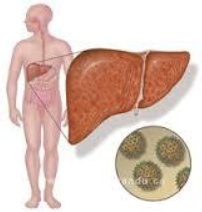
Only half of Americans identified as ever having had hepatitis C received follow-up testing showing that they were still infected, according to a Centers for Disease Control and Prevention analysis of data from a multi-area study published today in the CDC report Vital Signs.
"Many people who test positive on an initial hepatitis C test are not receiving the necessary follow-up test to know if their body has cleared the virus or if they are still infected," said CDC Director Tom Frieden, M.D., M.P.H. "Complete testing is critical to ensure that those who are infected receive the care and treatment for hepatitis C that they need in order to prevent liver cancer and other serious and potentially deadly health consequences."
Testing for hepatitis C includes a blood test, called an antibody test, to determine if an individual has ever been infected with the virus. For people with a positive antibody test result, a follow-up test - called an RNA test - should be given to determine whether they are still infected so they can get needed care and treatment.
A small number of people with antibody-positive tests will have cleared the infection on their own, but most people with hepatitis C (about 80 percent) remain infected and can go on to develop significant health problems.
For the Vital Signs study, researchers looked at data from eight areas across the nation funded by CDC to conduct enhanced surveillance for hepatitis C virus infection. Of the hepatitis C cases reported in these areas (i.e., those cases with antibody-positive results), only 51 percent of the cases also included a follow-up (RNA) test result that identified current infection. Without follow-up testing, the other half are likely unaware if they are currently infected and therefore cannot get appropriate medical care.
Data included in this analysis also underscore the severe impact of hepatitis C among baby boomers. In the eight areas studied, 67 percent of all reported cases of current infection were among those born from 1945 through 1965. Deaths among people with hepatitis C also were more common among those born during these years (accounting for 72 percent of all reported deaths).
"Hepatitis C has few noticeable symptoms, and left undiagnosed it threatens the health of far too many Americans - especially baby boomers," said John Ward, M.D., director of CDC's Division of Viral Hepatitis. "Identifying those who are currently infected is important because new effective treatments can cure the infection better than ever before, as well as eliminate the risk of transmission to others."
Overall, approximately 3 million Americans are infected with hepatitis C and up to 3 out of 4 do not know they are infected. The vast majority of those affected are baby boomers, or those born from 1945 through 1965. Left untreated, hepatitis C can cause serious liver damage, including liver cancer. Hepatitis C is a leading cause of liver cancer and the most common indication for liver transplants. In fact, liver cancer is the fastest-rising cause of cancer-related death in the United States. Deaths from hepatitis C have nearly doubled over the past decade, now accounting for more than 15,000 deaths each year.
In light of increasing evidence that many patients are not receiving the follow-up test, as well as recent changes in testing technologies and the availability of new effective treatments for hepatitis C, CDC is issuing updated guidance for health care providers on hepatitis C testing. These guidelines reinforce the recommended process for hepatitis C testing and underscore the importance of providers conducting follow-up RNA testing for all patients with a positive antibody test result in order to help ensure people infected with hepatitis C are properly tested and identified.
CDC recommends that everyone in the United States born from 1945 through 1965 be tested for hepatitis C. CDC also recommends that other populations at increased risk for hepatitis C get tested, including those who received blood transfusions or organ transplants before widespread screening of the blood supply began in 1992, or those who have ever injected drugs.
Text: http://www.medicalnewstoday.com/releases/260283.php; Image: www.google.com/imagens (Accessed on May 9, 2013)
According to the article, hepatitis C former patients may develop liver cancer
Questão 56 197163
IMEPAC 2013/2INSTRUCTIONS – Read the following text carefully and then choose the correct alternatives that answer the questions or complete the statements placed after it. Attention: take your answers from the text!
Study Suggests Only Half Of Americans With Hepatitis C Receive Complete Testing For The Virus
Main Category: Liver Disease / Hepatitis Article Date: 09 May 2013 - 2:00 PDT
CDC reinforces need for appropriate follow-up testing for current infection
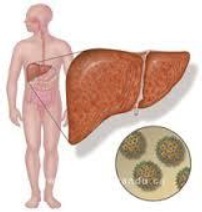
Only half of Americans identified as ever having had hepatitis C received follow-up testing showing that they were still infected, according to a Centers for Disease Control and Prevention analysis of data from a multi-area study published today in the CDC report Vital Signs.
"Many people who test positive on an initial hepatitis C test are not receiving the necessary follow-up test to know if their body has cleared the virus or if they are still infected," said CDC Director Tom Frieden, M.D., M.P.H. "Complete testing is critical to ensure that those who are infected receive the care and treatment for hepatitis C that they need in order to prevent liver cancer and other serious and potentially deadly health consequences."
Testing for hepatitis C includes a blood test, called an antibody test, to determine if an individual has ever been infected with the virus. For people with a positive antibody test result, a follow-up test - called an RNA test - should be given to determine whether they are still infected so they can get needed care and treatment.
A small number of people with antibody-positive tests will have cleared the infection on their own, but most people with hepatitis C (about 80 percent) remain infected and can go on to develop significant health problems.
For the Vital Signs study, researchers looked at data from eight areas across the nation funded by CDC to conduct enhanced surveillance for hepatitis C virus infection. Of the hepatitis C cases reported in these areas (i.e., those cases with antibody-positive results), only 51 percent of the cases also included a follow-up (RNA) test result that identified current infection. Without follow-up testing, the other half are likely unaware if they are currently infected and therefore cannot get appropriate medical care.
Data included in this analysis also underscore the severe impact of hepatitis C among baby boomers. In the eight areas studied, 67 percent of all reported cases of current infection were among those born from 1945 through 1965. Deaths among people with hepatitis C also were more common among those born during these years (accounting for 72 percent of all reported deaths).
"Hepatitis C has few noticeable symptoms, and left undiagnosed it threatens the health of far too many Americans - especially baby boomers," said John Ward, M.D., director of CDC's Division of Viral Hepatitis. "Identifying those who are currently infected is important because new effective treatments can cure the infection better than ever before, as well as eliminate the risk of transmission to others."
Overall, approximately 3 million Americans are infected with hepatitis C and up to 3 out of 4 do not know they are infected. The vast majority of those affected are baby boomers, or those born from 1945 through 1965. Left untreated, hepatitis C can cause serious liver damage, including liver cancer. Hepatitis C is a leading cause of liver cancer and the most common indication for liver transplants. In fact, liver cancer is the fastest-rising cause of cancer-related death in the United States. Deaths from hepatitis C have nearly doubled over the past decade, now accounting for more than 15,000 deaths each year.
In light of increasing evidence that many patients are not receiving the follow-up test, as well as recent changes in testing technologies and the availability of new effective treatments for hepatitis C, CDC is issuing updated guidance for health care providers on hepatitis C testing. These guidelines reinforce the recommended process for hepatitis C testing and underscore the importance of providers conducting follow-up RNA testing for all patients with a positive antibody test result in order to help ensure people infected with hepatitis C are properly tested and identified.
CDC recommends that everyone in the United States born from 1945 through 1965 be tested for hepatitis C. CDC also recommends that other populations at increased risk for hepatitis C get tested, including those who received blood transfusions or organ transplants before widespread screening of the blood supply began in 1992, or those who have ever injected drugs.
Text: http://www.medicalnewstoday.com/releases/260283.php; Image: www.google.com/imagens (Accessed on May 9, 2013)
The text states that people who have tested positive on an initial hepatitis C
Questão 59 197048
IMEPAC 2013/1Health
Increase in diabetes brings a spike in related eye disease
Blood vessels can leak into the retina
By Nanci Hellmich
USA Today
The nation‟s rising level of diabetes is driving another health problem: a significant jump in adults with vision problems from a related condition called diabetic retinopathy.
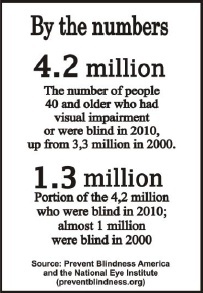
From 2000 and 2010, there was an 89% increase in the number of people with diabetic retinopathy, which affects the tiny blood vessels of the retina. The most severe forms can impair vision if not treated. About 7.7 million people ages 40 and older have diabetic retinopathy, the new estimates say.
The numbers emerge from an analysis, out today, by a group of researchers and sponsored by Prevent Blindness America and the National Eye Institute.
“The number we are most alarmed about is the increase in diabetic retinopathy, which is largely due to the diabetes epidemic,” says Jeff Todd, chief operating officer of
Prevent Blindness America.
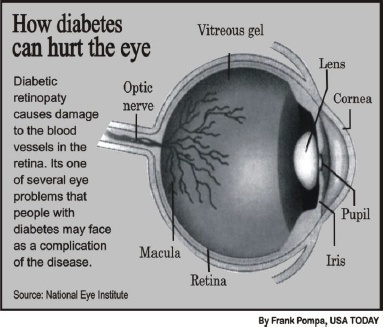
Almost 26 million people in the USA have diabetes, the Centers for Disease Control and Prevention says. In diabetic retinopathy, high blood sugar causes small blood vessels to swell and leak into the retina, blurring vision and sometimes leading to blindness. A government study in 2008 found that about 4.2 million adults had the disease, the leading cause of blindness in adults.
“You can treat and stop progression,” says Beatriz Muñoz, an associate professor of ophthalmology at the Wilmer Eye Institute at Johns Hopkins School of Medicine in Baltimore. But the disease can be “asymptomatic,” or without symptoms: “You may not know you have it,” she says, “So it‟s important to have regular eye exams.”
The vision analysis found that overall, the number of people over 40 with vision impairment and blindness has increased 23% in the past decade, partly because of more people with eye conditions such as cataracts.
Vision impairment is defined as having worse than 20/40 vision in the better eye even with glasses. In the USA, people are typically considered blind with vision of 20/200 or worse in their best eye.
If the trend remains the same, about 13 million in the USA will have visual impairment or be blind by 2050, the report says. “The increase we‟re seeing in eye diseases mirrors the increase in the aging population,” Todd says.
Estimates for eye conditions:
• 24.3 million people 40 and older have cataracts, a 19% jump from 2000. A cataract is a clouding of the eye‟s clear lens that appears with age. Surgery is effective in restoring vision. Muñoz says, but “there is no clear way to prevent it.”
• 2.7 million people ages 40 and older have open-angle glaucoma, the most common form of the disease, up 22%. Glaucoma causes damage to the optic nerve. Treatments can slow progression, she says.
• 2.1 million people ages 50 and older have late age-related macular degeneration, a 25% increase from 2000. Late AMD is the most severe form, and treatments can slow progression and prevent vision loss for some of the forms, Muñoz says.
USA Today, Wednesday, June 20, 2012, p. 6D.
From the text we learn that in diabetic retinopathy all the following can occur, EXCEPT
Questão 58 197046
IMEPAC 2013/1Health
Increase in diabetes brings a spike in related eye disease
Blood vessels can leak into the retina
By Nanci Hellmich
USA Today
The nation‟s rising level of diabetes is driving another health problem: a significant jump in adults with vision problems from a related condition called diabetic retinopathy.
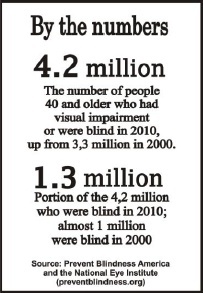
From 2000 and 2010, there was an 89% increase in the number of people with diabetic retinopathy, which affects the tiny blood vessels of the retina. The most severe forms can impair vision if not treated. About 7.7 million people ages 40 and older have diabetic retinopathy, the new estimates say.
The numbers emerge from an analysis, out today, by a group of researchers and sponsored by Prevent Blindness America and the National Eye Institute.
“The number we are most alarmed about is the increase in diabetic retinopathy, which is largely due to the diabetes epidemic,” says Jeff Todd, chief operating officer of
Prevent Blindness America.
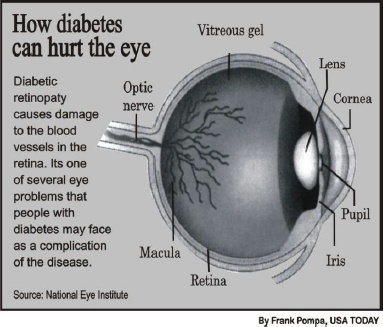
Almost 26 million people in the USA have diabetes, the Centers for Disease Control and Prevention says. In diabetic retinopathy, high blood sugar causes small blood vessels to swell and leak into the retina, blurring vision and sometimes leading to blindness. A government study in 2008 found that about 4.2 million adults had the disease, the leading cause of blindness in adults.
“You can treat and stop progression,” says Beatriz Muñoz, an associate professor of ophthalmology at the Wilmer Eye Institute at Johns Hopkins School of Medicine in Baltimore. But the disease can be “asymptomatic,” or without symptoms: “You may not know you have it,” she says, “So it‟s important to have regular eye exams.”
The vision analysis found that overall, the number of people over 40 with vision impairment and blindness has increased 23% in the past decade, partly because of more people with eye conditions such as cataracts.
Vision impairment is defined as having worse than 20/40 vision in the better eye even with glasses. In the USA, people are typically considered blind with vision of 20/200 or worse in their best eye.
If the trend remains the same, about 13 million in the USA will have visual impairment or be blind by 2050, the report says. “The increase we‟re seeing in eye diseases mirrors the increase in the aging population,” Todd says.
Estimates for eye conditions:
• 24.3 million people 40 and older have cataracts, a 19% jump from 2000. A cataract is a clouding of the eye‟s clear lens that appears with age. Surgery is effective in restoring vision. Muñoz says, but “there is no clear way to prevent it.”
• 2.7 million people ages 40 and older have open-angle glaucoma, the most common form of the disease, up 22%. Glaucoma causes damage to the optic nerve. Treatments can slow progression, she says.
• 2.1 million people ages 50 and older have late age-related macular degeneration, a 25% increase from 2000. Late AMD is the most severe form, and treatments can slow progression and prevent vision loss for some of the forms, Muñoz says.
USA Today, Wednesday, June 20, 2012, p. 6D.
The increase in diabetic retinopathy was of 89%
Questão 57 197043
IMEPAC 2013/1Health
Increase in diabetes brings a spike in related eye disease
Blood vessels can leak into the retina
By Nanci Hellmich
USA Today
The nation‟s rising level of diabetes is driving another health problem: a significant jump in adults with vision problems from a related condition called diabetic retinopathy.
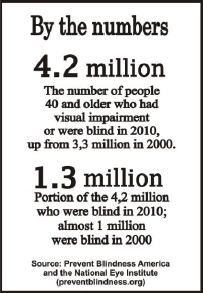
From 2000 and 2010, there was an 89% increase in the number of people with diabetic retinopathy, which affects the tiny blood vessels of the retina. The most severe forms can impair vision if not treated. About 7.7 million people ages 40 and older have diabetic retinopathy, the new estimates say.
The numbers emerge from an analysis, out today, by a group of researchers and sponsored by Prevent Blindness America and the National Eye Institute.
“The number we are most alarmed about is the increase in diabetic retinopathy, which is largely due to the diabetes epidemic,” says Jeff Todd, chief operating officer of
Prevent Blindness America.
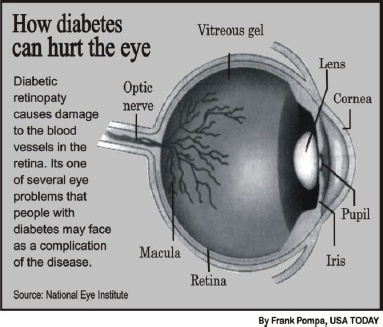
Almost 26 million people in the USA have diabetes, the Centers for Disease Control and Prevention says. In diabetic retinopathy, high blood sugar causes small blood vessels to swell and leak into the retina, blurring vision and sometimes leading to blindness. A government study in 2008 found that about 4.2 million adults had the disease, the leading cause of blindness in adults.
“You can treat and stop progression,” says Beatriz Muñoz, an associate professor of ophthalmology at the Wilmer Eye Institute at Johns Hopkins School of Medicine in Baltimore. But the disease can be “asymptomatic,” or without symptoms: “You may not know you have it,” she says, “So it‟s important to have regular eye exams.”
The vision analysis found that overall, the number of people over 40 with vision impairment and blindness has increased 23% in the past decade, partly because of more people with eye conditions such as cataracts.
Vision impairment is defined as having worse than 20/40 vision in the better eye even with glasses. In the USA, people are typically considered blind with vision of 20/200 or worse in their best eye.
If the trend remains the same, about 13 million in the USA will have visual impairment or be blind by 2050, the report says. “The increase we‟re seeing in eye diseases mirrors the increase in the aging population,” Todd says.
Estimates for eye conditions:
• 24.3 million people 40 and older have cataracts, a 19% jump from 2000. A cataract is a clouding of the eye‟s clear lens that appears with age. Surgery is effective in restoring vision. Muñoz says, but “there is no clear way to prevent it.”
• 2.7 million people ages 40 and older have open-angle glaucoma, the most common form of the disease, up 22%. Glaucoma causes damage to the optic nerve. Treatments can slow progression, she says.
• 2.1 million people ages 50 and older have late age-related macular degeneration, a 25% increase from 2000. Late AMD is the most severe form, and treatments can slow progression and prevent vision loss for some of the forms, Muñoz says.
USA Today, Wednesday, June 20, 2012, p. 6D.
According to the text, all the following are true about diabetic retinopathy, EXCEPT
Questão 20 187980
ITA 2013Reboot the School
SALMAN KHAN’S YOUTUBE LESSONS HAVE ALREADY MADE HIM A GEEK CELEBRITY.
NOW HE WANTS TO REINVENT HOMEWORK, BANISH CLASSROOM LECTURES—AND MAYBE SAVE EDUCATION
By Kayla Webley
[1] Fifth-graders at Eastside College Preparatory School in East Palo Alto, Calif., sit at their
desks with netbooks. They're in the middle of a math lesson, listening as a teacher explains how to
convert percentages to decimals. "If we get rid of the percent sign, we just have to move the
decimal sign two places to the left," the instructor says. Pens scribble across notebooks.
[5] Eleven thousand miles away in Accra, Ghana, students at the African School for Excellence
are studying logarithms. Their teacher is the same one firing off math tips in California–both groups
of kids are learning by watching online videos. While the screen shows a march of equations and
diagrams, the students never actually see the face of the lecturer. There's just a voice, deep, patient
and unrehearsed—think NPR host crossed with Mister Rogers. His inflection rises at times to
[10] underscore a point or when he gets really excited. "Math is not just random things to memorize and
regurgitate on a test next week," he says. "It's the purest way of describing the universe!"
The voice belongs to Salman Khan, a 35-year-old hedge-fund manager turned YouTube
professor to millions around the world. Thanks to his Khan Academy, an online repository of some
3,250 digital lectures, he has become a celebrity to techies, educators and uncounted high
[15] schoolers cramming for the AP biology test. His 18-minute discourse on the Krebs cycle and cell
metabolism has been viewed more than 675,000 times.
But Khan isn't satisfied with being the most famous teacher ever to appear on a Web
browser. He believes he has stumbled onto a solution to some of education's most intractable
problems, with his video-driven teaching method at its heart. He wants to fundamentally change the
[20] role of teachers in the classroom—and redefine the concept of homework along the way. And he
has persuaded Bill Gates, Google's Eric Schmidt and a minor constellation of other tech billionaires
to back this quest.
Education reform is notoriously difficult. K-12 schools are debating everything from teacher
evaluations to standardized tests, with no consensus in sight. Universities, meanwhile, are
[25] confronting massive budget cuts and new kinds of competition—as dramatized by the recent turmoil
at the University of Virginia. Its board fired the president amid worries that UVa wasn't keeping up
with change and embracing online education fast enough, then rehired her 16 days later after a
backlash from students and faculty.
At all levels, there's plenty of skepticism about any tech-centric approach to teaching. An
[30] estimated $65.7 billion was spent in the U.S. last year on education technology, according to
research firm Gartner. But many educators say there is little concrete proof of its benefits.
Khan is already butting up against veteran teachers nervous about their roles in his brave
new classroom. But the biggest obstacle of all may be Khan himself. For all his grassroots fandom
and Silicon Valley cred, he's not an educator, and he's never worked with children. Are parents and
[35] teachers ready to upend hundreds of years of precedent about how basic subjects are taught on the
word of a guy who has spent more time analyzing financial statements than standing before a
blackboard?
Fonte: Time, July 9, 2012. Texto adaptado.
A palavra “actually” (linha 8)
06