


![[Marketing] Questao Topo - deslogado](https://storage.estuda.com.br/banners/0_6b7ebee90b03af1c560c73bb8bcce34a_banner_deslogado_70_dias.png)
Questões de Inglês
19.971 Questões
Questão 22 221091
FACISA 2013/2TEXT A
INBOX HEROES
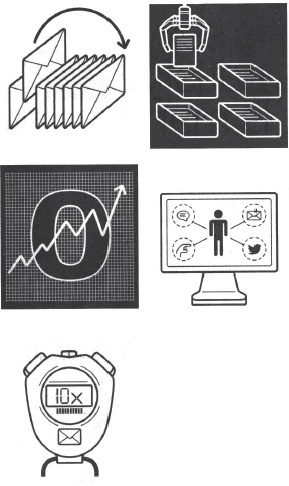
Once upon a time, receiving e-mail was a pleasant, even welcome experience. Now our inboxes buckle under the weight of an ever expanding morass of messages – many of which are ads and notifications sent by relentless machines rather than fellow human beings. […] These days, the best thing about e-mail isn’t getting it, it’s getting rid of it. Startups and established players alike are devising innovative tools for taming chaotic inboxes.[…] They’re free and work with your existing e-mail account, especially if it’s Gmail.
FIVE ROUTES TO AN ORDERLY INBOX
MAILBOX: When you don’t have time to deal with a message at this very moment, this app lets you banish it from your inbox – and then bring it back to the top at a time of your choice.[…]
MAILSTORM: It’s a specialized tool best used for deleting e-mail as swiftly as possible. You can use it to eradicate mail from your inbox in bulk – for instance, by deleting all the messages from a particular person – whether or not you’ve actually read them.
TENXER: Tenxer analyzes how long it takes you to respond to messages in Gmail. Then the service goads you into timelier communications through a bevy of stats and charts that track your progress toward faster responses.
ALTO: AOL’s ad-free service sucks e-mail from Gmail, Yahoo, AOL and other providers into one unified inbox. It automatically diverts not-so-vital missives such as ads and social-network notifications into stacks that you can peruse at your leisure or ignore altogether.
CLOZE: […] This ambitious app melds mail, Facebook, LinkedIn and Twitter. You can check out, in one place, all the conversations you’ve had in any medium with a particular person — and they all get a Cloze score based on factors like the freshness and frequency of your interactions with them.
Time, March 4th, 2013
The program MAILSTORM mentioned in TEXT A
Questão 21 221086
FACISA 2013/2TEXT A
INBOX HEROES
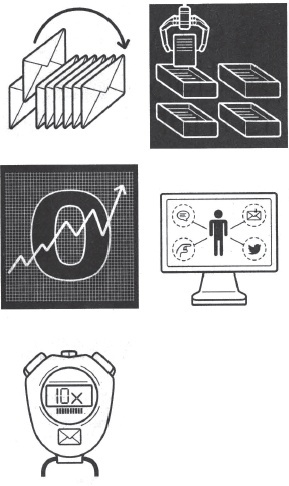
Once upon a time, receiving e-mail was a pleasant, even welcome experience. Now our inboxes buckle under the weight of an ever expanding morass of messages – many of which are ads and notifications sent by relentless machines rather than fellow human beings. […] These days, the best thing about e-mail isn’t getting it, it’s getting rid of it. Startups and established players alike are devising innovative tools for taming chaotic inboxes.[…] They’re free and work with your existing e-mail account, especially if it’s Gmail.
FIVE ROUTES TO AN ORDERLY INBOX
MAILBOX: When you don’t have time to deal with a message at this very moment, this app lets you banish it from your inbox – and then bring it back to the top at a time of your choice.[…]
MAILSTORM: It’s a specialized tool best used for deleting e-mail as swiftly as possible. You can use it to eradicate mail from your inbox in bulk – for instance, by deleting all the messages from a particular person – whether or not you’ve actually read them.
TENXER: Tenxer analyzes how long it takes you to respond to messages in Gmail. Then the service goads you into timelier communications through a bevy of stats and charts that track your progress toward faster responses.
ALTO: AOL’s ad-free service sucks e-mail from Gmail, Yahoo, AOL and other providers into one unified inbox. It automatically diverts not-so-vital missives such as ads and social-network notifications into stacks that you can peruse at your leisure or ignore altogether.
CLOZE: […] This ambitious app melds mail, Facebook, LinkedIn and Twitter. You can check out, in one place, all the conversations you’ve had in any medium with a particular person — and they all get a Cloze score based on factors like the freshness and frequency of your interactions with them.
Time, March 4th, 2013
TEXT A is concerned with
Questão 60 218953
UECE 1ª Fase 2013/2TEXT
Hundreds of studies have assessed leadership styles, mainly by having employees report on how their managers typically behave. Researchers have also collected information on how effective managers are. After large numbers of such studies became available, reviewers aggregated them quantitatively to discover what kinds of leadership are effective.
One conclusion that has emerged based on the research of the past 30 years is that a hybrid style known as transformational leadership is highly effective in most contemporary organizational contexts.
A transformational leader acts as an inspirational role model, motivates others to go beyond the confines of their job descriptions, encourages creativity and innovation, fosters good human relationships, and develops the skills of followers. This type of leadership is effective because it fosters strong interpersonal bonds based on a leader’s charisma and consideration of others. These bonds enable leaders to promote high-quality performance by encouraging workers rather than threatening them, thus motivating them to exceed basic expectations.
By bringing out the best in others, transformational leaders enhance the performance of groups and organizations.
Transformational leadership is androgynous because it incorporates culturally masculine and feminine behaviors. This androgynous mixing of the masculine and feminine means that skill in this contemporary way of leading does not necessarily come naturally. It may require some effort and thought.
Men often have to work on their social skills and women on being assertive enough to inspire others. It is nonetheless clear that both women and men can adapt to the demands of leadership in the transformational mode.
One of the surprises of research on transformational leadership is that female managers are somewhat more transformational than male managers. In particular, they exceed men in their attention to human relationships. Also, in delivering incentives, women lean toward a more positive, reward-based approach and men toward a more negative and less effective, threat-based approach. In these respects, women appear to be better leaders than men, despite the double standard that can close women out of these roles.
Why are women leaders more transformational when they are less likely to become leaders in the first place? One reason is that the double standard that slows women’s rise would work against mediocre women while allowing mediocre men to rise. As a consequence, the women who attain leadership roles really are better than the men on average.
It is also true women generally avoid more domineering, “command and control” behavior because of the backlash they receive if they lead in this way. Men can often get away with autocratic behavior that is roundly disliked in women. Ironically, this backlash against domineering women may foster good leadership because the androgynous middle ground is more likely to bring success. Leaders gain less from ordering others about than from forming teams of smart, motivated collaborators who together figure out how to solve problems and get work done.
From: http://www.nytimes.com/ 2013/03/20
Women usually refuse to behave in a domineering way due to the fact that they
Questão 59 218952
UECE 1ª Fase 2013/2TEXT
Hundreds of studies have assessed leadership styles, mainly by having employees report on how their managers typically behave. Researchers have also collected information on how effective managers are. After large numbers of such studies became available, reviewers aggregated them quantitatively to discover what kinds of leadership are effective.
One conclusion that has emerged based on the research of the past 30 years is that a hybrid style known as transformational leadership is highly effective in most contemporary organizational contexts.
A transformational leader acts as an inspirational role model, motivates others to go beyond the confines of their job descriptions, encourages creativity and innovation, fosters good human relationships, and develops the skills of followers. This type of leadership is effective because it fosters strong interpersonal bonds based on a leader’s charisma and consideration of others. These bonds enable leaders to promote high-quality performance by encouraging workers rather than threatening them, thus motivating them to exceed basic expectations.
By bringing out the best in others, transformational leaders enhance the performance of groups and organizations.
Transformational leadership is androgynous because it incorporates culturally masculine and feminine behaviors. This androgynous mixing of the masculine and feminine means that skill in this contemporary way of leading does not necessarily come naturally. It may require some effort and thought.
Men often have to work on their social skills and women on being assertive enough to inspire others. It is nonetheless clear that both women and men can adapt to the demands of leadership in the transformational mode.
One of the surprises of research on transformational leadership is that female managers are somewhat more transformational than male managers. In particular, they exceed men in their attention to human relationships. Also, in delivering incentives, women lean toward a more positive, reward-based approach and men toward a more negative and less effective, threat-based approach. In these respects, women appear to be better leaders than men, despite the double standard that can close women out of these roles.
Why are women leaders more transformational when they are less likely to become leaders in the first place? One reason is that the double standard that slows women’s rise would work against mediocre women while allowing mediocre men to rise. As a consequence, the women who attain leadership roles really are better than the men on average.
It is also true women generally avoid more domineering, “command and control” behavior because of the backlash they receive if they lead in this way. Men can often get away with autocratic behavior that is roundly disliked in women. Ironically, this backlash against domineering women may foster good leadership because the androgynous middle ground is more likely to bring success. Leaders gain less from ordering others about than from forming teams of smart, motivated collaborators who together figure out how to solve problems and get work done.
From: http://www.nytimes.com/ 2013/03/20
As to the effectiveness of managers, researchers have found, after many years of study, that
Questão 58 218950
UECE 1ª Fase 2013/2TEXT
Hundreds of studies have assessed leadership styles, mainly by having employees report on how their managers typically behave. Researchers have also collected information on how effective managers are. After large numbers of such studies became available, reviewers aggregated them quantitatively to discover what kinds of leadership are effective.
One conclusion that has emerged based on the research of the past 30 years is that a hybrid style known as transformational leadership is highly effective in most contemporary organizational contexts.
A transformational leader acts as an inspirational role model, motivates others to go beyond the confines of their job descriptions, encourages creativity and innovation, fosters good human relationships, and develops the skills of followers. This type of leadership is effective because it fosters strong interpersonal bonds based on a leader’s charisma and consideration of others. These bonds enable leaders to promote high-quality performance by encouraging workers rather than threatening them, thus motivating them to exceed basic expectations.
By bringing out the best in others, transformational leaders enhance the performance of groups and organizations.
Transformational leadership is androgynous because it incorporates culturally masculine and feminine behaviors. This androgynous mixing of the masculine and feminine means that skill in this contemporary way of leading does not necessarily come naturally. It may require some effort and thought.
Men often have to work on their social skills and women on being assertive enough to inspire others. It is nonetheless clear that both women and men can adapt to the demands of leadership in the transformational mode.
One of the surprises of research on transformational leadership is that female managers are somewhat more transformational than male managers. In particular, they exceed men in their attention to human relationships. Also, in delivering incentives, women lean toward a more positive, reward-based approach and men toward a more negative and less effective, threat-based approach. In these respects, women appear to be better leaders than men, despite the double standard that can close women out of these roles.
Why are women leaders more transformational when they are less likely to become leaders in the first place? One reason is that the double standard that slows women’s rise would work against mediocre women while allowing mediocre men to rise. As a consequence, the women who attain leadership roles really are better than the men on average.
It is also true women generally avoid more domineering, “command and control” behavior because of the backlash they receive if they lead in this way. Men can often get away with autocratic behavior that is roundly disliked in women. Ironically, this backlash against domineering women may foster good leadership because the androgynous middle ground is more likely to bring success. Leaders gain less from ordering others about than from forming teams of smart, motivated collaborators who together figure out how to solve problems and get work done.
From: http://www.nytimes.com/ 2013/03/20
Among the factors that make transformational leadership effective, the text mentions
Questão 56 218947
UECE 1ª Fase 2013/2TEXT
Hundreds of studies have assessed leadership styles, mainly by having employees report on how their managers typically behave. Researchers have also collected information on how effective managers are. After large numbers of such studies became available, reviewers aggregated them quantitatively to discover what kinds of leadership are effective.
One conclusion that has emerged based on the research of the past 30 years is that a hybrid style known as transformational leadership is highly effective in most contemporary organizational contexts.
A transformational leader acts as an inspirational role model, motivates others to go beyond the confines of their job descriptions, encourages creativity and innovation, fosters good human relationships, and develops the skills of followers. This type of leadership is effective because it fosters strong interpersonal bonds based on a leader’s charisma and consideration of others. These bonds enable leaders to promote high-quality performance by encouraging workers rather than threatening them, thus motivating them to exceed basic expectations.
By bringing out the best in others, transformational leaders enhance the performance of groups and organizations.
Transformational leadership is androgynous because it incorporates culturally masculine and feminine behaviors. This androgynous mixing of the masculine and feminine means that skill in this contemporary way of leading does not necessarily come naturally. It may require some effort and thought.
Men often have to work on their social skills and women on being assertive enough to inspire others. It is nonetheless clear that both women and men can adapt to the demands of leadership in the transformational mode.
One of the surprises of research on transformational leadership is that female managers are somewhat more transformational than male managers. In particular, they exceed men in their attention to human relationships. Also, in delivering incentives, women lean toward a more positive, reward-based approach and men toward a more negative and less effective, threat-based approach. In these respects, women appear to be better leaders than men, despite the double standard that can close women out of these roles.
Why are women leaders more transformational when they are less likely to become leaders in the first place? One reason is that the double standard that slows women’s rise would work against mediocre women while allowing mediocre men to rise. As a consequence, the women who attain leadership roles really are better than the men on average.
It is also true women generally avoid more domineering, “command and control” behavior because of the backlash they receive if they lead in this way. Men can often get away with autocratic behavior that is roundly disliked in women. Ironically, this backlash against domineering women may foster good leadership because the androgynous middle ground is more likely to bring success. Leaders gain less from ordering others about than from forming teams of smart, motivated collaborators who together figure out how to solve problems and get work done.
From: http://www.nytimes.com/ 2013/03/20
According to the research results, women tend to do better in terms of the application of the transformational type of leadership because of their
06