


![[Marketing] Questao Topo - deslogado](https://storage.estuda.com.br/banners/0_6b7ebee90b03af1c560c73bb8bcce34a_banner_deslogado_70_dias.png)
Questões de Inglês
19.971 Questões
Questão 23 222047
FACISA 2013/1TEXT A
Frank Rankings
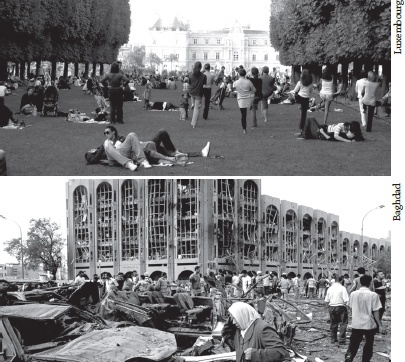
Ranking cities for “livability” grows more complicated each year. Just think of the urban scene in 2011: violent protests in Athens and elsewhere over economic issues, continuing unrest in Arab capitals, terrorist attacks on government buildings in Oslo and a summer camp nearby. All that strife prompted Mercer, a human resources consultancy, to add a separate personal safety section to its annual ranking of more than 200 cities, which helps companies determine cost of living adjustments for employees transferred overseas. Baghdad ranked dead last overall; Luxembourg was first for safety, due to a low crime rate and stable political situation.
Mercer weighs many factors in its overall rankings: education, public health, censorship, mass transit, culture. Economists and other rankers take a different tack. The Cato Institute’s urban planning expert Randal O’Toole favors looking at which cities draw the most newcomers. To him, that’s a sign of affordable,
livable cities.
National Geographic, September 2012.
The words “elsewhere” and “nearby” in BOLD in TEXT A refer to
Questão 21 222039
FACISA 2013/1TEXT A
Frank Rankings
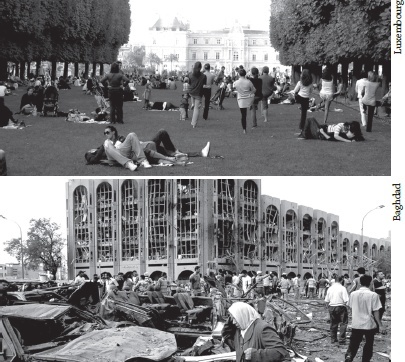
Ranking cities for “livability” grows more complicated each year. Just think of the urban scene in 2011: violent protests in Athens and elsewhere over economic issues, continuing unrest in Arab capitals, terrorist attacks on government buildings in Oslo and a summer camp nearby. All that strife prompted Mercer, a human resources consultancy, to add a separate personal safety section to its annual ranking of more than 200 cities, which helps companies determine cost of living adjustments for employees transferred overseas. Baghdad ranked dead last overall; Luxembourg was first for safety, due to a low crime rate and stable political situation.
Mercer weighs many factors in its overall rankings: education, public health, censorship, mass transit, culture. Economists and other rankers take a different tack. The Cato Institute’s urban planning expert Randal O’Toole favors looking at which cities draw the most newcomers. To him, that’s a sign of affordable,
livable cities.
National Geographic, September 2012.
TEXT A states that discovering which cities have the most favourable living conditions has become difficult because of
Questão 30 221109
FACISA 2013/2TEXT C
ARE VAMPIRES FOR REAL?
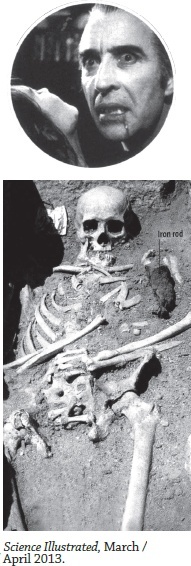
Vampires don’t exist, but in the past, myths about bloodsucking ghosts were common. Throughout the world, archaeologists have found graves containing humans who were believed to be vampires. One of the most recent discoveries was made in Bulgaria during the excavation of a church in Sozopol near the Black Sea, where scientists found two skeletons around 700 years old with iron rods through their chests.
The belief in vampires originated long before modern times. The earliest known account of vampirelike creatures is 4,000 years old and stems from Mesopotamia. About 500 years ago, the belief in vampires swept across Eastern Europe, spreading to Western Europe at a later point in time.
Count Dracula was based on a real person. The most famous vampire in history is Bram Stoker’s Count Dracula, who was inspired by Prince Vlad Tepes Dracula, ruler of Wallachia in Romania in the mid-1400s. Tepes means “the impaler” and the prince earned his nickname through his preferred means of executing his enemies by penetrating the body with a pole and erecting it, thereby impaling his victim.
Which of the following groups of words from TEXT C consists only of the past tense forms of irregular verbs?
Questão 28 221104
FACISA 2013/2TEXT C
ARE VAMPIRES FOR REAL?
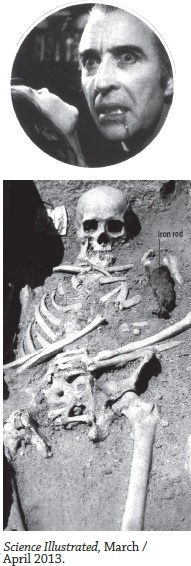
Vampires don’t exist, but in the past, myths about bloodsucking ghosts were common. Throughout the world, archaeologists have found graves containing humans who were believed to be vampires. One of the most recent discoveries was made in Bulgaria during the excavation of a church in Sozopol near the Black Sea, where scientists found two skeletons around 700 years old with iron rods through their chests.
The belief in vampires originated long before modern times. The earliest known account of vampirelike creatures is 4,000 years old and stems from Mesopotamia. About 500 years ago, the belief in vampires swept across Eastern Europe, spreading to Western Europe at a later point in time.
Count Dracula was based on a real person. The most famous vampire in history is Bram Stoker’s Count Dracula, who was inspired by Prince Vlad Tepes Dracula, ruler of Wallachia in Romania in the mid-1400s. Tepes means “the impaler” and the prince earned his nickname through his preferred means of executing his enemies by penetrating the body with a pole and erecting it, thereby impaling his victim.
According to TEXT C humans who were believed to be vampires were
Questão 27 221102
FACISA 2013/2TEXT C
ARE VAMPIRES FOR REAL?
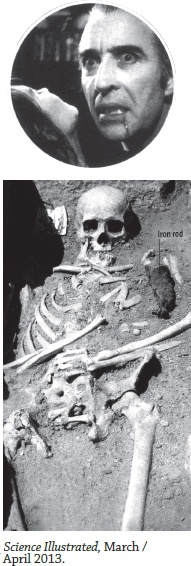
Vampires don’t exist, but in the past, myths about bloodsucking ghosts were common. Throughout the world, archaeologists have found graves containing humans who were believed to be vampires. One of the most recent discoveries was made in Bulgaria during the excavation of a church in Sozopol near the Black Sea, where scientists found two skeletons around 700 years old with iron rods through their chests.
The belief in vampires originated long before modern times. The earliest known account of vampirelike creatures is 4,000 years old and stems from Mesopotamia. About 500 years ago, the belief in vampires sweptacross Eastern Europe, spreading to Western Europe at a later point in time.
Count Dracula was based on a real person. The most famous vampire in history is Bram Stoker’s Count Dracula, who was inspired by Prince Vlad Tepes Dracula, ruler of Wallachia in Romania in the mid-1400s. Tepes means “the impaler” and the prince earned his nickname through his preferred means of executing his enemies by penetrating the body with a pole and erecting it, thereby impaling his victim.
TEXT C claims us that belief in vampires began
Questão 22 221091
FACISA 2013/2TEXT A
INBOX HEROES
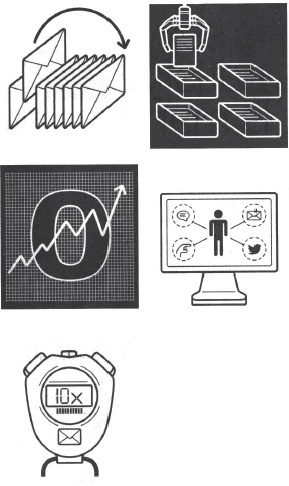
Once upon a time, receiving e-mail was a pleasant, even welcome experience. Now our inboxes buckle under the weight of an ever expanding morass of messages – many of which are ads and notifications sent by relentless machines rather than fellow human beings. […] These days, the best thing about e-mail isn’t getting it, it’s getting rid of it. Startups and established players alike are devising innovative tools for taming chaotic inboxes.[…] They’re free and work with your existing e-mail account, especially if it’s Gmail.
FIVE ROUTES TO AN ORDERLY INBOX
MAILBOX: When you don’t have time to deal with a message at this very moment, this app lets you banish it from your inbox – and then bring it back to the top at a time of your choice.[…]
MAILSTORM: It’s a specialized tool best used for deleting e-mail as swiftly as possible. You can use it to eradicate mail from your inbox in bulk – for instance, by deleting all the messages from a particular person – whether or not you’ve actually read them.
TENXER: Tenxer analyzes how long it takes you to respond to messages in Gmail. Then the service goads you into timelier communications through a bevy of stats and charts that track your progress toward faster responses.
ALTO: AOL’s ad-free service sucks e-mail from Gmail, Yahoo, AOL and other providers into one unified inbox. It automatically diverts not-so-vital missives such as ads and social-network notifications into stacks that you can peruse at your leisure or ignore altogether.
CLOZE: […] This ambitious app melds mail, Facebook, LinkedIn and Twitter. You can check out, in one place, all the conversations you’ve had in any medium with a particular person — and they all get a Cloze score based on factors like the freshness and frequency of your interactions with them.
Time, March 4th, 2013
The program MAILSTORM mentioned in TEXT A
06