


![[Marketing] Questao Topo - deslogado](https://storage.estuda.com.br/banners/0_6b7ebee90b03af1c560c73bb8bcce34a_banner_deslogado_70_dias.png)
Questões de Inglês
19.971 Questões
Questão 31 237131
UESB Caderno 1 2013TEXTO:

Archaeologists in Serbia say that they have
discovered a rare mammoth field containing the remains
of at least five of the giant beasts that lived here tens of
thousands of years ago. The discovery last week at the
[5] Kostolac coal mine, east of Serbian capital of Belgrade,
is the first of its kind in the region. It could offer important
insight into the ice age in the Balkans, said Miomir from
Serbia’s mammoth fragments in the world, but they are
rarely so accessible for exploration,” he told the
[10] Associated Press.
The remains were found during coal excavation
about 20 meters below ground, and the field, according
to Korac, stretches over some 20 acres of sandy terrain.
In 2009, a well-preserved skeleton of a much older
[15] mammoth was found at the same site. Vika — as the
female skeleton was dubbed — is up to one million years
old and belonged to the furless, so-called southern
mammoth. The bones discovered last month probably
belong to the so-called woolly mammoth, which
[20] disappeared some 10,000 years ago, said Sanja Alaburic,
a mammoth expert from Serbia’s Museum of Natural
History. Alaburic explained that “this discovery is
interesting because, unusually, there are many bones
in one place,” probably brought there by torrential waters.
[25] Another mammoth skeleton was discovered in
northern Serbia in 1996. It belonged to a female mammoth
that lived about 500,000 years ago and is now on display
in the town of Kikinda, near the Hungarian border. As to
the new findings, Korac said that at least six months
[30] will be needed before all the bones are unearthed.
MAMMOTH mine. Disponível em: <www.huffingtonpost.com/2012/06/20/mammoth-mine-prehistoric-beasts-serbian-mine-n-1611860.html>. Acesso em: 12 out. 2012.
“It could offer important insight into the ice age in the Balkans” (l. 6-7)
The question to which this sentence is the suitable answer is
Questão 27 237122
UESB Caderno 1 2013TEXTO:
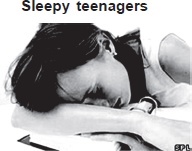
Teenagers are renowned for enjoying lengthy
lie-ins in the morning. But contrary to popular belief,
their reluctance to get out of bed may not be just down
to laziness alone.
[5] This bedroom is a battleground. Morgan’s 17, and
like most other teenagers, she struggles to surface.
Noelle Delaney, her mother, says: “Some days it is very
difficult…you know I have to go in there two, three times.
I have been known to pull her by her feet out of her bed.”
[10] Morgan replies:“It’s too early to get up in the morning,
especially in the winter when it’s quite dark out. It just
seems like you’re getting up in the middle of the night,
you just want to be back in bed.”
And that’s why sleep scientists studied Morgan
[15] and her friends for two weeks. These wrist-mounted
sensors monitored their every move — waking and
sleeping.Analysis of that data surprised the scientists.
They found that consistently the teenagers get just six
and a half hours sleep a night. Most adults need at least
[20] eight. When the clocks moved forward to British Summer
Time the youngsters got even less — just six hours a
night.
As Joanne Bower, from the University of Surrey,
says, “You’ve got something inside you called your
[25] circadian rhythm [body clock] which insures the same
thing happens the same time every day and one of those
things is the secretion of melatonin which is the hormone
that makes you sleepy. Now for an adult you expect
that to be early evening, in teenagers it happens much
[30] later so even if you put your teenager in bed at say ten
at night it may be that they don’t secrete their melatonin
until midnight, one o’clock, so they’re staring at the
ceiling just not sleepy.” Consistent sleep deprivation
can affect concentration, memory or even mood. The
[35] scientists behind this study say more research is needed
because, like Morgan, most teenagers have busy
lives — what they’re not getting is enough rest.
SLEEP teenagers. Disponível em: <www.bbc.co.uk/worldservice/learningenglish/language/wordsinthenews/>. Acesso em: 12 out 2012.
The word in bold expresses what is stated on the right in
Questão 26 237121
UESB Caderno 1 2013TEXTO:
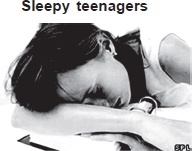
Teenagers are renowned for enjoying lengthy
lie-ins in the morning. But contrary to popular belief,
their reluctance to get out of bed may not be just down
to laziness alone.
[5] This bedroom is a battleground. Morgan’s 17, and
like most other teenagers, she struggles to surface.
Noelle Delaney, her mother, says: “Some days it is very
difficult…you know I have to go in there two, three times.
I have been known to pull her by her feet out of her bed.”
[10] Morgan replies:“It’s too early to get up in the morning,
especially in the winter when it’s quite dark out. It just
seems like you’re getting up in the middle of the night,
you just want to be back in bed.”
And that’s why sleep scientists studied Morgan
[15] and her friends for two weeks. These wrist-mounted
sensors monitored their every move — waking and
sleeping.Analysis of that data surprised the scientists.
They found that consistently the teenagers get just six
and a half hours sleep a night. Most adults need at least
[20] eight. When the clocks moved forward to British Summer
Time the youngsters got even less — just six hours a
night.
As Joanne Bower, from the University of Surrey,
says, “You’ve got something inside you called your
[25] circadian rhythm [body clock] which insures the same
thing happens the same time every day and one of those
things is the secretion of melatonin which is the hormone
that makes you sleepy. Now for an adult you expect
that to be early evening, in teenagers it happens much
[30] later so even if you put your teenager in bed at say ten
at night it may be that they don’t secrete their melatonin
until midnight, one o’clock, so they’re staring at the
ceiling just not sleepy.” Consistent sleep deprivation
can affect concentration, memory or even mood. The
[35] scientists behind this study say more research is needed
because, like Morgan, most teenagers have busy
lives — what they’re not getting is enough rest.
SLEEP teenagers. Disponível em: <www.bbc.co.uk/worldservice/learningenglish/language/wordsinthenews/>. Acesso em: 12 out 2012.
“their reluctance to get out of bed may not be just down to laziness alone.” (l. 3-4)
The expression in bold should be understood as
Questão 25 237120
UESB Caderno 1 2013TEXTO:
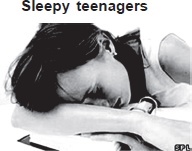
Teenagers are renowned for enjoying lengthy
lie-ins in the morning. But contrary to popular belief,
their reluctance to get out of bed may not be just down
to laziness alone.
[5] This bedroom is a battleground. Morgan’s 17, and
like most other teenagers, she struggles to surface.
Noelle Delaney, her mother, says: “Some days it is very
difficult…you know I have to go in there two, three times.
I have been known to pull her by her feet out of her bed.”
[10] Morgan replies:“It’s too early to get up in the morning,
especially in the winter when it’s quite dark out. It just
seems like you’re getting up in the middle of the night,
you just want to be back in bed.”
And that’s why sleep scientists studied Morgan
[15] and her friends for two weeks. These wrist-mounted
sensors monitored their every move — waking and
sleeping.Analysis of that data surprised the scientists.
They found that consistently the teenagers get just six
and a half hours sleep a night. Most adults need at least
[20] eight. When the clocks moved forward to British Summer
Time the youngsters got even less — just six hours a
night.
As Joanne Bower, from the University of Surrey,
says, “You’ve got something inside you called your
[25] circadian rhythm [body clock] which insures the same
thing happens the same time every day and one of those
things is the secretion of melatonin which is the hormone
that makes you sleepy. Now for an adult you expect
that to be early evening, in teenagers it happens much
[30] later so even if you put your teenager in bed at say ten
at night it may be that they don’t secrete their melatonin
until midnight, one o’clock, so they’re staring at the
ceiling just not sleepy.” Consistent sleep deprivation
can affect concentration, memory or even mood. The
[35] scientists behind this study say more research is needed
because, like Morgan, most teenagers have busy
lives — what they’re not getting is enough rest.
SLEEP teenagers. Disponível em: <www.bbc.co.uk/worldservice/learningenglish/language/wordsinthenews/>. Acesso em: 12 out 2012.
One of the bad effects of sleep deprivation mentioned in the text is
Questão 24 237118
UESB Caderno 1 2013TEXTO:
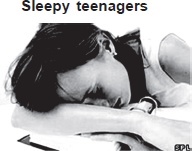
Teenagers are renowned for enjoying lengthy
lie-ins in the morning. But contrary to popular belief,
their reluctance to get out of bed may not be just down
to laziness alone.
[5] This bedroom is a battleground. Morgan’s 17, and
like most other teenagers, she struggles to surface.
Noelle Delaney, her mother, says: “Some days it is very
difficult…you know I have to go in there two, three times.
I have been known to pull her by her feet out of her bed.”
[10] Morgan replies:“It’s too early to get up in the morning,
especially in the winter when it’s quite dark out. It just
seems like you’re getting up in the middle of the night,
you just want to be back in bed.”
And that’s why sleep scientists studied Morgan
[15] and her friends for two weeks. These wrist-mounted
sensors monitored their every move — waking and
sleeping.Analysis of that data surprised the scientists.
They found that consistently the teenagers get just six
and a half hours sleep a night. Most adults need at least
[20] eight. When the clocks moved forward to British Summer
Time the youngsters got even less — just six hours a
night.
As Joanne Bower, from the University of Surrey,
says, “You’ve got something inside you called your
[25] circadian rhythm [body clock] which insures the same
thing happens the same time every day and one of those
things is the secretion of melatonin which is the hormone
that makes you sleepy. Now for an adult you expect
that to be early evening, in teenagers it happens much
[30] later so even if you put your teenager in bed at say ten
at night it may be that they don’t secrete their melatonin
until midnight, one o’clock, so they’re staring at the
ceiling just not sleepy.” Consistent sleep deprivation
can affect concentration, memory or even mood. The
[35] scientists behind this study say more research is needed
because, like Morgan, most teenagers have busy
lives — what they’re not getting is enough rest.
SLEEP teenagers. Disponível em: <www.bbc.co.uk/worldservice/learningenglish/language/wordsinthenews/>. Acesso em: 12 out 2012.
According to Joanne Bower, teenagers usually fall asleep
Questão 23 237117
UESB Caderno 1 2013TEXTO:
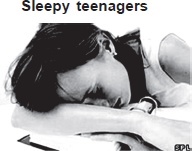
Teenagers are renowned for enjoying lengthy
lie-ins in the morning. But contrary to popular belief,
their reluctance to get out of bed may not be just down
to laziness alone.
[5] This bedroom is a battleground. Morgan’s 17, and
like most other teenagers, she struggles to surface.
Noelle Delaney, her mother, says: “Some days it is very
difficult…you know I have to go in there two, three times.
I have been known to pull her by her feet out of her bed.”
[10] Morgan replies:“It’s too early to get up in the morning,
especially in the winter when it’s quite dark out. It just
seems like you’re getting up in the middle of the night,
you just want to be back in bed.”
And that’s why sleep scientists studied Morgan
[15] and her friends for two weeks. These wrist-mounted
sensors monitored their every move — waking and
sleeping.Analysis of that data surprised the scientists.
They found that consistently the teenagers get just six
and a half hours sleep a night. Most adults need at least
[20] eight. When the clocks moved forward to British Summer
Time the youngsters got even less — just six hours a
night.
As Joanne Bower, from the University of Surrey,
says, “You’ve got something inside you called your
[25] circadian rhythm [body clock] which insures the same
thing happens the same time every day and one of those
things is the secretion of melatonin which is the hormone
that makes you sleepy. Now for an adult you expect
that to be early evening, in teenagers it happens much
[30] later so even if you put your teenager in bed at say ten
at night it may be that they don’t secrete their melatonin
until midnight, one o’clock, so they’re staring at the
ceiling just not sleepy.” Consistent sleep deprivation
can affect concentration, memory or even mood. The
[35] scientists behind this study say more research is needed
because, like Morgan, most teenagers have busy
lives — what they’re not getting is enough rest.
SLEEP teenagers. Disponível em: <www.bbc.co.uk/worldservice/learningenglish/language/wordsinthenews/>. Acesso em: 12 out 2012.
It was discovered that the teenagers mentioned in the study sleep
06