


![[Marketing] Questao Topo - deslogado](https://storage.estuda.com.br/banners/0_6b7ebee90b03af1c560c73bb8bcce34a_banner_deslogado_70_dias.png)
Questões de Inglês
19.971 Questões
Questão 60 767775
UFN Inverno 2013Olympians for Worldwide Fitness
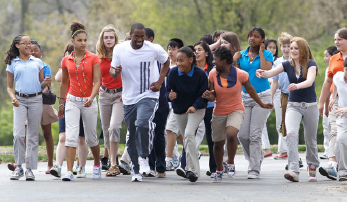
©Lexington Herald-Leader
27/03/2013
[1] With an increase in sedentary lifestyles,
obesity amongst children has become a grow-
ing concern in many countries around the
world. In the United States, three time Olympic
[5] medalist in swimming and medical doctor Gary
Hall Sr, decided to do something about it.
He co-founded World Fit, a foundation which
encourages children in schools across America to
get active. Using his Olympic experience and net-
[10] work, a simple concept was developed: an Olym-
pian is paired with a school and challenges its stu-
dents and teachers to walk 60 miles in 40 days to
get them fit.
“Walking is an accessible, affordable way to
[15] exercise; you just need a pair of shoes and a goal,”
says Hall, now Executive Director of the founda-
tion. “As humans, we are designed to walk and it is
one of the best forms of exercise.”
Over 300 Olympians and Paralympians have
[20] registered so far to adopt a school. Once they are
assigned a school, they speak annually to its stu-
dents about the importance of physical fitness
activities and a healthy lifestyle and encourage the
students to participate in the World Fit Walk, held
[25] each spring.
“An Olympian, regardless of the year he/she
competed or whether or not he/she ever won a
medal, is a hero to every school student in Amer-
ica,” says Hall. “What better inspiration than to
[30] have an Olympian adopt your school and students
for life?”
Since the first World Fit Walk in 2009, 52,399
students from 75 different schools across the
United States have logged in a total of 5,033,919
[35] miles (8,101,307 kilometres) during the six-week
program.
World Fit is currently looking to introduce its
program into Europe in 2014 in partnership with
the International Academy of Sports Science and
[40] Technology (AISTS), a not-for-profit educational
institute based in Lausanne, Switzerland.
“We strongly believe that World Fit brings huge
value not only to children but also to the schools
and the community they live in,” says Geert
[45] Hendriks, AISTS Sports Development Manager.
“The great thing is that the program is also attrac-
tive and accessible for children who do not neces-
sarily enjoy sport or have physical barriers to over-
come.”
[50] What makes World Fit work is the right dy-
namics of motivation, inspiration and competition
that make it fun. Students can log their miles elec-
tronically on the World Fit website, which keeps
track for them and compares how they are doing
[55] with other students and schools in their region. A
“buddy” system lets them collect miles from outside
participants, for example teachers, parents or
siblings who walk along with them and the World
Fit social media sites allow them to upload their
[60] photos and share their efforts.
“The best time for us to try to establish a life-
long habit of good exercise is with children.
Students are still in their formative years when
encouragement and role models can make a life-
[65] long impact,” says Hall. “A little bit of exercise goes
a long way toward improving overall health.”
Source: http://www.olympic.org/news/olympians-for-worldwide-fitness/195314
Os referentes de them (l. 13), its (l. 37) e which (l. 53) são, respectivamente,
Questão 59 767774
UFN Inverno 2013Olympians for Worldwide Fitness
©Lexington Herald-Leader
27/03/2013
[1] With an increase in sedentary lifestyles,
obesity amongst children has become a grow-
ing concern in many countries around the
world. In the United States, three time Olympic
[5] medalist in swimming and medical doctor Gary
Hall Sr, decided to do something about it.
He co-founded World Fit, a foundation which
encourages children in schools across America to
get active. Using his Olympic experience and net-
[10] work, a simple concept was developed: an Olym-
pian is paired with a school and challenges its stu-
dents and teachers to walk 60 miles in 40 days to
get them fit.
“Walking is an accessible, affordable way to
[15] exercise; you just need a pair of shoes and a goal,”
says Hall, now Executive Director of the founda-
tion. “As humans, we are designed to walk and it is
one of the best forms of exercise.”
Over 300 Olympians and Paralympians have
[20] registered so far to adopt a school. Once they are
assigned a school, they speak annually to its stu-
dents about the importance of physical fitness
activities and a healthy lifestyle and encourage the
students to participate in the World Fit Walk, held
[25] each spring.
“An Olympian, regardless of the year he/she
competed or whether or not he/she ever won a
medal, is a hero to every school student in Amer-
ica,” says Hall. “What better inspiration than to
[30] have an Olympian adopt your school and students
for life?”
Since the first World Fit Walk in 2009, 52,399
students from 75 different schools across the
United States have logged in a total of 5,033,919
[35] miles (8,101,307 kilometres) during the six-week
program.
World Fit is currently looking to introduce its
program into Europe in 2014 in partnership with
the International Academy of Sports Science and
[40] Technology (AISTS), a not-for-profit educational
institute based in Lausanne, Switzerland.
“We strongly believe that World Fit brings huge
value not only to children but also to the schools
and the community they live in,” says Geert
[45] Hendriks, AISTS Sports Development Manager.
“The great thing is that the program is also attrac-
tive and accessible for children who do not neces-
sarily enjoy sport or have physical barriers to over-
come.”
[50] What makes World Fit work is the right dy-
namics of motivation, inspiration and competition
that make it fun. Students can log their miles elec-
tronically on the World Fit website, which keeps
track for them and compares how they are doing
[55] with other students and schools in their region. A
“buddy” system lets them collect miles from outside
participants, for example teachers, parents or
siblings who walk along with them and the World
Fit social media sites allow them to upload their
[60] photos and share their efforts.
“The best time for us to try to establish a life-
long habit of good exercise is with children.
Students are still in their formative years when
encouragement and role models can make a life-
[65] long impact,” says Hall. “A little bit of exercise goes
a long way toward improving overall health.”
Source: http://www.olympic.org/news/olympians-for-worldwide-fitness/195314
A exemplo de annually (l. 21), as seguintes palavras pertencem à classe dos advérbios, exceto
Questão 58 767772
UFN Inverno 2013Olympians for Worldwide Fitness
©Lexington Herald-Leader
27/03/2013
[1] With an increase in sedentary lifestyles,
obesity amongst children has become a grow-
ing concern in many countries around the
world. In the United States, three time Olympic
[5] medalist in swimming and medical doctor Gary
Hall Sr, decided to do something about it.
He co-founded World Fit, a foundation which
encourages children in schools across America to
get active. Using his Olympic experience and net-
[10] work, a simple concept was developed: an Olym-
pian is paired with a school and challenges its stu-
dents and teachers to walk 60 miles in 40 days to
get them fit.
“Walking is an accessible, affordable way to
[15] exercise; you just need a pair of shoes and a goal,”
says Hall, now Executive Director of the founda-
tion. “As humans, we are designed to walk and it is
one of the best forms of exercise.”
Over 300 Olympians and Paralympians have
[20] registered so far to adopt a school. Once they are
assigned a school, they speak annually to its stu-
dents about the importance of physical fitness
activities and a healthy lifestyle and encourage the
students to participate in the World Fit Walk, held
[25] each spring.
“An Olympian, regardless of the year he/she
competed or whether or not he/she ever won a
medal, is a hero to every school student in Amer-
ica,” says Hall. “What better inspiration than to
[30] have an Olympian adopt your school and students
for life?”
Since the first World Fit Walk in 2009, 52,399
students from 75 different schools across the
United States have logged in a total of 5,033,919
[35] miles (8,101,307 kilometres) during the six-week
program.
World Fit is currently looking to introduce its
program into Europe in 2014 in partnership with
the International Academy of Sports Science and
[40] Technology (AISTS), a not-for-profit educational
institute based in Lausanne, Switzerland.
“We strongly believe that World Fit brings huge
value not only to children but also to the schools
and the community they live in,” says Geert
[45] Hendriks, AISTS Sports Development Manager.
“The great thing is that the program is also attrac-
tive and accessible for children who do not neces-
sarily enjoy sport or have physical barriers to over-
come.”
[50] What makes World Fit work is the right dy-
namics of motivation, inspiration and competition
that make it fun. Students can log their miles elec-
tronically on the World Fit website, which keeps
track for them and compares how they are doing
[55] with other students and schools in their region. A
“buddy” system lets them collect miles from outside
participants, for example teachers, parents or
siblings who walk along with them and the World
Fit social media sites allow them to upload their
[60] photos and share their efforts.
“The best time for us to try to establish a life-
long habit of good exercise is with children.
Students are still in their formative years when
encouragement and role models can make a life-
[65] long impact,” says Hall. “A little bit of exercise goes
a long way toward improving overall health.”
Source: http://www.olympic.org/news/olympians-for-worldwide-fitness/195314
O conetivo “also” (l. 43) expressa uma ideia d
Questão 57 767771
UFN Inverno 2013Olympians for Worldwide Fitness
©Lexington Herald-Leader
27/03/2013
[1] With an increase in sedentary lifestyles,
obesity amongst children has become a grow-
ing concern in many countries around the
world. In the United States, three time Olympic
[5] medalist in swimming and medical doctor Gary
Hall Sr, decided to do something about it.
He co-founded World Fit, a foundation which
encourages children in schools across America to
get active. Using his Olympic experience and net-
[10] work, a simple concept was developed: an Olym-
pian is paired with a school and challenges its stu-
dents and teachers to walk 60 miles in 40 days to
get them fit.
“Walking is an accessible, affordable way to
[15] exercise; you just need a pair of shoes and a goal,”
says Hall, now Executive Director of the founda-
tion. “As humans, we are designed to walk and it is
one of the best forms of exercise.”
Over 300 Olympians and Paralympians have
[20] registered so far to adopt a school. Once they are
assigned a school, they speak annually to its stu-
dents about the importance of physical fitness
activities and a healthy lifestyle and encourage the
students to participate in the World Fit Walk, held
[25] each spring.
“An Olympian, regardless of the year he/she
competed or whether or not he/she ever won a
medal, is a hero to every school student in Amer-
ica,” says Hall. “What better inspiration than to
[30] have an Olympian adopt your school and students
for life?”
Since the first World Fit Walk in 2009, 52,399
students from 75 different schools across the
United States have logged in a total of 5,033,919
[35] miles (8,101,307 kilometres) during the six-week
program.
World Fit is currently looking to introduce its
program into Europe in 2014 in partnership with
the International Academy of Sports Science and
[40] Technology (AISTS), a not-for-profit educational
institute based in Lausanne, Switzerland.
“We strongly believe that World Fit brings huge
value not only to children but also to the schools
and the community they live in,” says Geert
[45] Hendriks, AISTS Sports Development Manager.
“The great thing is that the program is also attrac-
tive and accessible for children who do not neces-
sarily enjoy sport or have physical barriers to over-
come.”
[50] What makes World Fit work is the right dy-
namics of motivation, inspiration and competition
that make it fun. Students can log their miles elec-
tronically on the World Fit website, which keeps
track for them and compares how they are doing
[55] with other students and schools in their region. A
“buddy” system lets them collect miles from outside
participants, for example teachers, parents or
siblings who walk along with them and the World
Fit social media sites allow them to upload their
[60] photos and share their efforts.
“The best time for us to try to establish a life-
long habit of good exercise is with children.
Students are still in their formative years when
encouragement and role models can make a life-
[65] long impact,” says Hall. “A little bit of exercise goes
a long way toward improving overall health.”
Source: http://www.olympic.org/news/olympians-for-worldwide-fitness/195314
A que se referem os seguintes números? Relacione as colunas.
1) 60
2) 40
3) 300
4) 2009
5) 75
( ) Número de dias do programa
( ) Número de atletas que se inscreveram para adotar uma escola.
( ) Número de escolas que já participaram.
( ) Ano da primeira edição do World Fit Walk
( ) Extensão (em milhas) que deve ser percorrida no período do programa.
A sequência correta é
Questão 60 767483
UFN Verão 2013Baby boomer1 alcohol harm 'more likely than in young'
By Nick Triggle Health correspondent, BBC News 12 October 2012 Last updated at 01:52 GMT

A variety of methods have been used by countries to try to curb problem drinking
[1] More National Health Service money is
spent treating alcohol-related illness in baby
boomers than young people, a study says.
The Alcohol Concern report found the cost of
[5] hospital admissions linked to heavy drinking 55 to
74-year-olds in 2010-11 was more than £825m.
That was 10 times the figure for 16 to 24-year-
olds.
In total, nearly £2bn was spent on alcohol-
[10] related in-patient admissions in England, the report
found.
This comes as more than 10 million people in
England are drinking above the recommended
levels, according to the report.
[15] The sum spent on treating the baby boomer
generation went on 454,317 patients, compared
with the 54,682 under-24s who were treated at a
cost of £64m.
Problem drinking is a contributing factor for a
[20] host of diseases, including liver, kidney and heart
disease, as well as increasing the risk of injury.
In many ways the findings are not surprising as
the effects of drinking are more likely to catch up
with people later in life.
[25] 'Expensive care'
But the charity said part of the reason for
compiling the report, which was based on NHS
figures, was to break down the data by individual
local authority area.
[30] It hopes the information, compiled with funding
from drug company Lundbeck, will be used by
councils next year when they take responsibility
for problem drinking as part of their new remit
covering public health under the shake-up of the
[35] NHS.
Alcohol Concern chief executive Eric Appleby
said he hoped they would use the findings to help
them focus their energy on schemes to tackle
problem drinking.
[40] "It is a common perception that young people
are responsible for the increasing cost of alcohol
misuse, but our findings show that in reality this is
not the case.
"It is the middle-aged, and often middle-class
[45] drinker, regularly drinking above recommended
limits, who are actually requiring this complex and
expensive NHS care."
Liver disease expert Sir Ian Gilmore, a former
president of the Royal College of Physicians, who
[50] has long campaigned about alcohol misuse,
agreed. He said: "It is the unwitting chronic middle-
aged drinkers who are taking serious risks with
their health."
http://www.menshealth.com/travel-center/travel-stress
1- A baby boomer is a person who was born during the demographic post-World War II baby boom between the years 1946 and 1964, according to the U.S. Census Bureau.
O advérbio “actually” (l. 46) pode ser traduzido como
Questão 59 767482
UFN Verão 2013Baby boomer1 alcohol harm 'more likely than in young'
By Nick Triggle Health correspondent, BBC News 12 October 2012 Last updated at 01:52 GMT
A variety of methods have been used by countries to try to curb problem drinking
[1] More National Health Service money is
spent treating alcohol-related illness in baby
boomers than young people, a study says.
The Alcohol Concern report found the cost of
[5] hospital admissions linked to heavy drinking 55 to
74-year-olds in 2010-11 was more than £825m.
That was 10 times the figure for 16 to 24-year-
olds.
In total, nearly £2bn was spent on alcohol-
[10] related in-patient admissions in England, the report
found.
This comes as more than 10 million people in
England are drinking above the recommended
levels, according to the report.
[15] The sum spent on treating the baby boomer
generation went on 454,317 patients, compared
with the 54,682 under-24s who were treated at a
cost of £64m.
Problem drinking is a contributing factor for a
[20] host of diseases, including liver, kidney and heart
disease, as well as increasing the risk of injury.
In many ways the findings are not surprising as
the effects of drinking are more likely to catch up
with people later in life.
[25] 'Expensive care'
But the charity said part of the reason for
compiling the report, which was based on NHS
figures, was to break down the data by individual
local authority area.
[30] It hopes the information, compiled with funding
from drug company Lundbeck, will be used by
councils next year when they take responsibility
for problem drinking as part of their new remit
covering public health under the shake-up of the
[35] NHS.
Alcohol Concern chief executive Eric Appleby
said he hoped they would use the findings to help
them focus their energy on schemes to tackle
problem drinking.
[40] "It is a common perception that young people
are responsible for the increasing cost of alcohol
misuse, but our findings show that in reality this is
not the case.
"It is the middle-aged, and often middle-class
[45] drinker, regularly drinking above recommended
limits, who are actually requiring this complex and
expensive NHS care."
Liver disease expert Sir Ian Gilmore, a former
president of the Royal College of Physicians, who
[50] has long campaigned about alcohol misuse,
agreed. He said: "It is the unwitting chronic middle-
aged drinkers who are taking serious risks with
their health."
http://www.menshealth.com/travel-center/travel-stress
1- A baby boomer is a person who was born during the demographic post-World War II baby boom between the years 1946 and 1964, according to the U.S. Census Bureau.
Os referentes de who, (l. 17, 46 e 49), são, respectivamente,
06