


![[Marketing] Questao Topo - deslogado](https://storage.estuda.com.br/banners/0_6b7ebee90b03af1c560c73bb8bcce34a_banner_deslogado_70_dias.png)
Questões de Inglês
19.971 Questões
Questão 44 80093
FMABC 2014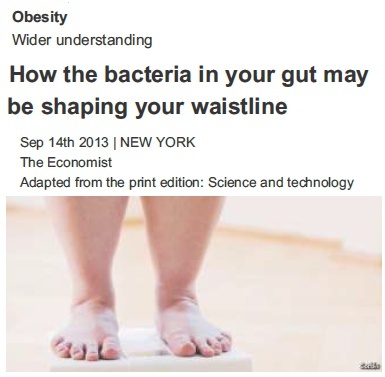
1 A CALORIE is a calorie. Eat too many and spend too
few, and you will become obese and sickly. This is the
conventional wisdom. But increasingly, it looks too
simplistic. All calories do not seem to be created equal,
and the way the body processes the same calories may
vary dramatically from one person to the next.
2 This is the intriguing suggestion from the latest
research into metabolic syndrome, the nasty clique that
includes high blood pressure, high blood sugar,
unbalanced cholesterol and, of course, obesity. This
uniquely modern scourge has swept across America,
where obesity rates are notoriously high. But it is also
doing damage from Mexico to South Africa and India,
raising levels of disease and pushing up health costs.
3 Metabolic syndrome can still be blamed on eating too
much and exercising too little. But it is crucial to
understand why some foods are particularly harmful
and why some people gain more weight than others.
Thankfully, researchers are beginning to offer
explanations in a series of recent papers.
4 One debate concerns the villainy of glucose, which is
found in starches, and fructose, found in fruits, table
sugar and, not surprisingly, high-fructose corn syrup.
Diets with a high “glycaemic index”, raising glucose
levels in the blood, seem to promote metabolic
problems. David Ludwig of Boston Children's Hospital
has shown that those on a diet with a low glycaemic
index experience metabolic changes that help them
keep weight off compared with those fed a low-fat diet.
This challenges the notion that a calorie is a calorie.
Others, however, blame fructose, which seems to
promote obesity and insulin resistance. Now a study
published in Nature Communications by Richard
Johnson, of the University of Colorado, explains that
glucose may do its harm, in part, through its conversion
to fructose.
5 Dr Johnson and his colleagues administered a diet of
water and glucose to three types of mice. One group
acted as a control and two others lacked enzymes that
help the body process fructose. The normal mice
developed a fatty liver and became resistant to insulin.
The others were protected. The body's conversion of
glucose to fructose, therefore, seems to help spur
metabolic woes.
6 Jeffrey Gordon, of Washington University in St Louis,
says that many studies point to the importance of what
he calls “job vacancies” in the microbiota of the obese.
Fed the proper diet, a person with more vacancies may
see the jobs filled by helpful bacteria. In a paper,
recently published in Science, Dr Gordon explores this
in mice. To control for the effects of genetics, Dr Gordon
found four pairs of human twins, with one twin obese
and the other lean. He collected their stool, then
transferred the twins' bacteria to sets of mice. Fed an
identical diet, the mice with bacteria from an obese twin
became obese, whereas mice with bacteria from a thin
twin remained lean.
7 Dr Gordon then tested what would happen when mice
with different bacteria were housed together—mouse
droppings help to transfer bacteria. Bacteria from the
lean mice made their way to the mice with the obese
twin's bacteria, preventing those mice from gaining
weight and developing other metabolic abnormalities.
But the phenomenon did not work in reverse, probably
due to Dr Gordon's theory on the microbiota's job
vacancies. Interestingly, the invasion did not occur, and
obesity was not prevented, when the mice ate a diet
high in fat and low in fruits and vegetables. The transfer
of helpful bacteria therefore seems to depend on diet.
8 Dr Gordon hopes to be able to identify specific bacteria
that might, eventually, be isolated and used as a
treatment for obesity. For now, however, he and other
researchers are exposing a complex interplay of
factors.
9 One type of calorie may be metabolised differently than
another. But the effect of a particular diet depends on a
person's genes and bacteria. And that person's bacteria
are determined in part by his diet. Metabolic syndrome,
it seems, hinges on an intricate relationship between
food, bacteria and genetics. Understand it, and
researchers will illuminate one of modernity's most
common ailments.
No parágrafo 4, notamos que o controle da obesidade
Questão 43 80092
FMABC 2014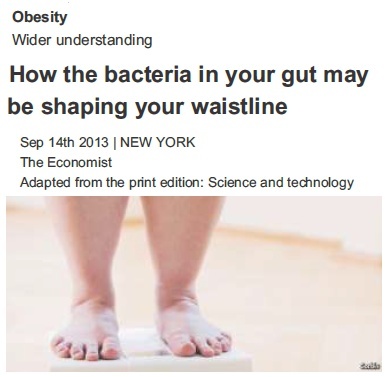
1 A CALORIE is a calorie. Eat too many and spend too
few, and you will become obese and sickly. This is the
conventional wisdom. But increasingly, it looks too
simplistic. All calories do not seem to be created equal,
and the way the body processes the same calories may
vary dramatically from one person to the next.
2 This is the intriguing suggestion from the latest
research into metabolic syndrome, the nasty clique that
includes high blood pressure, high blood sugar,
unbalanced cholesterol and, of course, obesity. This
uniquely modern scourge has swept across America,
where obesity rates are notoriously high. But it is also
doing damage from Mexico to South Africa and India,
raising levels of disease and pushing up health costs.
3 Metabolic syndrome can still be blamed on eating too
much and exercising too little. But it is crucial to
understand why some foods are particularly harmful
and why some people gain more weight than others.
Thankfully, researchers are beginning to offer
explanations in a series of recent papers.
4 One debate concerns the villainy of glucose, which is
found in starches, and fructose, found in fruits, table
sugar and, not surprisingly, high-fructose corn syrup.
Diets with a high “glycaemic index”, raising glucose
levels in the blood, seem to promote metabolic
problems. David Ludwig of Boston Children's Hospital
has shown that those on a diet with a low glycaemic
index experience metabolic changes that help them
keep weight off compared with those fed a low-fat diet.
This challenges the notion that a calorie is a calorie.
Others, however, blame fructose, which seems to
promote obesity and insulin resistance. Now a study
published in Nature Communications by Richard
Johnson, of the University of Colorado, explains that
glucose may do its harm, in part, through its conversion
to fructose.
5 Dr Johnson and his colleagues administered a diet of
water and glucose to three types of mice. One group
acted as a control and two others lacked enzymes that
help the body process fructose. The normal mice
developed a fatty liver and became resistant to insulin.
The others were protected. The body's conversion of
glucose to fructose, therefore, seems to help spur
metabolic woes.
6 Jeffrey Gordon, of Washington University in St Louis,
says that many studies point to the importance of what
he calls “job vacancies” in the microbiota of the obese.
Fed the proper diet, a person with more vacancies may
see the jobs filled by helpful bacteria. In a paper,
recently published in Science, Dr Gordon explores this
in mice. To control for the effects of genetics, Dr Gordon
found four pairs of human twins, with one twin obese
and the other lean. He collected their stool, then
transferred the twins' bacteria to sets of mice. Fed an
identical diet, the mice with bacteria from an obese twin
became obese, whereas mice with bacteria from a thin
twin remained lean.
7 Dr Gordon then tested what would happen when mice
with different bacteria were housed together—mouse
droppings help to transfer bacteria. Bacteria from the
lean mice made their way to the mice with the obese
twin's bacteria, preventing those mice from gaining
weight and developing other metabolic abnormalities.
But the phenomenon did not work in reverse, probably
due to Dr Gordon's theory on the microbiota's job
vacancies. Interestingly, the invasion did not occur, and
obesity was not prevented, when the mice ate a diet
high in fat and low in fruits and vegetables. The transfer
of helpful bacteria therefore seems to depend on diet.
8 Dr Gordon hopes to be able to identify specific bacteria
that might, eventually, be isolated and used as a
treatment for obesity. For now, however, he and other
researchers are exposing a complex interplay of
factors.
9 One type of calorie may be metabolised differently than
another. But the effect of a particular diet depends on a
person's genes and bacteria. And that person's bacteria
are determined in part by his diet. Metabolic syndrome,
it seems, hinges on an intricate relationship between
food, bacteria and genetics. Understand it, and
researchers will illuminate one of modernity's most
common ailments.
No parágrafo 2, a obesidade
Questão 42 80091
FMABC 2014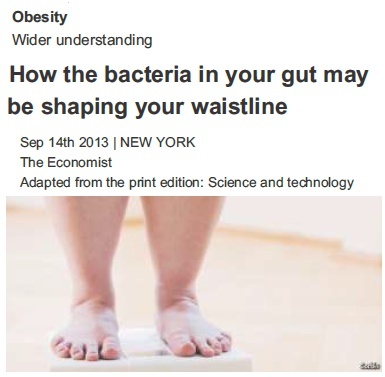
1 A CALORIE is a calorie. Eat too many and spend too
few, and you will become obese and sickly. This is the
conventional wisdom. But increasingly, it looks too
simplistic. All calories do not seem to be created equal,
and the way the body processes the same calories may
vary dramatically from one person to the next.
2 This is the intriguing suggestion from the latest
research into metabolic syndrome, the nasty clique that
includes high blood pressure, high blood sugar,
unbalanced cholesterol and, of course, obesity. This
uniquely modern scourge has swept across America,
where obesity rates are notoriously high. But it is also
doing damage from Mexico to South Africa and India,
raising levels of disease and pushing up health costs.
3 Metabolic syndrome can still be blamed on eating too
much and exercising too little. But it is crucial to
understand why some foods are particularly harmful
and why some people gain more weight than others.
Thankfully, researchers are beginning to offer
explanations in a series of recent papers.
4 One debate concerns the villainy of glucose, which is
found in starches, and fructose, found in fruits, table
sugar and, not surprisingly, high-fructose corn syrup.
Diets with a high “glycaemic index”, raising glucose
levels in the blood, seem to promote metabolic
problems. David Ludwig of Boston Children's Hospital
has shown that those on a diet with a low glycaemic
index experience metabolic changes that help them
keep weight off compared with those fed a low-fat diet.
This challenges the notion that a calorie is a calorie.
Others, however, blame fructose, which seems to
promote obesity and insulin resistance. Now a study
published in Nature Communications by Richard
Johnson, of the University of Colorado, explains that
glucose may do its harm, in part, through its conversion
to fructose.
5 Dr Johnson and his colleagues administered a diet of
water and glucose to three types of mice. One group
acted as a control and two others lacked enzymes that
help the body process fructose. The normal mice
developed a fatty liver and became resistant to insulin.
The others were protected. The body's conversion of
glucose to fructose, therefore, seems to help spur
metabolic woes.
6 Jeffrey Gordon, of Washington University in St Louis,
says that many studies point to the importance of what
he calls “job vacancies” in the microbiota of the obese.
Fed the proper diet, a person with more vacancies may
see the jobs filled by helpful bacteria. In a paper,
recently published in Science, Dr Gordon explores this
in mice. To control for the effects of genetics, Dr Gordon
found four pairs of human twins, with one twin obese
and the other lean. He collected their stool, then
transferred the twins' bacteria to sets of mice. Fed an
identical diet, the mice with bacteria from an obese twin
became obese, whereas mice with bacteria from a thin
twin remained lean.
7 Dr Gordon then tested what would happen when mice
with different bacteria were housed together—mouse
droppings help to transfer bacteria. Bacteria from the
lean mice made their way to the mice with the obese
twin's bacteria, preventing those mice from gaining
weight and developing other metabolic abnormalities.
But the phenomenon did not work in reverse, probably
due to Dr Gordon's theory on the microbiota's job
vacancies. Interestingly, the invasion did not occur, and
obesity was not prevented, when the mice ate a diet
high in fat and low in fruits and vegetables. The transfer
of helpful bacteria therefore seems to depend on diet.
8 Dr Gordon hopes to be able to identify specific bacteria
that might, eventually, be isolated and used as a
treatment for obesity. For now, however, he and other
researchers are exposing a complex interplay of
factors.
9 One type of calorie may be metabolised differently than
another. But the effect of a particular diet depends on a
person's genes and bacteria. And that person's bacteria
are determined in part by his diet. Metabolic syndrome,
it seems, hinges on an intricate relationship between
food, bacteria and genetics. Understand it, and
researchers will illuminate one of modernity's most
common ailments.
Ainda de acordo com o texto, o estudo sobre a síndrome metabólica
Questão 29 76258
FATEC 2014/1Tooth fairy quantum mechanics
The reason I can’t show you a Higgs boson1 is also the solution to a parental dilemma.
Posted by Jon Butterworth Sunday 23 December 2012 18.36 GMT, theguardian.com
I do sometimes get asked “If you’ve found a Higgs boson, can you show me a picture of it?” Unfortunately, the answer is no. But the reason for this provides a resolution to a severe parental dilemma, and explains why I am in fact sometimes the tooth fairy. Bear with me.
I can’t show you something which is definitely the new boson, but I can show evidence for it, for example in the picture below. It shows the distribution (black dots) of the mass you get when you combine the energy and momenta2 of pairs of photons (particles of light) in the ATLAS detector. The bump shows that there are more of these photon pairs at masses corresponding to around 125 GeV than would be expected from the trend. This excess implies the existence of a particle at about this mass which decays to pairs of photons.
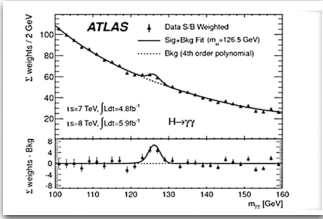
The bump3 in this plot would not be there unless there were a new boson (credit, ATLAS experiment and CERN). The key is that even if I show you a collision event with a pair of photons which exactly gives the “Higgs mass”, i.e. at the top of that peak, it is still not possible to be sure that this exact pair of photons came from a Higgs boson. There may be several possible ways of producing a set of new particles from the incoming ones; but if the resulting set is identical, it is not physically meaningful to say which way occurred.
Now, to the parental dilemma. It is especially acute at this time of year, but if you have children who are losing their milk teeth, it is ever-present. Is the tooth fairy real? What about Father Christmas? Do you spoil the fun or do you lie? Something in me hates the idea of lying to my kids, and undermining4 trust. Here’s my way out. Anything which has the same initial state (tooth) and final state (money) might in fact be an event in which a tooth fairy was present. To put it another way, anything which removes the tooth and delivers money shares such an essential property with a tooth fairy that it can be said to be one (anything removing both teeth and money is probably a dentist. Or possibly a mugger5).
By now, my son doesn’t believe a word of it of course. But in the early days it was the truth. We managed this transition without lies, betrayal and tears because actually, when tiptoeing into the bedroom with a shiny pound coin, I really am the tooth fairy. I am of course also at the same time Dad. This seemed to work, and now he’s older, it’s still fun. It’s not much of stretch to extend this to Father Christmas, and it also explains why sometimes Father Christmas uses the same wrapping paper as your parents - he and they are, in a sense, indistinguishable quantum possibilities for the delivery process.
(theguardian.com/science/life-and-physics/2012/dec/23/tooth-fairy-quantum-mechanics Acesso em: 26.08.2013. Adaptado)
Glossário
1Higgs boson: partícula subatômica teórica que ficou conhecida publicamente após ter sido divulgada como a “partícula de Deus”. Sua existência é associada a pesquisas acerca da origem do universo.
(topics.nytimes.com/top/reference/timestopics/subjects/h/higgs_boson/index.html Acesso em 02.10.2013. Adaptado)
2momenta: plural de momentum – conceito físico associado à quantidade de movimento de uma partícula.
3bump: choque ou elevação.
4undermine: tornar algo gradativamente mais fraco, especialmente a confiança ou autoridade de alguém.
5mugger: assaltante.
Os pronomes he e they presentes no último parágrafo do texto – he and they are, in a sense, indistinguishable quantum possibilities for the delivery process – substituem, respectivamente, os termos
Questão 28 76257
FATEC 2014/1Tooth fairy quantum mechanics
The reason I can’t show you a Higgs boson1 is also the solution to a parental dilemma.
Posted by Jon Butterworth Sunday 23 December 2012 18.36 GMT, theguardian.com
I do sometimes get asked “If you’ve found a Higgs boson, can you show me a picture of it?” Unfortunately, the answer is no. But the reason for this provides a resolution to a severe parental dilemma, and explains why I am in fact sometimes the tooth fairy. Bear with me.
I can’t show you something which is definitely the new boson, but I can show evidence for it, for example in the picture below. It shows the distribution (black dots) of the mass you get when you combine the energy and momenta2 of pairs of photons (particles of light) in the ATLAS detector. The bump shows that there are more of these photon pairs at masses corresponding to around 125 GeV than would be expected from the trend. This excess implies the existence of a particle at about this mass which decays to pairs of photons.
The bump3 in this plot would not be there unless there were a new boson (credit, ATLAS experiment and CERN). The key is that even if I show you a collision event with a pair of photons which exactly gives the “Higgs mass”, i.e. at the top of that peak, it is still not possible to be sure that this exact pair of photons came from a Higgs boson. There may be several possible ways of producing a set of new particles from the incoming ones; but if the resulting set is identical, it is not physically meaningful to say which way occurred.
Now, to the parental dilemma. It is especially acute at this time of year, but if you have children who are losing their milk teeth, it is ever-present. Is the tooth fairy real? What about Father Christmas? Do you spoil the fun or do you lie? Something in me hates the idea of lying to my kids, and undermining4 trust. Here’s my way out. Anything which has the same initial state (tooth) and final state (money) might in fact be an event in which a tooth fairy was present. To put it another way, anything which removes the tooth and delivers money shares such an essential property with a tooth fairy that it can be said to be one (anything removing both teeth and money is probably a dentist. Or possibly a mugger5).
By now, my son doesn’t believe a word of it of course. But in the early days it was the truth. We managed this transition without lies, betrayal and tears because actually, when tiptoeing into the bedroom with a shiny pound coin, I really am the tooth fairy. I am of course also at the same time Dad. This seemed to work, and now he’s older, it’s still fun. It’s not much of stretch to extend this to Father Christmas, and it also explains why sometimes Father Christmas uses the same wrapping paper as your parents - he and they are, in a sense, indistinguishable quantum possibilities for the delivery process.
(theguardian.com/science/life-and-physics/2012/dec/23/tooth-fairy-quantum-mechanics Acesso em: 26.08.2013. Adaptado)
Glossário
1Higgs boson: partícula subatômica teórica que ficou conhecida publicamente após ter sido divulgada como a “partícula de Deus”. Sua existência é associada a pesquisas acerca da origem do universo.
(topics.nytimes.com/top/reference/timestopics/subjects/h/higgs_boson/index.html Acesso em 02.10.2013. Adaptado)
2momenta: plural de momentum – conceito físico associado à quantidade de movimento de uma partícula.
3bump: choque ou elevação.
4undermine: tornar algo gradativamente mais fraco, especialmente a confiança ou autoridade de alguém.
5mugger: assaltante.
No segundo parágrafo do texto, o pronome relativo which em – I can’t show you something which is definitely the new boson – pode ser substituído, mantendo-se a sentença gramaticalmente correta, por
Questão 27 76256
FATEC 2014/1Tooth fairy quantum mechanics
The reason I can’t show you a Higgs boson1 is also the solution to a parental dilemma.
Posted by Jon Butterworth Sunday 23 December 2012 18.36 GMT, theguardian.com
I do sometimes get asked “If you’ve found a Higgs boson, can you show me a picture of it?” Unfortunately, the answer is no. But the reason for this provides a resolution to a severe parental dilemma, and explains why I am in fact sometimes the tooth fairy. Bear with me.
I can’t show you something which is definitely the new boson, but I can show evidence for it, for example in the picture below. It shows the distribution (black dots) of the mass you get when you combine the energy and momenta2 of pairs of photons (particles of light) in the ATLAS detector. The bump shows that there are more of these photon pairs at masses corresponding to around 125 GeV than would be expected from the trend. This excess implies the existence of a particle at about this mass which decays to pairs of photons.
The bump3 in this plot would not be there unless there were a new boson (credit, ATLAS experiment and CERN). The key is that even if I show you a collision event with a pair of photons which exactly gives the “Higgs mass”, i.e. at the top of that peak, it is still not possible to be sure that this exact pair of photons came from a Higgs boson. There may be several possible ways of producing a set of new particles from the incoming ones; but if the resulting set is identical, it is not physically meaningful to say which way occurred.
Now, to the parental dilemma. It is especially acute at this time of year, but if you have children who are losing their milk teeth, it is ever-present. Is the tooth fairy real? What about Father Christmas? Do you spoil the fun or do you lie? Something in me hates the idea of lying to my kids, and undermining4 trust. Here’s my way out. Anything which has the same initial state (tooth) and final state (money) might in fact be an event in which a tooth fairy was present. To put it another way, anything which removes the tooth and delivers money shares such an essential property with a tooth fairy that it can be said to be one (anything removing both teeth and money is probably a dentist. Or possibly a mugger5).
By now, my son doesn’t believe a word of it of course. But in the early days it was the truth. We managed this transition without lies, betrayal and tears because actually, when tiptoeing into the bedroom with a shiny pound coin, I really am the tooth fairy. I am of course also at the same time Dad. This seemed to work, and now he’s older, it’s still fun. It’s not much of stretch to extend this to Father Christmas, and it also explains why sometimes Father Christmas uses the same wrapping paper as your parents - he and they are, in a sense, indistinguishable quantum possibilities for the delivery process.
(theguardian.com/science/life-and-physics/2012/dec/23/tooth-fairy-quantum-mechanics Acesso em: 26.08.2013. Adaptado)
Glossário
1Higgs boson: partícula subatômica teórica que ficou conhecida publicamente após ter sido divulgada como a “partícula de Deus”. Sua existência é associada a pesquisas acerca da origem do universo.
(topics.nytimes.com/top/reference/timestopics/subjects/h/higgs_boson/index.html Acesso em 02.10.2013. Adaptado)
2momenta: plural de momentum – conceito físico associado à quantidade de movimento de uma partícula.
3bump: choque ou elevação.
4undermine: tornar algo gradativamente mais fraco, especialmente a confiança ou autoridade de alguém.
5mugger: assaltante.
O autor do texto afirma que
06