


![[Marketing] Questao Topo - deslogado](https://storage.estuda.com.br/banners/0_6b7ebee90b03af1c560c73bb8bcce34a_banner_deslogado_70_dias.png)
Questões de Inglês
19.971 Questões
Questão 58 85832
UNIFOR Geral 2014/2Leia as tirinhas abaixo de Calvin e Hobbes e marque a opção correta de acordo com o discurso indireto:

Questão 57 85831
UNIFOR Geral 2014/2Leia as orações abaixo e marque a opção em que o uso do pronome está correto:
1. John and I are great friends.
2. Helen’s brother bought my sister a present.
3. Mary Ann gave John the money for the concert.
4. James’s sister brought the guys to university.
1. We are great friends.
2. He bought her a present.
3. She gave him the money for the concert.
4. She brought them to university.
Questão 56 85830
UNIFOR Geral 2014/2O brasão de Hogwarts, a baixo, representando as quatro casas (no sentido horário, começando no canto superior direito: Sonserina, Corvinal, Lufa-Lufa, Grifinória), apresenta o lema da escola, que se traduz em:

Questão 12 85076
UNIMONTES 3° Etapa 2014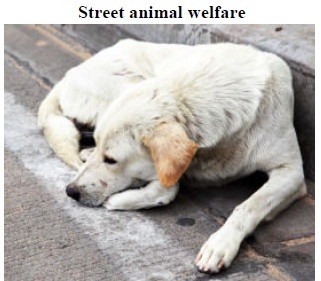
[1] The situation for street animals varies from culture to culture. In some places, they are treated well, given
scraps, even identified as “belonging to” someone, though the definition of “ownership” can be loose and
they may still roam the neighborhood, sleeping outside.
Adoption of homeless pets is still a relatively new concept in many developing countries. And
[5] unfortunately, even in places where adoption is common, there are far too many litters born each year to
keep up with the number of homes available.
Overpopulation
Overpopulation of street dogs (and cats) has been an issue that societies have dealt with in a variety of ways,
many inhumane. The welfare of the animals has rarely been considered, and as a result, campaigns of
[10] poisoning, shooting, electrocution, drowning, starvation and other cruel methods have been used to
"dispose" of unwanted animals. Such activities are not only brutal; they are ineffective because, although
they may serve as methods for “immediate”results, they are not long-term solutions.
Our work
Humane Society International has been working in a number of countries to extend a humane philosophy of
[15] animal control, providing expertise and guidance to create programs that focus on sterilization and
vaccination against zoonotic disease. With the help of HSI, determined local organizations have
implemented spay and neuter programs all over the world to humanely address the overpopulation of street
dogs and cats. A variety of methods of capture and control are used, but consideration of the welfare of the
animal is always a priority.
[20] Animal control
For the sake of public health and safety and the quality of life in a community, local governments must
provide animal control services. It is up to city and county governments to provide mechanisms to resolve
conflicts that will protect both people and animals.
The most successful programs integrate three basic components: legislation, education, and sterilization
[25] (LES). Animal shelters, both public and private, that follow this formula have reported a significant
decrease in the number of animals they handle after a few years of program operation.
Ways we help
• Vet training
• Vaccination, de-worming and other veterinary care
[30] • Public education
• Encouraging a culture of adoption
• Helping local animal welfare groups and shelters with advice and funding
• Working with local and national governments
• Partnering with local groups to offer spay/neuter clinics
[35] • Organizing Spay Day annually
• Helping street and companion animals after disasters
• Helping pass laws and regulations to protect street animals
Fonte: http://www.hsi.org
Acesso em 7 de setembro de 2014.
São estratégias utilizadas pela Humanity Society International, EXCETO
Questão 11 85075
UNIMONTES 3° Etapa 2014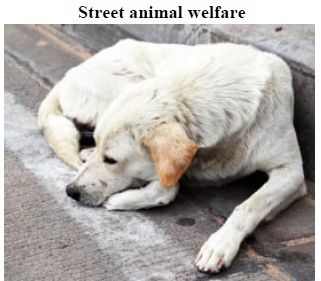
[1] The situation for street animals varies from culture to culture. In some places, they are treated well, given
scraps, even identified as “belonging to” someone, though the definition of “ownership” can be loose and
they may still roam the neighborhood, sleeping outside.
Adoption of homeless pets is still a relatively new concept in many developing countries. And
[5] unfortunately, even in places where adoption is common, there are far too many litters born each year to
keep up with the number of homes available.
Overpopulation
Overpopulation of street dogs (and cats) has been an issue that societies have dealt with in a variety of ways,
many inhumane. The welfare of the animals has rarely been considered, and as a result, campaigns of
[10] poisoning, shooting, electrocution, drowning, starvation and other cruel methods have been used to
"dispose" of unwanted animals. Such activities are not only brutal; they are ineffective because, although
they may serve as methods for “immediate”results, they are not long-term solutions.
Our work
Humane Society International has been working in a number of countries to extend a humane philosophy of
[15] animal control, providing expertise and guidance to create programs that focus on sterilization and
vaccination against zoonotic disease. With the help of HSI, determined local organizations have
implemented spay and neuter programs all over the world to humanely address the overpopulation of street
dogs and cats. A variety of methods of capture and control are used, but consideration of the welfare of the
animal is always a priority.
[20] Animal control
For the sake of public health and safety and the quality of life in a community, local governments must
provide animal control services. It is up to city and county governments to provide mechanisms to resolve
conflicts that will protect both people and animals.
The most successful programs integrate three basic components: legislation, education, and sterilization
[25] (LES). Animal shelters, both public and private, that follow this formula have reported a significant
decrease in the number of animals they handle after a few years of program operation.
Ways we help
• Vet training
• Vaccination, de-worming and other veterinary care
[30] • Public education
• Encouraging a culture of adoption
• Helping local animal welfare groups and shelters with advice and funding
• Working with local and national governments
• Partnering with local groups to offer spay/neuter clinics
[35] • Organizing Spay Day annually
• Helping street and companion animals after disasters
• Helping pass laws and regulations to protect street animals
Fonte: http://www.hsi.org
Acesso em 7 de setembro de 2014.
Após a leitura do texto, é possível afirmar, com base nas informações contidas, que
Questão 19 85019
UNIMONTES 2° Etapa 2014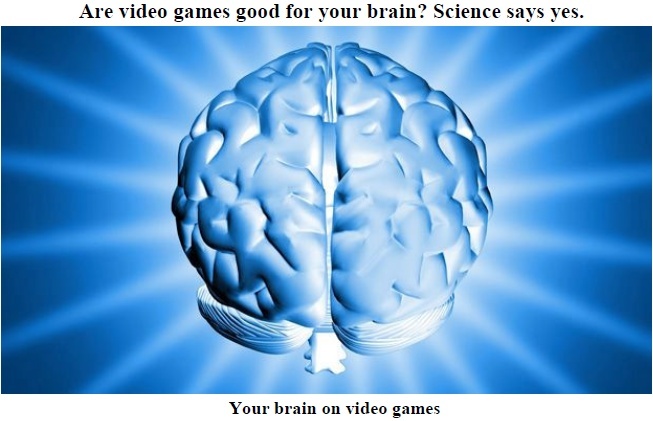
Your brain on video games
[1] Are video games the devil? It’s a compelling question, if a bit hysterical, and there will always be people
arguing both sides. Those against video games often have the same arguments: “Video games are bad for
your eyesight,” “Video games make you violent,” “Video games foster* seclusion*.” But these claims never
have any grounding, and were just spun up through the fear and ignorance of those who don’t understand
[5] the glory of gaming.
Until recently, though, gamers have never had evidence to prove that everyone was wrong about gaming.
Thanks to researchers like Daphne Bavelier, academic research is finally turning its critical eye to video
games… and the findings have been amazing. There are a ton of scientifically validated, peer reviewed, and
published articles that specifically point out benefits of video games.
Fonte: http://www.gamesradar.com
Acesso em 3 de setembro de 2014.
“Thanks to researchers like Daphne Bavelier, academic research is finally turning its critical eye to video games.” (Linhas 7-8)
O pronome “its”, sublinhado na frase acima, refere-se a
06